



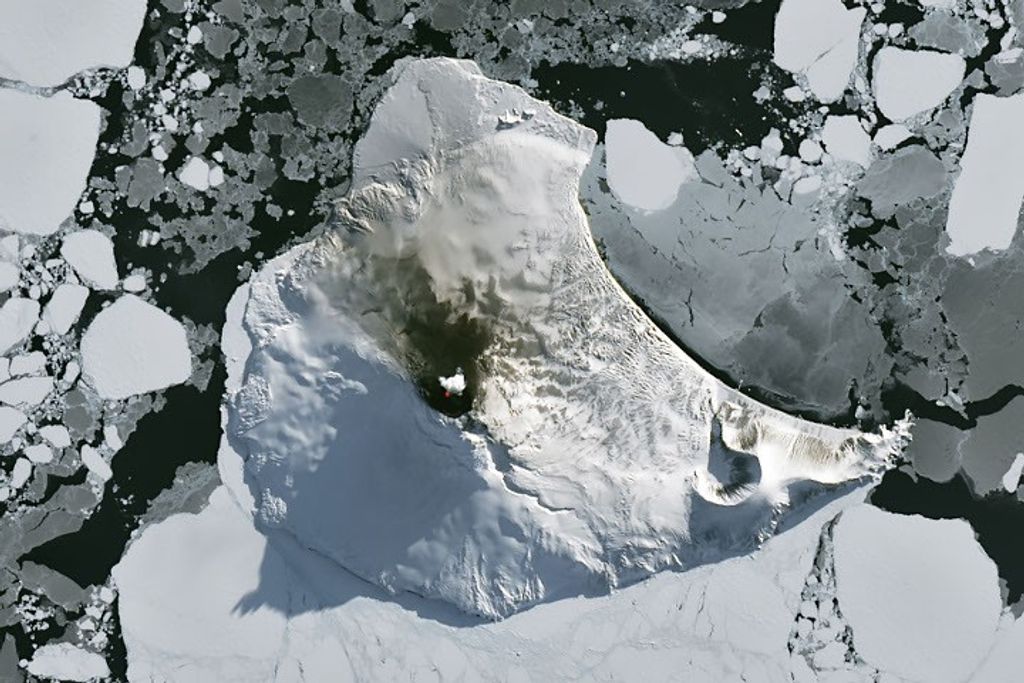



















Site of one of the largest volcanic eruptions of the 19th Century, Anak Krakatau (also known as Krakatoa) has been intermittently active for the past several decades. On July 31, 2011, a wispy ash plume rose above the volcano and drifted west (up in this image).
This natural-color satellite image was acquired by the Advanced Land Imager (ALI) aboard Earth Observing-1 (EO-1). Dark gray areas of Anak Krakatau are composed principally of lava flows deposited in the 1970s, ’80s, and ’90s. These flows are topped by a young cinder cone near the center of the island. Green vegetation covers older lavas along the eastern coastline.
References & Resources
- Global Volcanism Program. (2009, November). Krakatau: Monthly Reports. Accessed August 2, 2011.
- Roscoe, R. (n.d.). Krakatau. Accessed August 2, 2011.
NASA image by Jesse Allen and Robert Simmon, using data from the Advanced Land Imager (ALI) aboard the Earth Observing-1 (EO-1) satellite. Caption by Robert Simmon.