









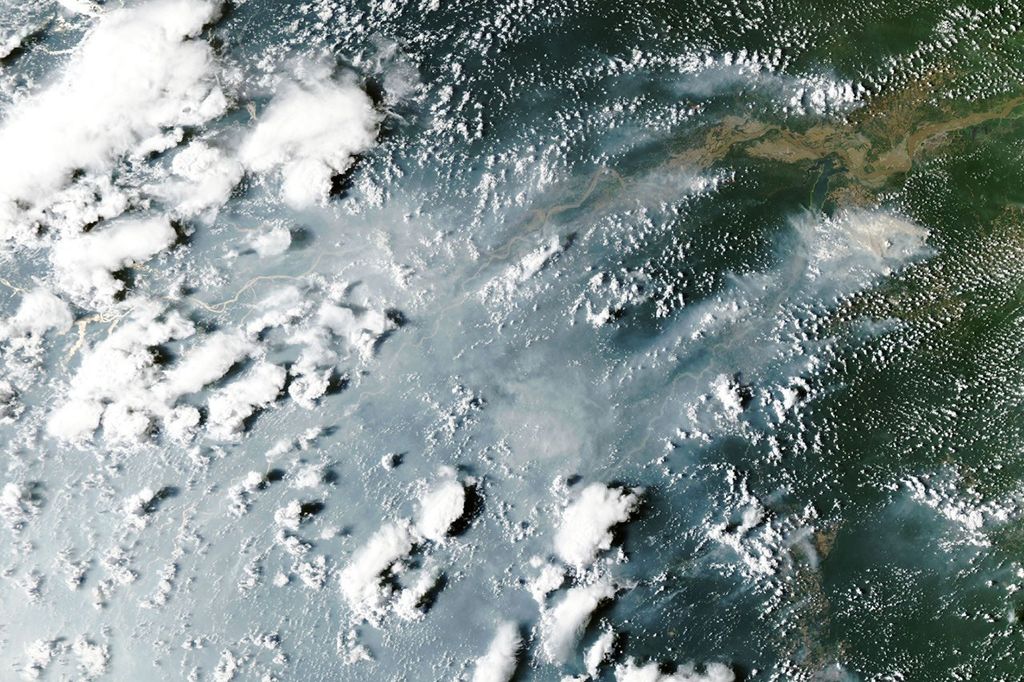








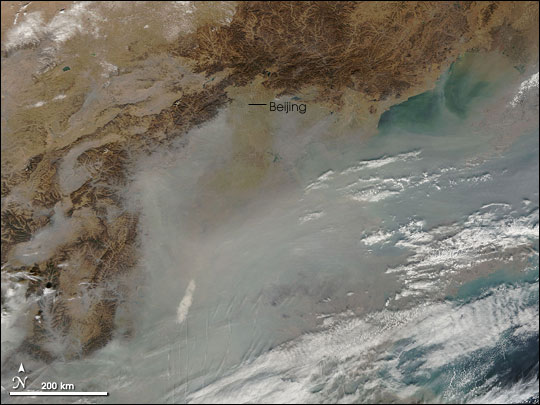
Sooty haze in eastern China was abundant on November 23, 2004, when this image of the region was captured by the Moderate Resolution Imaging Spectroradiometer (MODIS) on NASA’s Terra satellite. The haze accumulates in the atmosphere from the burning of carbon-based fuels (for example, fossil fuels and wood) for heating, transportation, and power. In addition to the respiratory health consequences, the persistent, thick haze—which occurs throughout the year at different intensities—also reduces crop yields. Although many factors can control crop yields, in places where crops are both irrigated and fertilized, as they are in China's most agriculturally productive areas, sunlight often becomes the limiting factor. This shielding effect of haze occurs throughout the world, both in developing countries and, to a lesser extent, developed ones, where technology, alternative fuels, and regulation generally foster cleaner air.
References & Resources
NASA image courtesy the MODIS Rapid Response Team, NASA-Goddard Space Flight Center