

















Thematic Mapper (TM)
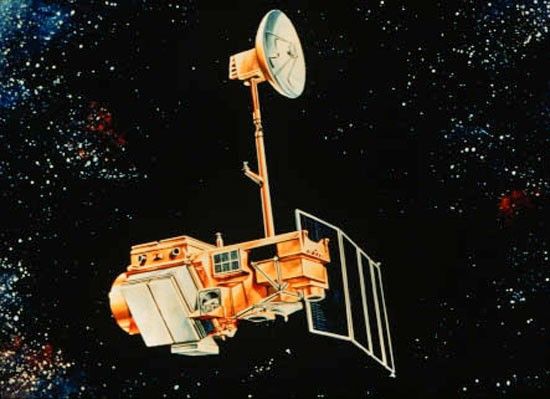
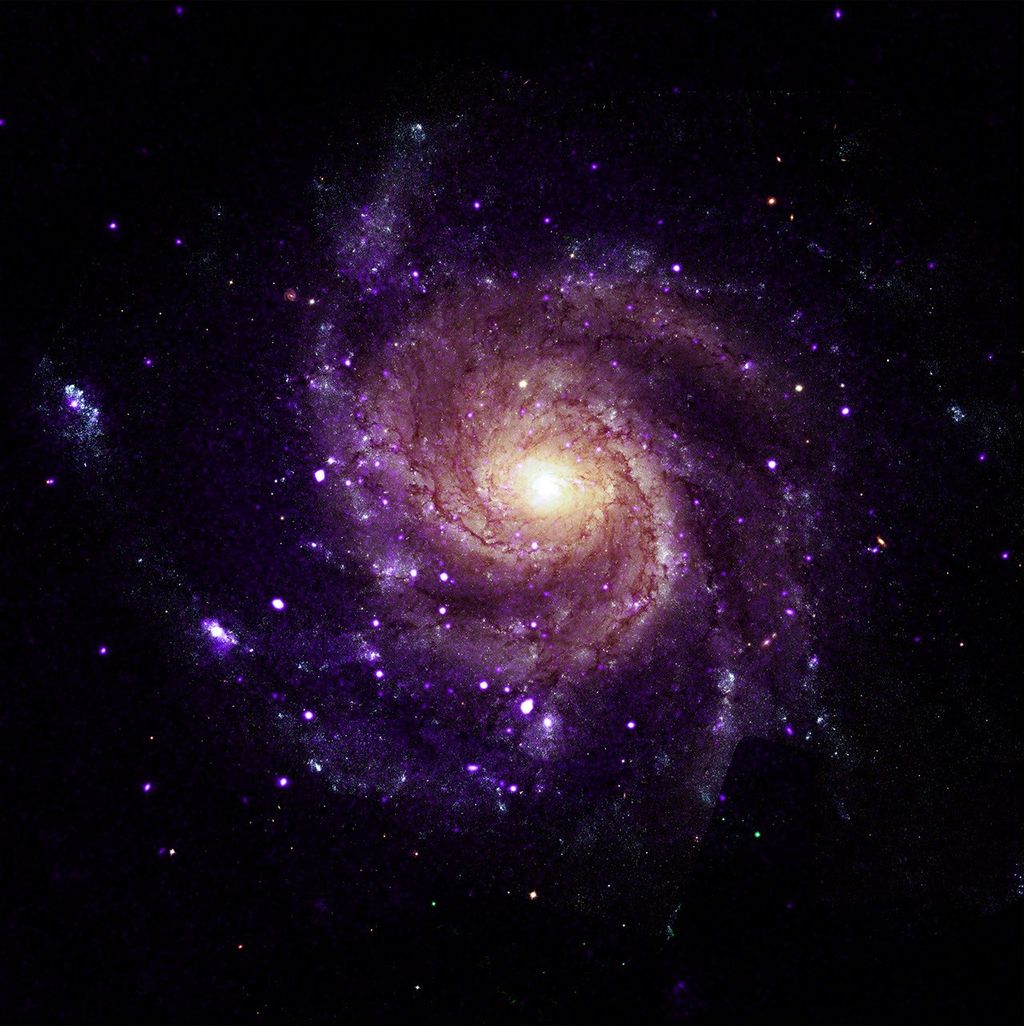
The Thematic Mapper (TM), carried by Landsats 4 and 5, represented a significant advancement in Earth observation technology. The TM enabled the first-ever natural-color images of the Landsat program, allowing us to observe Earth as we see it.

Overview
The Thematic Mapper (TM) was an advanced, multispectral scanning, Earth observation sensor designed to achieve higher image resolution, sharper spectral separation, improved geometric fidelity, and greater radiometric accuracy and resolution than the Multispectral Scanner System (MSS) sensor. The Thematic Mapper was so named because of its ability to help scientists create maps tailored to different Earth science disciplines, or “themes.” It was designed to meet the growing needs of university researchers, private industry, government agencies, and international data users.
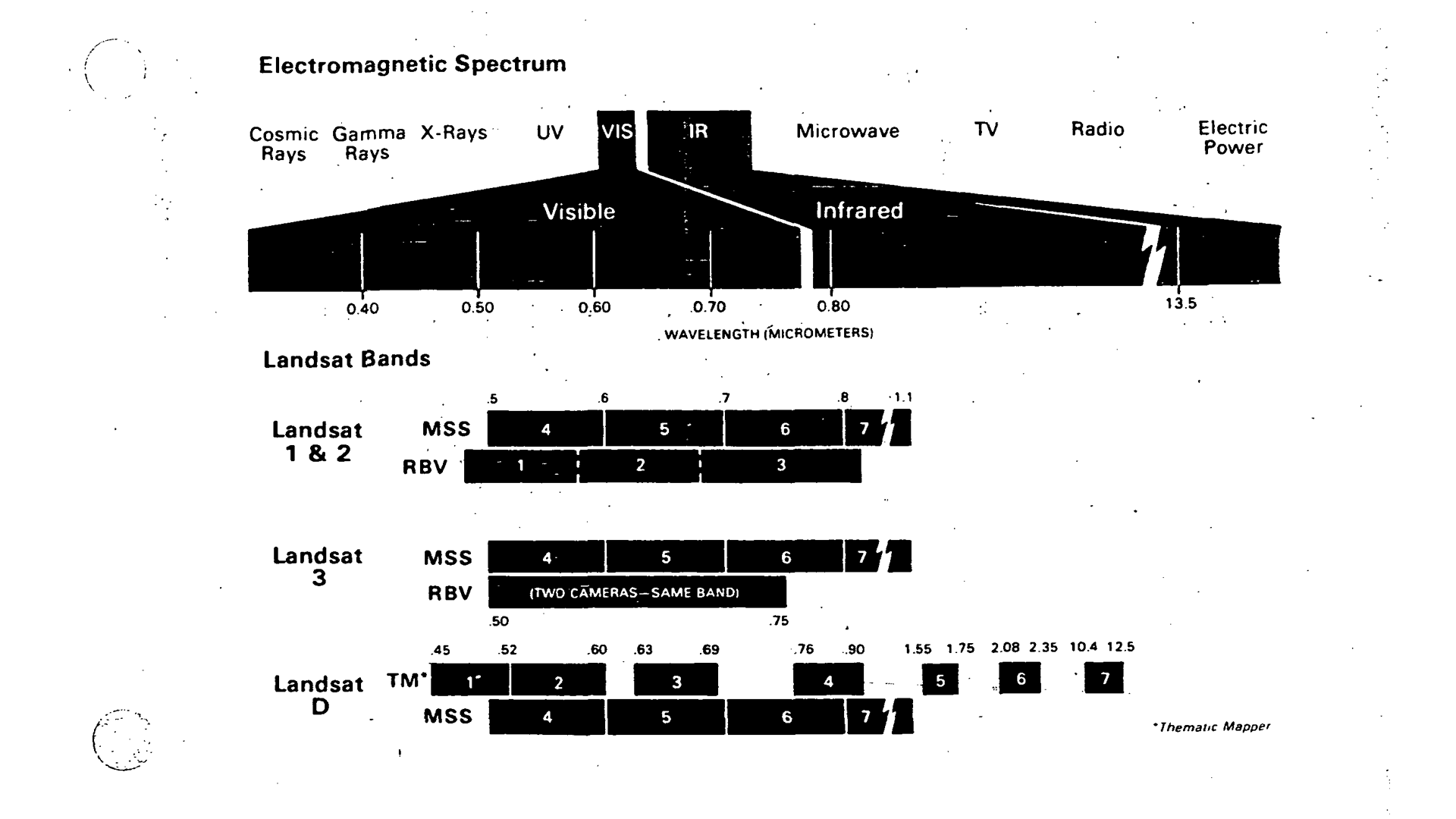
TM data are sensed in seven spectral bands, adding more spectral coverage than previous Landsat instruments. Band 1 (visible blue light) enabled the first ever natural-color Landsat images. Band 6 (thermal-infrared energy) sensed heat emitted from the Earth’s surface and provided the first nighttime observations. These new bands unlocked applications including water quality analysis and surface temperature monitoring.
These improvements provided distinct advantages for vegetation analysis and land cover mapping applications. The narrower spectral band data in the visible and near-infrared portions of the spectrum, improving the ability to differentiate between conventional crops of wheat, barley, corn, and soybeans. Geological and petroleum exploration scientists benefited from these narrower spectral bands by testing more advanced surveying and exploration procedures and improved geological maps.
Requirements
The TM instrument had to “satisfy requirements for data continuity desired by users, including government agencies, research institutions, and resource enterprises,” according to Landsat’s Enduring Legacy (Goward et al., 2017). The requirements mentioned in the Landsat D Press Kit included:
- extend the 10 year data set of observations provided by the multispectral scanner
- increased spatial resolution for visible, near infrared, and shortwave infrared bands to 30-40m
- new narrower spectral bands based on results agricultural monitoring experiments (e.g., LACIE, AgRISTARS)
- thermal infrared band at 120-m spatial resolution
- improved radiometric resolution of 0.5% or better reflectance; 0.5°C thermal infrared (TIR) resolution
- radiance digitized to 8-bits
Design
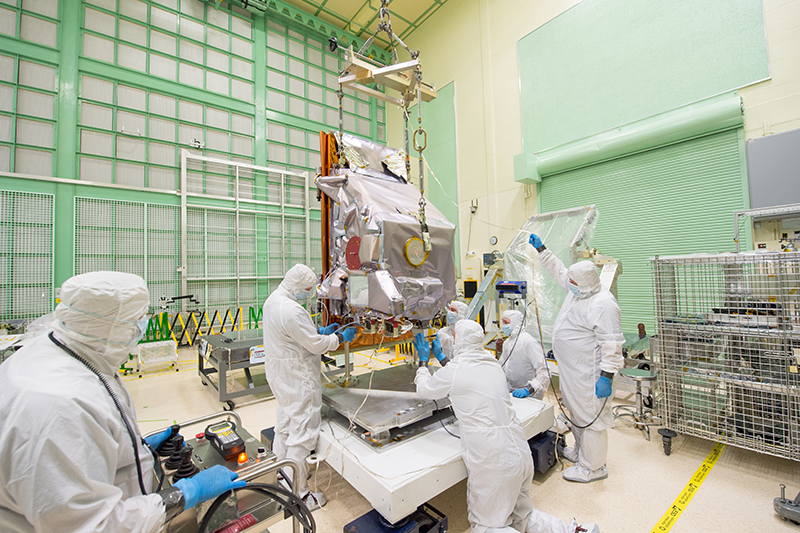
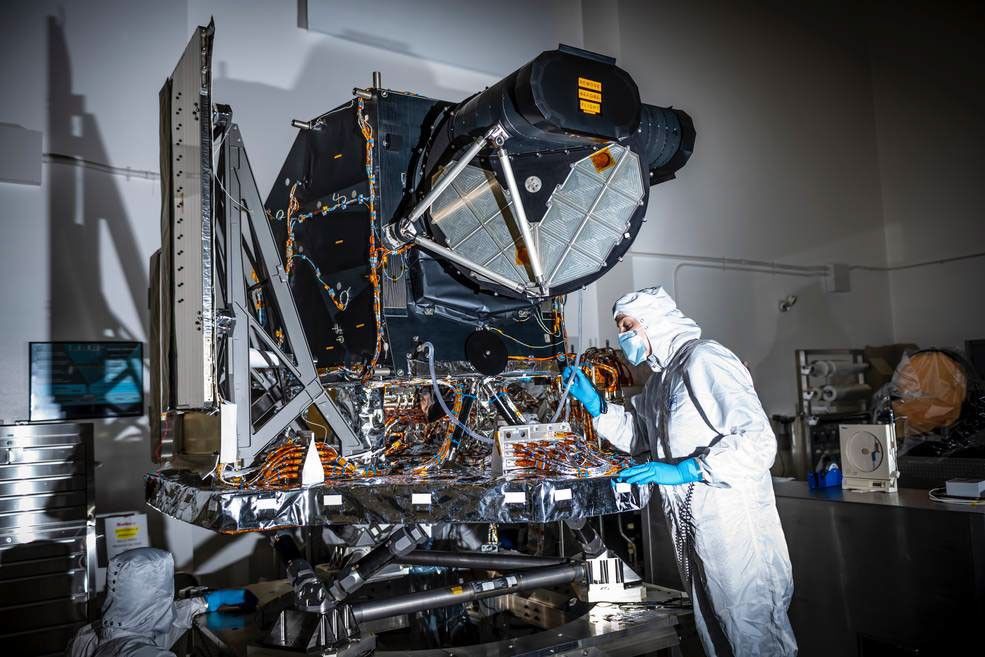
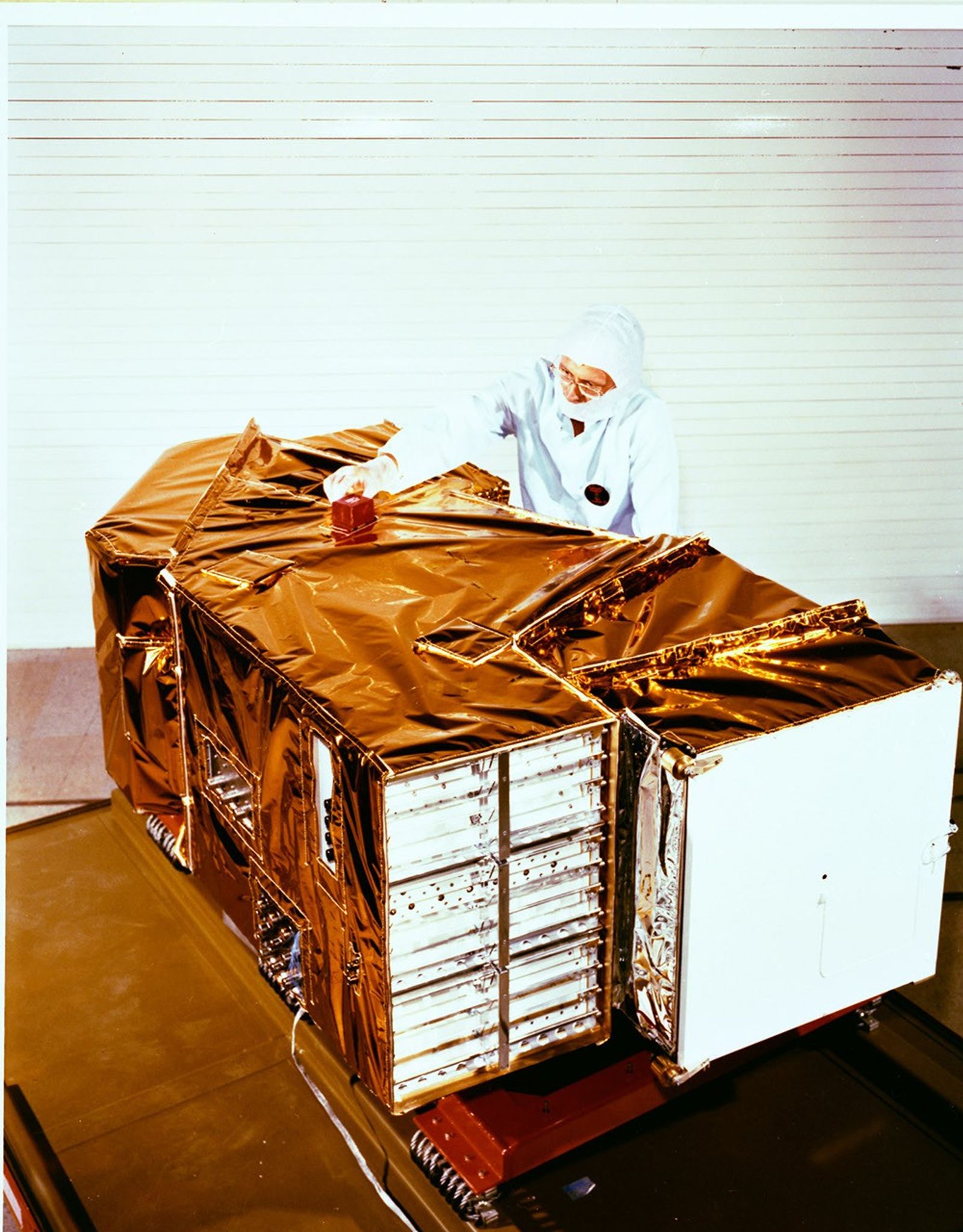
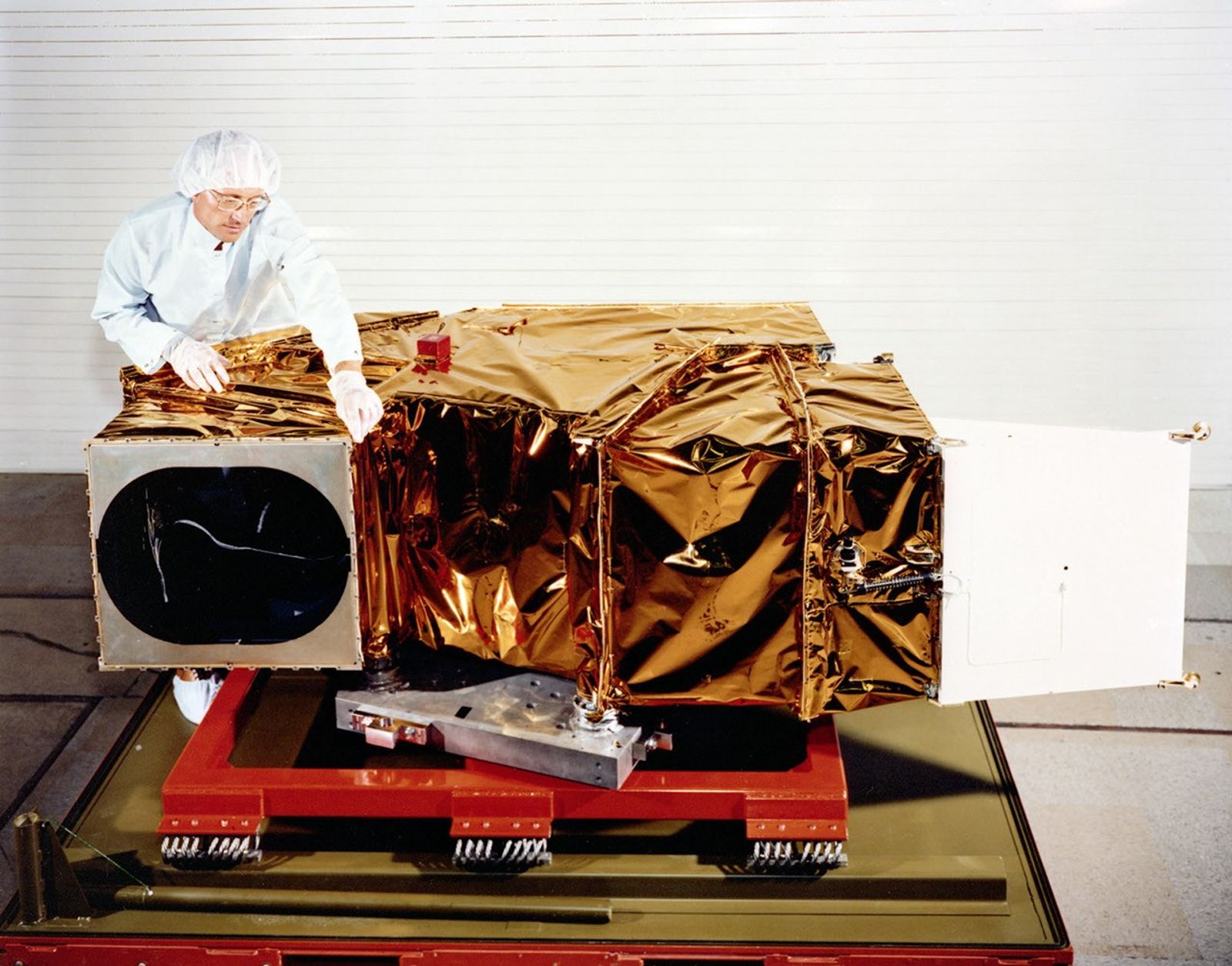
The Thematic Mapper (TM) was a seven-band, earth-observing, scanning radiometer. The instrument consisted of primary imaging optics, a scanning mechanism, spectral band discrimination optics, detector arrays, radiative cooler, inflight calibrator, and required operating and processing electronics.
The TM collected, filtered, and detected radiation in a swath that was 185 km (115 miles) wide. The scanning mechanism provided the cross-track scan while the progress of the spacecraft provided the scan along the track. A TM scene has an Instantaneous Field Of View (IFOV) of 30m x 30m in bands 1-5 and 7 while band 6 has an IFOV of 120m x 120m on the ground.
The instrument works by capturing incoming solar energy (visible and thermal-infrared light) through the Sun-shaded aperture. Filters were used to separate light into spectral bands before reaching the detectors. The visible and near-infrared bands (1, 2, 3, and 4) used four linear arrays of 16 silicon photo diode detectors and the mid-infrared bands (5 and 7) used indium-antimonide photo diode detectors. The thermal infrared band (6) used four mercury-cadium-telluride detectors.

Data collected from the sensor’s detectors were processed in the TM multiplexer for transmission via the Tracking And Data Relay Satellite System (TDRSS) or directly downlinked to ground stations within range. Archival data were made available through the U.S. Geological Survey’s EROS Data Center.

Spectral Bands
The Thematic Mapper's 30-meter spatial resolution (vs. MSS 60-meter) provides approximately seven times more information per scene. The instrument's spectral advancements allow more accurate crop differentiation (e.g., wheat from barley, corn from soybeans) that was previously challenging with MSS technology.
| Band | Wavelength (µm) | GSD (m) |
|---|---|---|
| 1 - Blue | 0.45-0.52 | 30 |
| 2 - Green | 0.52-0.60 | 30 |
| 3 - Red | 0.63-0.69 | 30 |
| 4 - Near-infrared (NIR) | 0.76-0.90 | 30 |
| 5 - Shortwave-infrared (SWIR) 1 | 1.55-1.75 | 30 |
| 6 - Thermal-infrared (TIR) | 10.41-12.5 | 120 |
| 7 - Shortwave-infrared (SWIR) 2 | 2.08-2.35 | 30 |
Related Resources
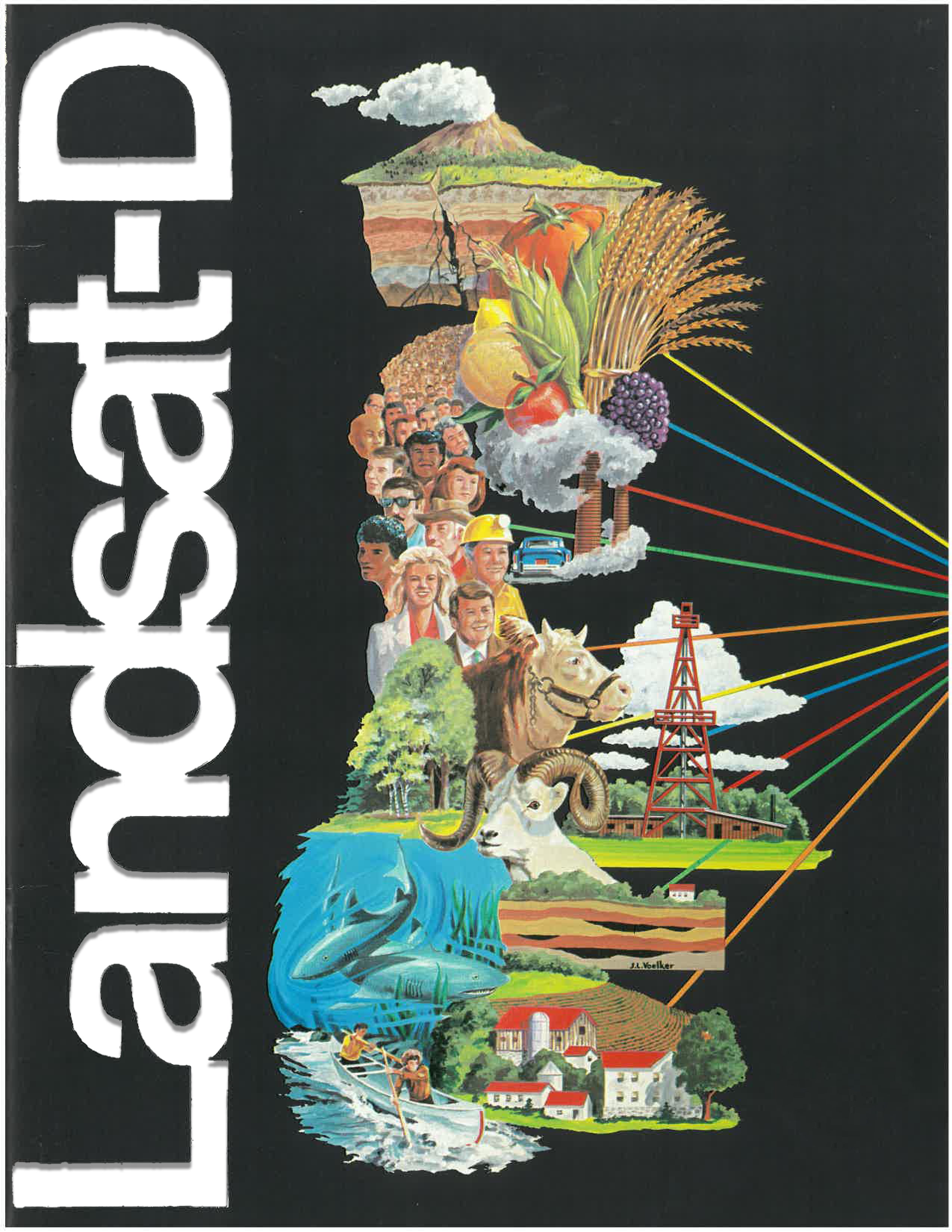
Landsat D Thematic Mapper Technical Working Group Report
Technical Working Group meeting report from Purdue University (1975) documenting final specifications and recommendations for the Landsat-D Thematic Mapper, featuring contributions from 40 scientists and engineers across government, industry, and academia.