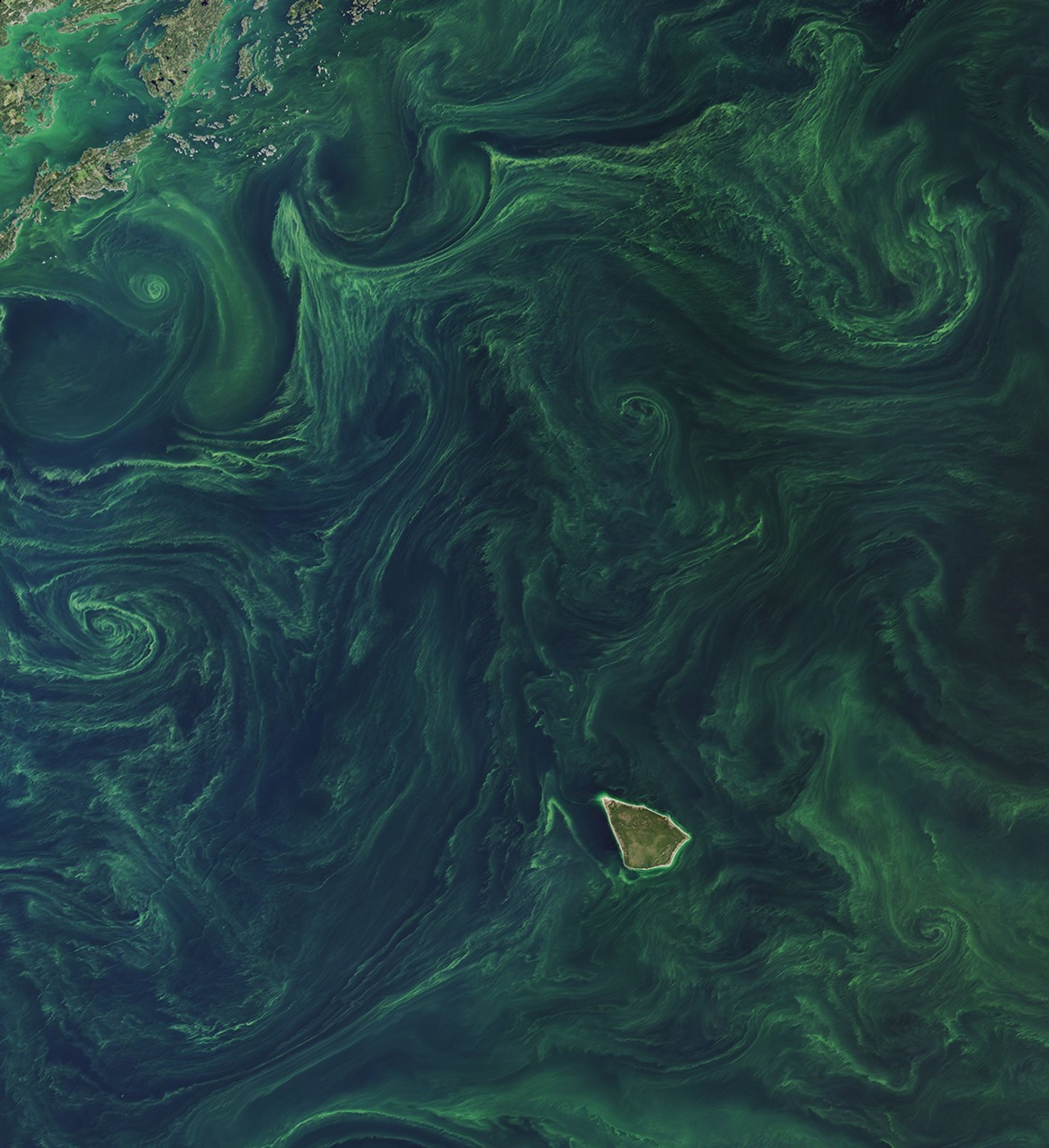



















Most summers, phytoplankton populations explode into a full-fledged “bloom” in the nutrient-rich waters of the Baltic Sea. Summer 2025 was no exception, as the tiny plant-like organisms amassed into bright green patches that swirled with the winds and currents.
The OLI-2 (Operational Land Imager) on Landsat 9 captured these images of a bloom on July 20, 2025. They show parts of the sea south of the Swedish island of Gotland (above) and southeast of Stockholm (below). The dark, relatively straight lines crossing the detailed image below are the wakes of boats cutting through the bloom-filled waters.
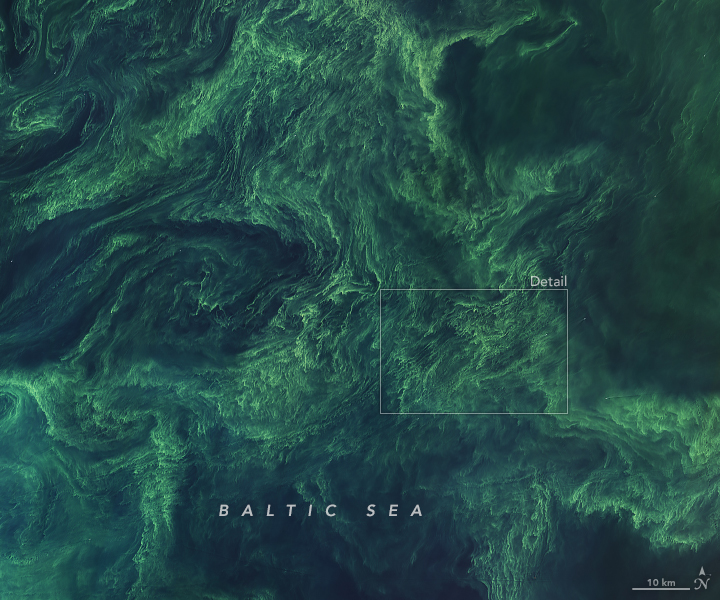
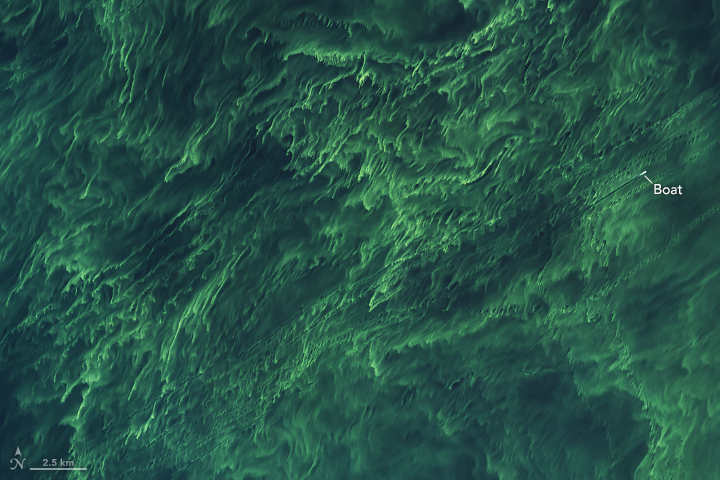
Identification of the type of phytoplankton within this bloom cannot be determined based on these satellite images alone. But experts from the Swedish Meteorological and Hydrological Institute (SMHI) reported that surface waters that day contained cyanobacteria—an ancient type of marine bacteria that captures and stores solar energy through photosynthesis. Suspended sediment and pollen can also contribute to the yellow-green color in parts of the sea, but the SMHI maps of cyanobacteria match the locations shown in these images.
Researchers have shown that cyanobacteria, previously known as blue-green “algae,” typically start to show up in this part of the Baltic Sea sometime between late June and mid-July. They can grow swiftly when nutrients like phosphorus are abundant in warm, stratified waters, and they can take advantage of dissolved nitrogen in the water. Cyanobacteria impact everything from nitrogen cycling and the marine food web to bottom-layer oxygen deficiencies when the phytoplankton are broken down by bacteria.
References & Resources
- Kahru, M., et al. (2025) What initiates cyanobacterial blooms in the Baltic Sea? Harmful Algae, 148(102924).
- NASA Earth Observatory (2022, August 19) Greening the Gulf of Finland. Accessed July 22, 2025.
- NASA Earth Observatory (2020, August 24) Beguiling Bloom in The Baltic Sea. Accessed July 22, 2025.
- SMHI (2025, July 21) The Algae Situation - cyanobacteria. Accessed July 22, 2025.
NASA Earth Observatory images by Michala Garrison, using Landsat data from the U.S. Geological Survey . Story by Kathryn Hansen.