





















1 min read
Hubble/Roman Galactic Bulge Survey Region (VISTA VVV Survey)
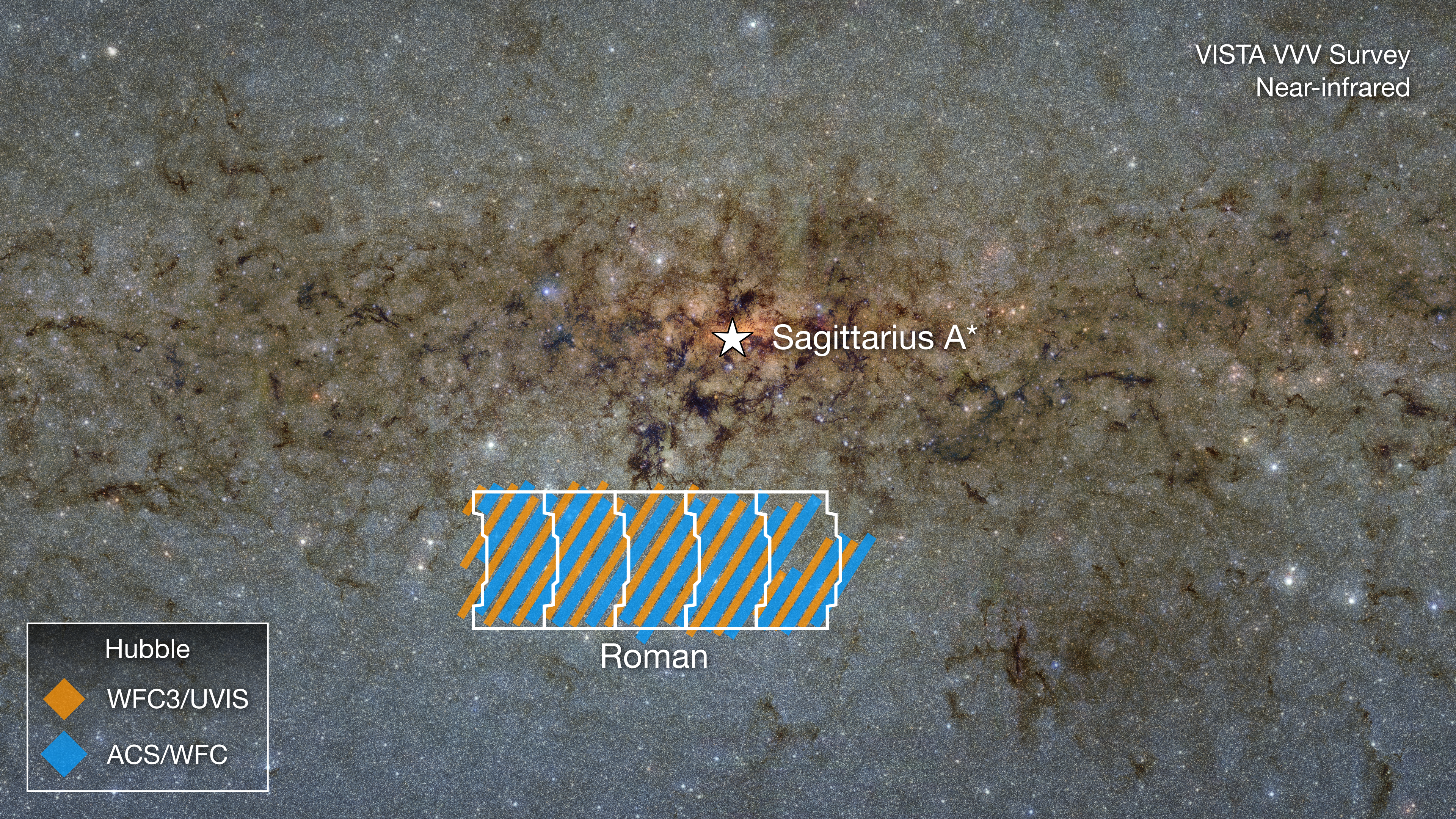
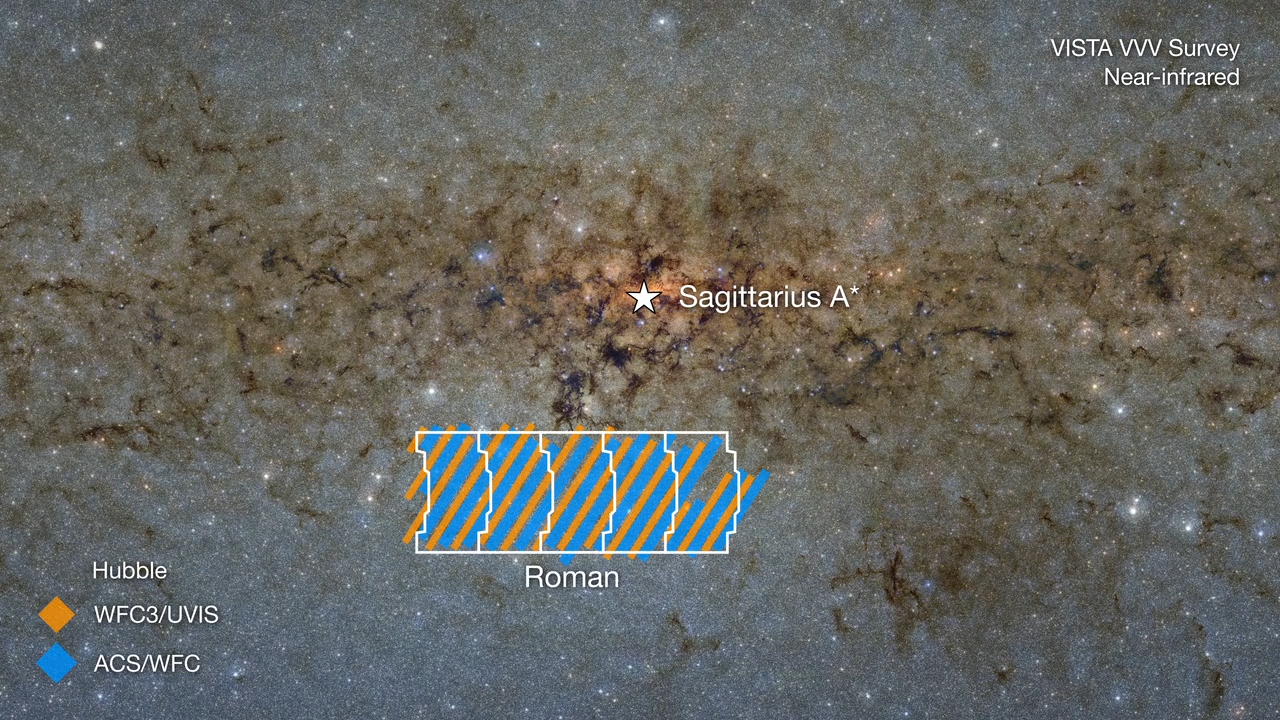
This near-infrared image from the ground-based VISTA VVV Survey shows the galactic bulge near Sagittarius A* (pronounced "A star"), the black hole at the Milky Way's center. The region, outlined in white, shows five stacked fields of view from NASA's Nancy Grace Roman Space Telescope that will be observed as part of its Galactic Bulge Time-Domain Survey, one of its three core community surveys. (Roman will also observe a sixth field at the galactic center that is not shown here.) Prior to Roman's launch, a team of researchers sought to use Hubble to capture the same regions in preparation for potential microlensing events.
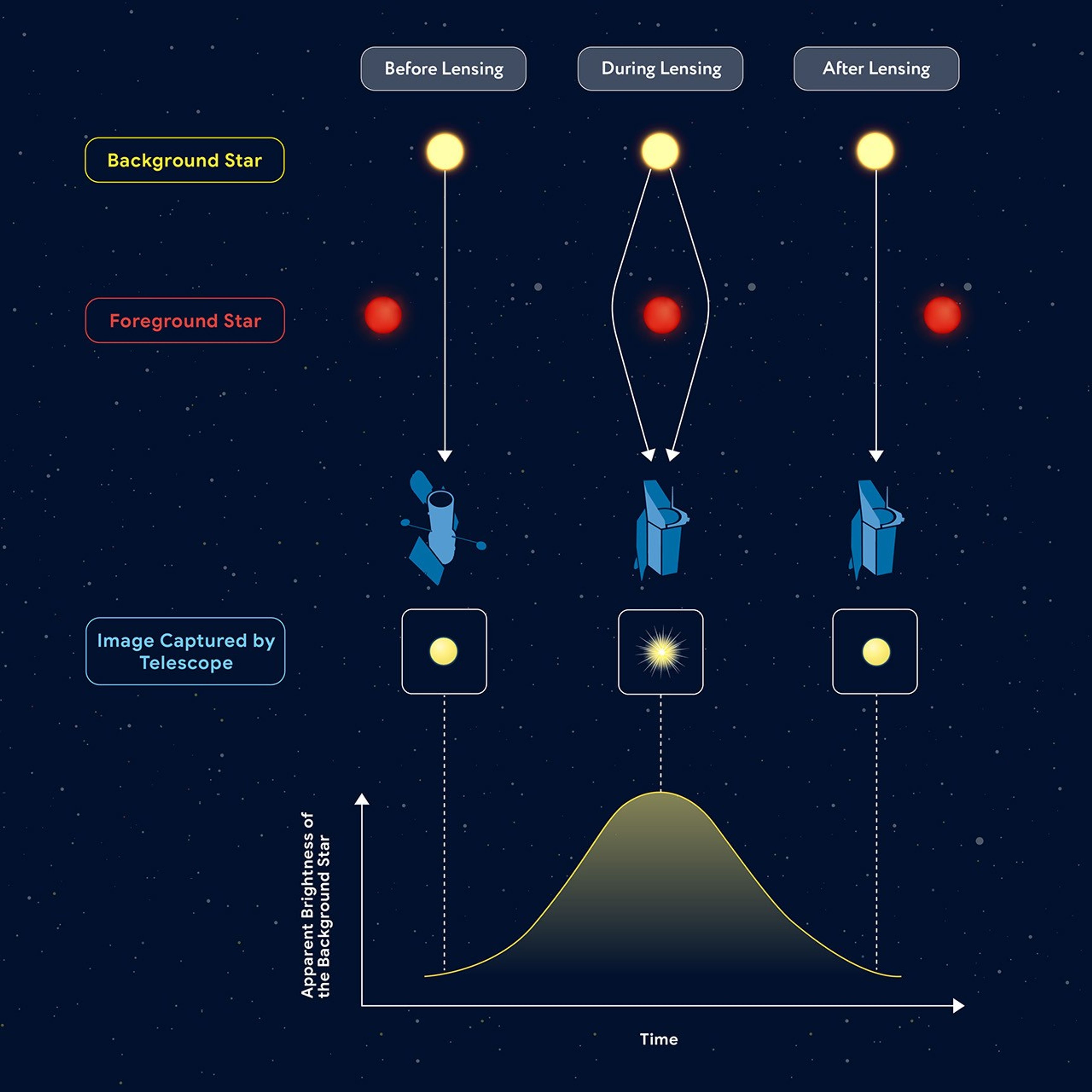
These events cause the light from a more distant object to warp as a mass precisely aligns in front of that object. These masses, therefore, act like lenses, bending the light from objects behind them like background stars. In this case, the glow from the densely packed stars within the galactic bulge would be the distant light source. Having these Hubble observations allows us to capture the moments before these microlensing events happen, providing astronomers a way to clearly characterize objects (stars, planets, and even stellar-mass black holes) that cause microlensing by passing in front of stars within the galactic bulge.
The colored lines representing the Hubble survey area are stylized and represent a large number of individual pointings.
About the Object
- ConstellationConstellationOne of 88 recognized regions of the celestial sphere in which the object appears.Sagittarius
About the Data
- Data DescriptionData DescriptionProposal: A description of the observations, their scientific justification, and the links to the data available in the science archive.
Science Team: The astronomers who planned the observations and analyzed the data. "PI" refers to the Principal Investigator.This image is annotated using a background image from the VVV Survey (VISTA Variables in the Via Lactea Survey)
- InstrumentInstrumentThe science instrument used to produce the data.VISTA>VIRCAM
- Object NameObject NameA name or catalog number that astronomers use to identify an astronomical object.Hubble and Roman GBTDS Surveys
- Object DescriptionObject DescriptionThe type of astronomical object.Milky Way Galactic Center
- Release DateMay 11, 2026
- Science ReleaseHubble Survey Sets Up Roman’s Future Look Near Milky Way’s Center
- CreditImage: NASA, Alyssa Pagan (STScI); Acknowledgment: VISTA, Dante Minniti (UNAB), Ignacio Toledo (ALMA), Martin Kornmesser (ESO)
Related Images & Videos

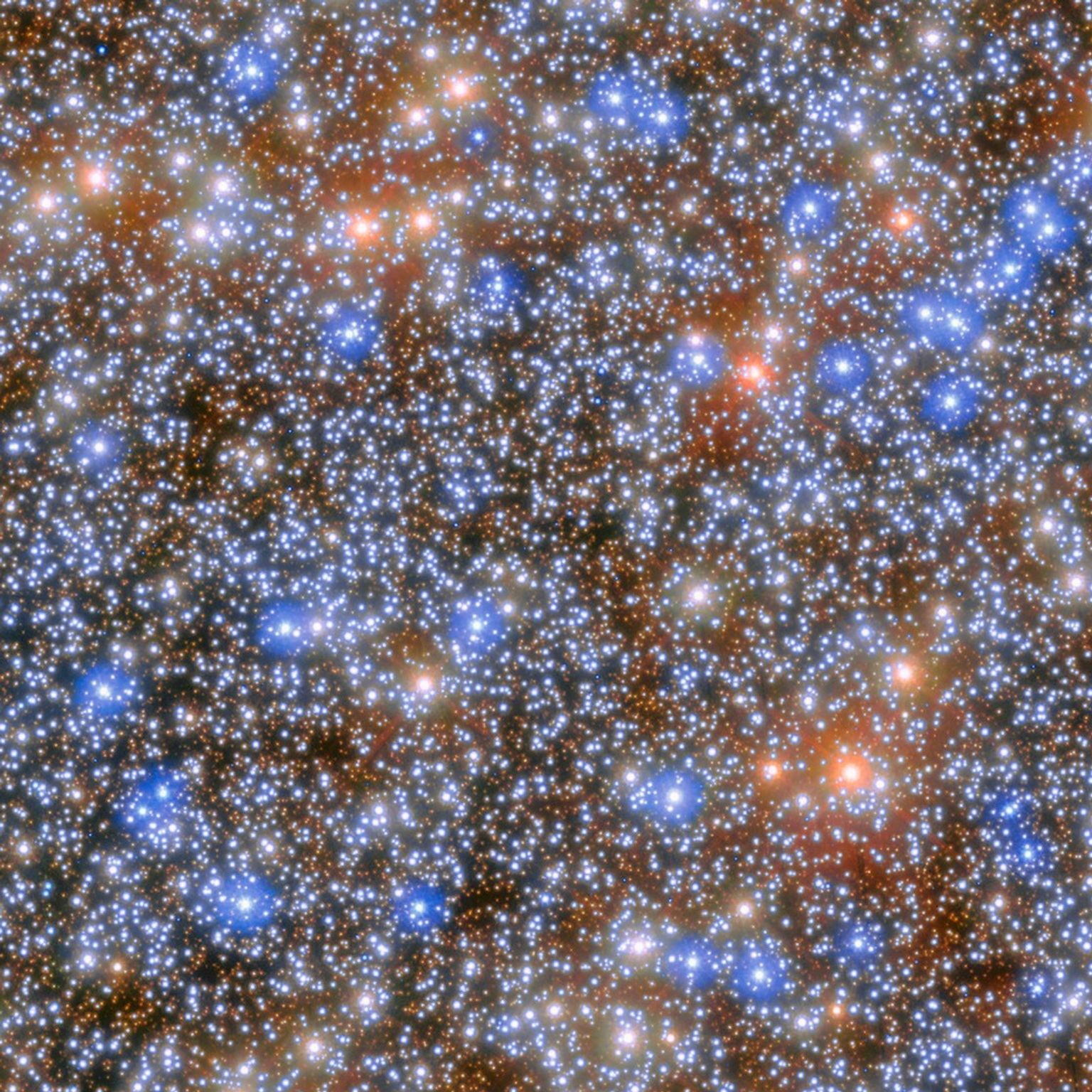
Microlensing Event at OGLE-2013-BLG-0341 (Hubble Image)
A follow-up observation by NASA’s Hubble Space Telescope shows a region containing a microlensing event captured by the Optical Gravitational Lensing Experiment (OGLE) in 2013. Hubble was able to separate the foreground lens from the background star.
Share
Details
Claire Andreoli
NASA’s Goddard Space Flight Center
Greenbelt, Maryland
claire.andreoli@nasa.gov