













Roman Scientific Visualizations
Simulated Galaxy Redshift Cube Sequence
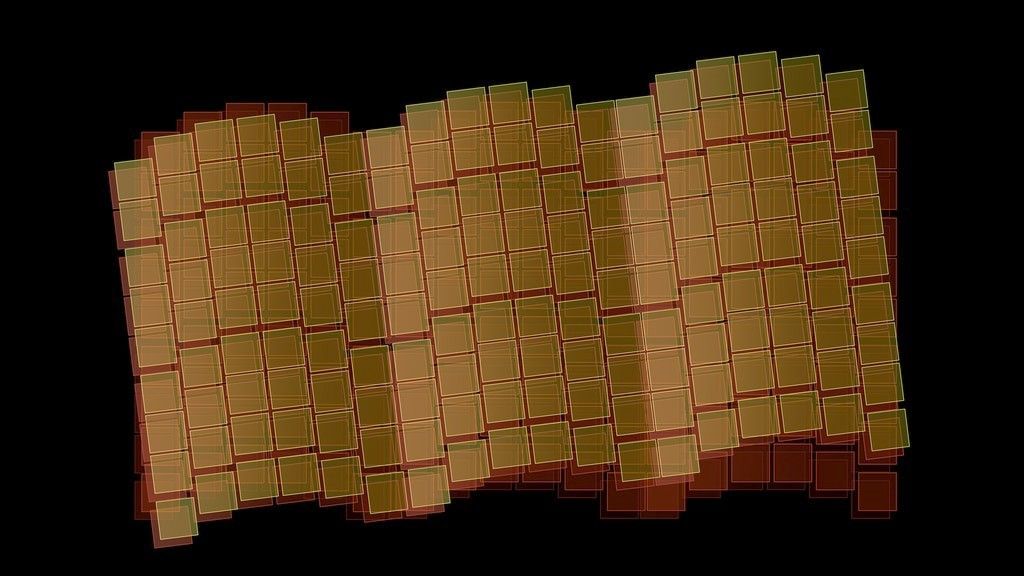
The WFI will use a special tiling pattern to perform its high latitude spectroscopic survey. A single image 'footprint' is produced by its 18-detector array and then takes an image slightly offset to cover the small gaps between the individual detectors. It repeats this process eight more times to create a mosaic covering 2.5 square degrees of sky.
Possible High Latitude Survey
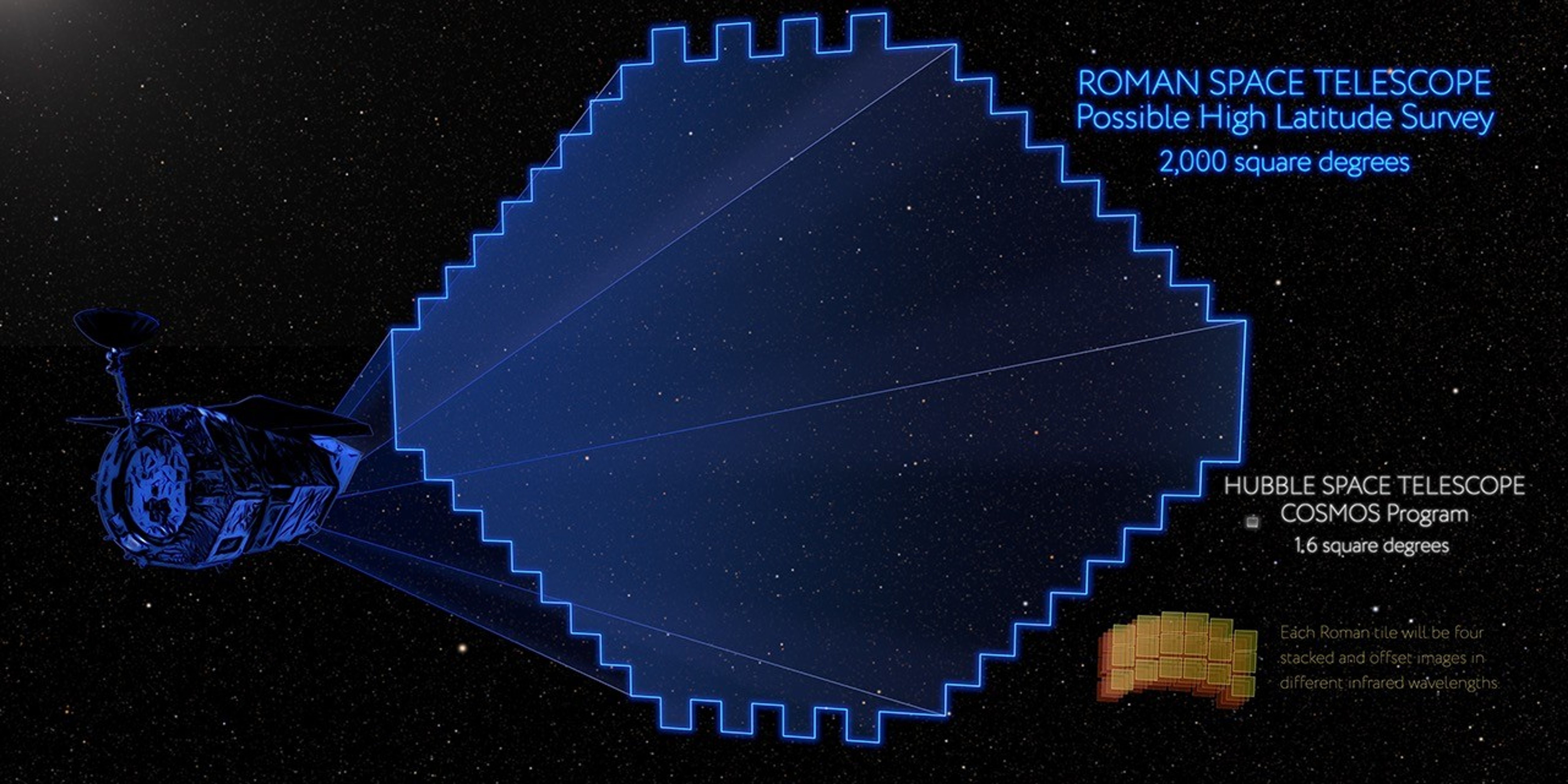
This illustration compares the relative sizes of the areas of sky covered by two surveys: Roman’s High Latitude Wide Area Survey, outlined in blue, and the largest mosaic led by Hubble, the Cosmological Evolution Survey (COSMOS), shown in red. In current plans, the Roman survey will be more than 1,000 times broader than Hubble’s.
Measuring redshifts of tens of millions of galaxies
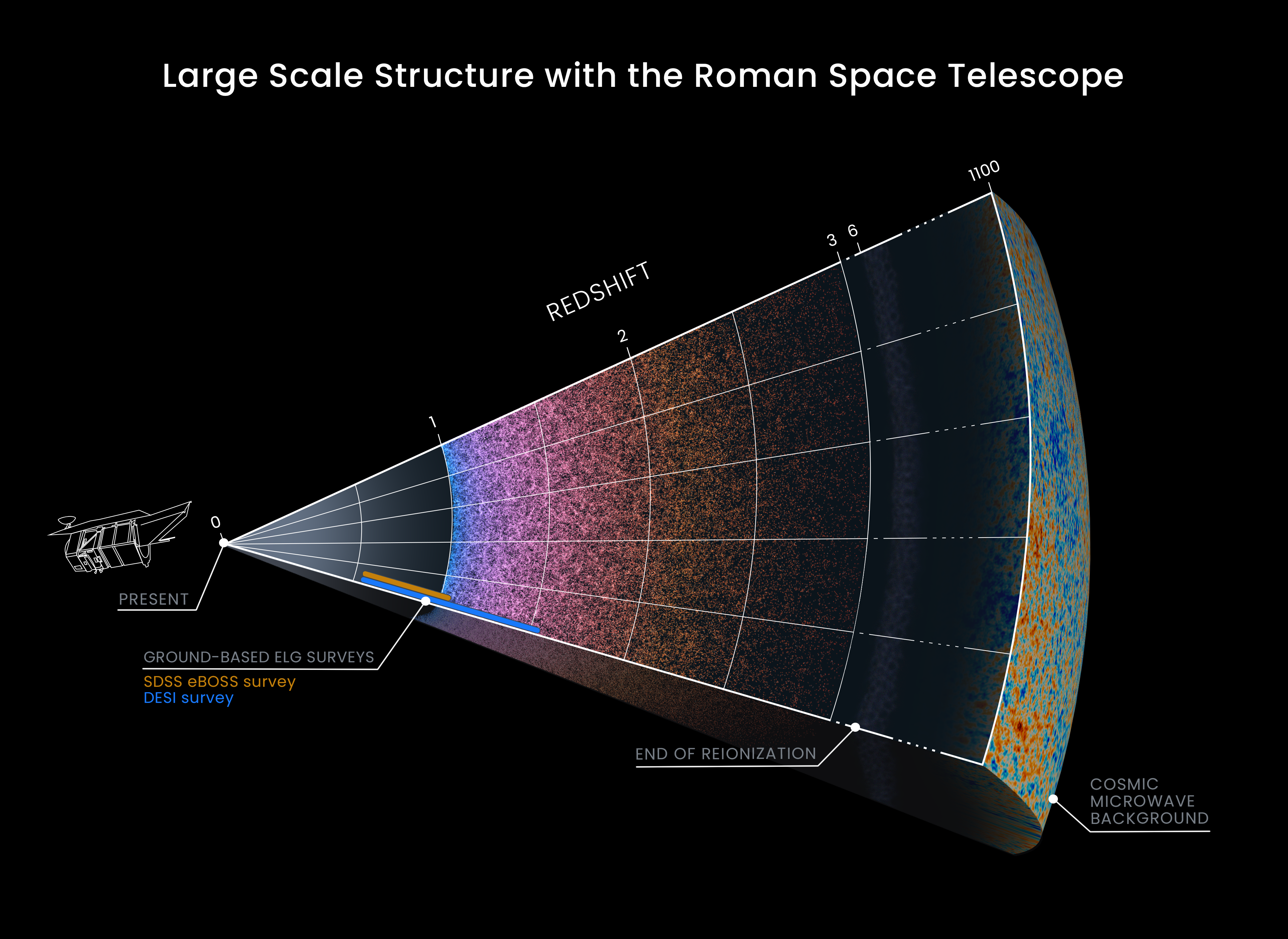
The spectroscopic component of the High Latitude Wide Area Survey measures redshifts of tens of millions of galaxies via grism spectroscopy using the WFI over at least a 1700 deg2 region that overlaps the region.
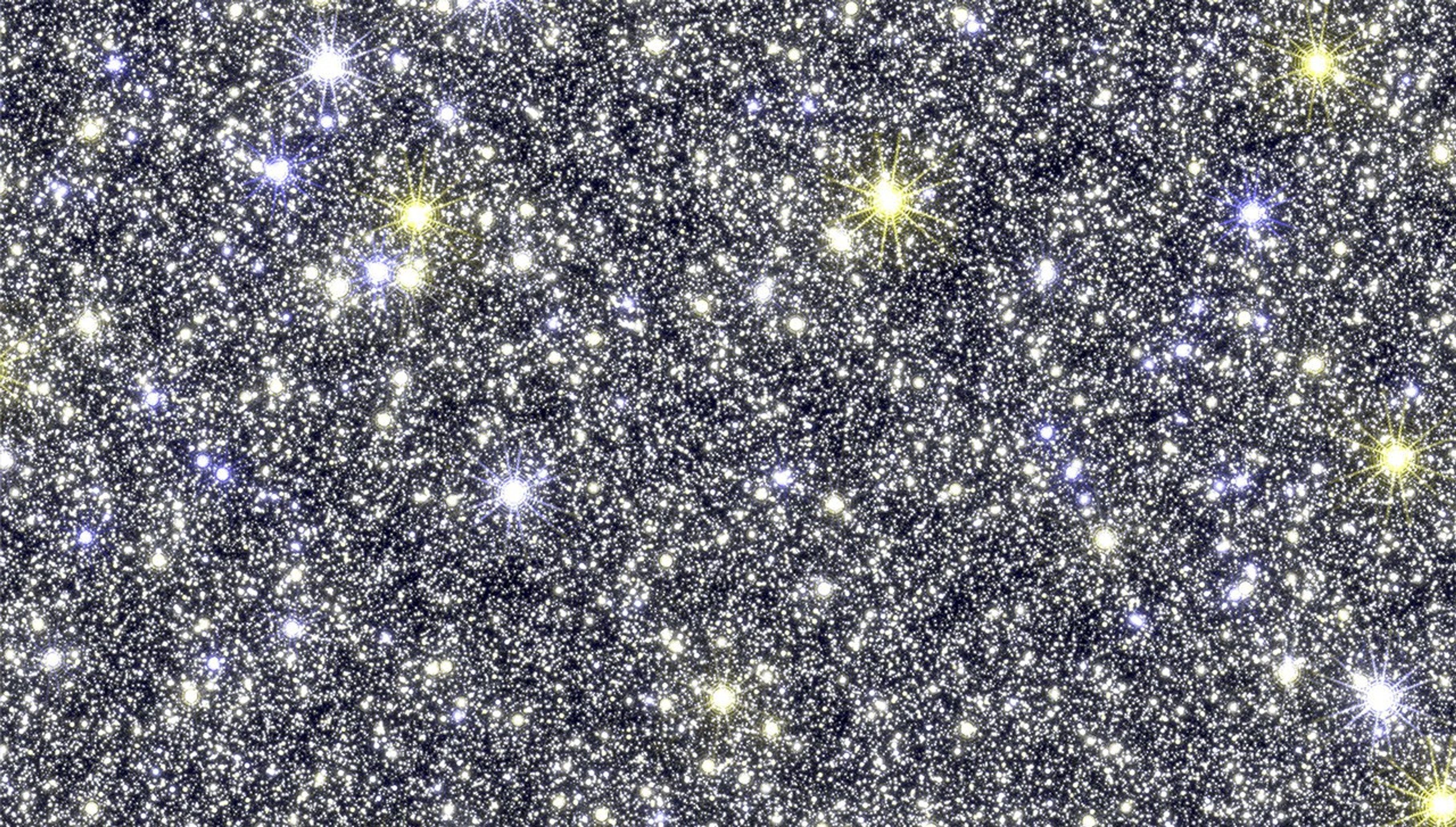
Roman Simulated Image
This Roman Simulated Image (1/140th Roman field of view) of center of our Galaxy
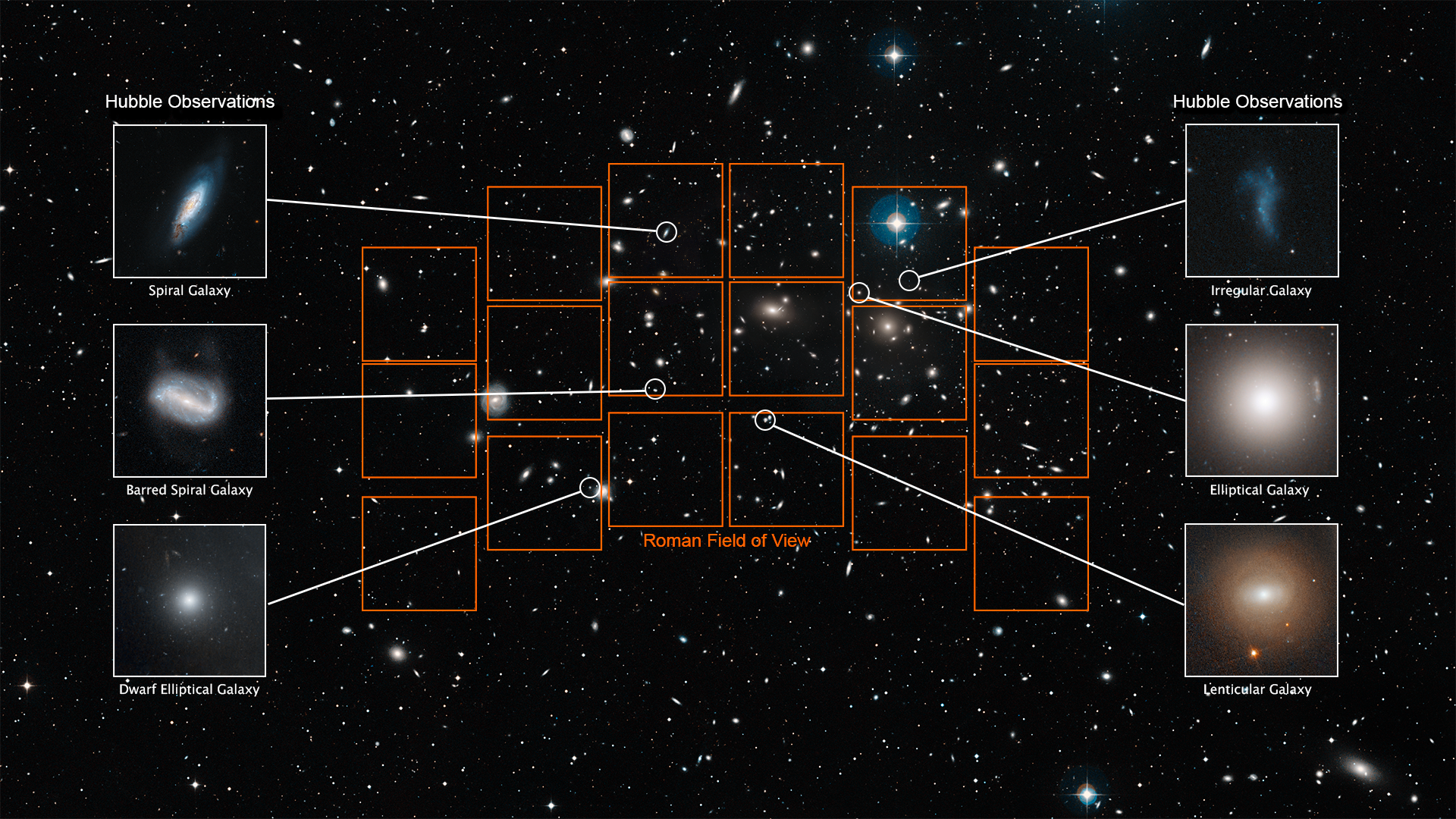
Roman’s wide field for studying galaxy clusters
This figure illustrates the power of Roman’s wide field for studying galaxy clusters. In 2000 square degrees, the High Latitude Wide Area Survey will observe some 200 Abell clusters and a much larger number of more distant galaxy clusters.
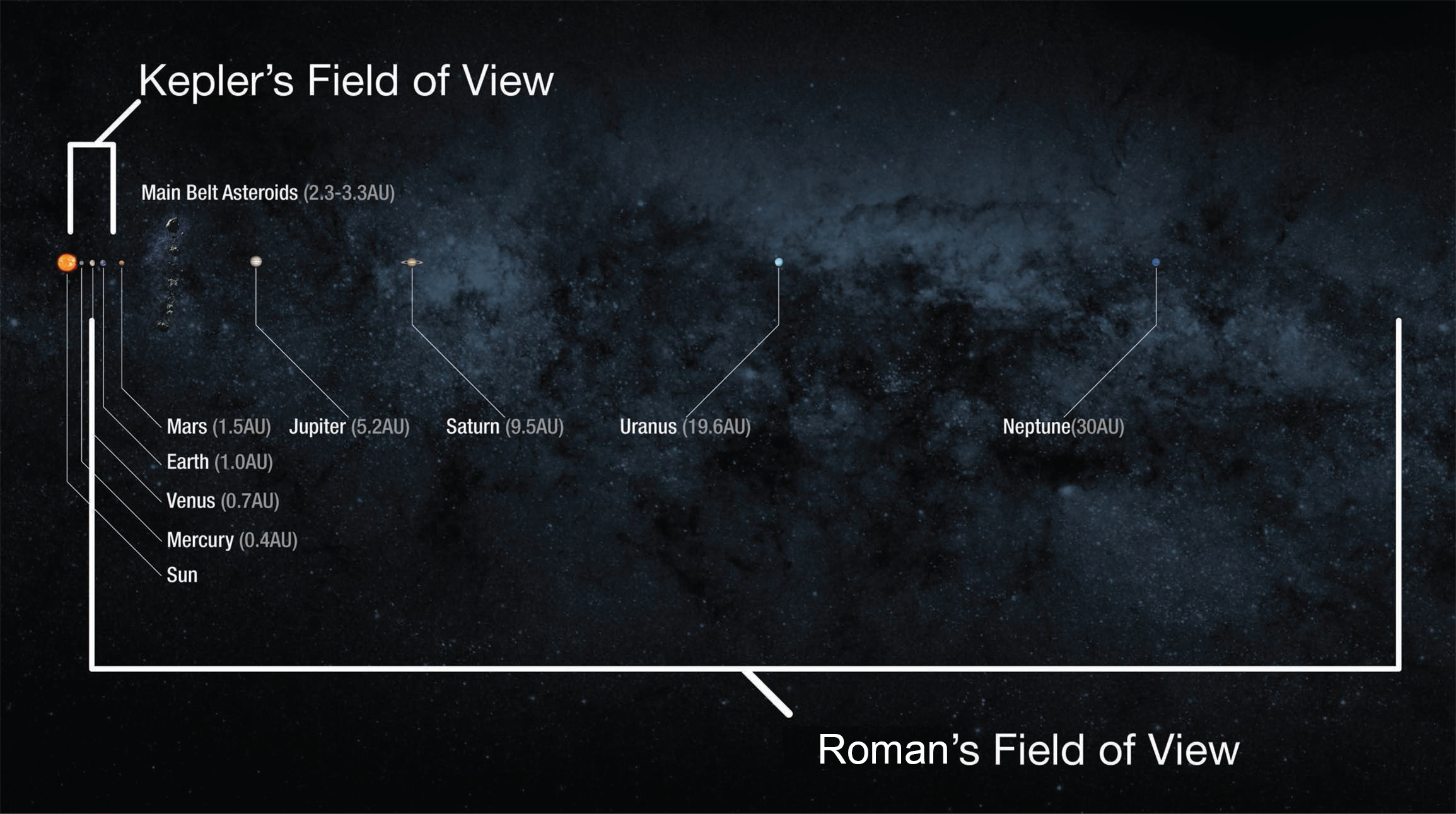
Roman Microlensing Search Space
Roman's Field of View is compared to that of the Kepler space telescope. Kepler’s original survey monitored stars at an average distance of around 2,000 light-years where Roman's will find planets up to 26,000 light-years away.
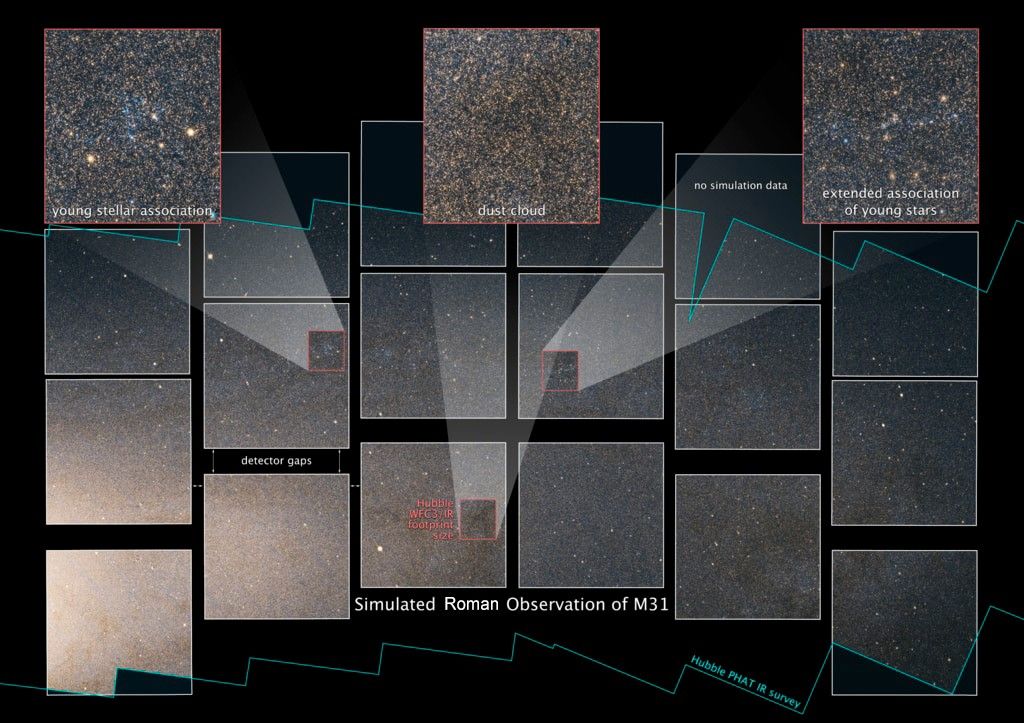
Our neighboring galaxy Andromeda
This simulated image showcases the red and infrared light of more than 50 million stars in Andromeda, as they would appear with the Roman Space Telescope. [Watch Video]
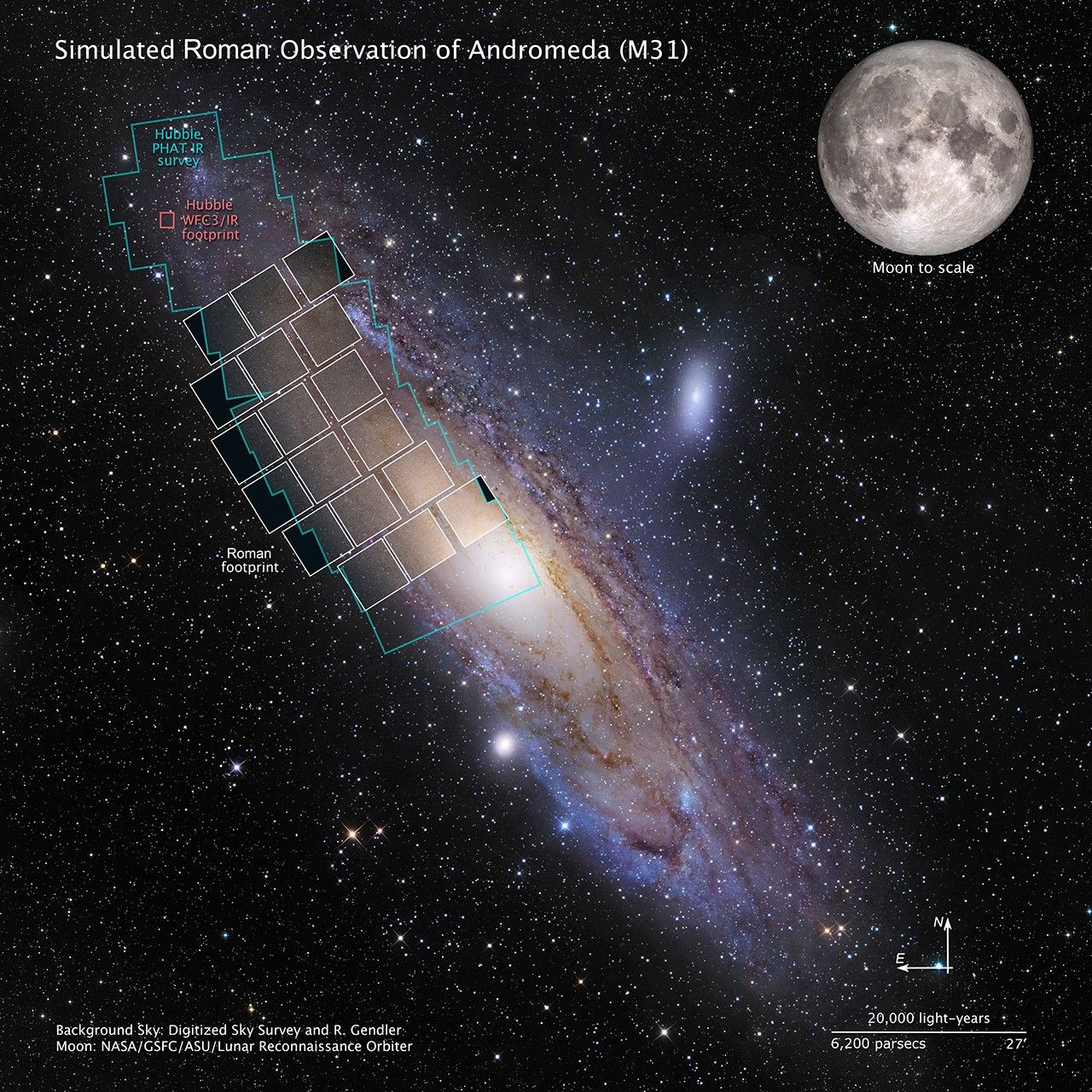
Roman simulation of Andromeda
A composite figure shows the region of Andromeda covered by the Roman Space Telescope simulation. It would be able to image the main body of Andromeda in just a few pointings, surveying the galaxy nearly 1500 times faster than Hubble. [Watch Video]
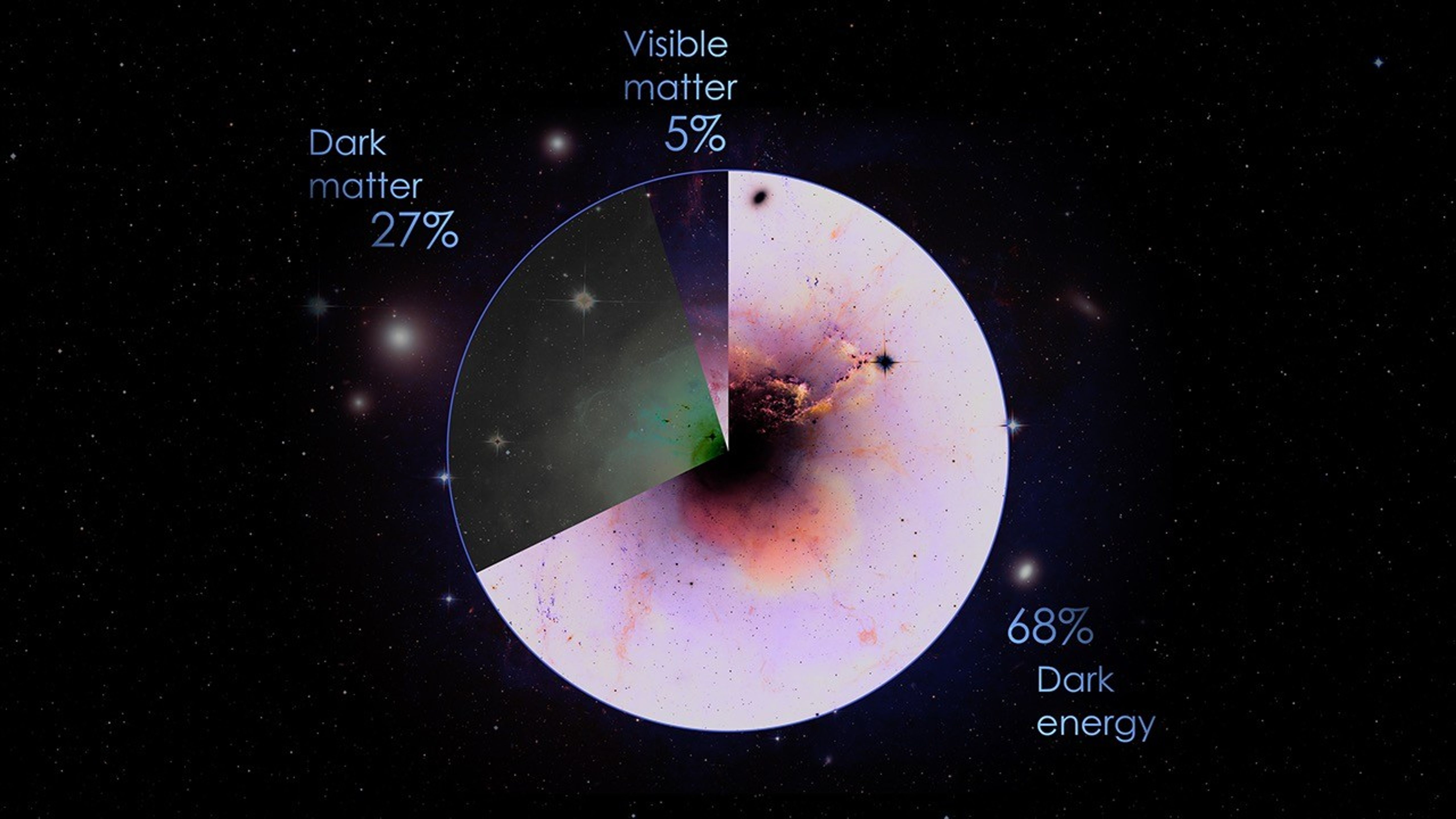
Content of the Universe
This pie chart shows rounded values for the three known components of the universe: normal matter, dark matter, and dark energy. [Watch Video]
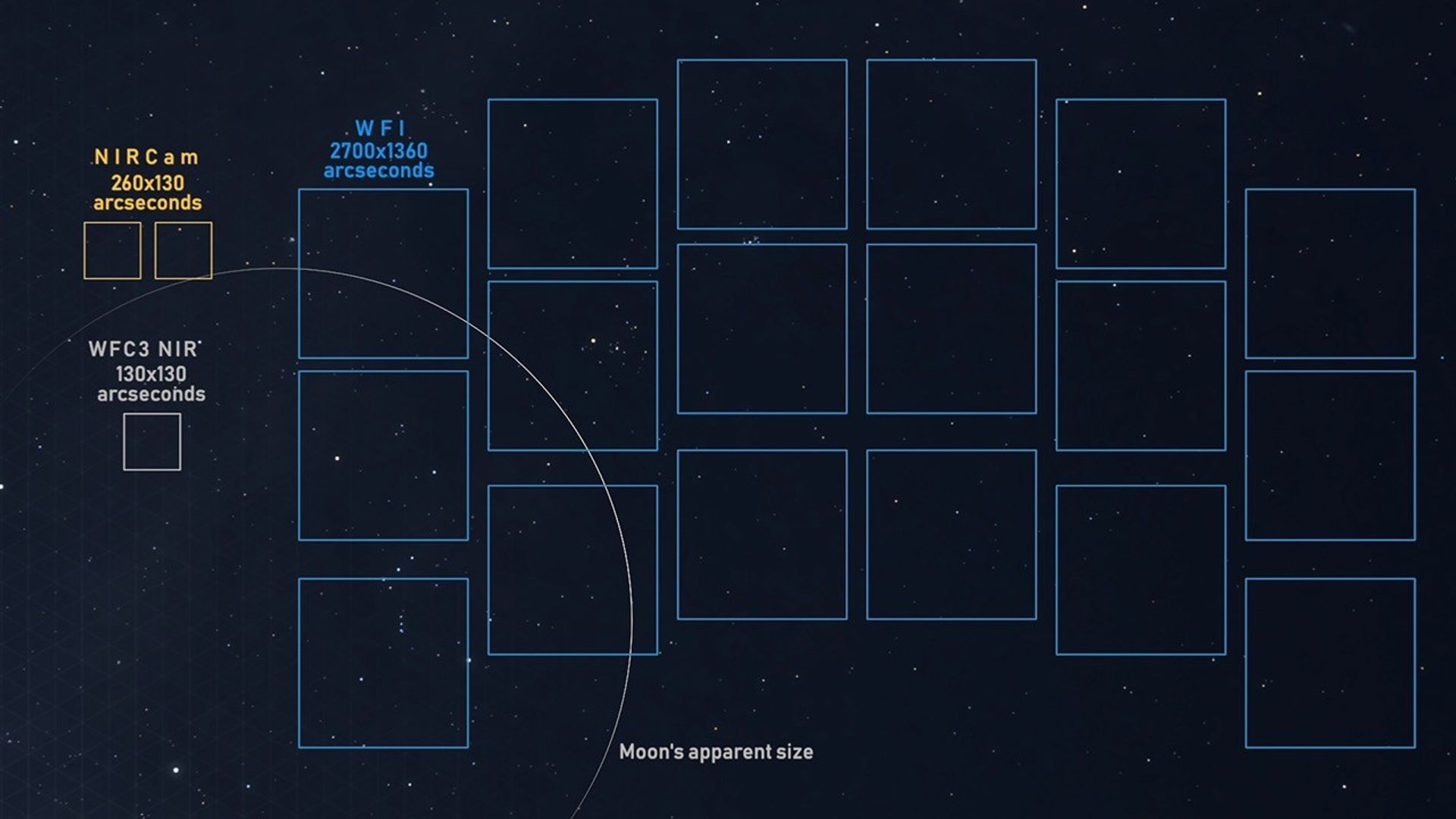
Roman Detector Field of View
Roman is a survey telescope, designed to capture vast swaths of sky. But it will do so with revolutionary precision, sensitivity, and depth. The Wide Field Instrument's detectors capture a 4000x4000-pixel image, and together they will take pictures covering 100 times more sky than either Hubble or Webb. [Watch Video]
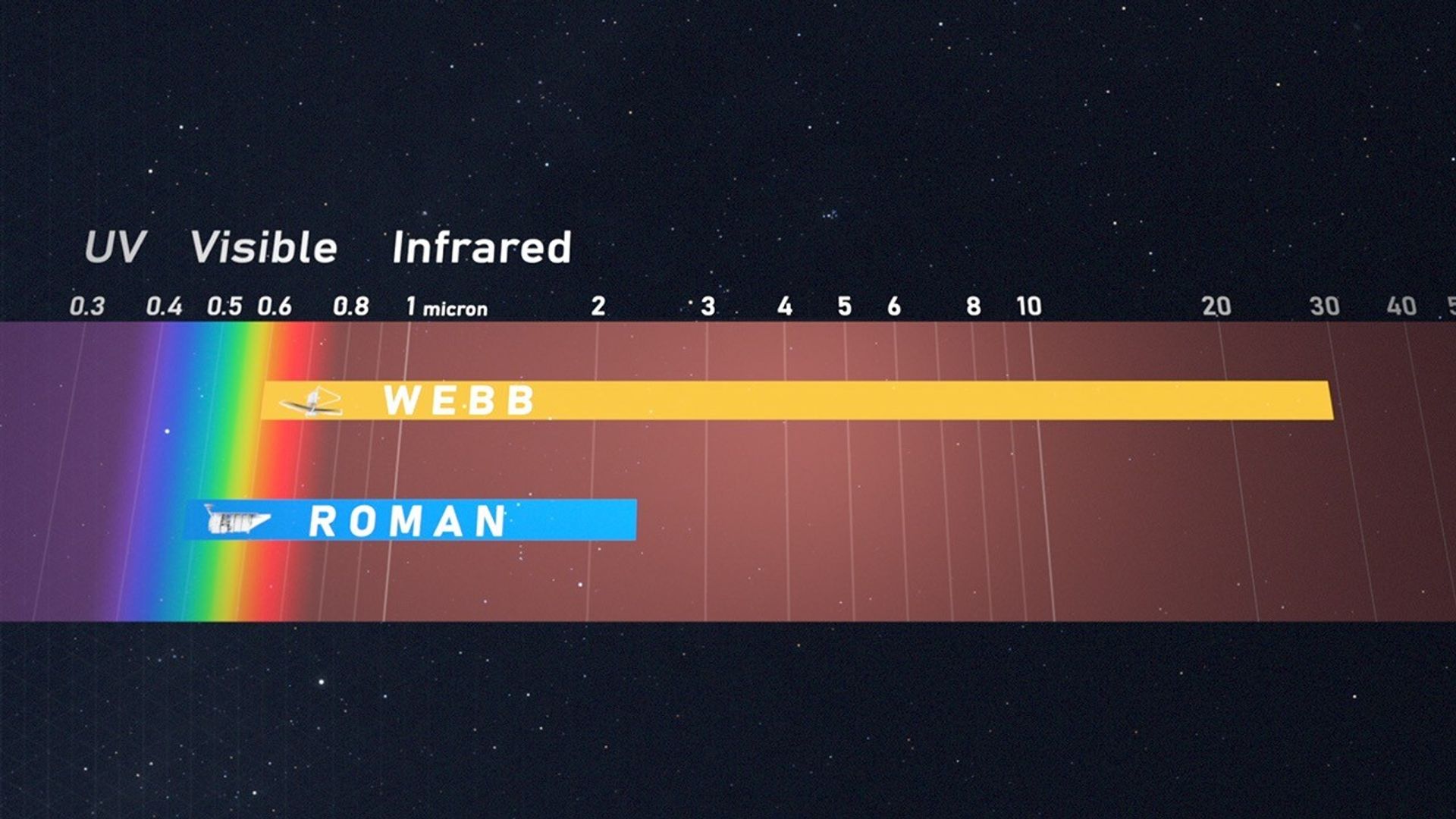
Roman vs Webb - Spectrum Range and Mirrors
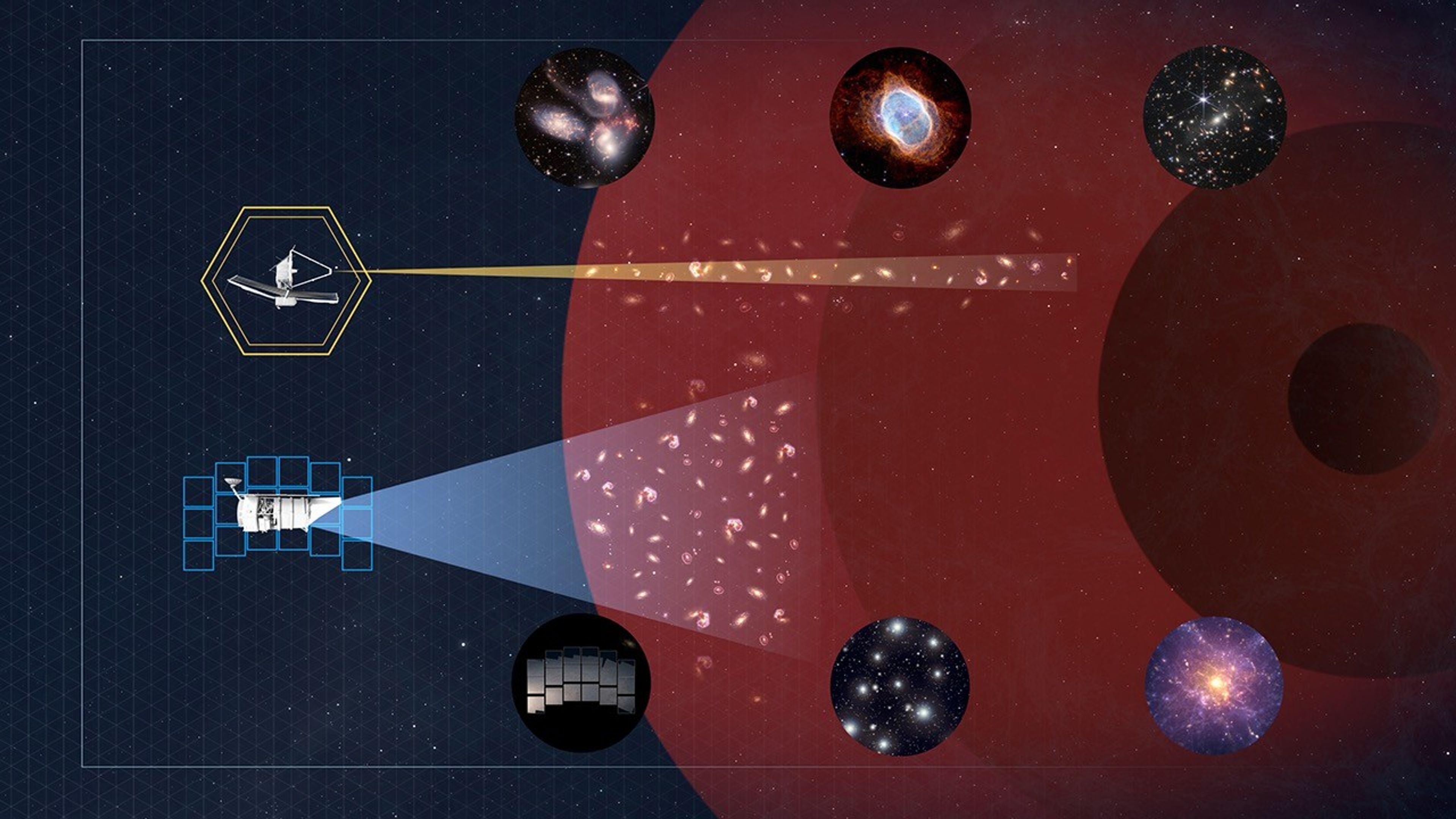
Webb is designed to see very redshifted light so that it can study the first, most distant galaxies. The Roman Space Telescope, on the other hand, isn’t trying to see quite as deep into the universe’s history. Roman does have filters to see infrared light, but not as far into the range as Webb because its targets aren’t as redshifted. And Roman’s mirror can be smaller because it isn’t trying to detect such faint objects. [Watch Video]
Roman and Webb Comparison
Webb has the exquisite sensitivity and wavelength range to capture detailed images deeper into the universe than ever before. Roman has an incredibly wide field of view to rapidly survey huge areas of sky while still rivaling Hubble and Webb’s resolving power. Webb will tell us about the early universe and Roman will help us understand how it evolved from there. [Watch Video]
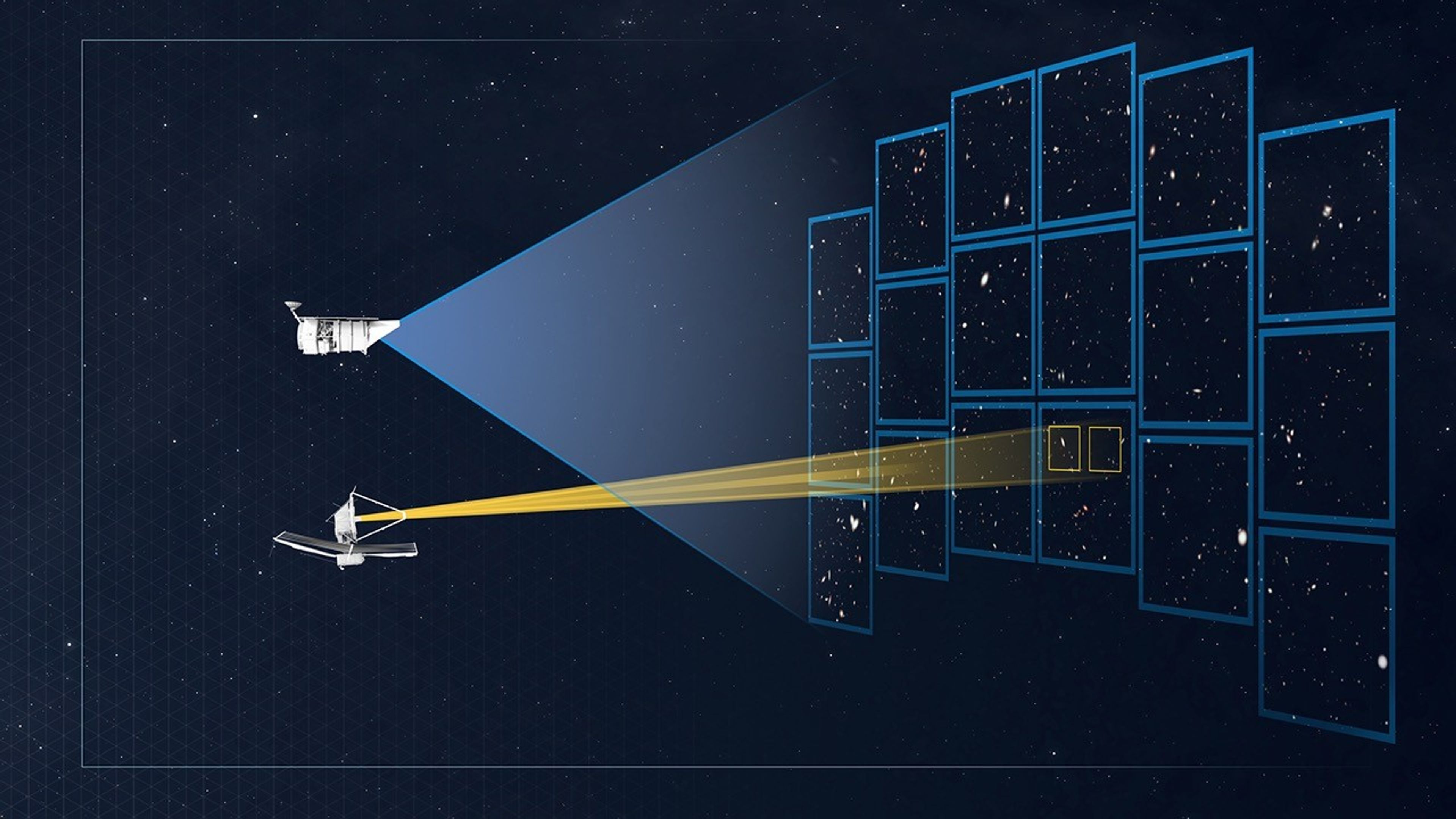
Roman and Webb
Because both telescopes will operate at the same time, they can work together to discover far more about the cosmos than either could learn alone. When Roman makes an intriguing exoplanet discovery, Webb may be able to follow up soon after, helping scientists learn more. When Roman detects a transient event, like a supernova, somewhere in its broad coverage, Webb can focus in to take deeper measurements. Should Webb find an interesting quirk in a nearby galaxy it is studying, Roman can provide context with thousands of galaxies around it. [Watch Video]
Scientific Visualization Studio
The NASA Scientific Visualization Studio works closely with scientists in the creation of visualizations, animations, and images to promote a greater understanding of Earth and Space Science research activities across NASA and the broader academic community.
Go to Roman at SVS