















Telescope Milestone: Teams Check Out NASA Roman Solar Panels
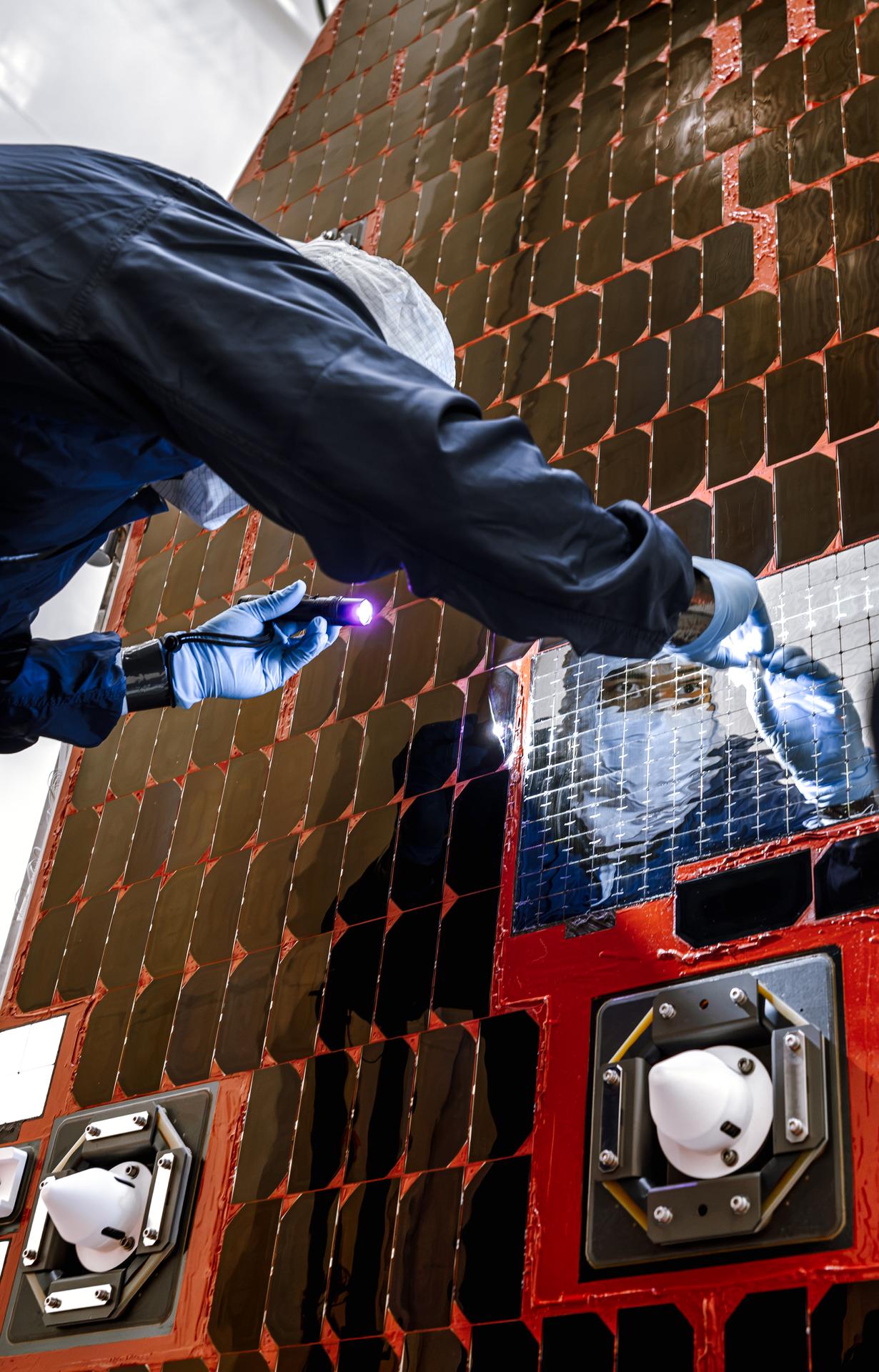
The solar panels that will help power NASA’s Nancy Grace Roman Telescope completed prelaunch cleaning and inspections July 8 at the Payload Hazardous Servicing Facility at NASA’s Kennedy Space Center in Florida.
Engineers and technicians are following necessary procedures to protect Roman from tiny debris, dust, or other material so that it operates optimally in space about one million miles away from Earth, or four times the distance to the Moon.
Collectively called the Solar Array Sun Shield, each of the six panels is about 7 by 10 feet (2.1 by 3 meters), designed, built, and installed at NASA’s Goddard Space Flight Center in Greenbelt, Maryland.
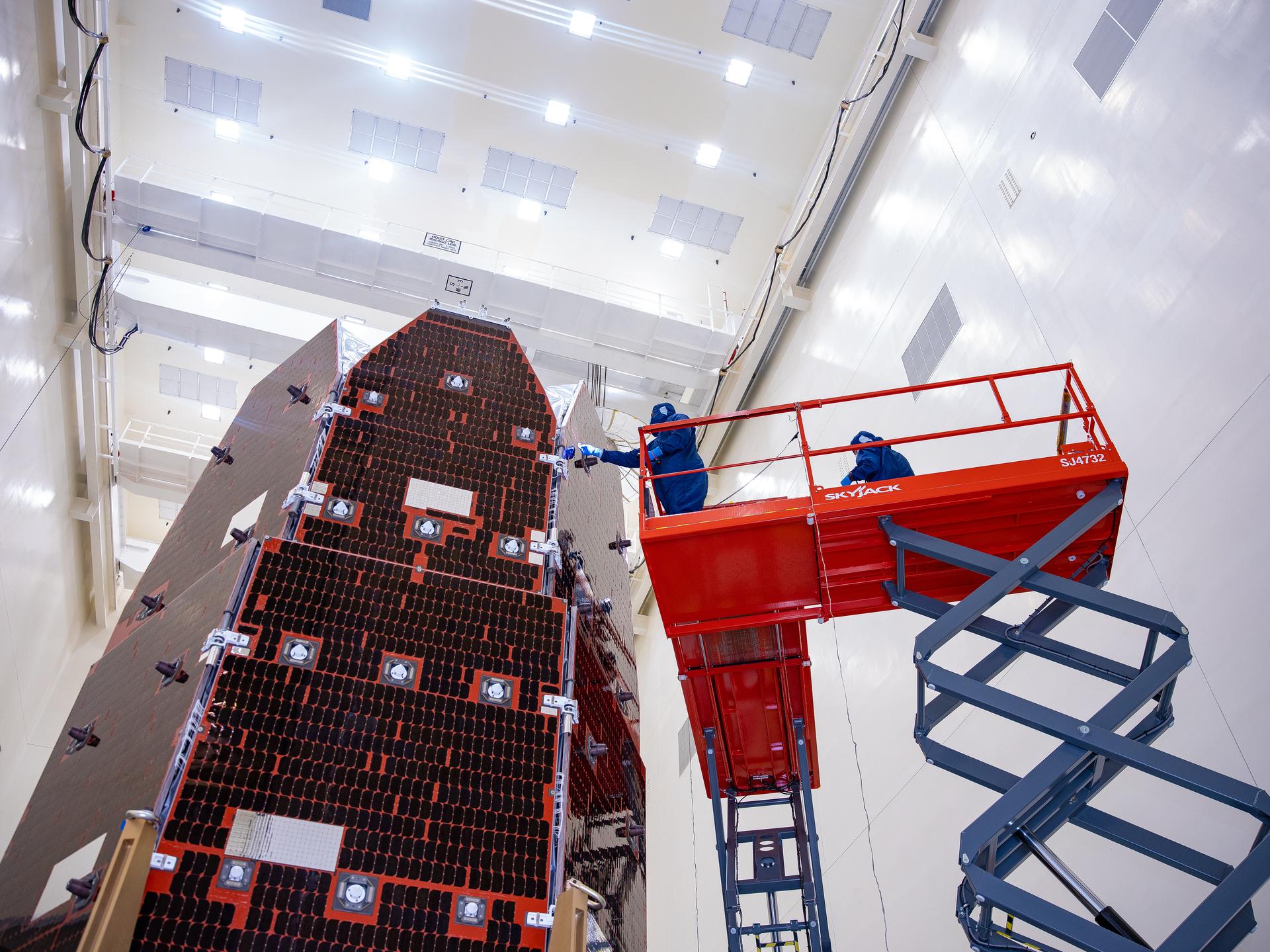
Roman will orbit at the second Sun-Earth Lagrange point (L2), the same orbit as NASA’s James Webb Space Telescope. The solar array panels will extend to continuously face the Sun during rotation, providing 4,100 watts to power the telescope as it gathers important data about planets outside our solar system and other fundamental mysteries about how the universe works. The observatory is designed to survey objects in our outer solar system, study exploding stars, and understand growing black holes and galaxies. Once processed, Roman’s data will be made publicly available so research teams can analyze it simultaneously.
NASA and SpaceX are targeting launch no earlier than Sunday, Aug. 30, on a SpaceX Falcon Heavy rocket from Launch Complex 39A at Kennedy.
For a virtual tour of the telescope, visit NASA’s Roman interactive.
To learn more about the Roman mission, visit:
