















1 min read
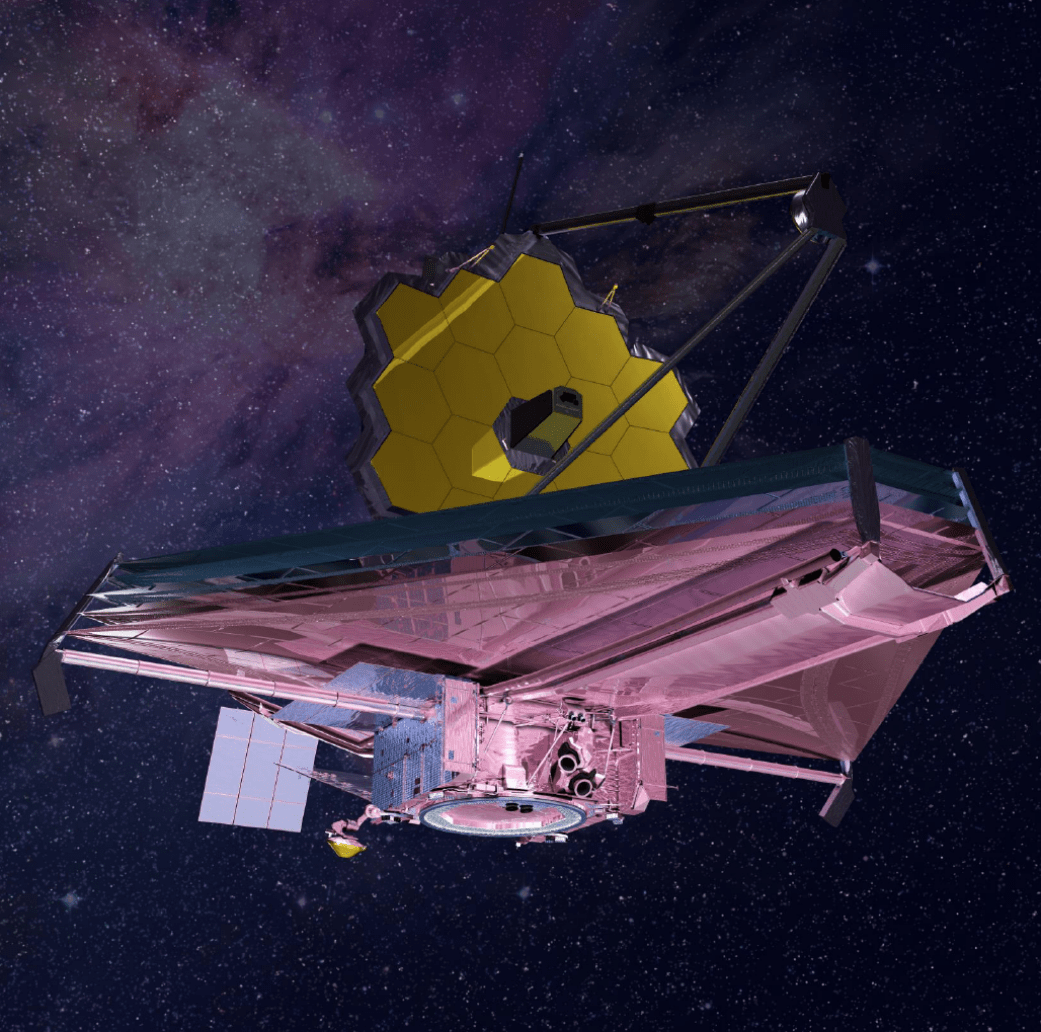
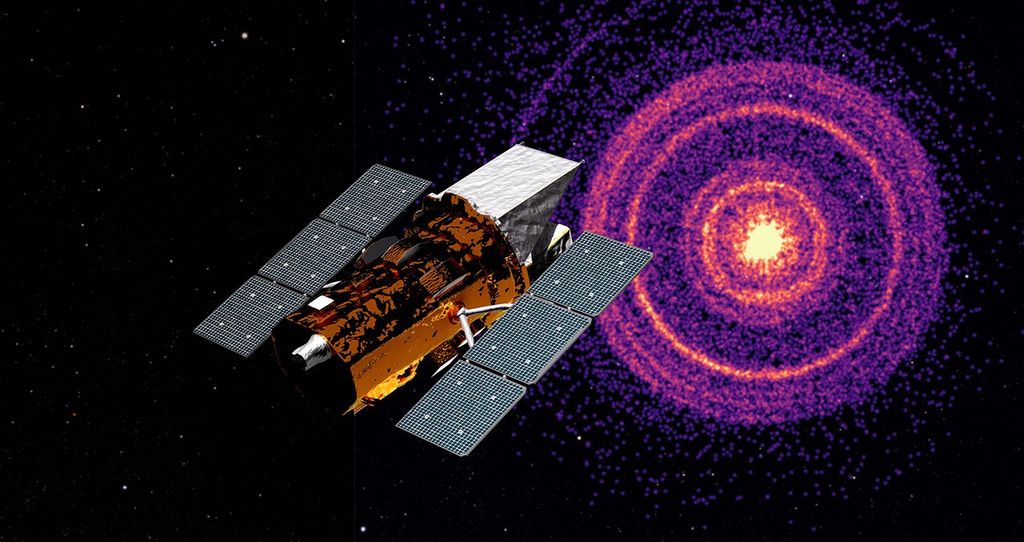
Quasar in the Early Universe (Illustration)
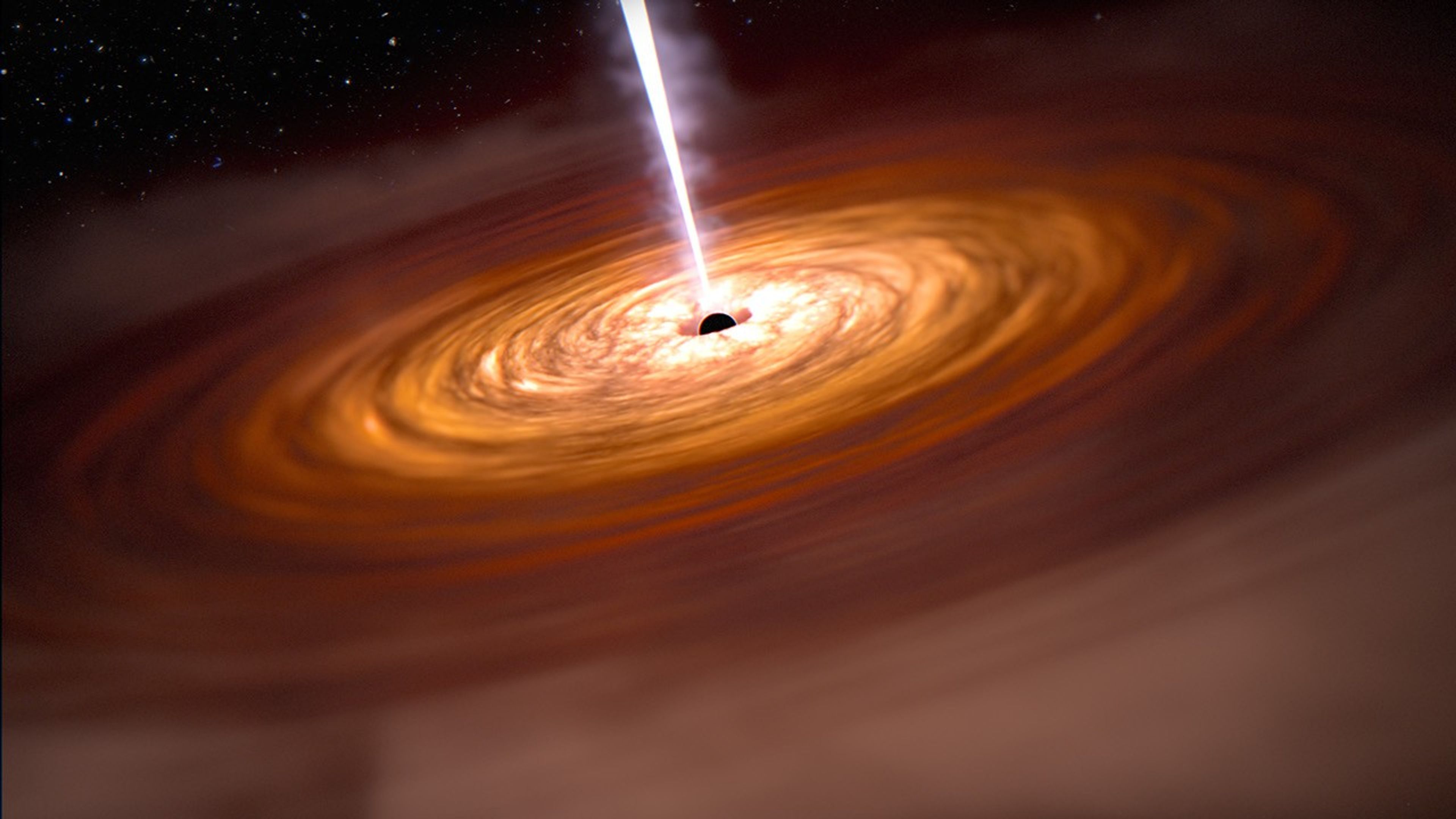
Researchers will use all four instruments aboard the James Webb Space Telescope to study the three most distant quasars yet discovered. They will obtain new measurements of the masses of their central supermassive black holes, detail the stars and composition of their host galaxies, and observe nearby galaxies to learn more about their “neighborhoods” in the early universe.
The three targets of this research program at a glance: J0313-1806 dates back to 670 million years after the big bang and is 1.6 billion times more massive than our Sun. J1007+2115, or Pōniuāʻena, was detected approximately 700 million years after the big bang and is 1.5 billion times more massive than our Sun. The third target, J1342+0928, dates back to 690 million years after the big bang and is 800 million times the mass of our Sun.
- Release DateDecember 8, 2021
- Science ReleaseSimulated Webb Images of Quasar and Galaxy Surrounding Quasar
- CreditArtwork: NASA, ESA, CSA, Joseph Olmsted (STScI)
Related Images & Videos
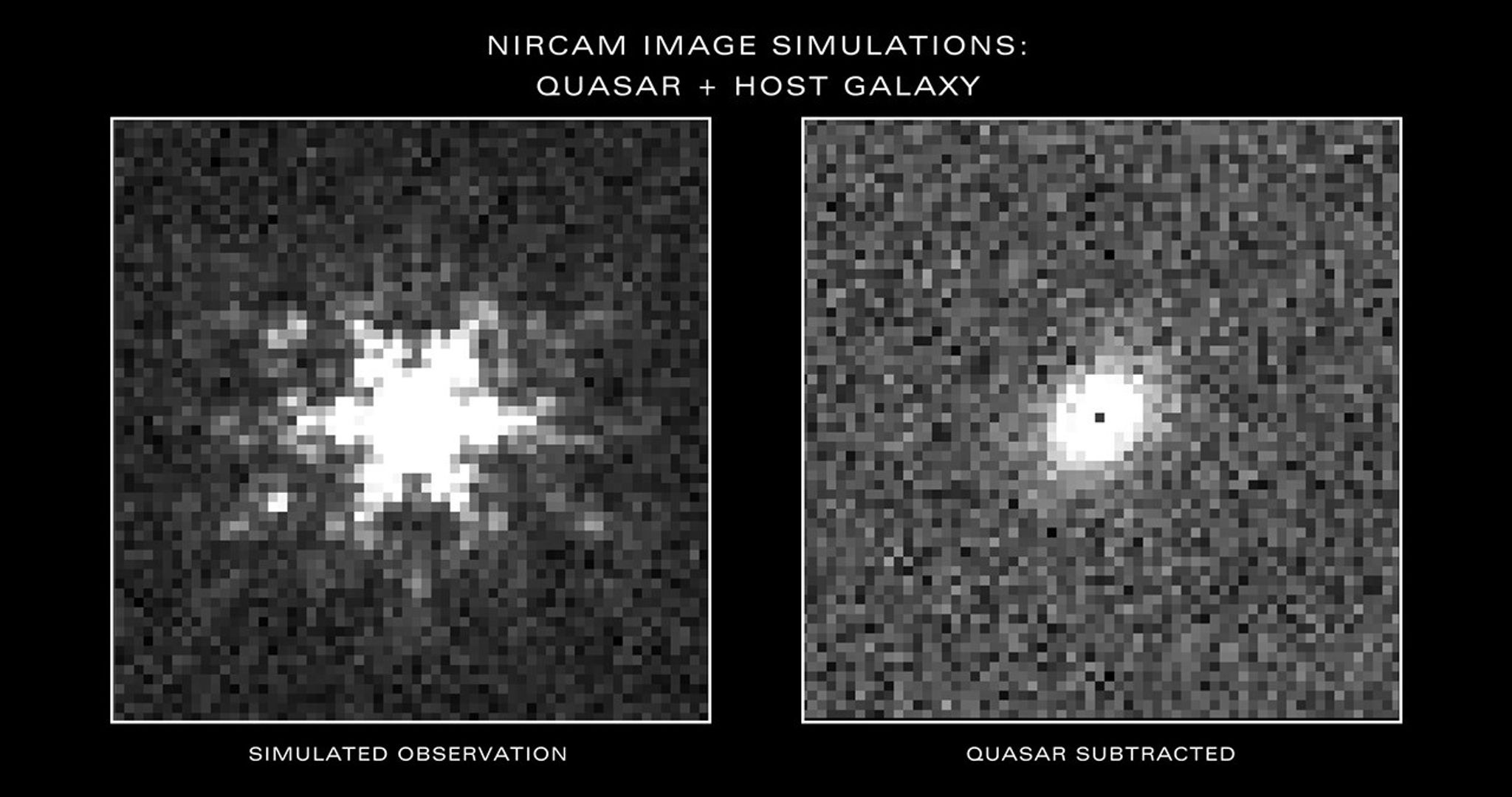
Simulated Webb Images of Quasar and Galaxy Surrounding Quasar
Researchers will study the galaxies that surround three bright quasars in detail for the first time with the James Webb Space Telescope. First, they will take images of each target with Webb’s Near-Infrared Camera (NIRCam), like the simulated image shown at left. Next, they will...
Share
Details
Laura Betz
NASA’s Goddard Space Flight Center
Greenbelt, Maryland
laura.e.betz@nasa.gov
NASA, ESA, CSA, Joseph Olmsted (STScI)