















Webb Science Theme
Star Lifecycle
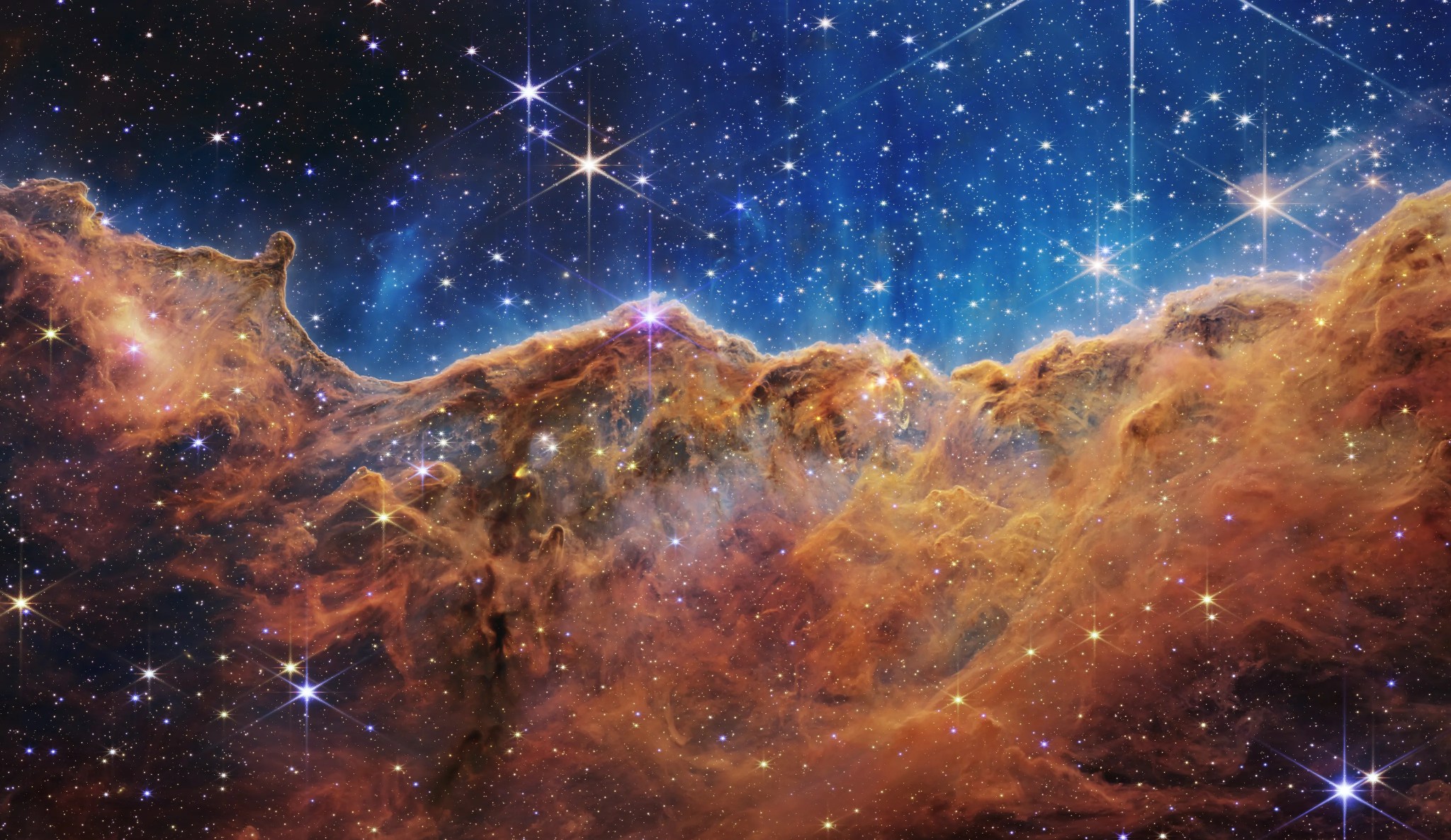
Webb is advancing our understanding of the life cycles of stars, from star birth and planet formation to star death, wherein matter is released back into space, allowing new stars and planets to form from their remnants.
Key Questions
Building on the established science from previous missions, scientists from around the world are using the Webb Telescope to advance our knowledge for these key questions.
How do clouds of gas and dust collapse to form stars?

Why do most stars form in groups?

How do planetary systems form?

How do the heavy elements stars produce get recycled into new generations of stars and planets?

How did the first generations of stars form in the early universe?

How much did the universe’s early stars deviate from the life cycles we are familiar with today?

What role did black holes play in the evolution of stars in galaxies like our own Milky Way?

Key Findings / Discoveries : Star Lifecycle
-
01
Locating a Former Star That Exploded as a Supernova
Astronomers looked through Webb (as well as Hubble) data of Galaxy NGC 1637, and were able to pinpoint a single red supergiant star located exactly where the supernova was spotted in June of 2025. This is the first time Webb data has been used to find a supernova progenitor, though scientists had been waiting for a chance to look for a supernova to explode in a galaxy Webb had already observed.
-
02
New views of the Helix planetary nebula, formed by a dying Sun-like star
Webb captured a new close-up of an old favorite, the Helix Nebula. We've seen this region before, but Webb zooms into this dying star with a deeper, more detailed view of blistering winds of hot gas crashing into colder shells of dust and gas that were shed earlier in the star's life.
-
03
Identifying the Earliest Supernova to Date
Teamwork makes the dream work! Webb confirmed the earliest supernova to date; this dying star exploded when the universe was only 730 million years old. Webb’s sharp infrared capability also allowed astronomers to locate the supernova’s very faint and distant host galaxy. Webb supported a whole chain of observations of international telescopes which began when a rare and super bright flash of light, called a gamma-ray burst (GRB), occurred in mid-March 2025.
-
04
Defining structure in the chaos
Webb refined our view of a star system called Apep, named after the Egyptian god of chaos. Apep was thought to consist solely of two Wolf-Rayet stars, which are a rare class of massive, evolved, luminous stars. Only 1000 are estimated to exist in our galaxy, out of hundreds of billions of stars. To have found a system with two of them is exceedingly rare, and it’s the only known one in our galaxy. Adding to the chaos, Webb confirmed that there is actually a third star in this system, a massive supergiant, which is slicing holes into the dusty shells the Wolf-Rayet stars are creating.
-
05
Better understanding massive star formation
Webb caught enormous jets of seething gases erupting from a monster baby star (10 times more massive than our Sun) moving at hundreds of thousands of miles per hour, stretching across 8 light-years of space, approximately twice the distance between our Sun and the next-nearest stars in the Alpha Centauri system. Newly forming stars can build up infalling gas, which is then blasted out along the star’s spin axis, likely due to the influence of its magnetic fields. We’ve observed this phenomenon before in lower mass stars, but spotting a star and jet of this scale is rare. Astronomers disagree on how massive stars form. This star seems to support the theory that massive stars have a stable disk of material around them, as evidenced by the jets being 180 degrees apart from each other.
-
06
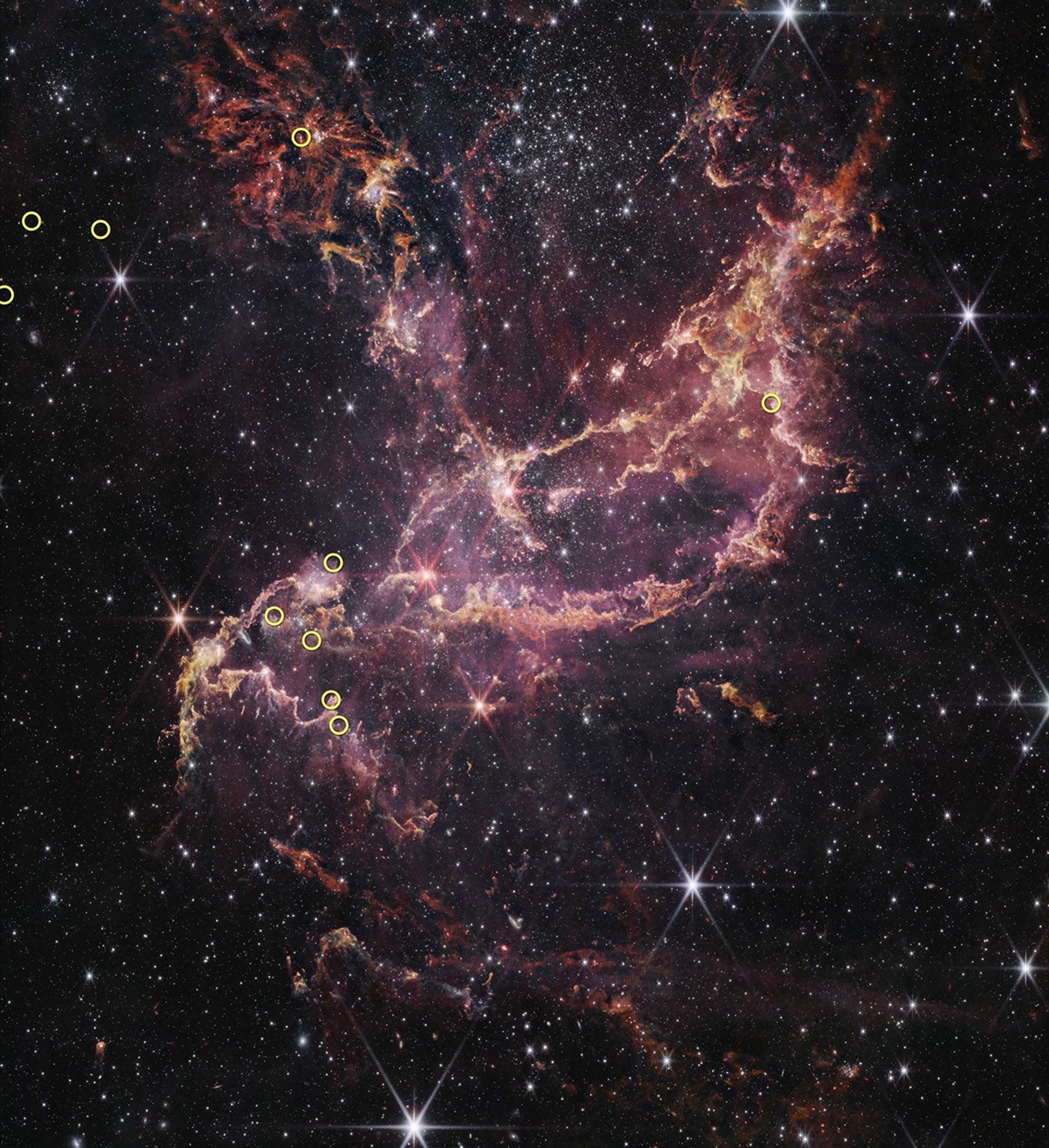
Starbirth in the Pismis 24 star cluster
In the center of this cluster, newborn stars form within clouds of dust and gas, shining through the nebula in the infrared. Two massive stars at the center are blasting out scorching radiation and stellar winds that are carving a cavity into the wall of the star-forming nebula clouds. Their fierce forces are shaping and compressing spires in the glowing gas at the bottom of the scene causing new stars to form. Pismis 24 is one of the closest sites of massive star birth, giving scientists rare insight into the properties of hot young stars and how they evolve.
-
07
Unprecedented views of the detail and structure of ejections of gas and dust from actively forming stars
High-resolution near-infrared light captured by Webb showed incredible new detail and structure within the lobes of the ejections emitted by two actively forming stars, including asymmetrical lines that appear to run into one another. L483 is 650 light-years away in the constellation Serpens.
-
08
Finding the lower mass limits of so-called “failed stars” found in star-forming regions
Webb recently observed brown dwarfs in the Flame Nebula. Decades of Hubble data were crucial in identifying brown dwarf candidates for further study, essentially handing the baton to Webb to take an in-depth look at this region. Scientists using Webb were looking for the lower mass limit of brown dwarfs, and think they have found it, at 2-3 times the mass of Jupiter. Webb is powerful enough that it can observe objects at even lower masses, down to 0.5 Jupiter masses, but it didn’t find any objects of smaller mass. The value of 2-3 Jupiter masses could potentially be the lower mass limit of objects formed by stellar mechanisms and thus the lowest mass limit of brown dwarfs.
-
09
The effects of strong magnetic fields on star-formation in the central part of our galaxy
Follow-up research on a 2023 image of the Sagittarius C stellar nursery in the heart of our Milky Way galaxy, captured by Webb, has revealed ejections from still-forming protostars and insights into the impact of strong magnetic fields on interstellar gas and the life cycle of stars.

Introduction: Star Lifecycle
Although stars have been the main topic of astronomy for thousands of years, we have begun to understand them in detail only in recent times through the advent of powerful telescopes and computers.
A hundred years ago, scientists did not know that stars are powered by nuclear fusion, and 50 years ago they did not know that stars are continually forming in the Universe. 35 years ago, we did not know that there were planets around other stars. Researchers still do not know the details of how clouds of gas and dust collapse to form stars, or why most stars form in groups, or exactly how planetary systems form. Young stars within a star-forming region interact with each other in complex ways. The details of how they evolve and release the heavy elements they produce back into space for recycling into new generations of stars and planets remains to be determined through a combination of observation and theory.
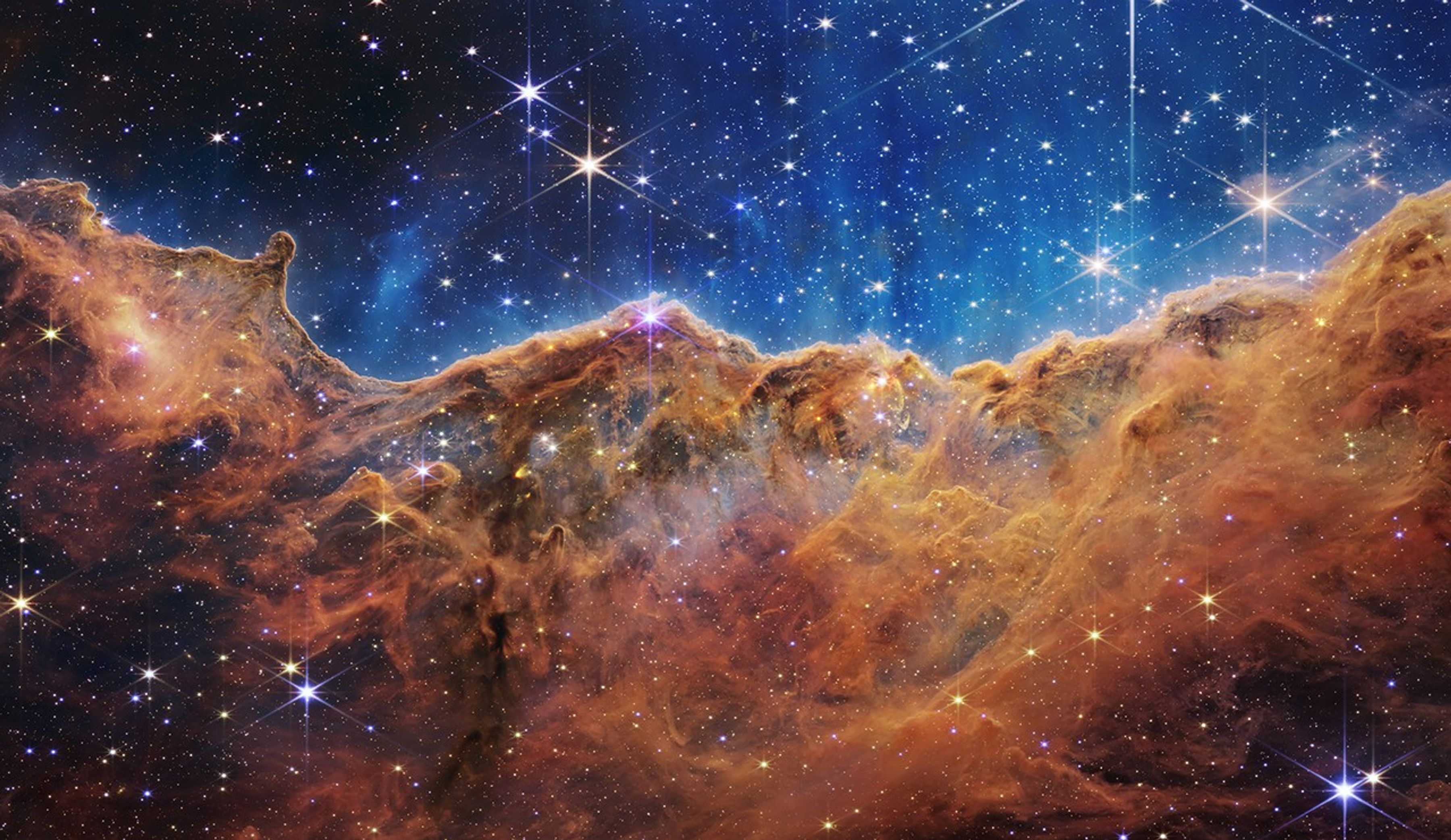
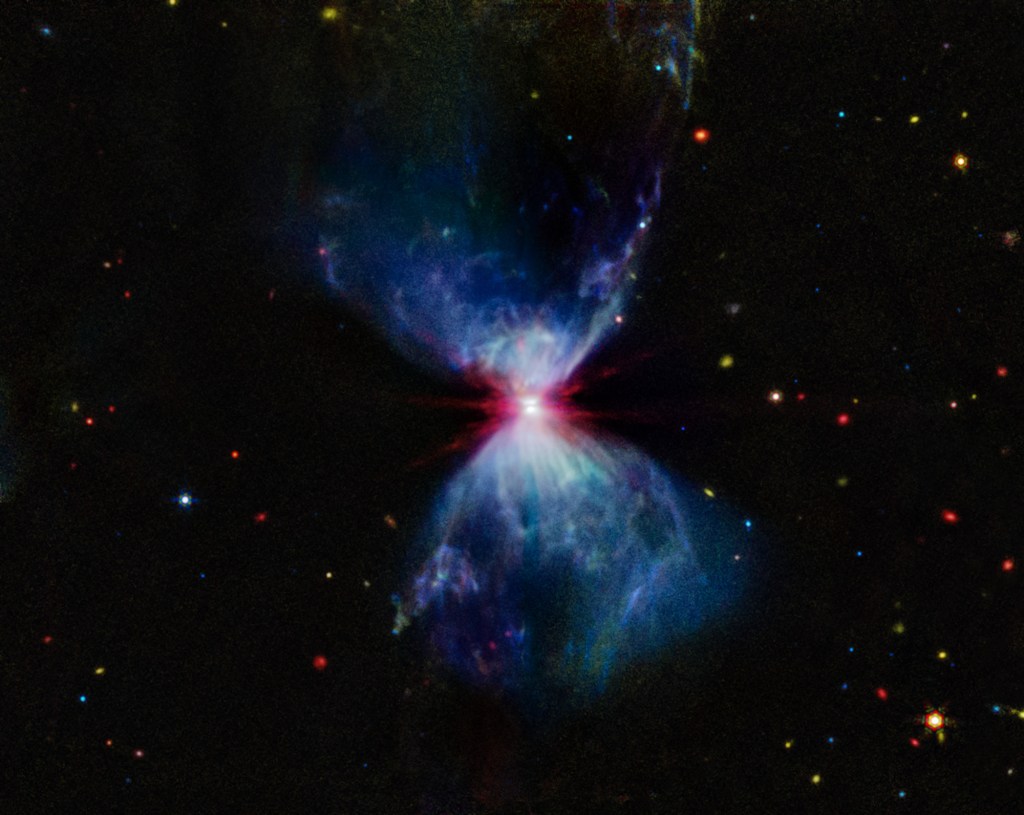
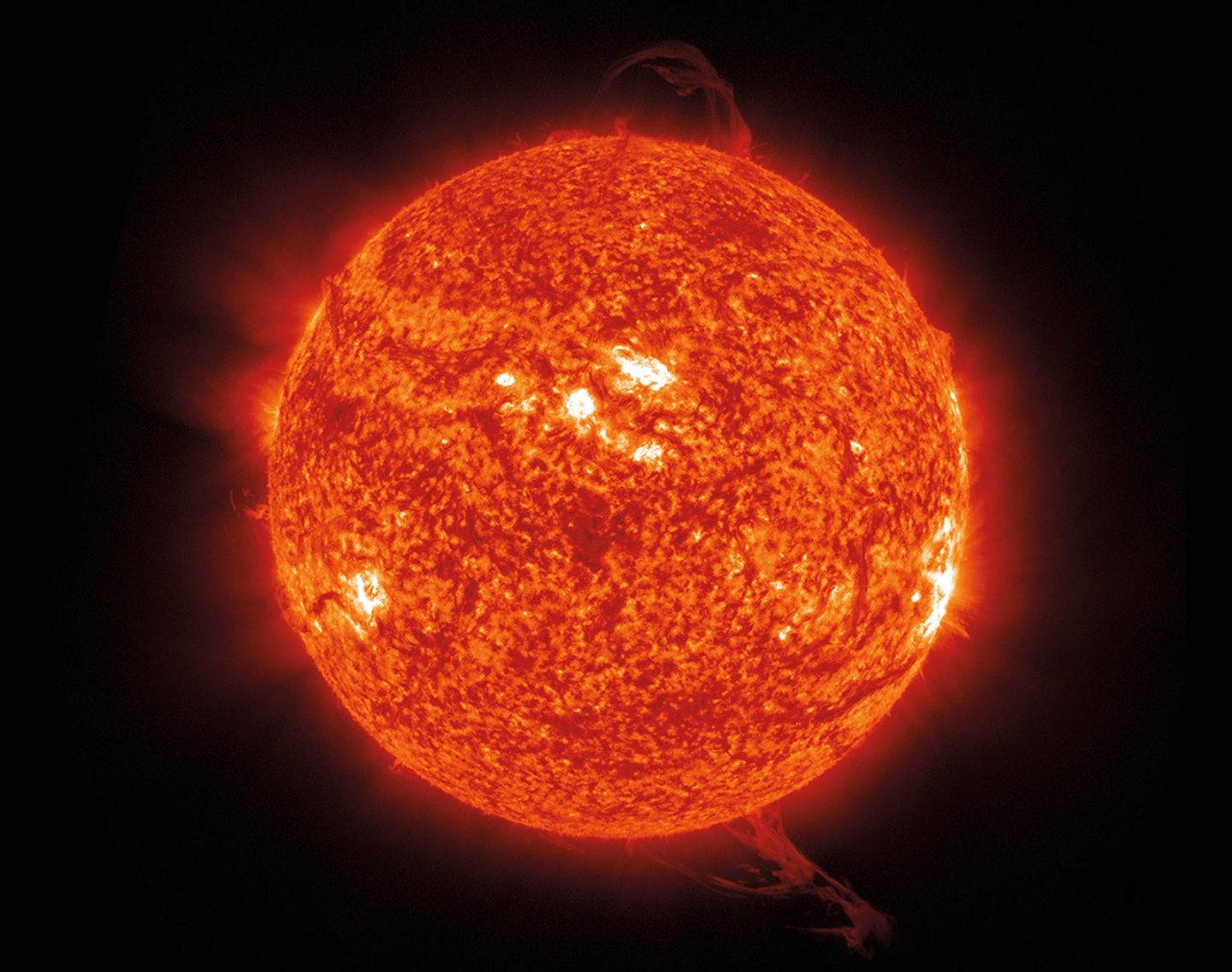
The Star Lifecycle in Four Images:
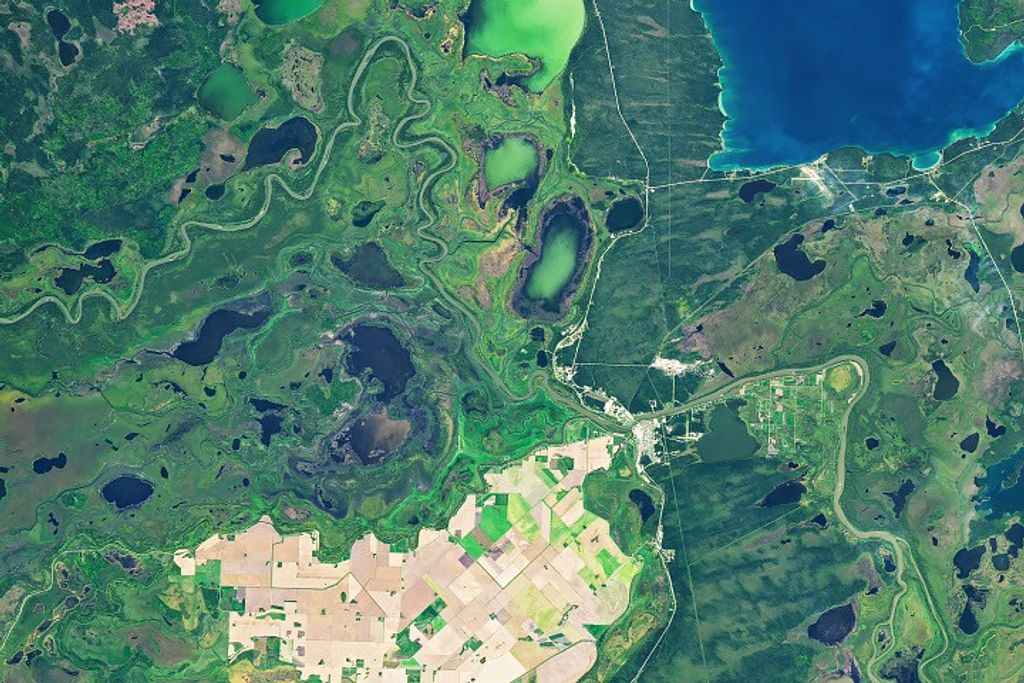
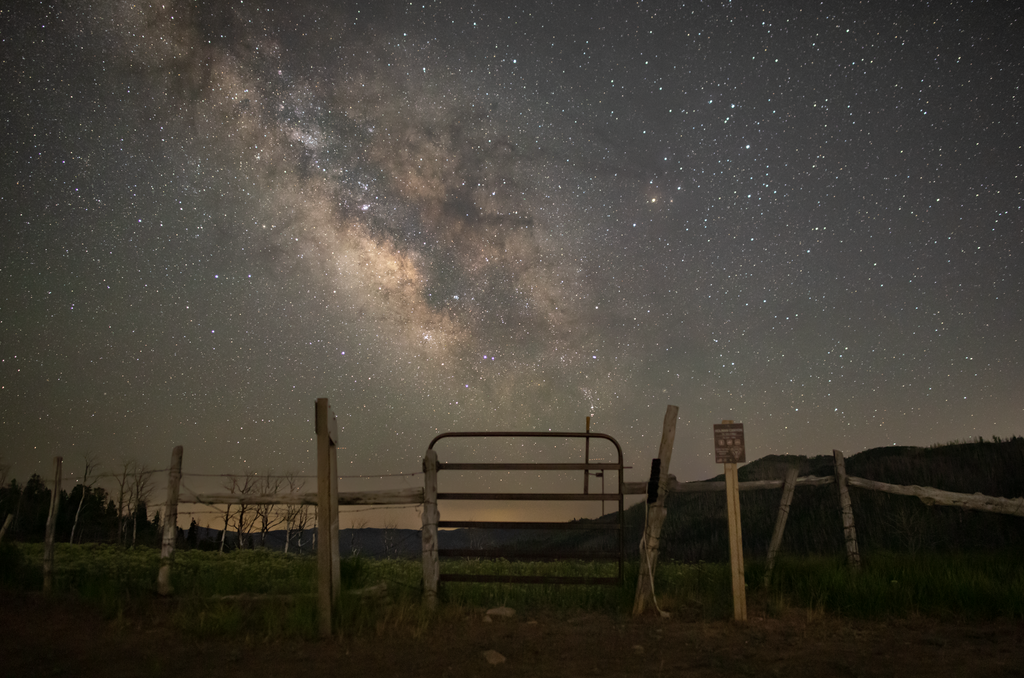
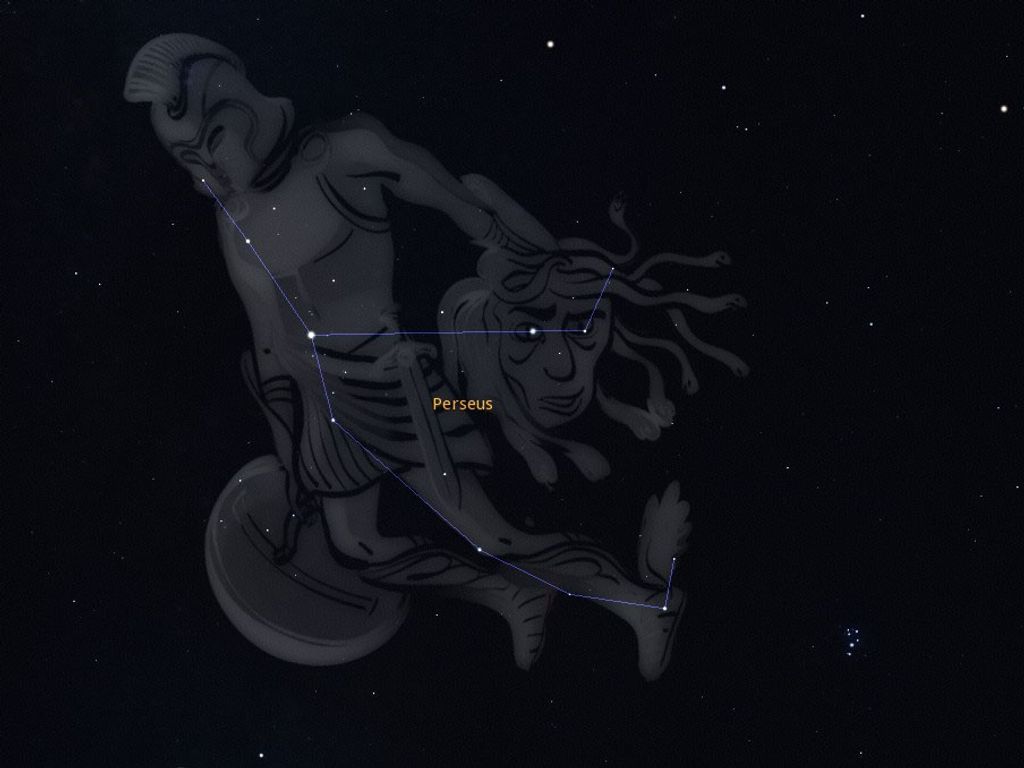
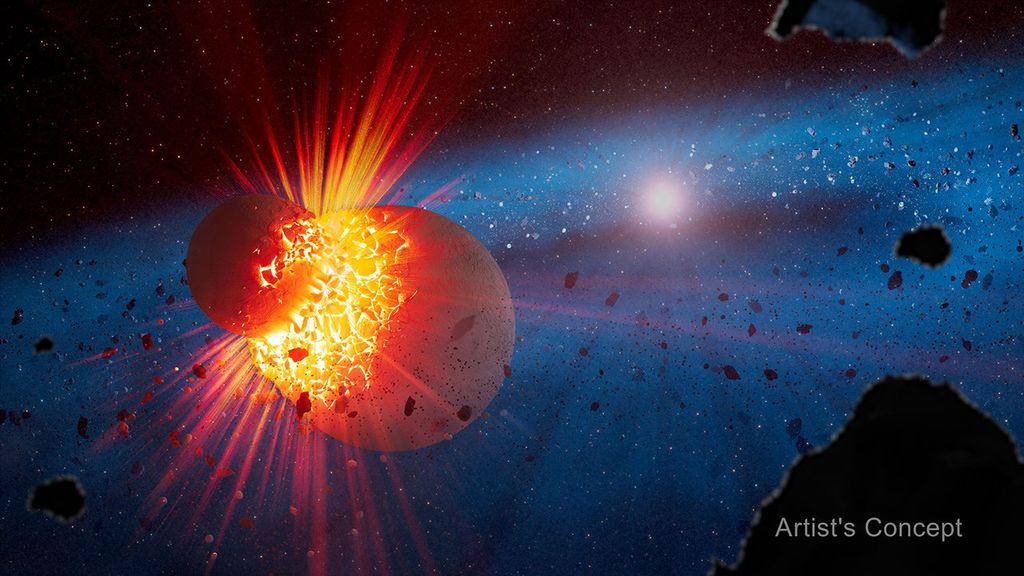
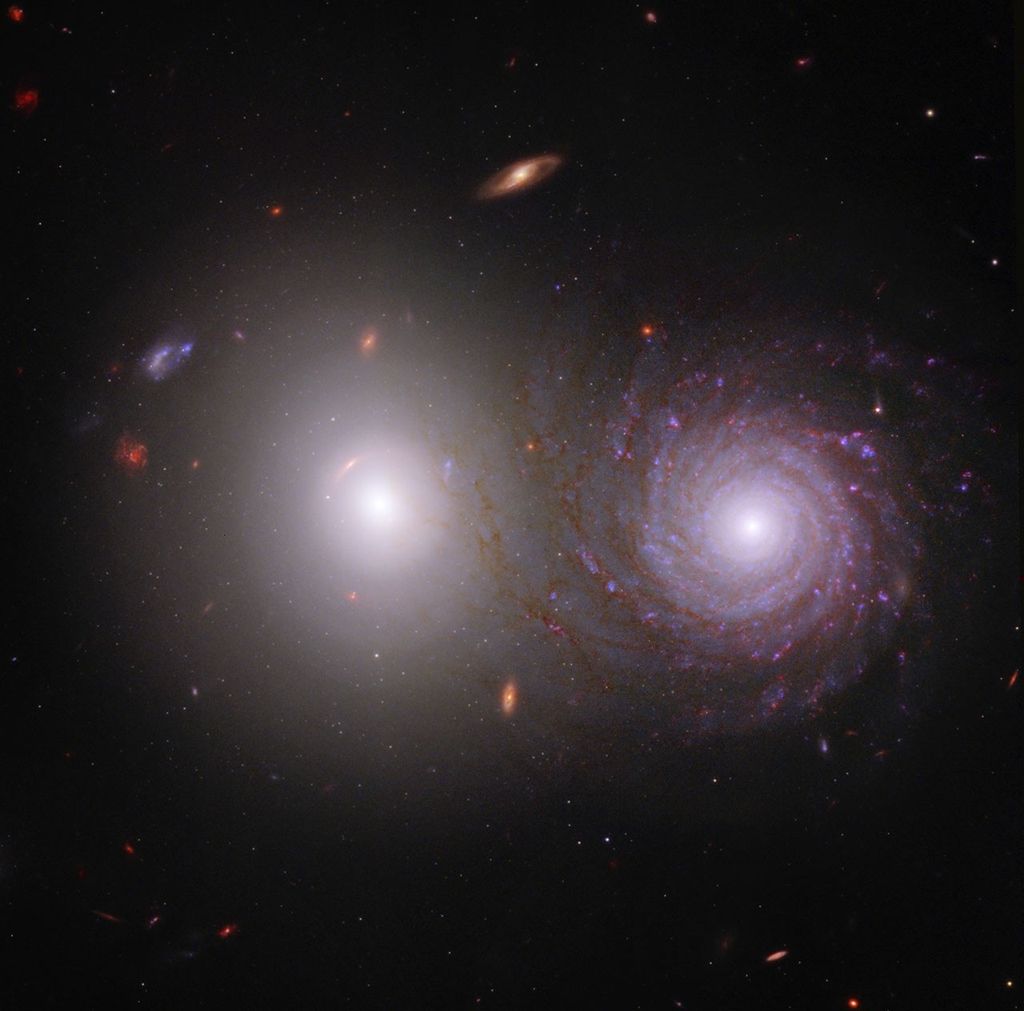
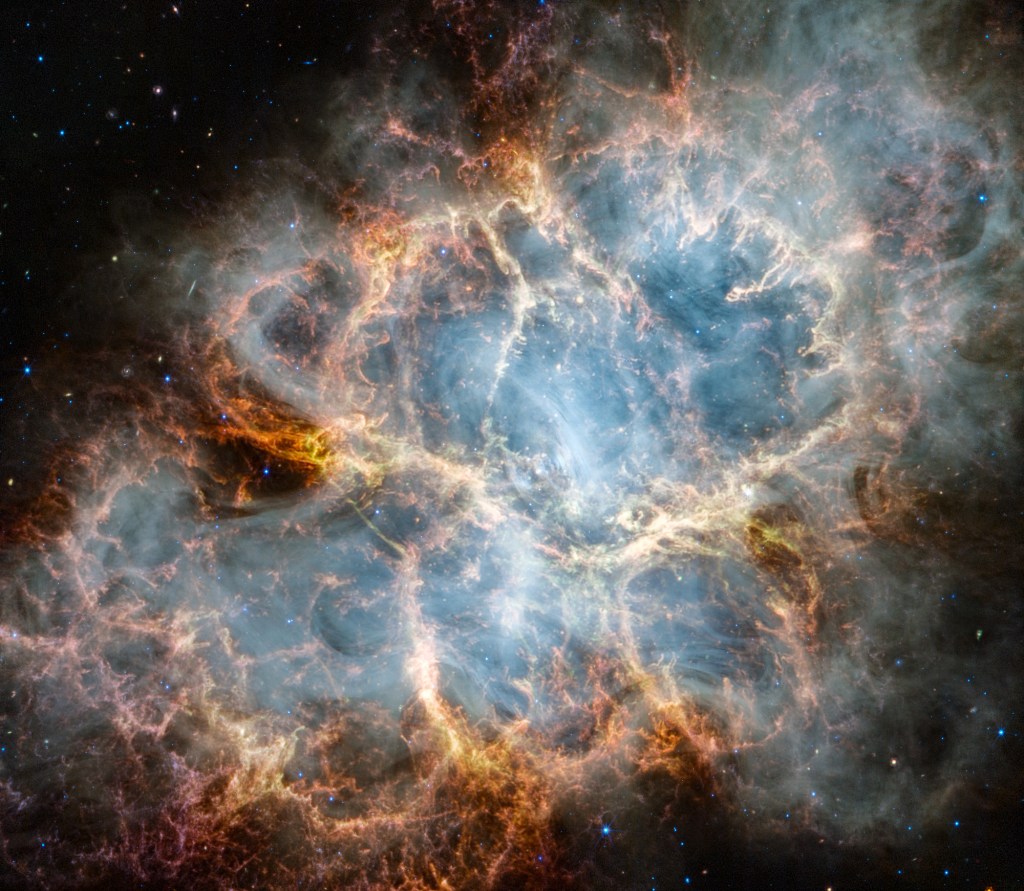
Stars are born in massive clouds of dust and gas, eventually becoming stable nuclear fusion engines existing for millions to billions of years. As the hydrogen fuel runs out they begin to collapse and shed their outer layers, some massive types explode, all spread and recycle their elements into the universe for further star creation. See Star Lifecycle Basics for a more detailed description. This lifecycle is captured in the four image slideshow below, the buttons to advance it are on the lower right of the images.
Related Information
In Depth: What is Webb Studying and How?
Star Lifecycle
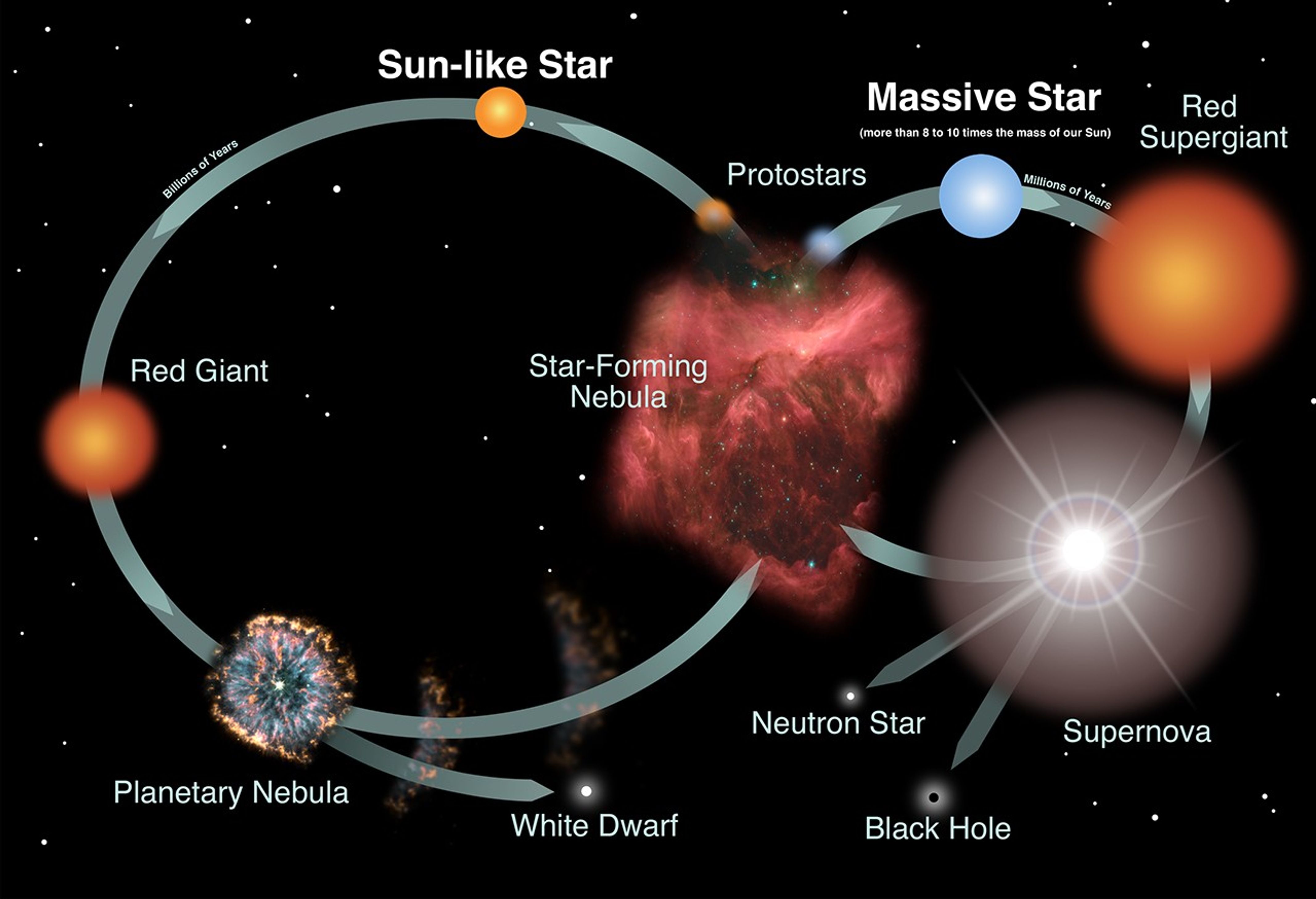
Today we know that stars are the essential sources of raw material in the universe, recycling and distributing the elemental building blocks of everything we observe: new stars, nebulae of gas and dust, planets, and even humans. All life on Earth contains the element carbon, and all carbon was originally formed in the core of a star.
Stars populate the universe with elements through their life cycle — an ongoing process of formation, consuming fuel, and dispersal of material when all the fuel is used up. Different stars take different paths, however, depending on how much matter they contain — their mass. A star’s mass depends on how much gas is brought together by gravity during its formation. We measure the mass of stars by how they compare to the “parent star” of our system, the Sun. Stars are considered high mass when they are a few times more massive than the Sun.
When high-mass stars have no more fuel to generate outward energy, their iron cores begin to collapse until the pressure overcomes the inward push of gravity and they explode in a spectacular supernova, dispersing elements into space to recombine as future stars, planets, asteroids, or even eventually life like us.
After a supernova explosion, massive stars can go one of two ways. If the remnant core of the star is less massive, it will collapse into a very small, very dense core of neutrons called a neutron star. If the remnant is more massive, gravity overwhelms the neutrons and the star collapses completely into a black hole — so-called because the matter within it is so compressed and gravity is so intense that not even light can escape.
Planetary System Formation
Once we thought planets around other stars were rare. Now we know they are not the exception, they are the rule. Most stars in the universe are surrounded by planetary systems. Webb’s infrared sensitivity makes it uniquely suited for studying how planetary systems are formed, as well as being able to tell us about the characteristics of the planets themselves.
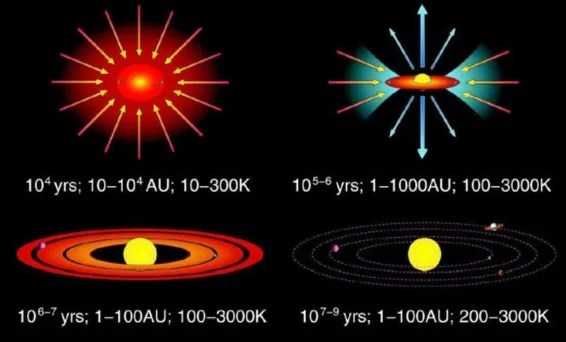
The stages of planetary system formation are illustrated below: starting with a protostar embedded in a gas cloud (upper left of diagram), to an early star with a circumstellar disk (upper right), to a star surrounded by small "planetesimals" which are starting to clump together (lower left) to a solar system like ours today.
The continual discovery of new and unusual planetary systems has made scientists re-think their ideas and theories about how planets are formed. Scientists realize that to get a better understanding of how planets form, they need to have more observations of planets around young stars, and more observations of leftover debris around stars, which can come together and form planets.
Brown Dwarfs
Webb is also revealing more about brown dwarfs, cosmic objects that are like a bridge between planets and stars. Brown dwarfs are not massive enough for their cores to sustain hydrogen fusion like full-fledged stars do, but their formation process is like that of stars, not planets. Observing star and planet formation stages may help explain how and why some masses of matter become small stars, others gas giant planets, and some brown dwarfs.
Brown dwarfs are dim and much cooler than stars, and thus difficult to observe. When they are very young, however, they are still relatively warmer and brighter than the obscuring, dense dust and gas that surrounds them. Webb’s extreme sensitivity to infrared light can pierce these dense, dusty regions and see the faint infrared glow from young brown dwarfs.
Webb observed brown dwarfs in the Flame Nebula. Decades of Hubble data were crucial in identifying brown dwarf candidates for further study, essentially handing the baton to Webb to take an in-depth look at this region. Scientists using Webb were looking for the lower mass limit of brown dwarfs, and think they have found it, at 2-3 times the mass of Jupiter. Webb is powerful enough that it can observe objects at even lower masses, down to 0.5 Jupiter masses, but it didn’t find any objects of smaller mass. The value of 2-3 Jupiter masses could potentially be the lower mass limit of objects formed by stellar mechanisms and thus the lowest mass limit of brown dwarfs.
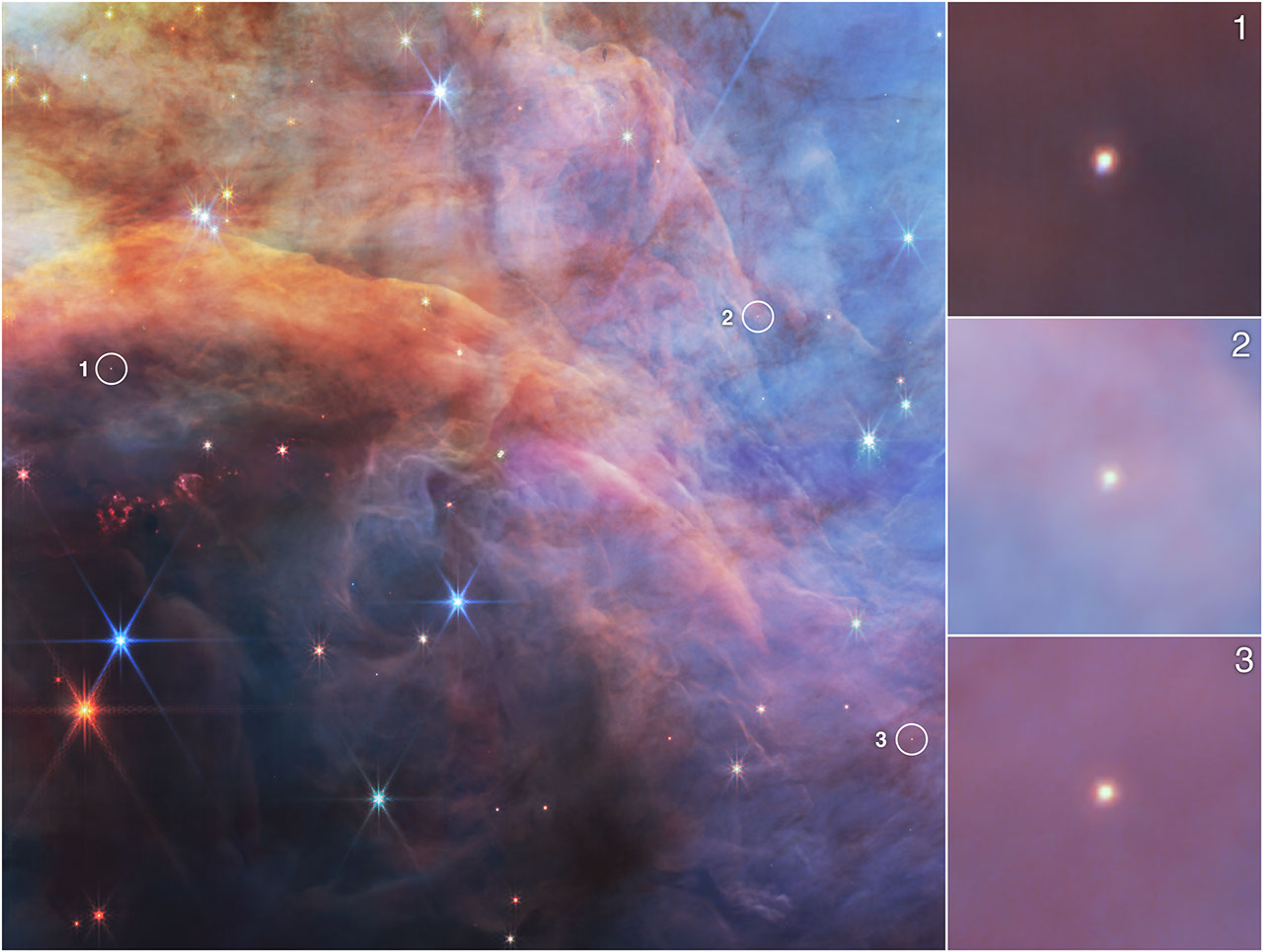
Webb is giving scientists insights into how planets form in dusty disks around young stars. Webb discovered evidence that planet-forming disks in the early universe are longer-lived than they should be, given the conditions in their environment.
Webb's Infrared Capabilities
Seeing Inside The Veiled Regions of Dust and Gas Where Stars are Born
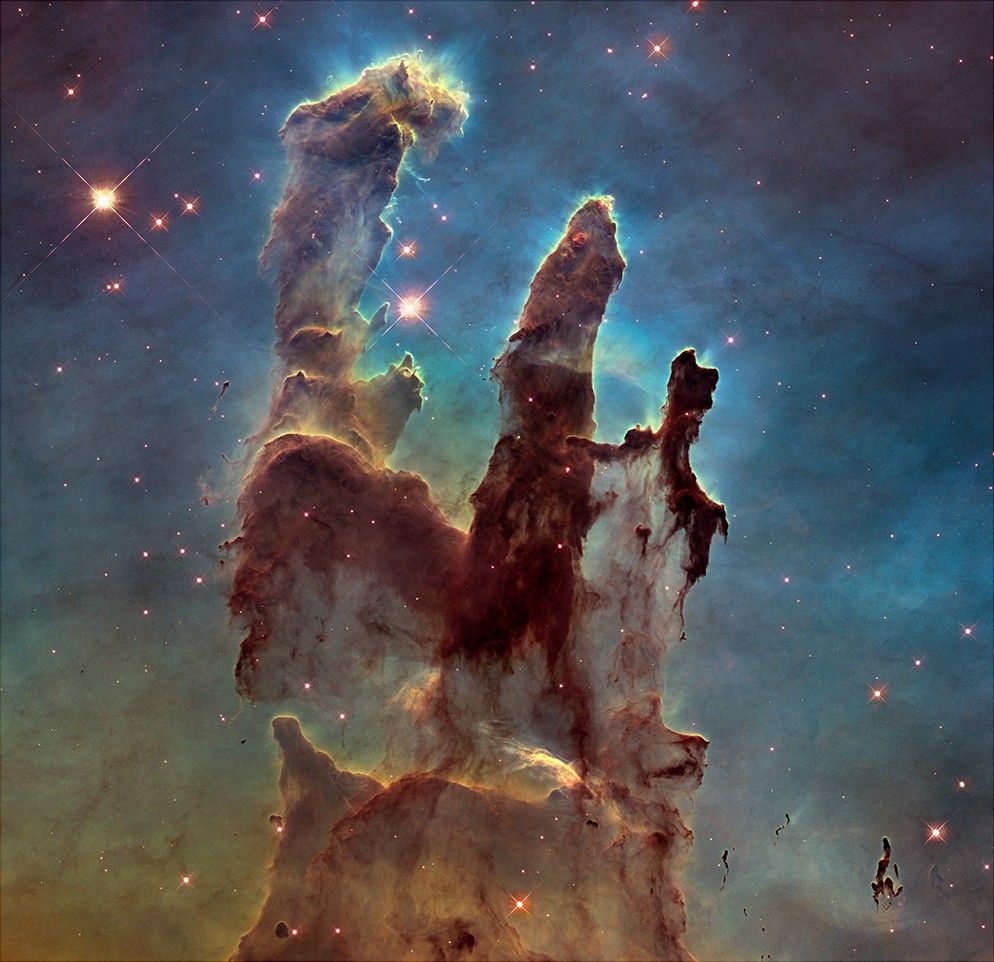
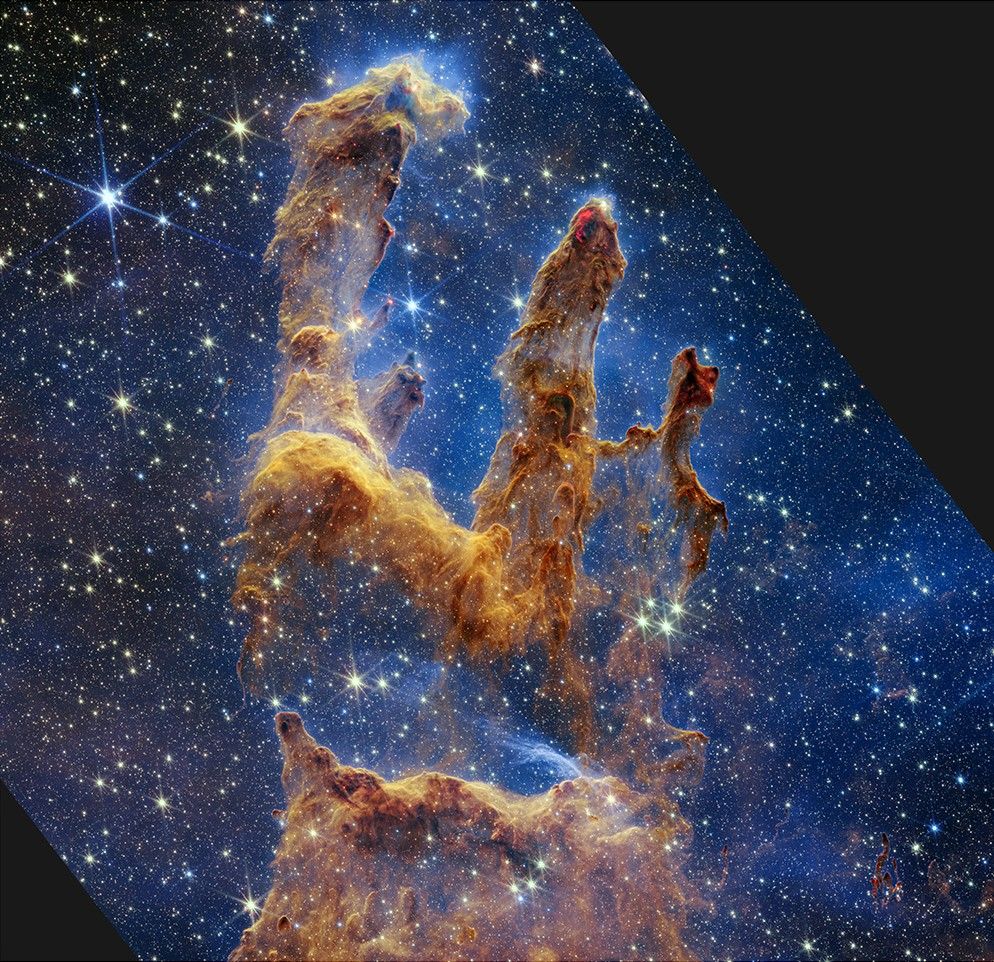
To unravel the birth and early evolution of stars and planets, we need to be able to peer into the hearts of dense and dusty cloud cores where star formation begins, like the Pillars of Creation (below). These regions cannot be observed at visible light wavelengths as the dust scatters visible light and makes such regions opaque. They must be observed at infrared wavelengths to see within them.
Hubble is optimized to observe the universe in visible light but has some near infrared capability. Below is a comparison of Hubble's visible and near infra-red view of the Pillars of Creation that illustrates this concept. In the infrared more structure within the dust clouds is revealed and hidden stars have now become apparent. Webb is Hubble's successor, optimized for near-infrared and mid-infrared light which allows us to see regions previously unseen - answering questions, advancing science, and asking new questions.


Side by Side Draggable Comparison
Hubble's Visible and Near-Infrared Views of the Pillars of Creation
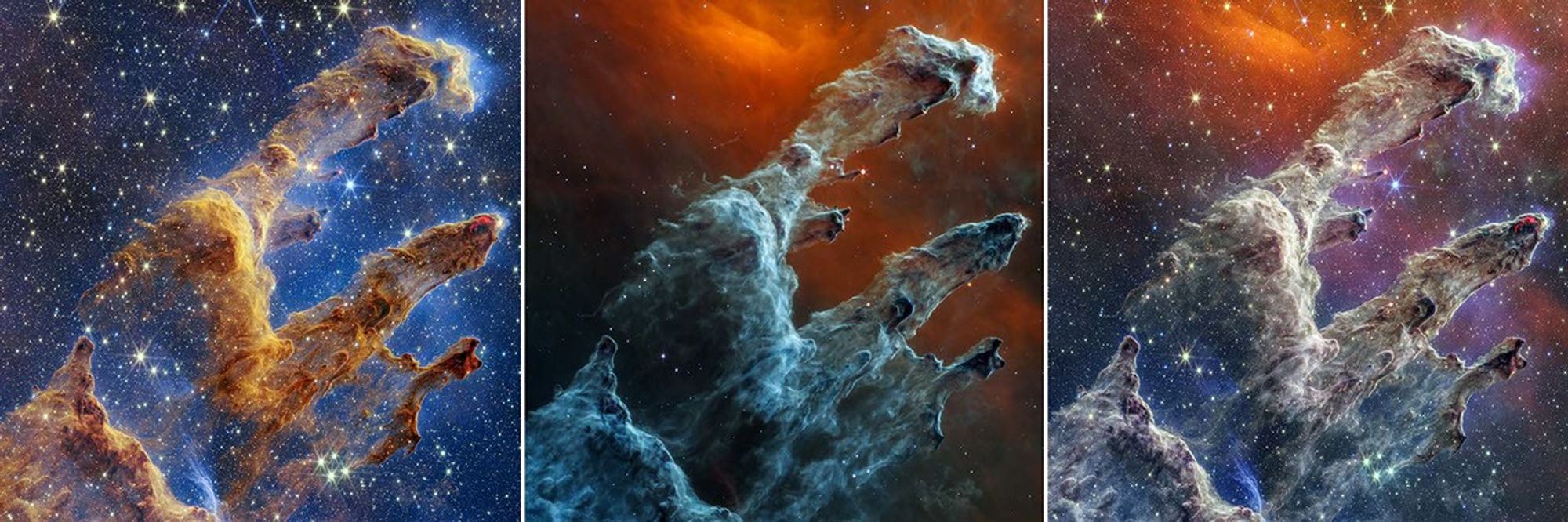
Webb is optimized for infrared observation with four instruments, each with many instrument modes and filters enabling Webb to observe astronomical objects with far more nuanced infrared techniques and in far more detail than previous missions. Below we compare three of Webb's infrared views of the Pillars of Creation.
Webb's Spectroscopic Capabilities
Webb's imaging and spectroscopy capabilities are allowing us to study stars as they are forming in their dusty cocoons. Additionally, it is able to image disks of heated material around these young stars, which can indicate the beginnings of planetary systems, and study organic molecules that are important for life to develop.
When it comes to infrared spectroscopy, you can’t beat the James Webb Space Telescope. With a giant mirror designed to collect infrared light from extremely dim objects, Webb has the ability to reveal infrared spectra of almost any type of object or material in space with unprecedented detail.
Webb’s primary mirror intercepts infrared light as it travels through space and reflects it onto a smaller secondary mirror. The secondary mirror then focuses the light into one or more of the four scientific instruments, each of which has spectrographs that disperse the light into its component colors to reveal infrared spectra.
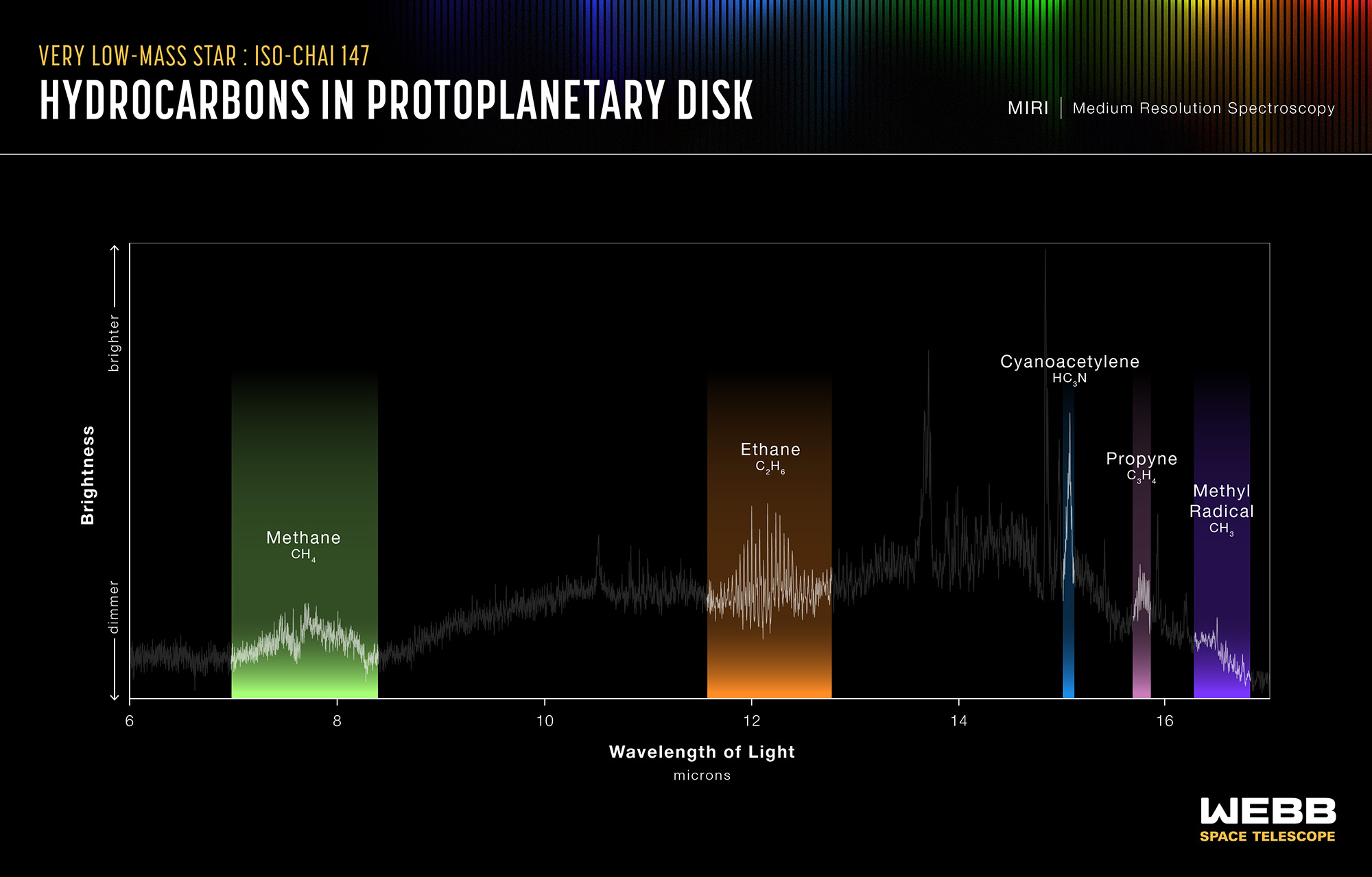
Webb has a number of spectroscopy “modes” to choose from (think modes on a digital camera), depending on what you are interested in. Some involve capturing the overall spectrum of a wide field of view—a field of stars or part of a nearby galaxy, for example. Others focus in on the spectrum of a single object, like a star, exoplanet, or distant galaxy. Two of the instruments have camera-spectrograph combos called integral field units that can capture an image along with a spectrum of each pixel in the image. And to top it off, Webb also has a nifty tool called a microshutter array—a grid of 248,000 tiny doors that can open and shut on command—making it possible to capture detailed spectra from more than 100 individual objects or locations at the same time.
In fact, while Webb is also capturing spectacular infrared images of space, its real power is in spectroscopy, and the vast majority of Webb’s investigations include spectroscopy. Astronomers are using spectra captured by Webb to study:
- Surfaces and atmospheres of planet, moons, comets, asteroids, and Kuiper Belt objects in our Solar System
- Fully-formed exoplanets, planets in the process of forming, and proto-planetary debris disks orbiting distant stars in the Milky Way
- Mature stars of different size, mass, age, color, temperature, evolutionary stage, and formation environment; and newly forming stars cocooned in dense dark clouds of gas and dust
- Cold molecular clouds that collapse to form stars; gas and dust ejected from dying stars; and molecules between stars
- Galaxies at different stages of evolution, including the first galaxies in their earliest stages of development
Webb also captures spectra that are used to study objects and materials that are invisible in infrared—such as black holes, dark matter, and infrared dark clouds—based on their influence on materials that do give off infrared light.
Latest Images : Star Lifecycle Theme
The image below is a SLIDESHOW of all NASA published imagery in the Star Lifecycle theme.
USAGE: Hover over the image to see the image title and controls. Click the arrows to move through the slide show, click the image to go to a detail page with more info and the ability to download the image at various resolutions.

Latest Research: Star Lifecycle
Below are all NASA published science articles relevant to the Star Lifecycle Webb science theme. These articles include peer-reviewed science and blog entries (which at the time of publishing are "science in progress," and give previews of exciting new findings).
Filters
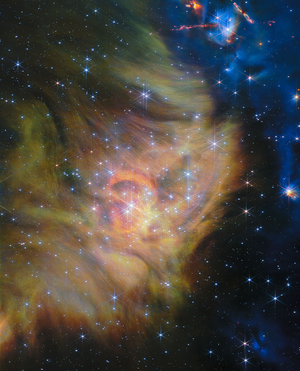
This starry view of the nearby star-forming region IC 348 is one of the largest images released to date from…
NASA’s James Webb Space Telescope recently observed IC 348, a star-forming region just 1,000 light-years away from Earth. Webb’s sharp…

This collage features a collection of insets from NASA’s James Webb Space Telescope’s image of star-forming region IC 348: embedded…
While our Sun was born almost five billion years ago, there are brand new stars forming today. Within our Milky…
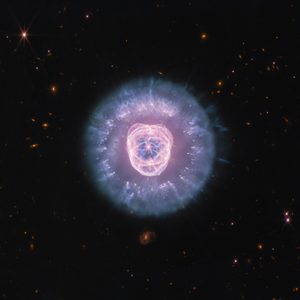
Observing across the starry “plains” of space, NASA’s James Webb Space Telescope has taken new images of NGC 2392, nicknamed…
NASA’s James Webb Space Telescope imaged the planetary nebula NGC 2392, the Lion Nebula, using the observatory’s NIRCam and MIRI…
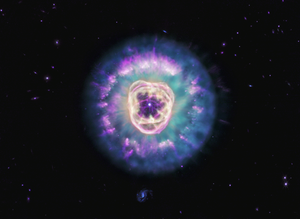
NASA’s James Webb Space Telescope’s mid-infrared image of planetary nebula NGC 2392, nicknamed the Lion Nebula, highlights the varying dust…

One of the most recognizable features of NASA’s James Webb Space Telescope is its large, segmented, gold-coated mirror, which delivers…
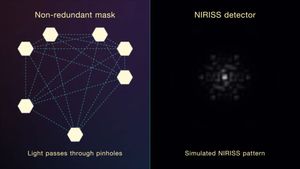
This animation shows a theoretical scenario to explain how an observational technique known as aperture masking interferometry (AMI) is conducted…