
















Webb Science Theme
Other Worlds
Webb has the capability to look at light from tiny and distant planets, orbiting other stars, and tell us what their atmospheres are made of, as well as what their climate and weather are like. Webb can also examine objects within our own solar system, giving us new insight into the physical and chemical properties of the smallest bodies to our gas giants. From gas giants to rocky planets, from lava worlds to those with skies of silica “snow,” from interstellar comets visiting the solar system to the motion of aurora on Uranus, Webb is producing a rich variety of data on planetary systems and helping scientists investigate the potential for life beyond Earth.
Key Questions
Building on the established science from previous missions, scientists from around the world are using the Webb Telescope to advance our knowledge for these key questions.
How are the building blocks of planets assembled from dust and gas?

How do planets reach their current orbits after forming in a disk around a star?

Can we find evidence that planets orbiting in the habitable zones of stars have liquid water in their atmospheres?

What atmospheric signatures might indicate biological processes and how do we distinguish between geological and biological atmospheric signatures?

What is the chemical and physical history of the building blocks that formed Earth?

Do comets and other distant icy bodies contain clues to our origins?

How can we improve techniques for detecting and characterizing exoplanets?

what can small bodies from our solar system as well as those from outside it, tell us about the early history and formation of planetary systems?

Key Findings / Discoveries : Other Worlds
-
01
Helping to define the dividing line between planets and stars
Webb directly imaged 29 Cygni b, an object 15 times more massive than Jupiter. In order to be able to classify it as a star or a planet, astronomers needed to figure out how it was formed because stars and planets result from two different processes. Webb detected the presence of carbon dioxide and carbon monoxide, providing strong evidence that 29 Cygni b is rich in heavier elements, consistent with objects that formed from a proto-planetary disk. Additionally, astronomers were able to determine that the angle of this planet’s orbit is aligned with the axis around which its star spins. This is similar to what we see in our own solar system. Scientists are gathering data on three other targets that have similar profiles to 29 Cygni b, which will give us more insight into how the largest of planets form.
-
02
The most comprehensive view of Saturn to date
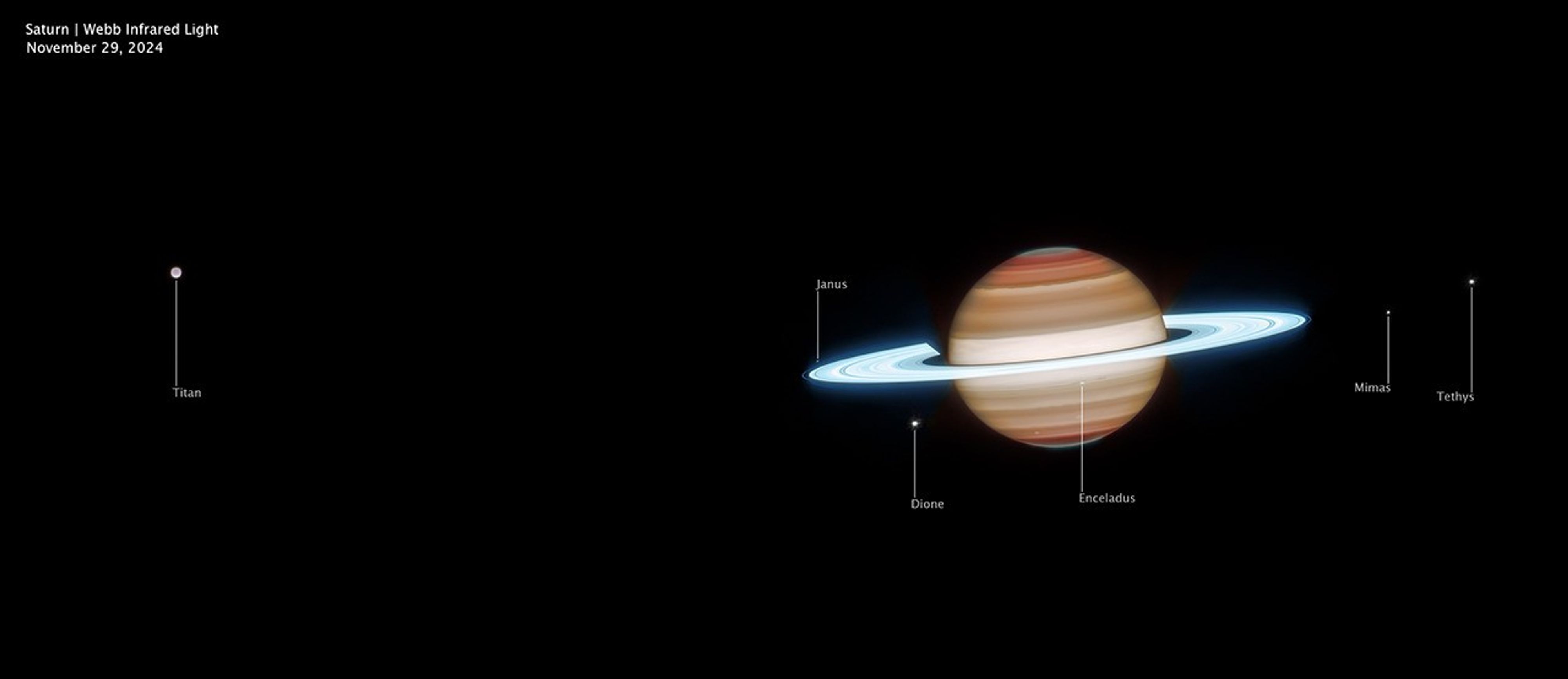
Webb teamed up with the Hubble Space Telescope, observing Saturn in complementary wavelengths of light to give us a richer, more layered understanding of its atmosphere. These images were each captured in 2024, just 14 weeks apart from each other.
-
03
Observations of an exoplanet whose composition defies explanation
Scientists are using Webb to investigate PSR J2322-2650b, an oddball of an exoplanet. It is a Jupiter-mass gaseous, lemon-shaped planet that may or may not contain diamonds at its core, orbiting a pulsar, which itself is a rapidly-spinning, dense remnant of a star that is the mass of the Sun but the size of a city. Instead of common molecules like water, methane, and carbon dioxide, in its atmosphere, Webb saw molecular carbon. Molecular carbon rarely exists at the temperatures seen on this planet and why it is there (or even how a planet like this forms around a pulsar) remains an open question.
-
04
The strongest evidence for an atmosphere on a rocky exoplanet
Webb detected the strongest evidence yet for an atmosphere on a rocky planet outside our solar system. Findings suggest ultra-hot super-Earth TOI-561 b is surrounded by a thick blanket of gases above a global magma ocean. The results of this recent study help explain the planet’s unusually low density and challenge the current knowledge that relatively small planets that are close to their stars are unable to sustain atmospheres. A relatively small iron core, and mantle made of rock that is not as dense as rock within Earth, could explain the planet’s low density. This planet’s composition could be representative of planets that formed when the universe was relatively young.
-
05
Measurements of a moon-forming disk around a massive planet
Webb provided the first direct measurements of the potential for moon-formation in a carbon-rich disk encircling a giant exoplanet, which is itself orbiting a red dwarf star. Though no moons themselves are detected in the Webb data, the chemical and physical properties of the disk make it a possible construction yard for moons. Jupiter’s four major moons all orbit in the same plane, so it is thought that they condensed out of a similar flattened disk billions of years ago. Looking at other systems “under construction” will help us better understand how moons form around planets.
-
07
New evidence for a planet around our closest solar twin
Webb’s observations from its Mid-Infrared Instrument (MIRI) are providing the strongest evidence to date of a gas giant orbiting Alpha Centauri A. If confirmed, this planet would be the closest to Earth that orbits in the habitable zone (the distance from a star at which liquid water could exist on orbiting planets’ surfaces) of a Sun-like star. The planet candidate however, is a gas giant, meaning that it would not support life as we know it.
-
08
Support for long-proposed process of planet formation
Scientists have long theorized that icy pebbles drift from the outer to the inner regions of a disk, delivering water and solids that then form planets. New data from Webb demonstrates this process in action. Pebbles were expected to go through compact disks more efficiently, allowing for greater delivery of water and solids to inner planets. Webb’s results confirmed these expectations by revealing excess cool water in the compact disks, compared with the larger disks.
-
09
New moon discovered around Uranus
Webb discovered an unknown moon orbiting the seventh planet, expanding its known satellite family to 29. The newly discovered moon is estimated to be just six miles (10 km) in diameter, assuming it has a similar reflectivity (albedo) to Uranus’ other small satellites. We haven’t seen this moon before now, likely due to its small size rendering it invisible to earlier missions or telescopes. Of the planet's now 29 moons, this one is the 14th member of the system of moons orbiting inward of the largest moons, Miranda, Ariel, Umbriel, Titania, and Oberon.
-
10
One of the coldest exoplanets imaged to date
14 Her c, which is a chilly 26 degrees F (-3 C) in temperature is one of the coldest exoplanets imaged to date. It’s hard to capture objects that are this faint - but Webb was up to the challenge. Webb is also giving us insight into a planetary system that astronomers have deemed abnormal, chaotic, and strange, with planets in misaligned orbits. Planets b and c don’t orbit in the same plane the way our planets do, with Planet c’s orbiting its star some 1.4 billion miles away in an extremely elliptical orbit (on average 15 times farther from the Sun than Earth) putting it somewhere between Saturn and Uranus if it were in our solar system.
-
11
Webb’s first discovery of a planet using direct imaging
TWA 7, a young, nearby star, is Webb's first discovery of a planet using direct imaging. With a mass similar to Saturn, it’s also the lightest exoplanet yet seen using this technique! It happens to be oriented nearly face-on to us, giving us a good view of the star’s debris disk, and the planet nestled within a gap in one of its three dust rings. The dust rings had been previously observed by ground-based telescopes and Webb’s Mid-Infrared Instrument (MIRI) was able to image the planet itself. Astronomers are excited that Webb is able to capture images of planets with masses similar to those in our solar system - this will help us better understand our own home in the cosmos.
-
12
Revealing the origin of our Solar System and glimpses of others
Webb is giving us a comprehensive look at the composition of small bodies across the solar system. These studies are revealing details about how and where these objects formed enabling a glimpse at our solar system’s baby pictures. Additionally, we are now revealing details about other planetary systems as they eject some small bodies that seem to find their way closer to us and thorough investigations on their chemistry and dynamics is telling us the history and story of where they came from.
Introduction: Other Worlds
The Dawn of Exoplanet Science
The first planetary system found outside our own came as a complete surprise—not around a main sequence star like our Sun, but orbiting a pulsar. This unexpected discovery in 1992 marked the beginning of a revolution in astronomy.
Since then, we have discovered thousands of exoplanets in every conceivable type of star system, fundamentally changing our perspective on planetary systems. In 1990, the only planets and moons we knew of orbited the Sun. Today, we have come to the realization that planets are in fact quite common throughout the universe, opening up entirely new fields of scientific research and new potential for putting our cosmic experience in context.
A Universe of Unexpected Worlds
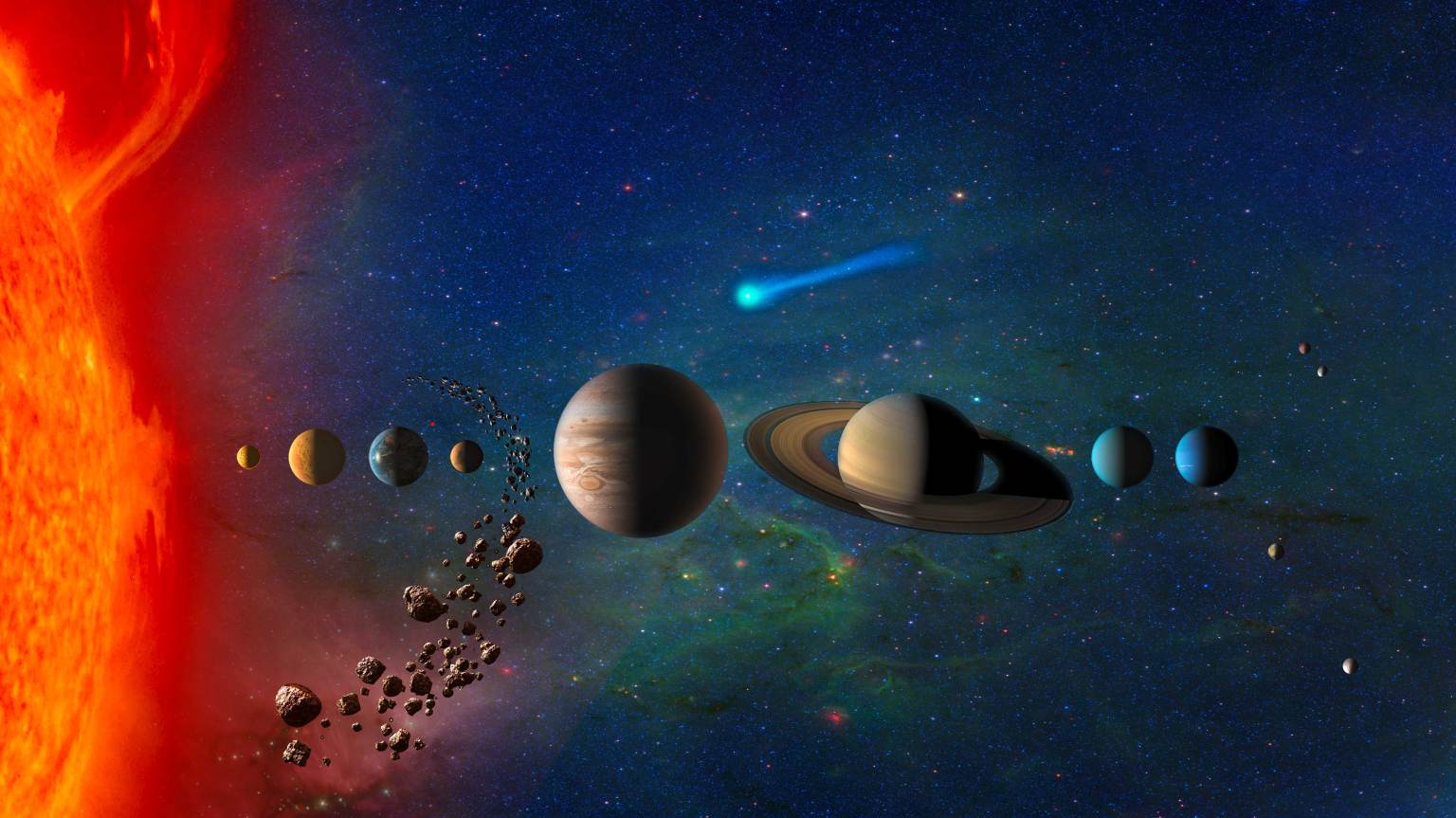
Our first reference for alien worlds begins with our own cosmic neighborhood. Earth, the only known world with life, has vast liquid water oceans and a substantial atmosphere, orbiting within what we've come to recognize as an organized system: rocky planets closest to the Sun (Mercury, Venus, Earth, Mars), giant planets farther out (Jupiter, Saturn, Uranus, Neptune), and broad fields of smaller bodies—the rocky Asteroid Belt and icy Kuiper Belt.
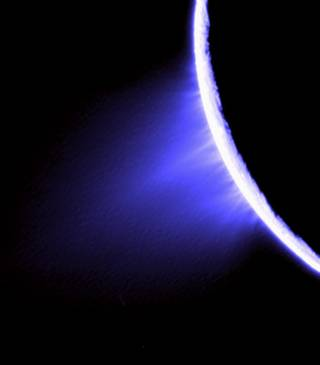
Spacecraft missions have revealed that even the moons of our solar system are greatly varied worlds. Jupiter's Europa has an icy crust laced with fissures that release water vapor, suggesting a subsurface ocean beneath. Its moon Io stands as the most volcanically active world in the solar system. Saturn's moon Titan harbors large surface lakes of liquid methane, creating an alien landscape unlike anything on Earth.
But astronomers have discovered that the universe contains far more exotic worlds than even our diverse solar system suggests. There are Jupiter-sized gas giants orbiting so close to their stars they complete an orbit in days, massive rocky "super-Earths" with no analog in our system, and "warm Neptunes" in configurations we never imagined. Proxima Centauri b, the closest known exoplanet, orbits within the complex triple-star system Alpha Centauri, challenging our assumptions about planetary formation.
In Depth: What is Webb Studying and How?
Decoding Planetary Origins
The incredible diversity of worlds we observe results from the equally diverse conditions under which they form. As nebulae of gas and dust swirl around young protostars, the building blocks of planetary systems can assemble in countless ways. The original composition of these stellar nurseries determines what kinds of stars, planets, moons, and small bodies will emerge as complex processes transform microscopic dust grains into vast worlds.
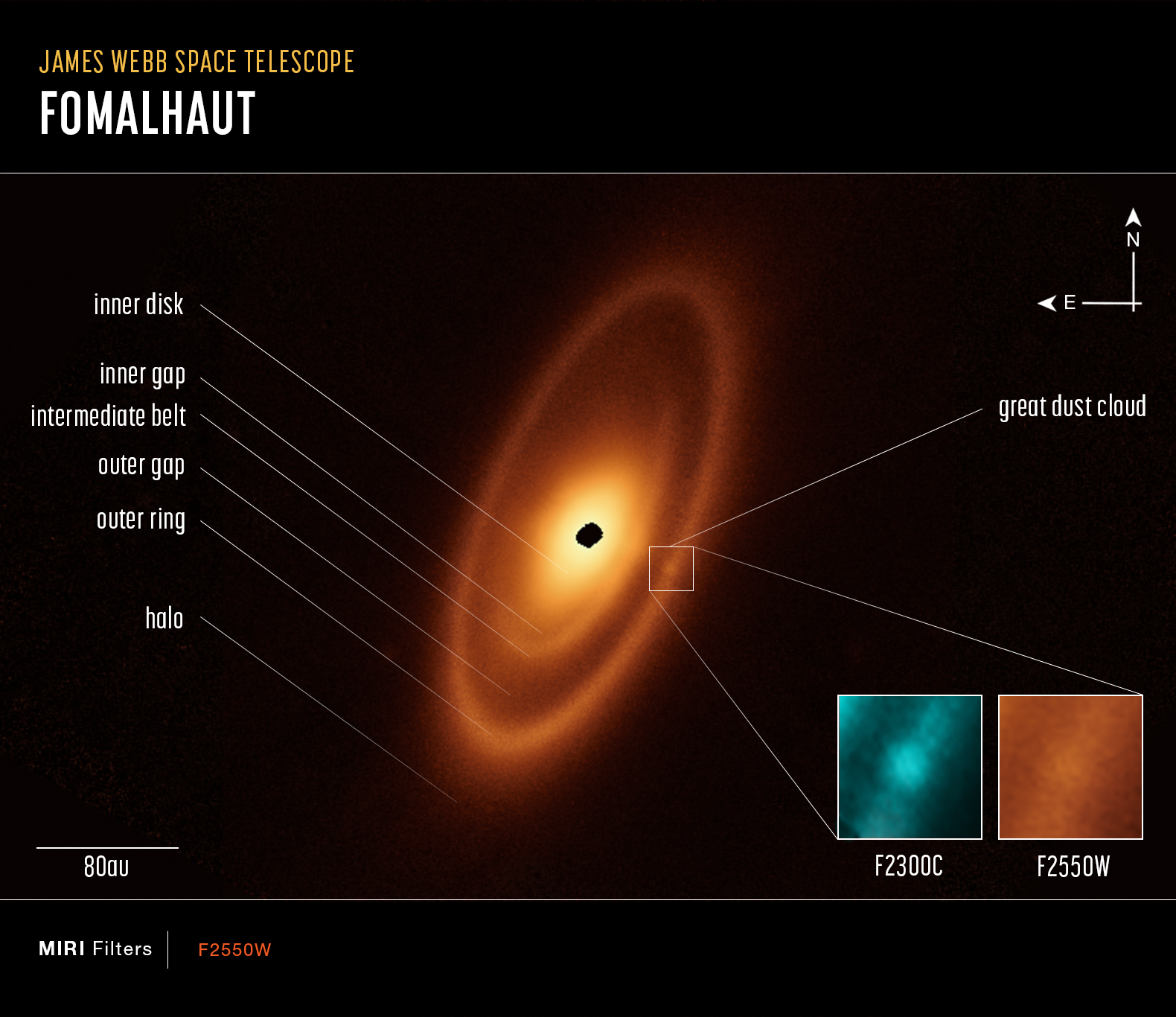
Webb's ability to observe deep into the mid-infrared allows astronomers to peer through the dusty protoplanetary disks that would otherwise block visible light, providing unprecedented insights into planet formation. Scientists can now study the very disks around other stars where planets are currently forming, measuring their composition and structure to understand how planetary systems develop.
Webb is also revealing more about brown dwarfs, cosmic objects that are like a bridge between planets and stars. Brown dwarfs are not massive enough for their cores to sustain hydrogen fusion like full-fledged stars do, but their formation process is like that of stars, not planets. Observing star and planet formation stages may help explain how and why some masses of matter become small stars, others gas giant planets, and some brown dwarfs.
Brown dwarfs are dim and much cooler than stars, and thus difficult to observe. When they are very young, however, they are still relatively warmer and brighter than the obscuring, dense dust and gas that surrounds them. Webb’s extreme sensitivity to infrared light can pierce these dense, dusty regions and see the faint infrared glow from young brown dwarfs.
Our Solar System Laboratory
While Webb searches for distant worlds, it also serves as an invaluable tool for studying our own solar system with unprecedented detail. Webb complements NASA's fleet of planetary missions, rovers, and ground-based observatories by providing unique infrared capabilities that reveal features invisible to other instruments.
On Mars, Webb can detect trace organic molecules in the atmosphere that might indicate past or present biological activity, conducting global atmospheric studies that complement the detailed local investigations of rovers and landers. Webb's observations will verify and expand upon findings from surface missions, searching for molecules that could be signs of life.
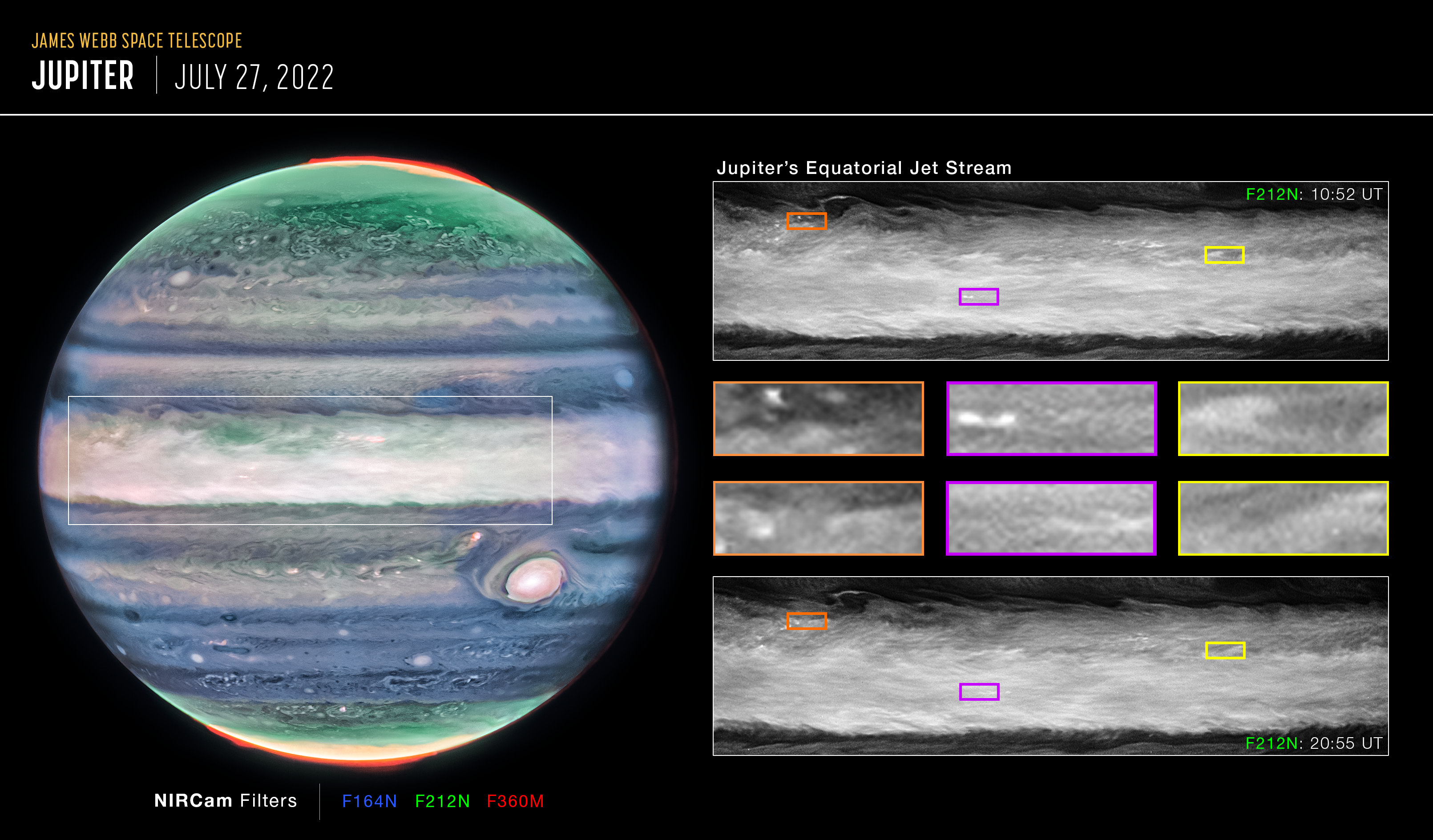
In the outer solar system, Webb continues the legacy of missions like Cassini, studying seasonal weather patterns on the giant planets and their moons. The telescope can characterize small bodies across the farthest reaches of the solar system —these icy relics preserve conditions from our solar system's earliest days and may contain crucial clues about Earth's origins and prebiotic chemistry throughout our planetary system .
Webb's unprecedented sensitivity enables detailed compositional studies of asteroids and other small bodies, revealing mineralogical features that Earth-based telescopes cannot detect. These observations help scientists understand the chemical and physical history of the building blocks that came together to form our terrestrial planets.
Planetary Atmospheres
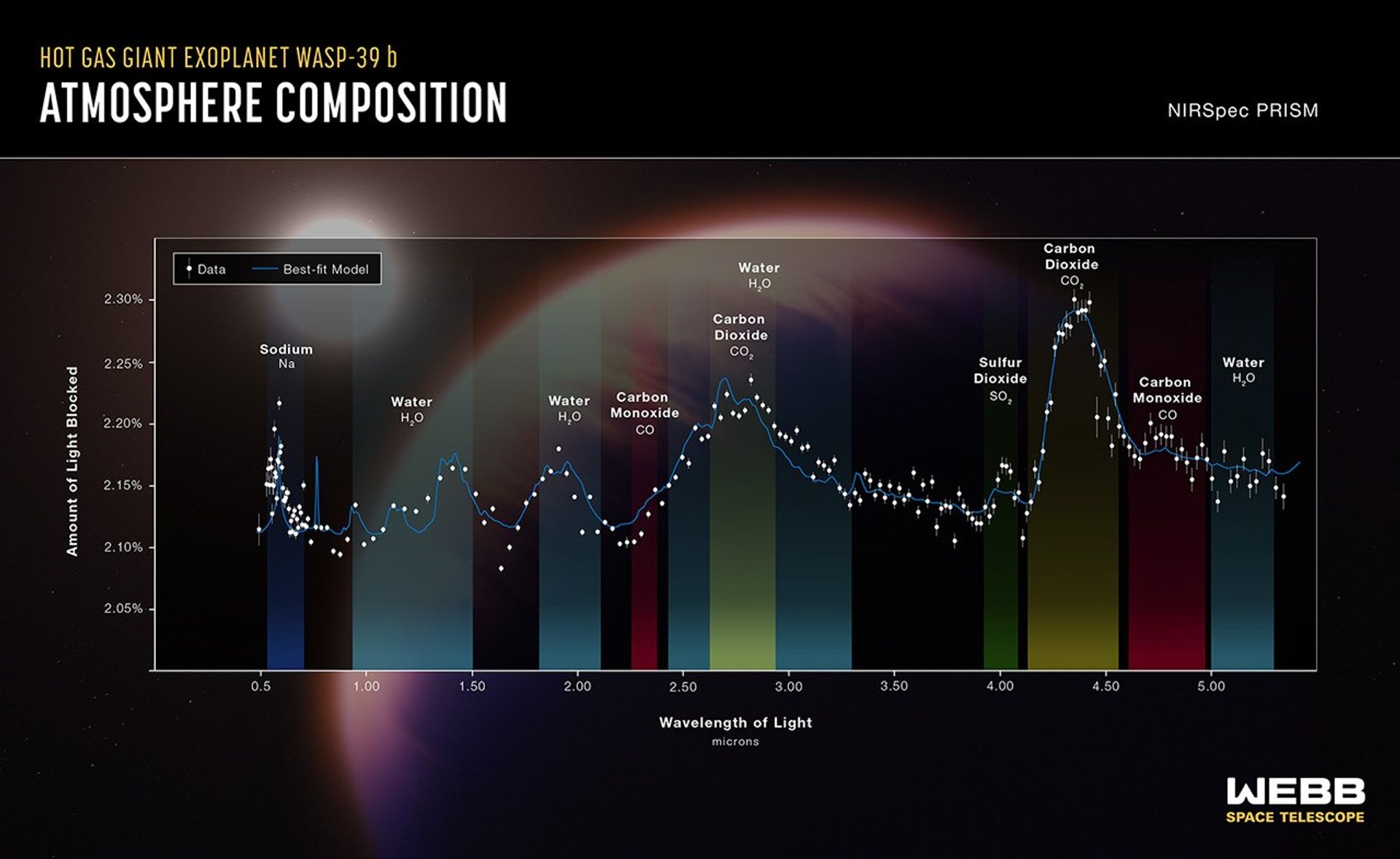
Webb can use transmission spectroscopy to characterize the composition of an exoplanet's atmosphere. Transmission spectroscopy compares the light filtered through the exoplanet's atmosphere to the light coming from the parent star.
Different types of chemicals in the atmosphere absorb different colors of the starlight spectrum, so the colors that are missing tell astronomers which atoms and molecules are present. By viewing infrared light with its sensitive spectrographs, Webb can pick up chemical fingerprints that can’t be detected in visible light.
The NIRSpec Integral Field Unit
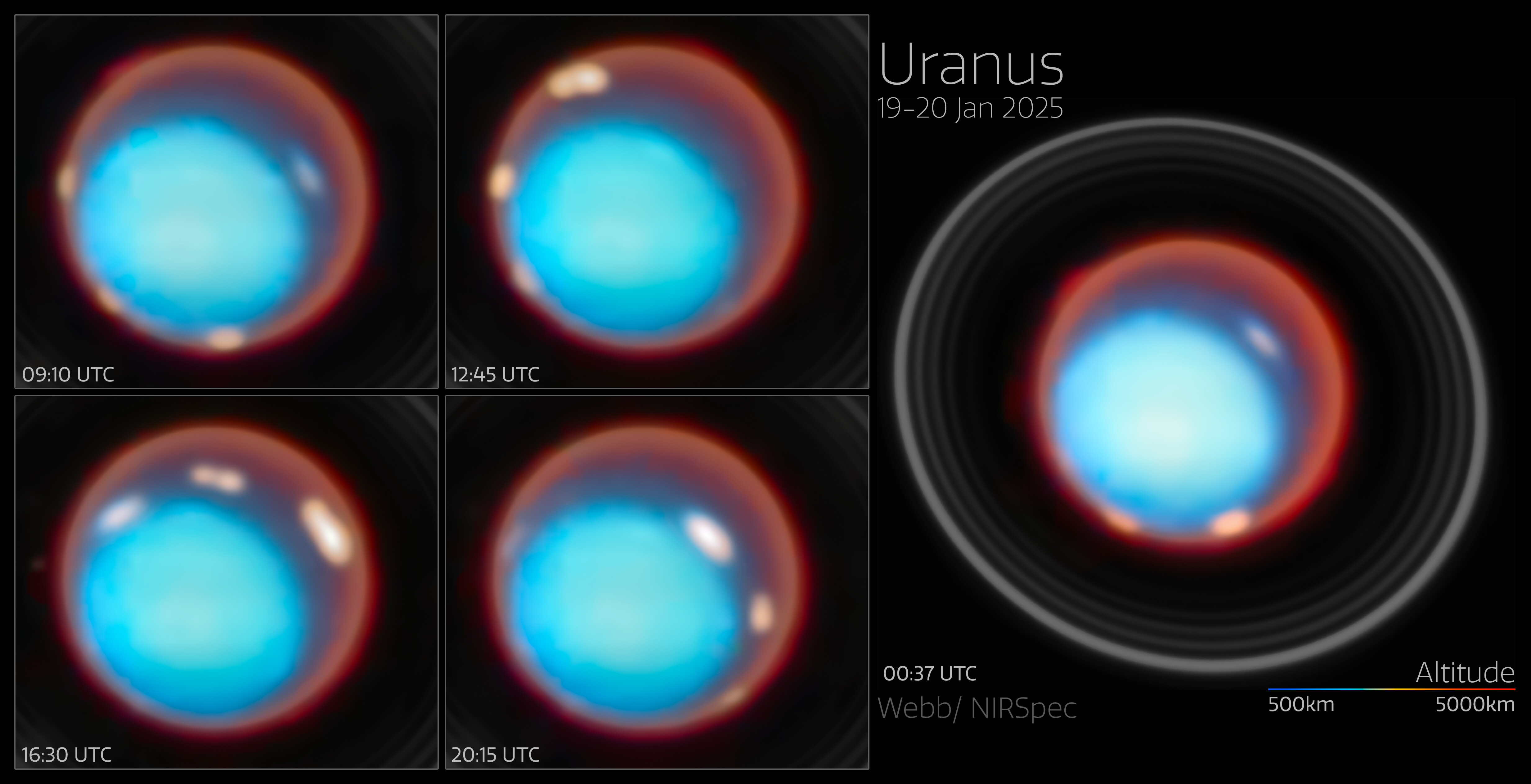
Webb’s Near-Infrared Spectrograph (NIRSpec) can give scientists data about the chemical composition of an exoplanet atmosphere, but it also has a special mode that combines imaging and spectroscopy. The Integral Field Unit (IFU) hardware can capture an image of the field of view along with individual spectra of each pixel in the field of view.
IFU observations allow astronomers to investigate the variations in properties of an object, such as composition, temperature, and motion. Essentially this allows scientist to map their observations spatially. Here is an example. This image of Uranus is not a high-resolution image from our primary camera - it is actually a map of the movement of auroras in the atmosphere made using IFU data.
Latest Images : Other Worlds Theme - Exoplanets & Brown Dwarfs
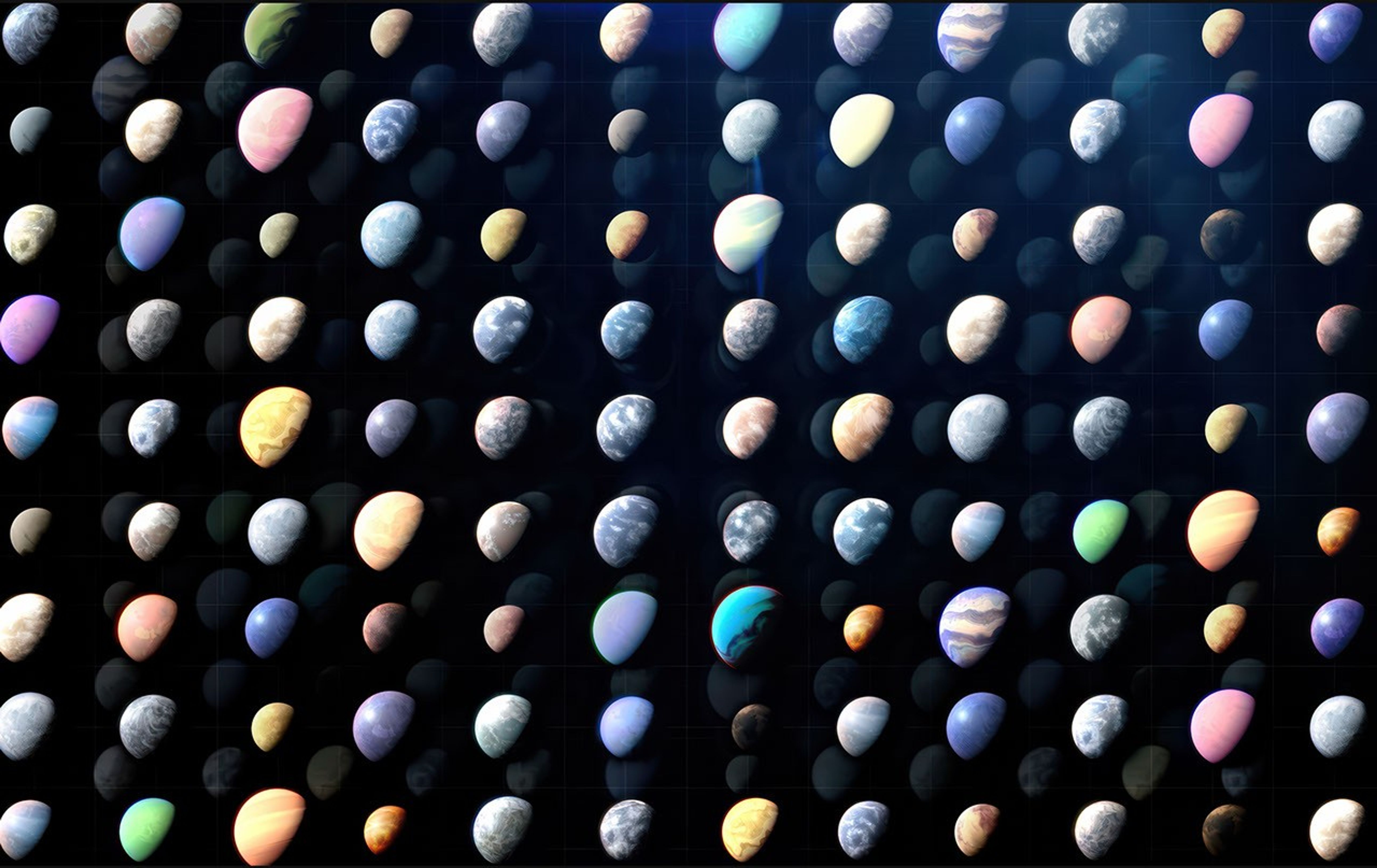
The image below is a SLIDESHOW of all NASA published imagery in the Other Worlds Theme focusing on exoplanets & brown dwarfs.
USAGE: Hover over the image to see the image title and controls. Click the arrows to move through the slide show, click the image to go to a detail page with more info and the ability to download the image at various resolutions.
Latest Images : Other Worlds Theme - Our Solar System
The image below is a SLIDESHOW of all NASA published imagery in the Other Worlds Theme focusing on Our Solar System.
USAGE: Hover over the image to see the image title and controls. Click the arrows to move through the slide show, click the image to go to a detail page with more info and the ability to download the image at various resolutions.

Latest Research: Other Worlds
Below are all NASA published science articles relevant to the Other Worlds Webb science theme. These articles include peer-reviewed science and blog entries (which at the time of publishing are "science in progress," and give previews of exciting new findings).
Filters
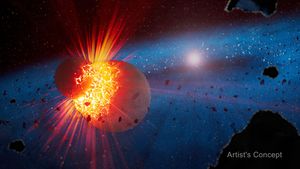
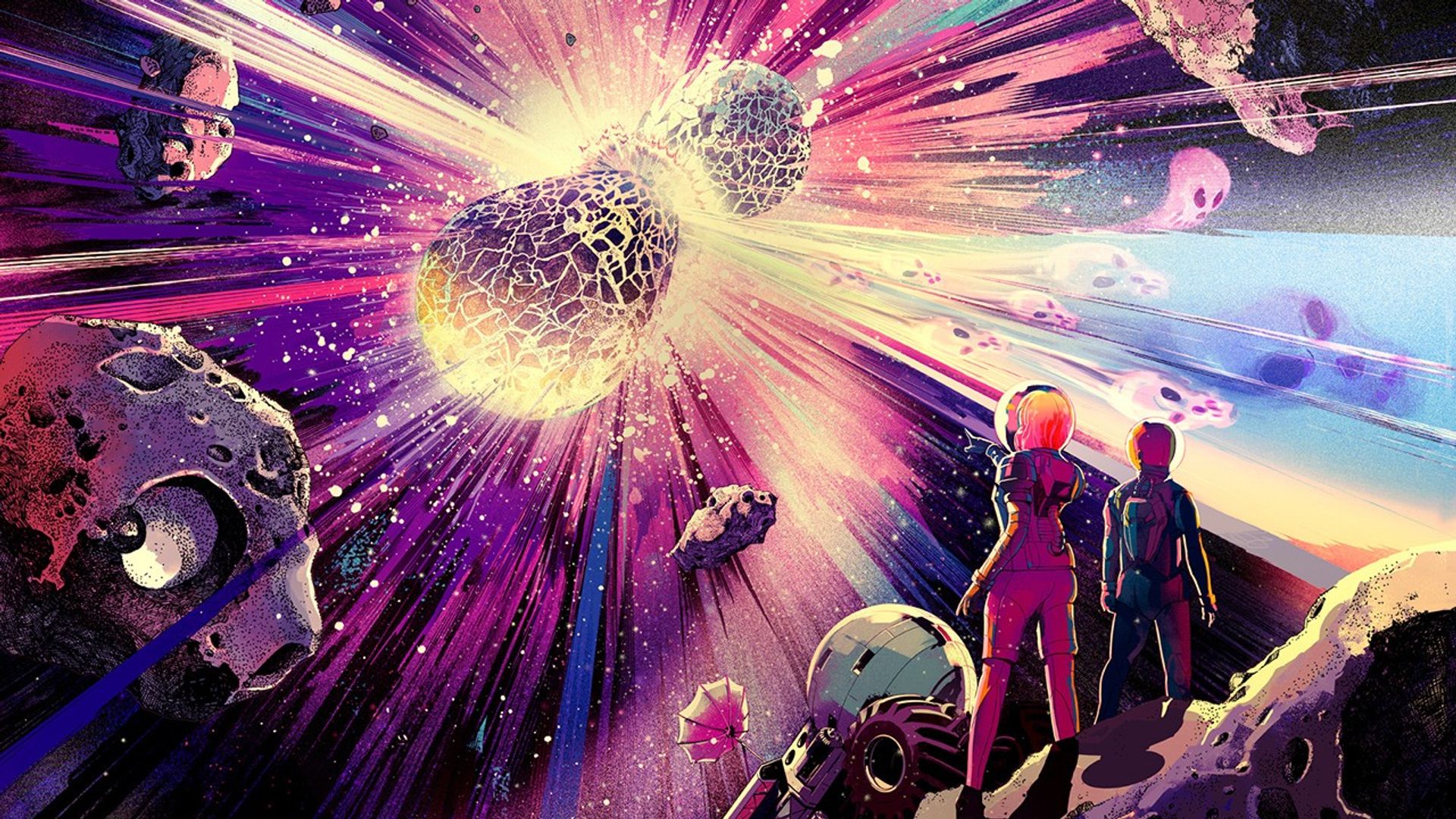
In the early history of our solar system, scientists theorize that a Mars-sized object called Theia smashed into the infant…
The types of collisions within young stellar systems known as extreme debris disks are relevant to scientists’ understanding of our…
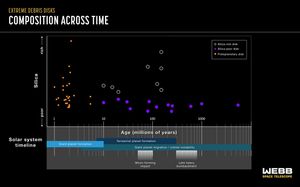
By investigating the compositions of extreme debris disks, scientists inferred that silica-rich disks are produced by high-energy impacts of Mars-sized…
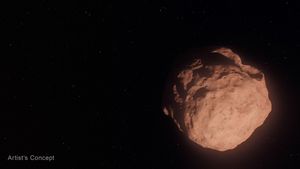
For the first time, scientists used the joint power of NASA’s Hubble and James Webb Space Telescopes to study some…
This artist’s concept depicts a Trans-Neptunian Object, a small, faint, icy body orbiting the Sun beyond the orbit of Neptune.…

One of the most recognizable features of NASA’s James Webb Space Telescope is its large, segmented, gold-coated mirror, which delivers…
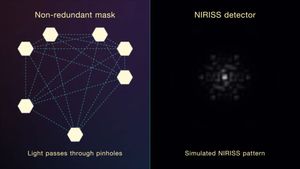
This animation shows a theoretical scenario to explain how an observational technique known as aperture masking interferometry (AMI) is conducted…
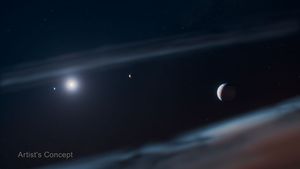
Astronomers using NASA’s James Webb Space Telescope have discovered a giant planet outside our solar system, called an exoplanet, hiding…
This artist’s concept shows the Beta Pictoris system with the discovered giant exoplanet Beta Pictoris d at the right. It…
Related Webb Science
How Will Webb Study Exoplanets?
NASA’s James Webb Space Telescope will primarily use its spectrographs–specialized instruments that capture and spread out light like a rainbow–to study exoplanets. By analyzing this data, known as spectra, researchers will be able to measure exoplanets’ compositions and chemistries.
Exploring Our Solar System with Webb
Whether exploring the small bodies or giant planets of our solar system, the James Webb Space Telescope is revolutionizing our understanding of our closest cosmic neighbors. With its powerful infrared instruments, sharp spatial resolution, and exquisite sensitivity, Webb is forever changing our view of our celestial backyard.