


















1 min read
Infrared Universe: The Hidden Maffei
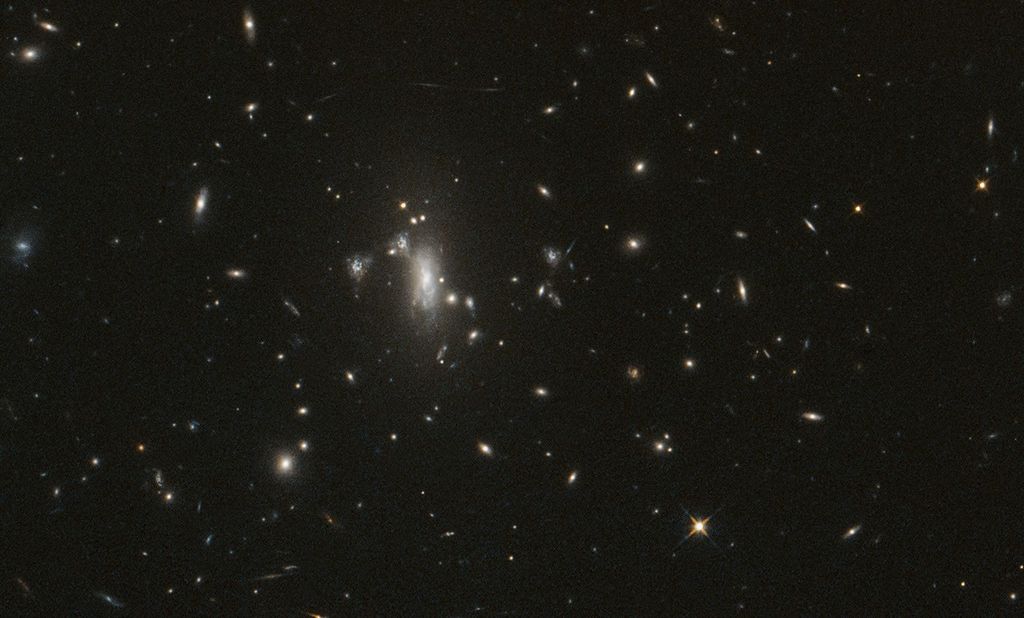
Infrared light helps us study galaxies that might otherwise be hidden. One example is Maffei 2, a barred starburst galaxy that happens to fall behind our own Milky Way. In visible light, the thick clouds of dust within our own galaxy almost entirely obscure our view of it. Switching to longer infrared wavelengths lets the light pass through to reveal this hidden gem.
Optical: This galaxy is obscured behind a dust cloud.
Credit: DSS, IPAC
Infrared: Slightly longer wavelengths of infrared light penetrate the dust.
Credit: 2MASS, IPAC
Near-Infrared: Even longer infrared wavelengths show us the dust features of the galaxy.
Credit: NASA, JPL-Caltech, J. Turner (UCLA)
About the Infrared Universe Collection
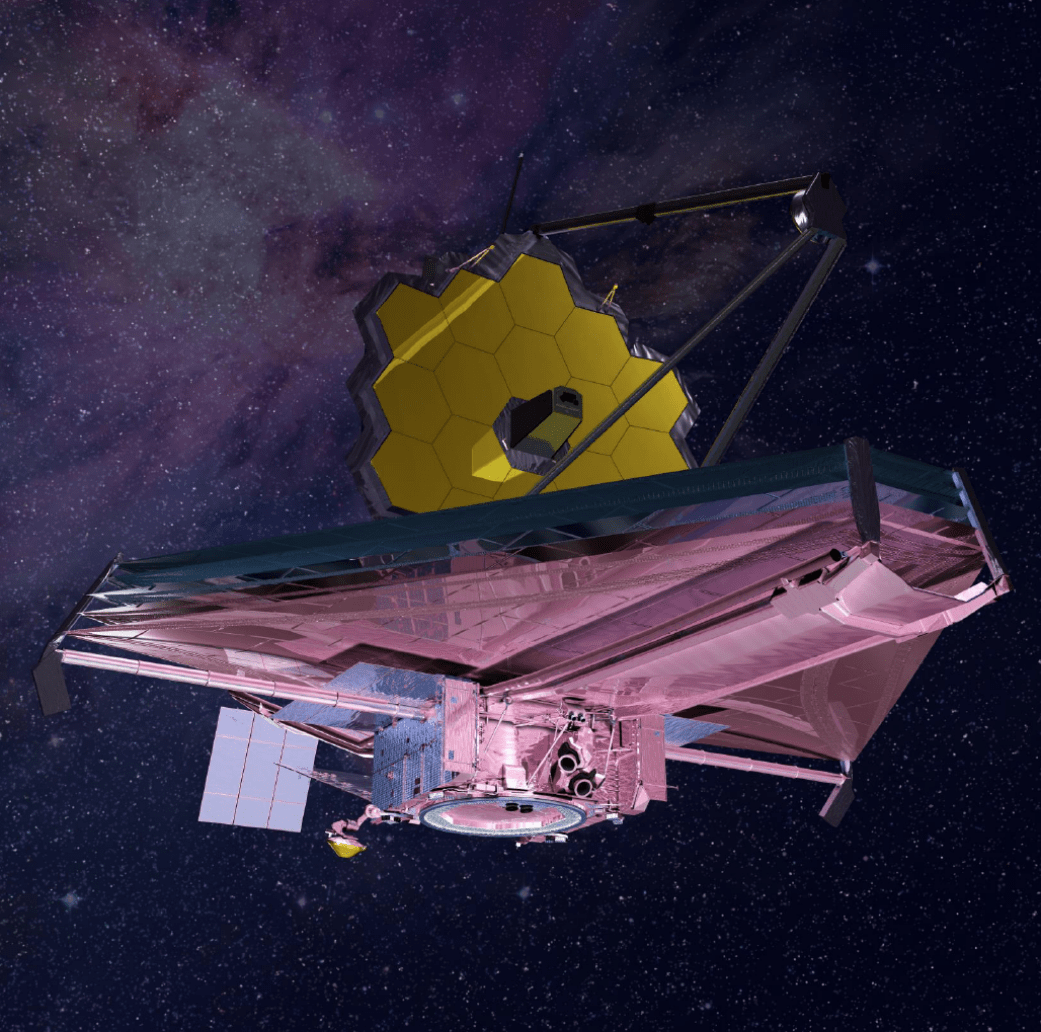
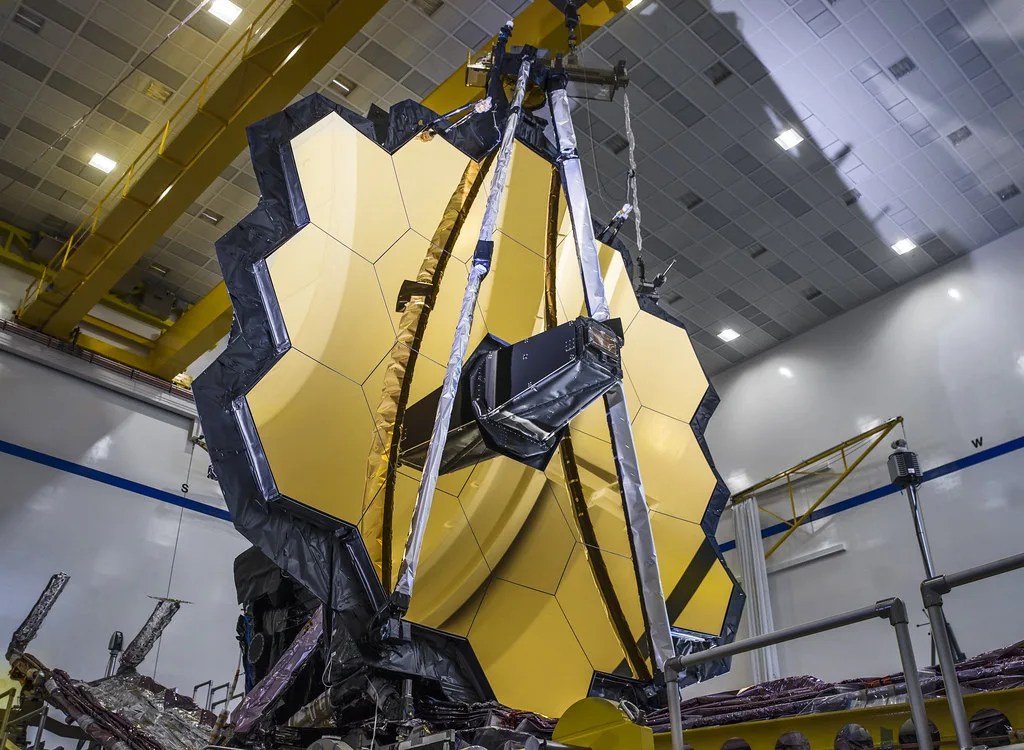
The human eye can only see visible light, but objects give off a variety of wavelengths of light. To see an object as it truly exists, we would ideally look at its appearance through the full range of the electromagnetic spectrum. Telescopes show us objects as they appear emitting different energies of light, with each wavelength conveying unique information about the object. The Webb Space Telescope will study infrared light from celestial objects with much greater clarity and sensitivity than ever before. Explore the Infrared Universe. Adapted from Cool Cosmos by IPAC, with additional contributions from Bruno Merin and Miguel Merin (Pludo).
- Release DateMay 22, 2018
- CreditVideo: NASA, ESA, Gregory Bacon (STScI)
Downloads
Share
Details
Laura Betz
NASA’s Goddard Space Flight Center
Greenbelt, Maryland
laura.e.betz@nasa.gov
NASA, ESA, Gregory Bacon (STScI)