






















1 min read
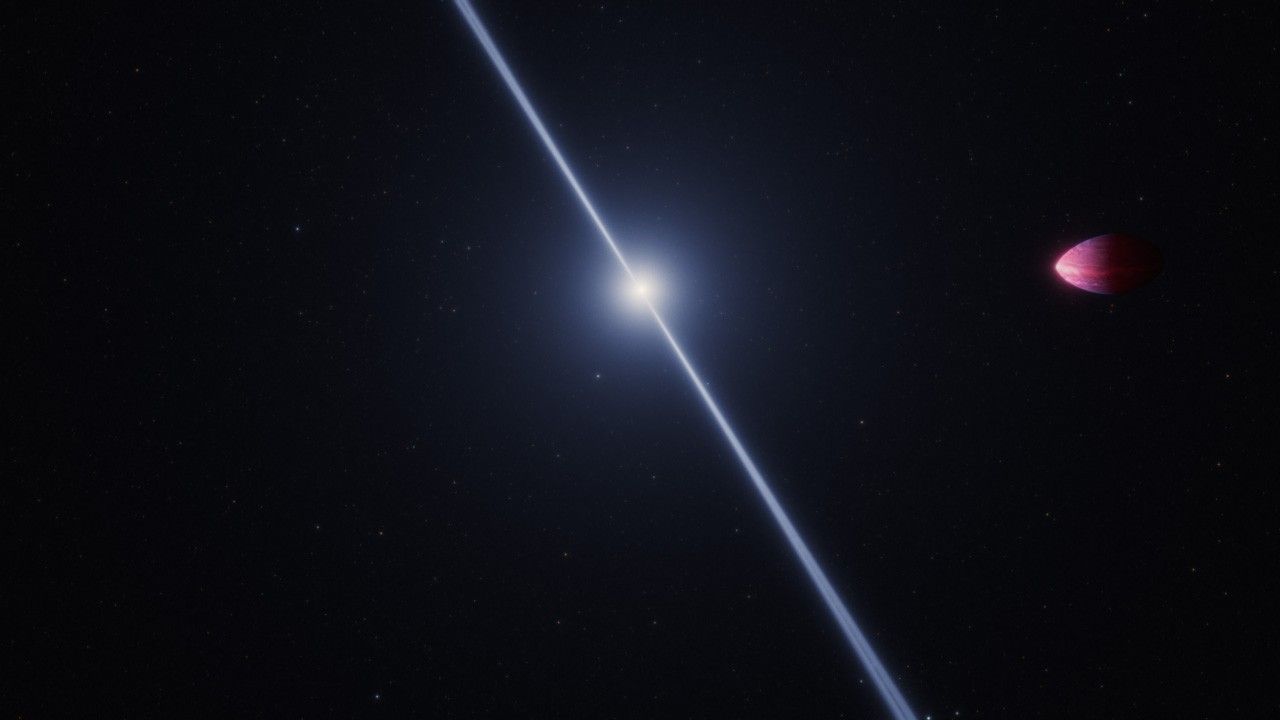
Exoplanet PSR J2322-2650b and Pulsar (Artist’s Concept)
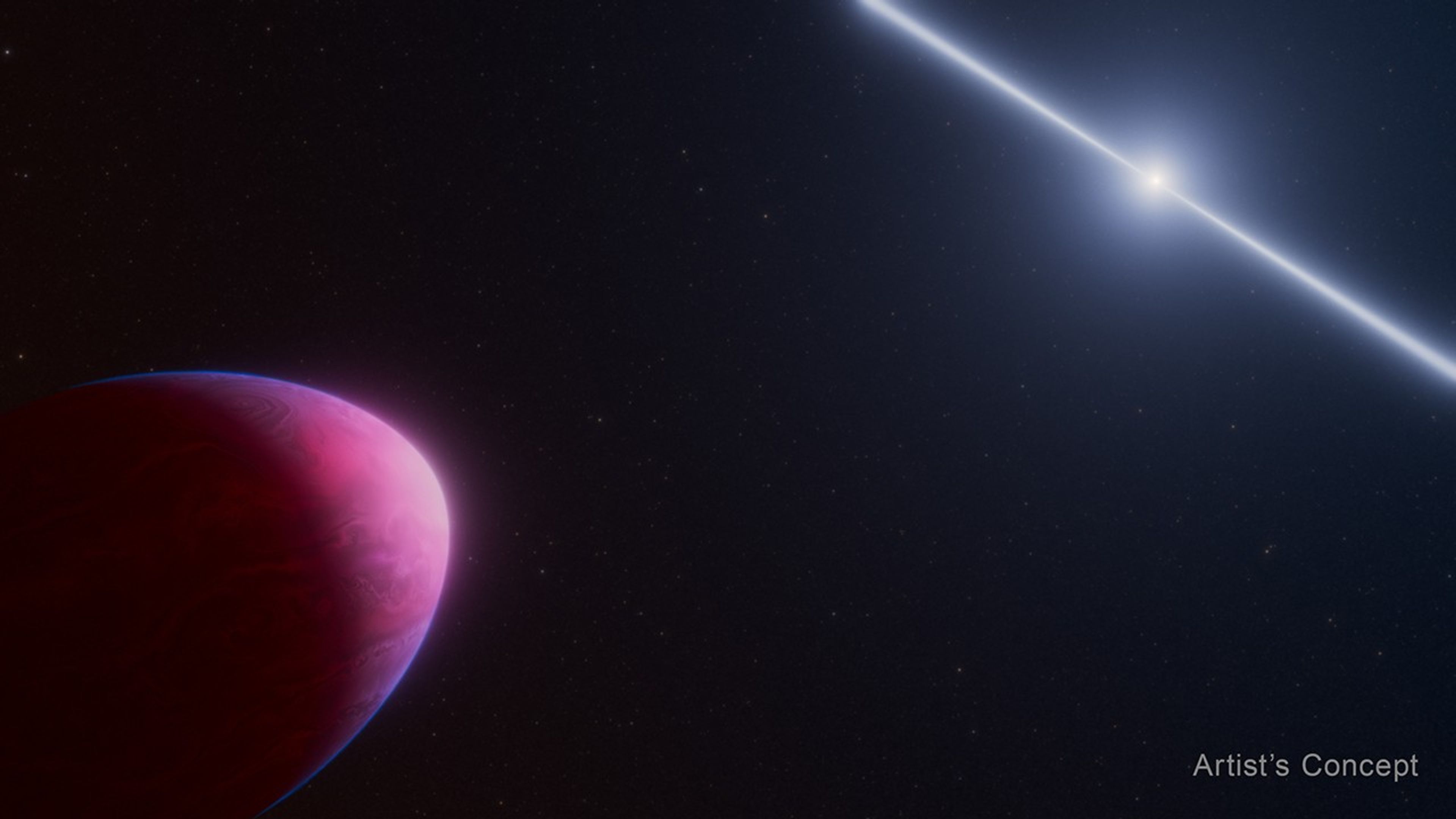
This artist’s concept shows what the exoplanet called PSR J2322-2650b (left) may look like as it orbits a rapidly spinning neutron star called a pulsar (right). Two radio beams are emitted from the pulsar’s magnetic poles, whipping around like a beam from a lighthouse. Gravitational forces from the much heavier pulsar are pulling the Jupiter-mass world into the shape of a lemon. This planet, studied with NASA’s James Webb Space Telescope, appears to have an exotic atmosphere unlike any ever seen before. How the planet came to be is a mystery.
- Release DateDecember 16, 2025
- Science ReleaseNASA’s Webb Observes Exoplanet Whose Composition Defies Explanation
- CreditIllustration: NASA, ESA, CSA, Ralf Crawford (STScI)
Related Images & Videos
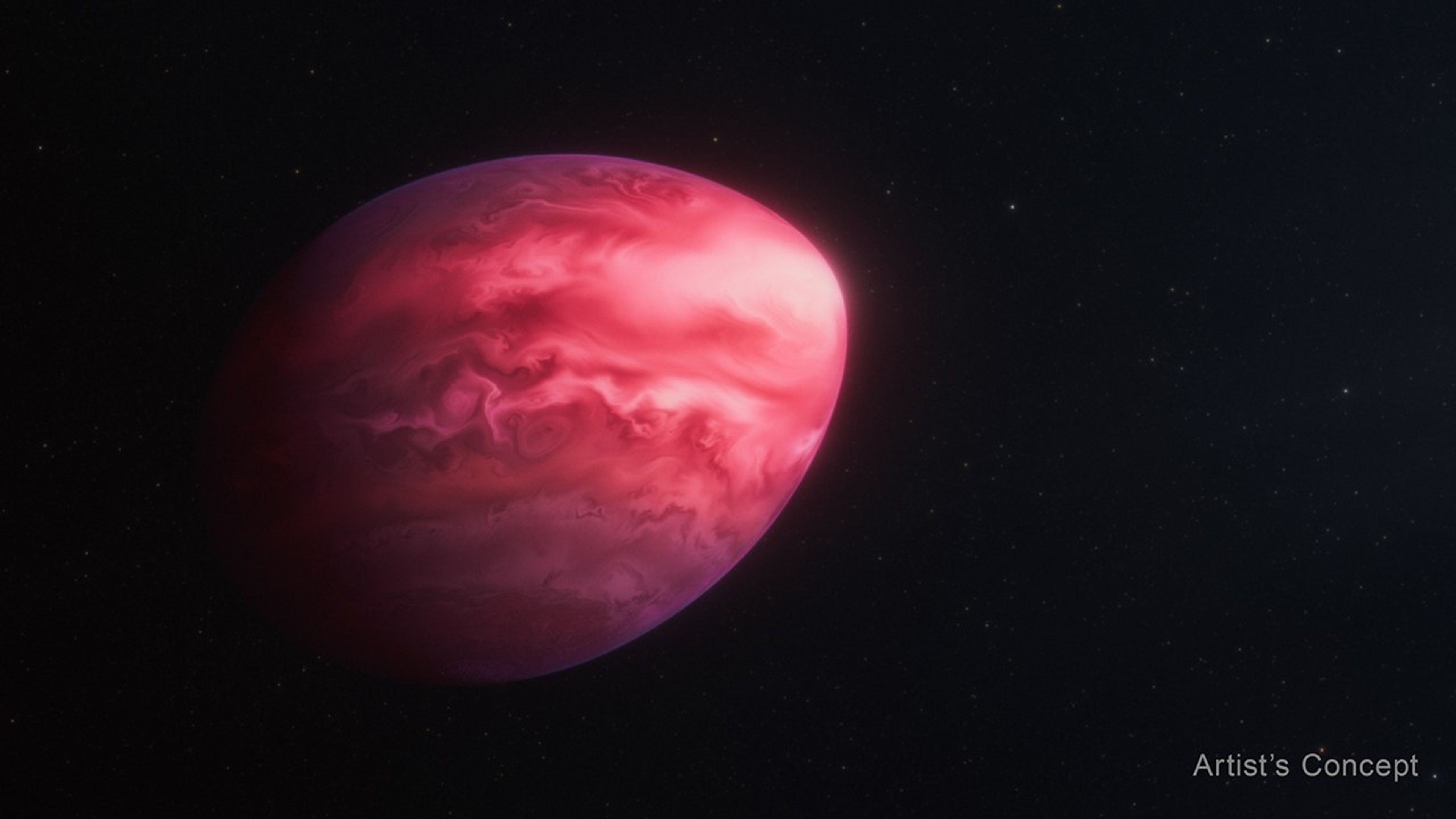
Exoplanet PSR J2322-2650b Orbiting a Pulsar
This animation shows an exotic exoplanet orbiting a distant pulsar, or rapidly rotating neutron star with radio pulses. The planet, which orbits about 1 million miles away from the pulsar, is stretched into a lemon shape by the pulsar’s strong gravitational tides. NASA&rsqu...
Share
Details
Laura Betz
NASA’s Goddard Space Flight Center
Greenbelt, Maryland
laura.e.betz@nasa.gov