






1 min read
Multiwavelength View of NGC 1300 (ALMA, VLT Compass Image)
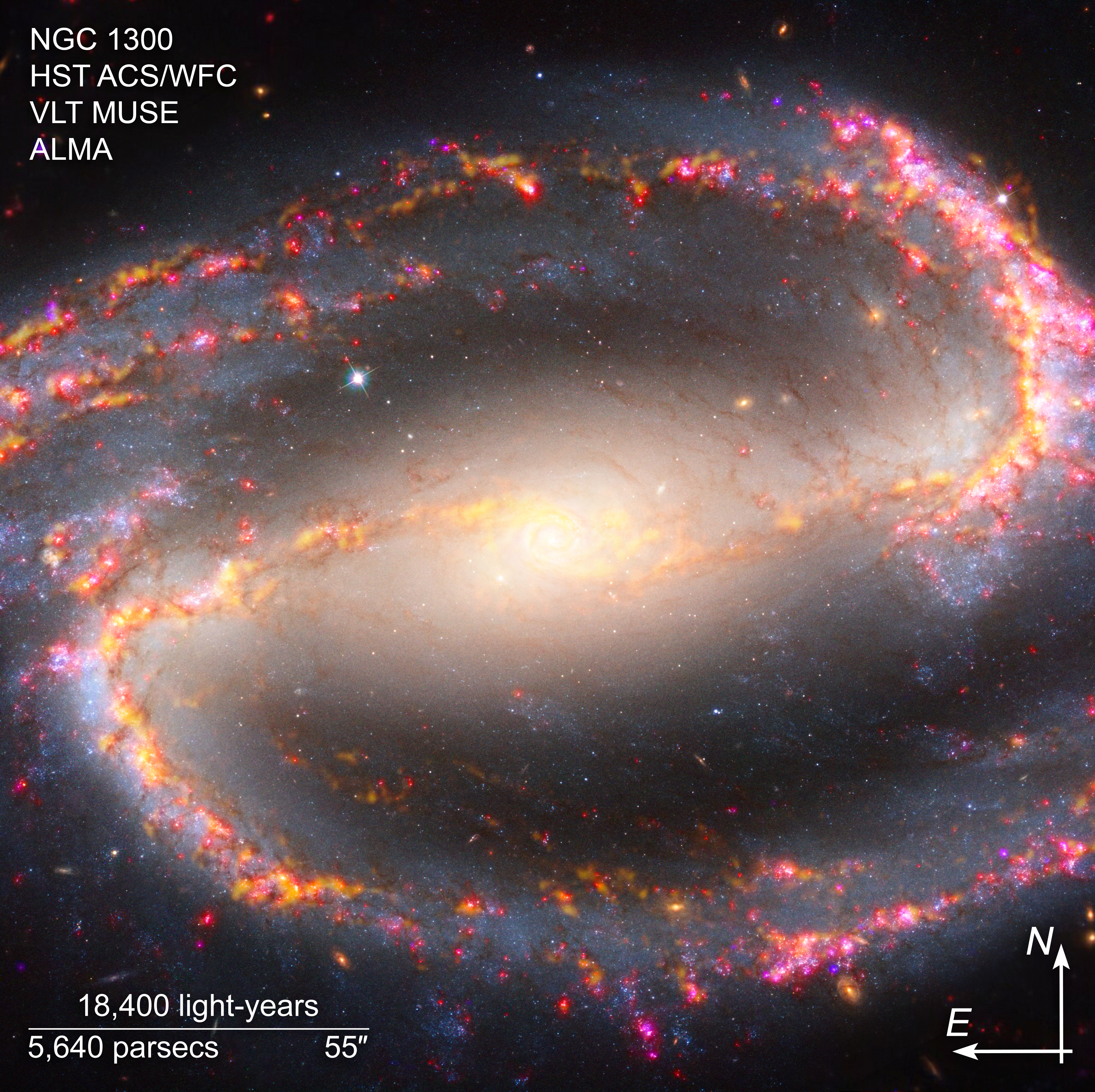
This composite image of NGC 1300, captured by the Hubble Space Telescope’s Advanced Camera for Surveys, the Atacama Large Millimeter/submillimeter Array (ALMA), and the Very Large Telescope’s Multi Unit Spectroscopic Explorer (MUSE) instrument, shows compass arrows and labels for reference.
The north and east compass arrows show the orientation of the image on the sky. Note that the relationship between north and east on the sky (as seen from below) is flipped relative to direction arrows on a map of the ground (as seen from above).
The scale bar is labeled in light-years, which is the distance that light travels in one Earth-year. (It takes 18,400 years for light to travel a distance equal to the length of the bar.) One light-year is equal to about 5.88 trillion miles or 9.46 trillion kilometers. The field of view shown in this image is approximately 59,000 light-years across.
This composite image shows visible, near-infrared, and radio wavelengths of light that have been translated into visible-light colors.
- Release DateJanuary 19, 2022
- Science ReleaseCapturing All That Glitters in Galaxies with NASA’s Webb
- CreditNASA, ESA, ESO-Chile, ALMA, NAOJ, NRAO
Related Images & Videos
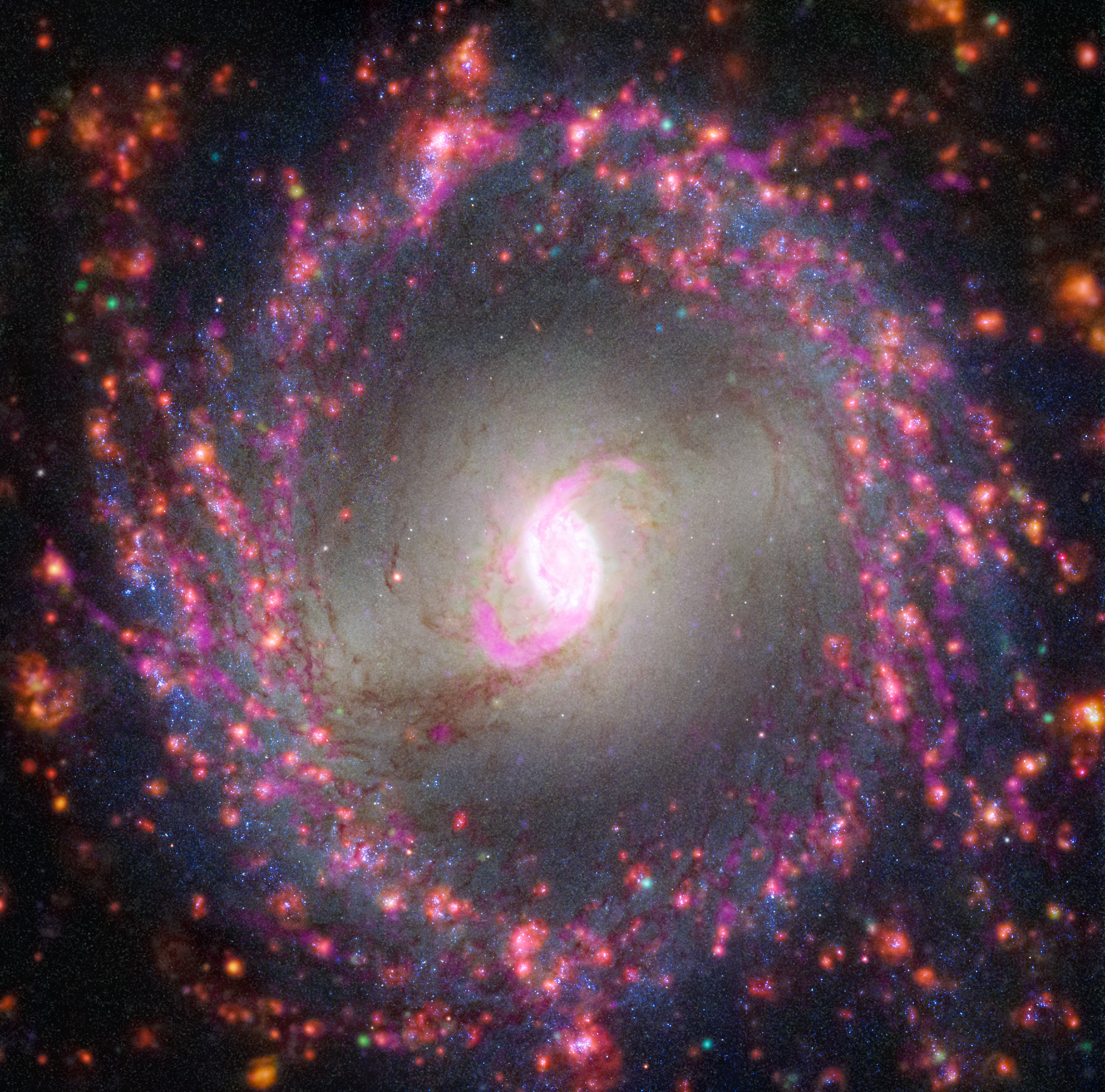
Multiwavelength View of NGC 3351 (Hubble, VLT, ALMA)
This image of spiral galaxy NGC 3351 combines observations from several observatories to reveal details about its stars and gas. Radio observations from the Atacama Large Millimeter/submillimeter Array (ALMA) show dense molecular gas in magenta. The Very Large Telescope’s Multi...
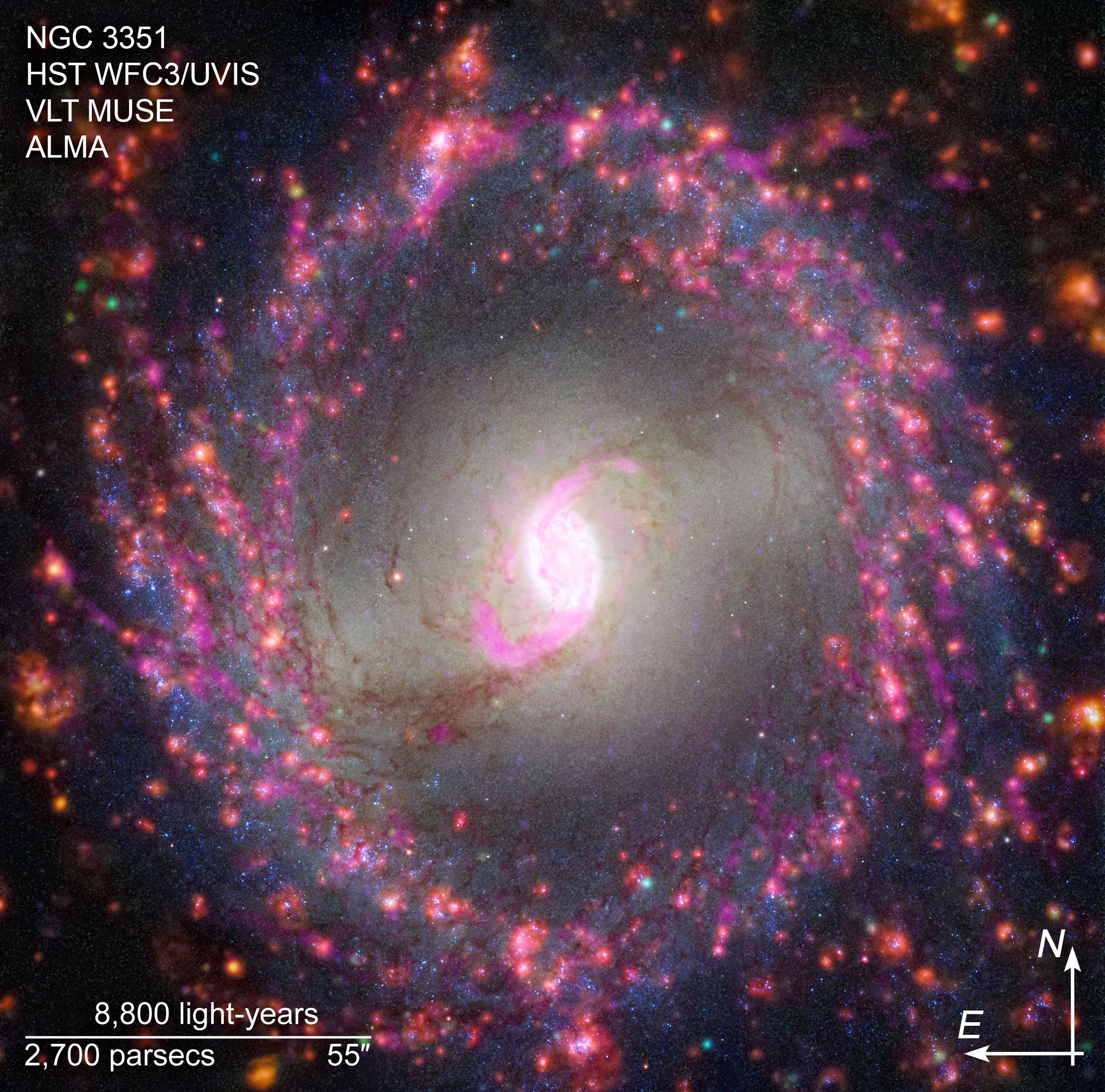
Multiwavelength View of NGC 3351 (Hubble, VLT, ALMA Compass Image)
This composite image of NGC 3351, captured by the Hubble Space Telescope’s Wide Field Camera 3, the Atacama Large Millimeter/submillimeter Array (ALMA), and the Very Large Telescope’s Multi Unit Spectroscopic Explorer (MUSE) instrument, shows compass arrows and labels for...
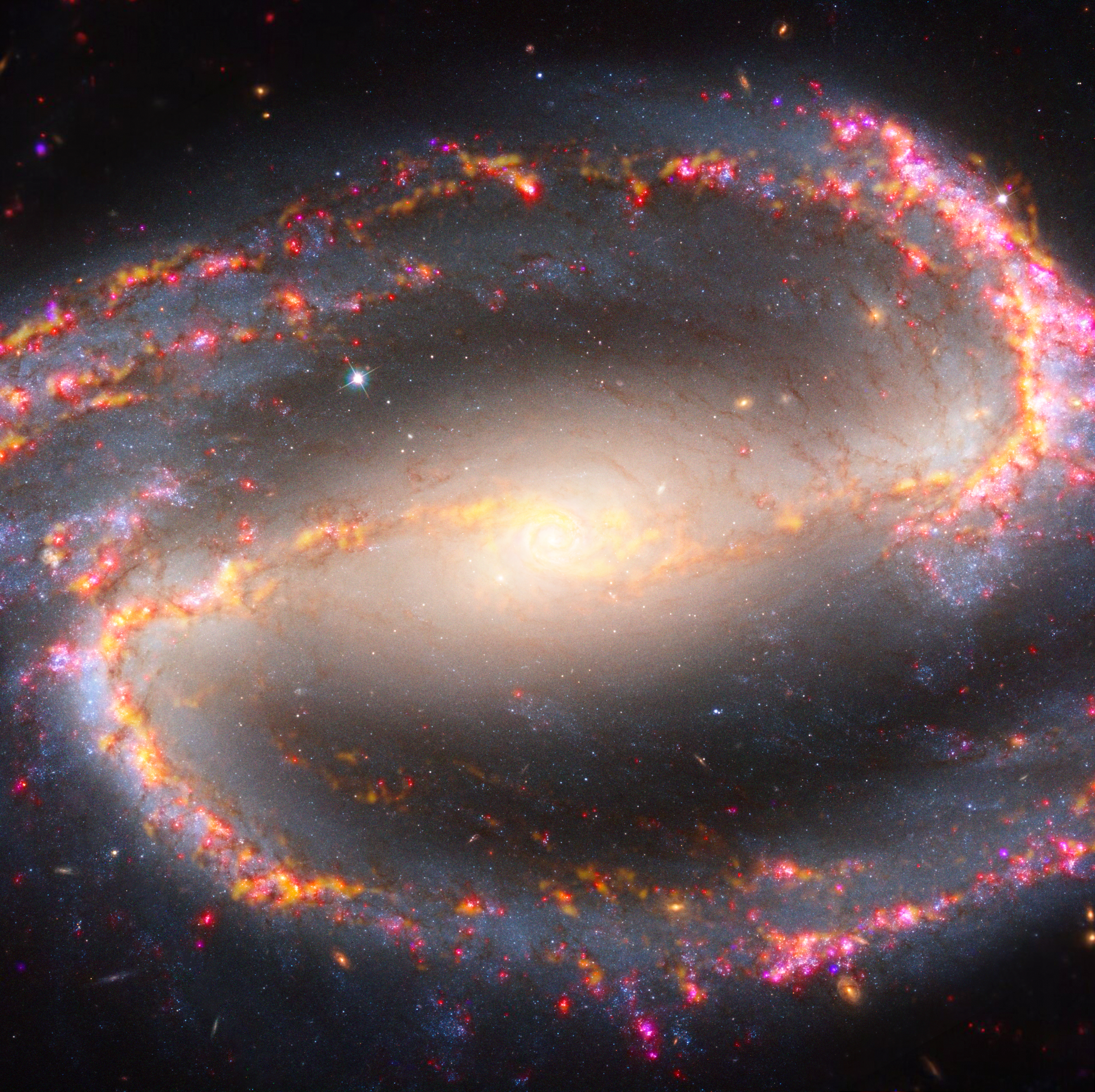
Multiwavelength View of NGC 1300 (ALMA, VLT)
This image of spiral galaxy NGC 1300 combines multiple observations to map stellar populations and gas. Radio light observed by the Atacama Large Millimeter/submillimeter Array (ALMA), represented in yellow, highlights the clouds of cold molecular gas that provide the raw...
Share
Details
Laura Betz
NASA’s Goddard Space Flight Center
Greenbelt, Maryland
laura.e.betz@nasa.gov
NASA, ESA, ESO-Chile, ALMA, NAOJ, NRAO