










1 min read
Pismis 24 (NIRCam Compass Image)

This image of Pismis 24, also called NGC 6357, was captured by the James Webb Space Telescope’s NIRCam (Near-Infrared Camera). For reference, it shows compass arrows, scale bar, and color key. The north and east compass arrows show the orientation of the image on the sky. Note that the relationship between north and east on the sky (as seen from below) is flipped to the direction arrows on a map of the ground (as seen from above). The scale bar is labeled 1 light-year, which is the distance that light travels in one Earth-year. (One light-year is equal to about 5.88 trillion miles or 9.46 trillion kilometers.) This image shows invisible near-infrared wavelengths of light that have been translated into visible-light colors. The color key shows which NIRCam filters were used when collecting the light. The color of each filter name is the visible light color used to represent the infrared light that passes through that filter.
About the Object
- R.A. PositionR.A. PositionRight ascension – analogous to longitude – is one component of an object's position.17:24:44.38
- Dec. PositionDec. PositionDeclination – analogous to latitude – is one component of an object's position.-34:11:35.35
- ConstellationConstellationOne of 88 recognized regions of the celestial sphere in which the object appears.Scorpius
- DistanceDistanceThe physical distance from Earth to the astronomical object. Distances within our solar system are usually measured in Astronomical Units (AU). Distances between stars are usually measured in light-years. Interstellar distances can also be measured in parsecs.5,500 light-years
- DimensionsDimensionsThe physical size of the object or the apparent angle it subtends on the sky.Image is 5.6 arcminutes tall (about 9 light-years) and 4 arcminutes across (about 6.5 light-years).
About the Data
- Data DescriptionData DescriptionProposal: A description of the observations, their scientific justification, and the links to the data available in the science archive.
Science Team: The astronomers who planned the observations and analyzed the data. "PI" refers to the Principal Investigator.This image was created with Webb data from proposal: 6783 (M. Garcia Marin). Image processing: Alyssa Pagan (STScI).
- InstrumentInstrumentThe science instrument used to produce the data.NIRCam
- Exposure DatesExposure DatesThe date(s) that the telescope made its observations and the total exposure time.06 Sept 2024
- FiltersFiltersThe camera filters that were used in the science observations.F090W, F187N, F200W, F335M, F470N
- Object NameObject NameA name or catalog number that astronomers use to identify an astronomical object.Pismis 24, HD 319718, NGC 6357
- Object DescriptionObject DescriptionThe type of astronomical object.Star-forming region
- Release DateSeptember 4, 2025
- Science ReleaseGlittering Glimpse of Star Birth From NASA’s Webb Telescope
- CreditImage: NASA, ESA, CSA, STScI; Image Processing: Alyssa Pagan (STScI)
This image is a composite of separate exposures acquired by the James Webb Space Telescope using the NIRCam instrument. Several filters were used to sample specific wavelength ranges. The color results from assigning different hues (colors) to each monochromatic (grayscale) image associated with an individual filter. In this case, the assigned colors are: Blue: F090W, Cyan: F187N, Green/Yellow: F200W, Orange: F335M, Red: F470N
Related Images & Videos
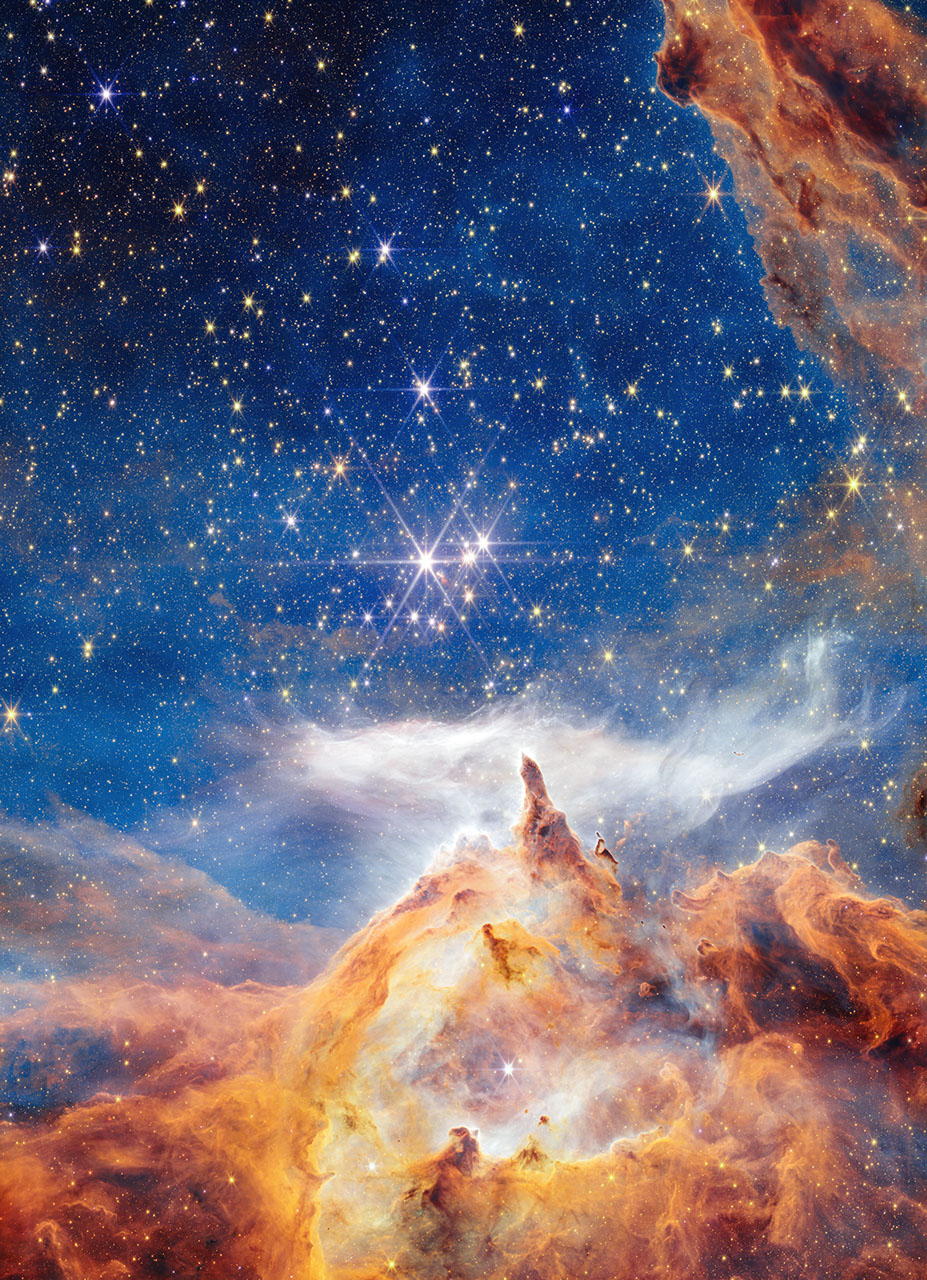
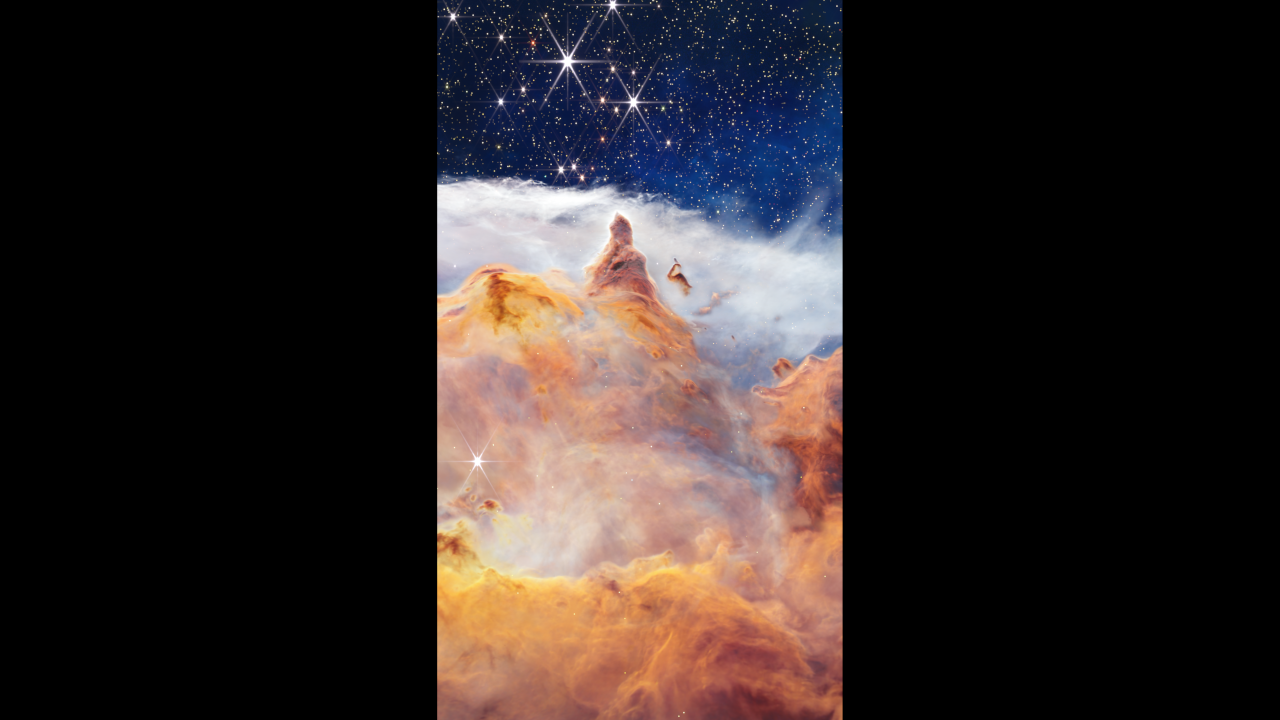
Expedition to Star Cluster Pismis 24
This scientific visualization takes viewers on a journey to a glittering young star cluster called Pismis 24. NASA’s James Webb Space Telescope captured this fantastical scene in the heart of the Lobster Nebula, approximately 5,500 light-years from Earth. This image, ...
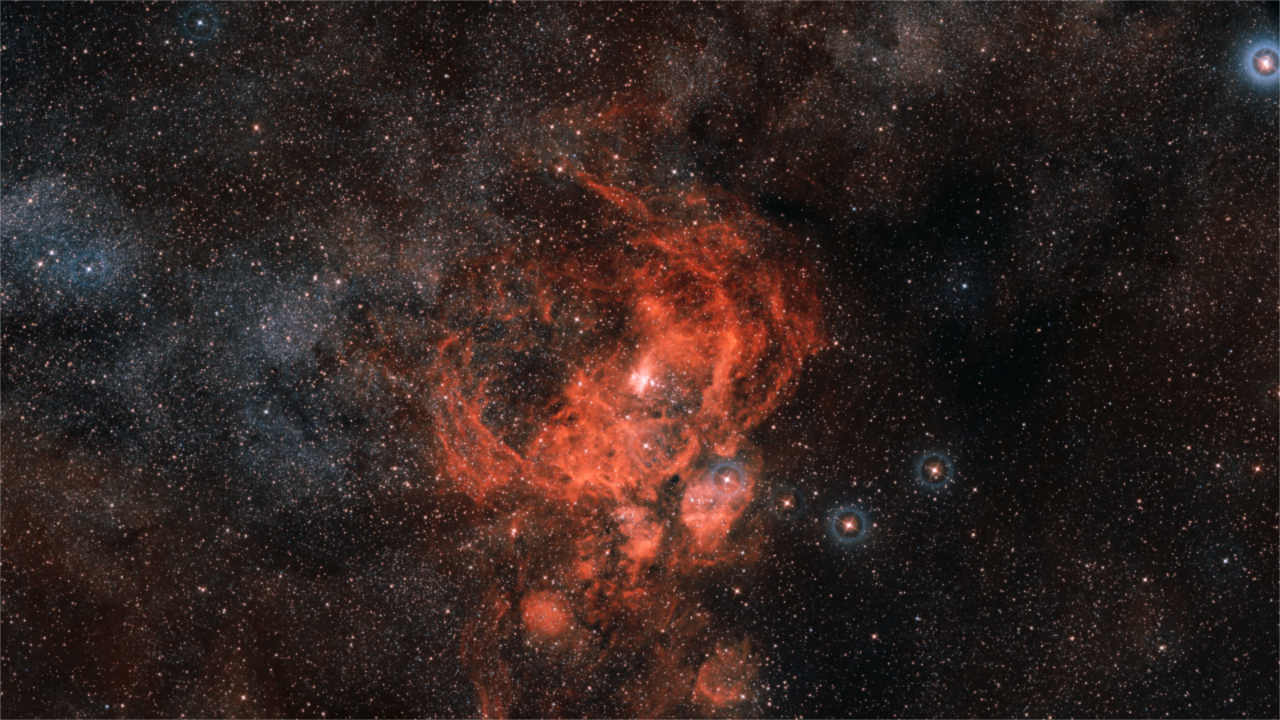
Zoom to Pismis 24
This zoom-in video shows the location of the young star cluster Pismis 24 on the sky. It begins with a ground-based photo of the constellation Scorpius by the late astrophotographer Akira Fujii. The sequence closes in on the Lobster Nebula, using views from the Digitized Sky Surv...
Share
Details
Laura Betz
NASA’s Goddard Space Flight Center
Greenbelt, Maryland
laura.e.betz@nasa.gov