












1 min read
Protoplanetary Disk XUE 1 (MIRI Emission Spectrum: 4.95–5.15 microns)
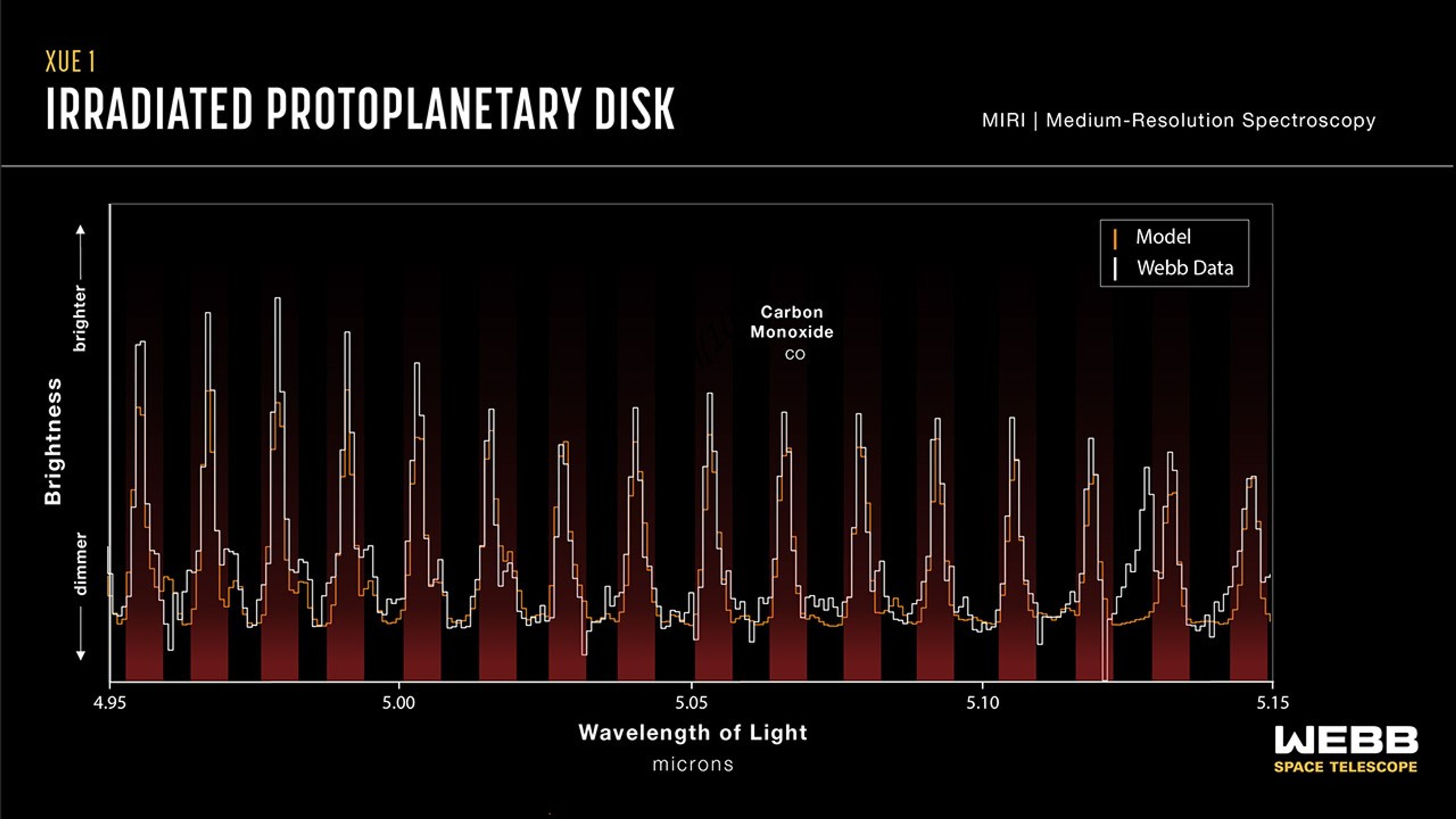
This graphic presents some of the first results from the eXtreme UV Environments (XUE) James Webb Space Telescope program. Astronomers focused on rocky-planet-forming regions of disks in the Lobster Nebula using Webb’s Medium Resolution Spectrometer (MRS) of the Mid-Infrared Instrument (MIRI). This first result focuses on the protoplanetary disk termed XUE 1, which is located in the star cluster Pismis 24.
This graphic features the observed signatures of carbon monoxide spanning 4.95 to 5.15 microns.
- Release DateNovember 30, 2023
- Science ReleaseWebb Study Reveals Rocky Planets Can Form in Extreme Environments
- CreditIllustration: NASA, ESA, CSA, María Claudia Ramírez-Tannus (MPIA), Joseph Olmsted (STScI)
Related Images & Videos
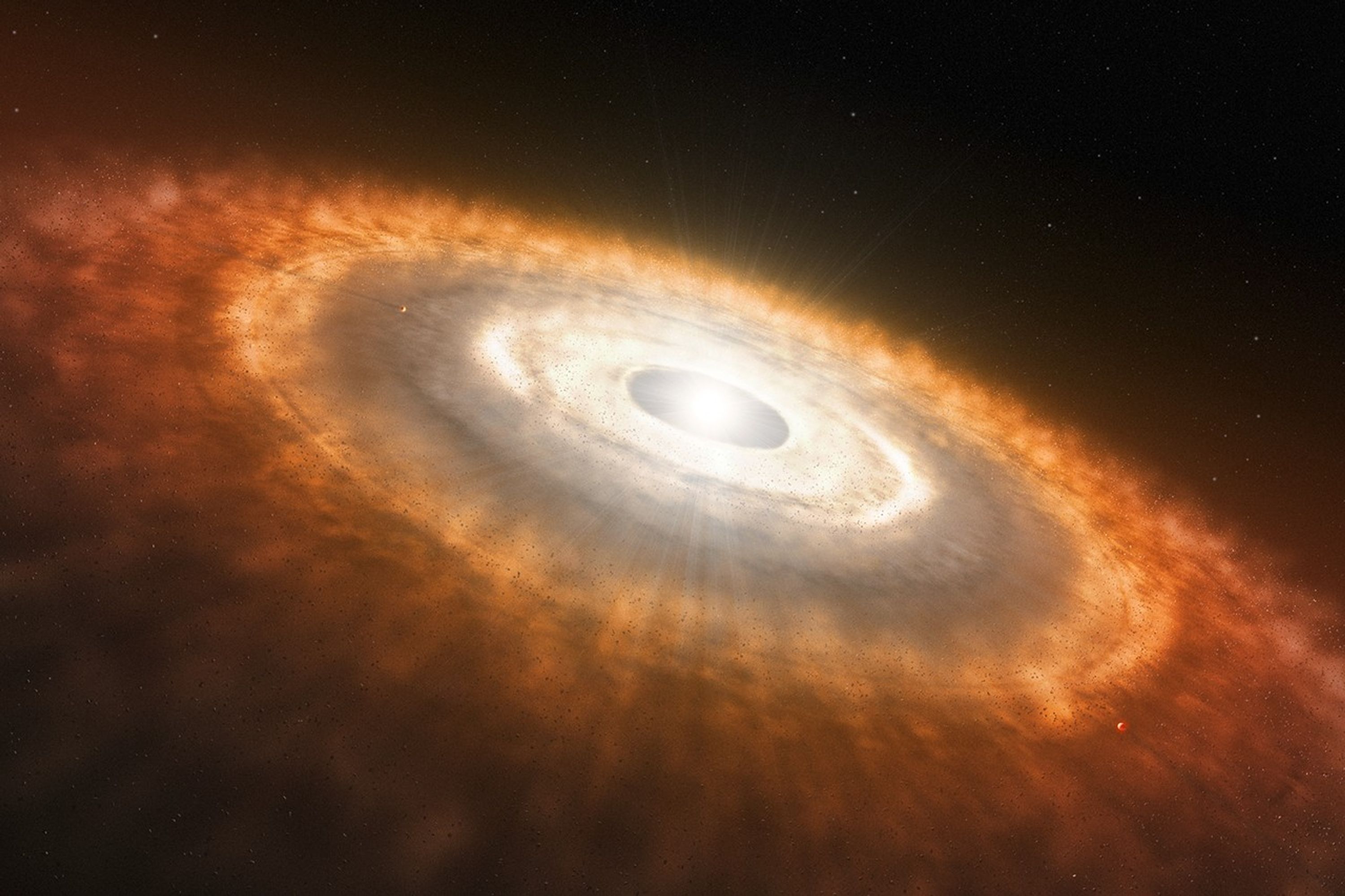
Protoplanetary Disk XUE 1 (Artist Concept)
This is an artist’s impression of a young star surrounded by a protoplanetary disk in which planets are forming. An international team of astronomers have used NASA’s James Webb Space Telescope to provide the first observation of water and other molecules in the highly...
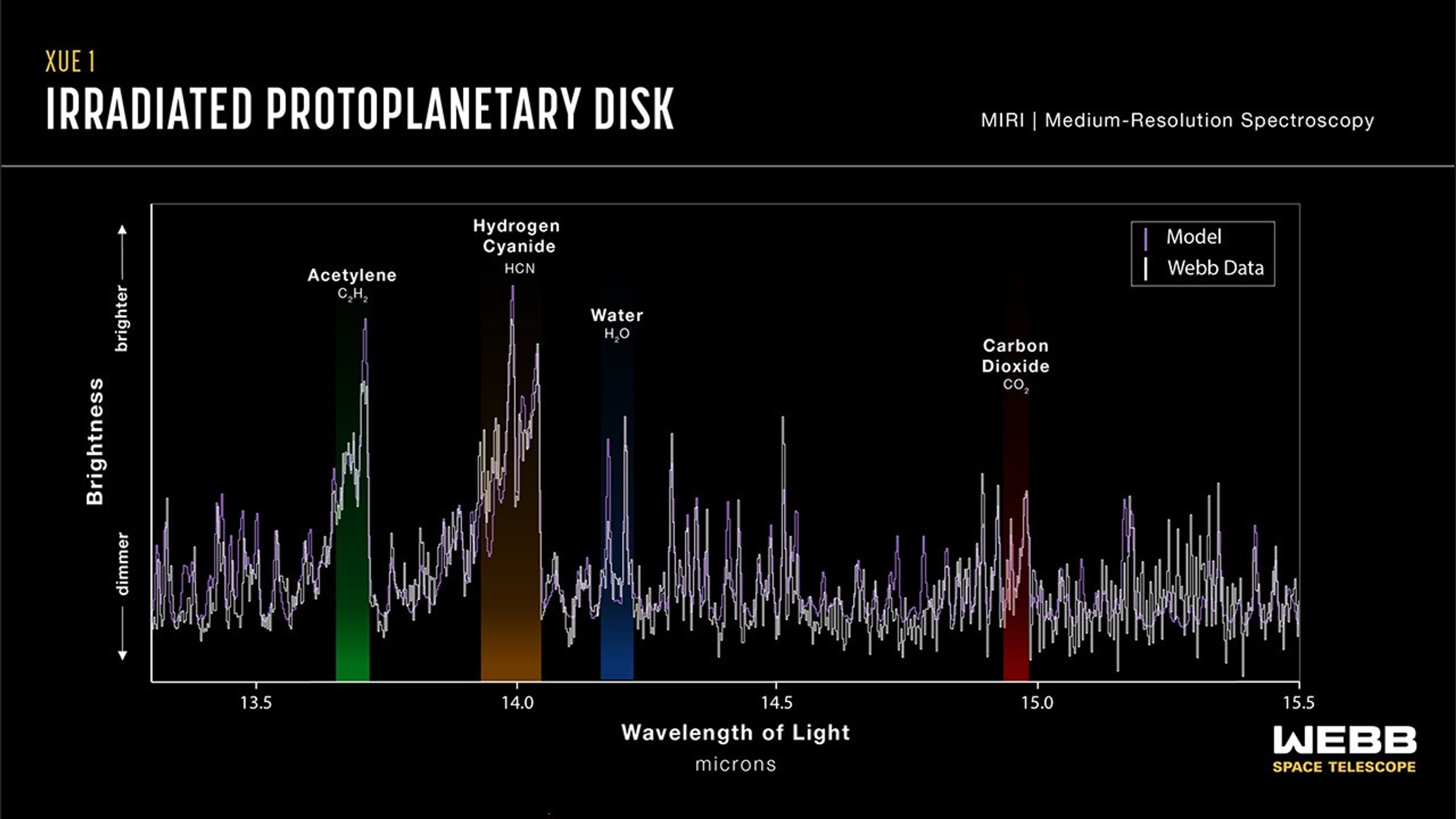
Protoplanetary Disk XUE 1 (MIRI Emission Spectrum: 13.3–15.5 microns)
This graphic presents some of the first results from the eXtreme UV Environments (XUE) James Webb Space Telescope program. Astronomers focused on rocky-planet-forming regions of disks in the Lobster Nebula using Webb’s Medium Resolution Spectrometer (MRS) of the Mid-Infrared...
Share
Details
Laura Betz
NASA’s Goddard Space Flight Center
Greenbelt, Maryland
laura.e.betz@nasa.gov
NASA, ESA, CSA, María Claudia Ramírez-Tannus (MPIA), Joseph Olmsted (STScI)