























1 min read
Wavelength Sensitivity of Hubble, Webb, Roman, and Other Observatories

Planets, stars, galaxies, and other objects in space give off a wide range of visible and invisible forms of light. Because different forms of light have different characteristics, no single observatory can detect all wavelengths. Astronomers typically rely on data from multiple ground- and space-based telescopes to fully understand the objects and phenomena they are studying.
This illustration shows the wavelength sensitivity of a number of current and future space- and ground-based observatories, along with their position relative to the ground and to Earth’s atmosphere. The wavelength bands are arranged from shortest (gamma rays) to longest (radio waves). The vertical color bars show the relative penetration of each band of light through Earth’s atmosphere.
From left to right:
The Fermi Gamma-ray Space Telescope detects gamma rays. Fermi is in low-Earth orbit, just above the bulk of Earth’s atmosphere, which blocks gamma rays. (launched in 2008)
The Chandra X-ray Observatory detects X-rays. Chandra orbits Earth high above the atmosphere, which absorbs X-rays. (launched in 1999)
The Hubble Space Telescope detects ultraviolet, visible, and near-infrared light. Hubble is in low-Earth orbit, just above the bulk of Earth’s atmosphere, which blocks some wavelengths of ultraviolet and near-infrared light. (launched in 1990)
The ground-based Rubin Observatory in Chile is designed to survey ultraviolet, visible, and near-infrared light that makes it through the atmosphere. (scheduled to begin full science surveys by 2023)
Ground-based Extremely Large Telescopes (ELTs), such as the Giant Magellan Telescope, the European ELT, and the Thirty Meter Telescope, will also detect ultraviolet, visible, and near-infrared light. (scheduled to begin operations in the late 2020s)
The Euclid spacecraft is designed to survey visible and near-infrared light. Euclid will orbit the Sun at Lagrange Point 2 (L2), about one million miles from Earth. (scheduled for launch in 2022)
The Nancy Grace Roman Space Telescope will survey visible and near-infrared light. Roman will orbit the Sun at L2. (scheduled for launch in the mid-2020s)
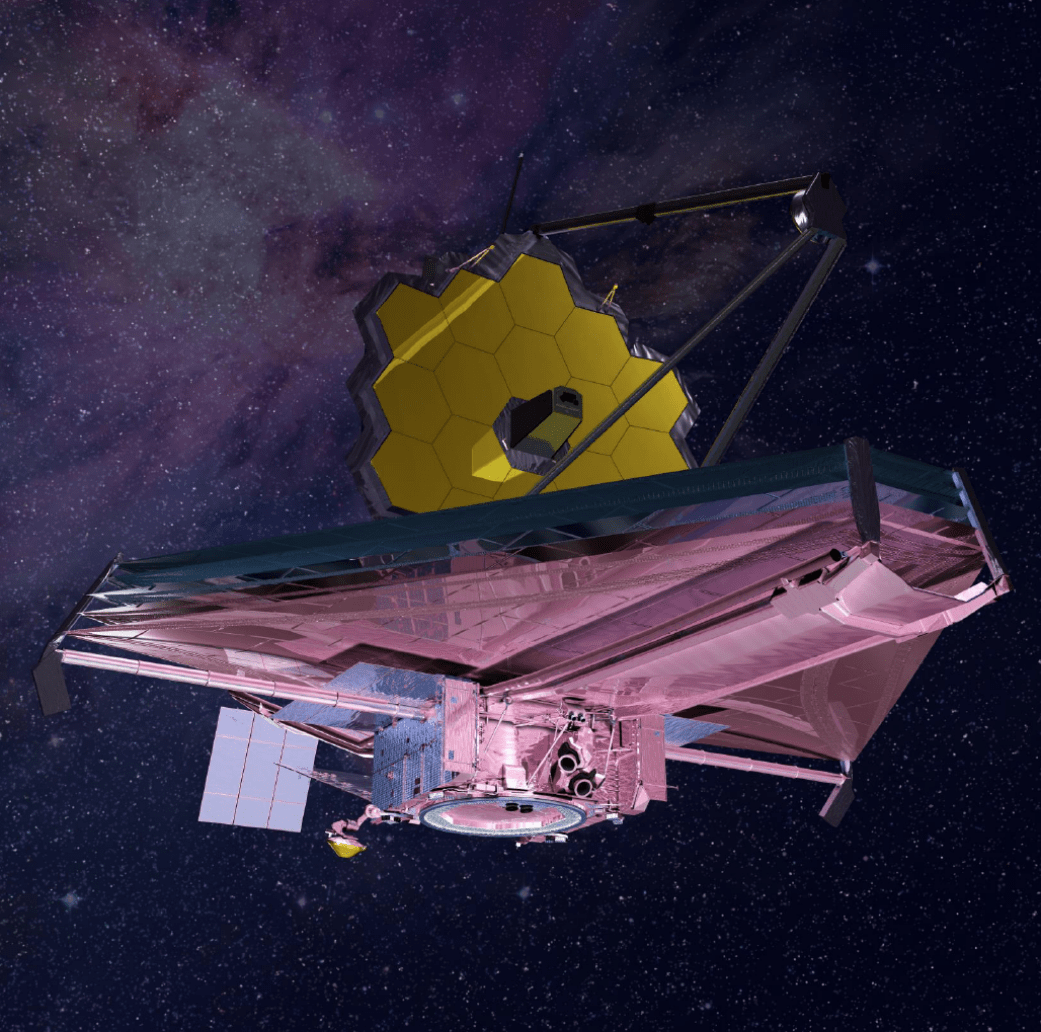
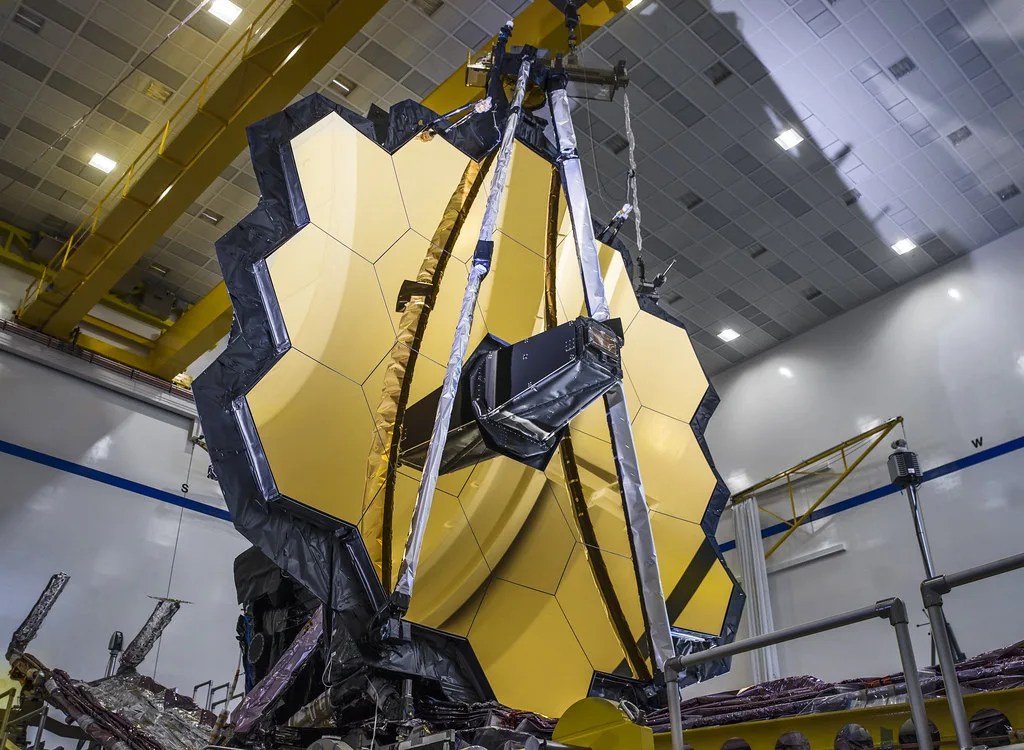
The James Webb Space Telescope is sensitive to visible (red) to mid-infrared light. Webb will orbit the Sun at L2. (launched in 2021)
The Stratospheric Observatory for Infrared Astronomy (SOFIA), a flying observatory, is primarily used to observe ultraviolet, visible, and near-infrared. SOFIA flies just above the lowest layer of Earth’s atmosphere. (began flying in 2010)
The ground-based Atacama Large Millimeter/Submillimeter Array (ALMA) in Chile detects microwave light, which passes all the way through Earth’s atmosphere. (began observations in 2011)
The ground-based Square Kilometre Array (SKA) in Australia is designed to detect radio waves that pass through the atmosphere. (scheduled to begin operation in the late 2020s)
Extended Description and Image Alt Text
Extended Description
Illustration showing ten astronomical observatories: Fermi, Chandra, Hubble, Euclid, Roman, Webb, Rubin and ELTs, Sofia, ALMA, and SKA. The observatories are illustrated realistically, with their vertical position on the graphic related to location on the ground, air, or in space, and their horizontal position related to the type of light they observe (wavelength sensitivity).
Observatory Locations
The ten observatories are arranged on a landscape with mountains, clouds, and sky extending up into space. A horizontal dashed line across the middle of the graphic, far above the clouds, is labeled, “atmosphere.” The color of the sky is light blue at low altitude near the mountain surface, and darkens upward, to nearly black above the atmosphere and into space.
The illustration shows the relative altitude of each observatory.
- Ground-based: Three of the observatories are on the ground: Rubin and ELTs, ALMA, and SKA.
- Atmosphere: Flying in the sky above the clouds and below the atmosphere line is an airplane labeled Sofia.
- Space-based: Six of the observatories are orbiting in space, above the atmosphere. From lowest to highest they are: Fermi and Hubble, Chandra and Euclid, Roman, and Webb.
The observatory sizes and altitudes are not to scale.
Observatory Wavelength Sensitivities
The observatories are arranged from left to right by wavelength, with wavelength bands labeled along the top of the graphic: Gamma, X-Ray, Ultraviolet, Visible, Infrared, Microwave, Radio.
Extending down from each label is a set of vertical columns colored relative to wavelength. In the center, visible light ranges from purple at the left to blue, green, yellow, orange, and red at the right. To the left, the wavelengths shorter than visible (Gamma, X-ray, and Ultraviolet) are purple. To the right, the wavelengths longer than visible (Infrared, Microwave, and Radio) are deep red.
The colored vertical wavelength columns extend down toward the surface, but end at different altitudes to indicate how far they pass down through Earth’s atmosphere.
- Visible, microwave, and radio extend all the way down to the surface.
- Infrared disappears within, to just above, the atmosphere line.
- Gamma disappears just above the atmosphere line.
- X-ray and Ultraviolet disappear higher up above the atmosphere.
The observatories are roughly within the following wavelength bands, from left to right.
- Fermi: Gamma
- Chandra: X-ray
- Hubble: Visible
- Rubin and ELTs: Visible to Infrared
- Euclid, Roman, Webb, and Sofia: Infrared
- ALMA: Microwave
- SKA: Radio
Image Alt Text
Mountains, clouds, sky, and space, with telescopes arranged vertically by altitude and horizontally by wavelength range
Share
Details
Laura Betz
NASA’s Goddard Space Flight Center
Greenbelt, Maryland
laura.e.betz@nasa.gov
NASA, STScI