























1 min read
What Webb Learns from Light
The universe is full of clues hidden in light — and Webb has tools to find them.
About 75% of the observations made using NASA's James Webb Space Telescope produce a powerful type of data called spectra — created by separating light into its many colors. Every material interacts with light in a unique way, leaving a distinct pattern of bright or dark lines across the spectrum. By analyzing these patterns through a process called spectroscopy, scientists can uncover details about objects millions or even billions of light-years away, including their temperature, motion, density, and chemical composition.
Webb's infrared spectrographs, which split infrared light into spectra, are the most sensitive ever built. They can detect chemical fingerprints across the cosmos. Since science operations began in 2022, researchers have used this unprecedented capability to transform our understanding of the universe.
In this video, learn about some of the most exciting discoveries Webb has made through spectroscopy — from mapping carbon dioxide on Jupiter's moon Europa, to characterizing the earliest known galaxies, to measuring cloud cover on a distant exoplanet.
Dive deeper into each discovery with the original news releases, spectra graphics, and additional resources:
Science Explainer: Spectroscopy 101 – Types of Spectra and Spectroscopy
Science Explainer: Webb’s Scientific Instruments
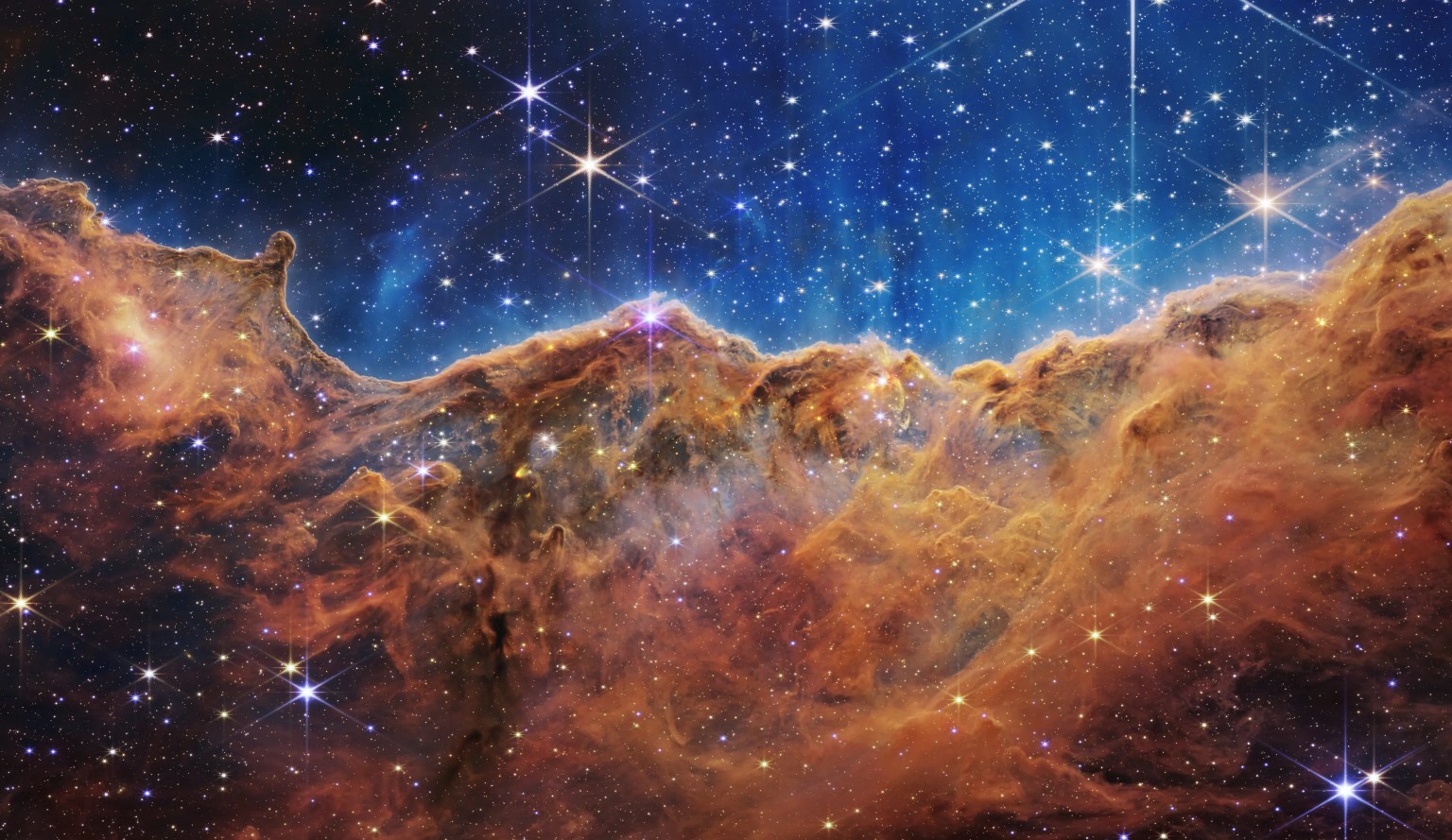
News Release (October 2022): Seeing through dust into the Pillars of Creation
News Release (November 2023): Detecting water in protoplanetary disks GK Tau and CI Tau
Graphic (July 2023): Spectra revealing information about black holes
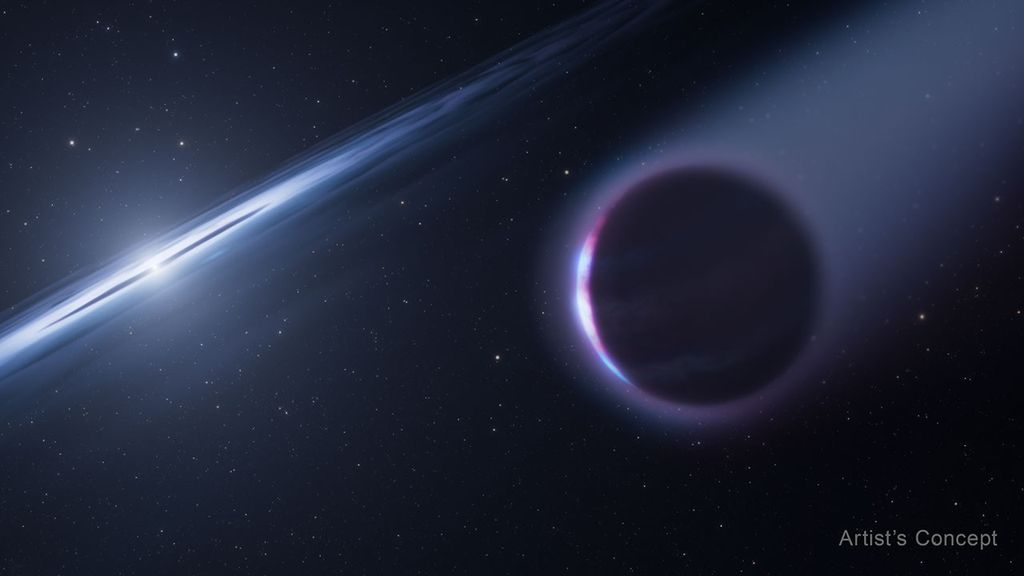
News Release (July 2024): Observing weather on exoplanet WASP-39 b
News Release (November 2022): Measuring atmospheric composition of exoplanet WASP-39 b
News Release (September 2023): Detecting CO2 on Europa
News Release (January 2026): Finding MoM-z14, a galaxy 280 million years after the big bang
News Release (May 2024): Detecting JADES-GS-z14-0, a galaxy less than 300 million years after the big bang
News Release (July 2023): Finding one of the earliest known black holes
- Release DateApril 22, 2026
- CreditVideo: NASA, ESA, CSA, STScI, Danielle Kirshenblat (STScI); Designer: Leah Hustak (STScI); Script Writer: Danielle Kirshenblat (STScI); Project Scientist: Christopher Britt (STScI); Education/Outreach Advisor: Alexander Cotnoir (STScI); Technical Specialists: Gregory Bacon (STScI), Margaret Carruthers (STScI), Quyen Hart (STScI); Narration: Ralf Crawford (STScI); Music: UMG
Downloads
Share
Details
Laura Betz
NASA’s Goddard Space Flight Center
Greenbelt, Maryland
laura.e.betz@nasa.gov