























Galaxies SIG Seminar Series April 3, 2024
Time/Date: April 3rd 2024, 1:00pm ET
Cosmological Hyper-Refinement Simulations to Leverage Future Great Observatories
Speaker
Daniel Anglés-Alcázar
Abstract
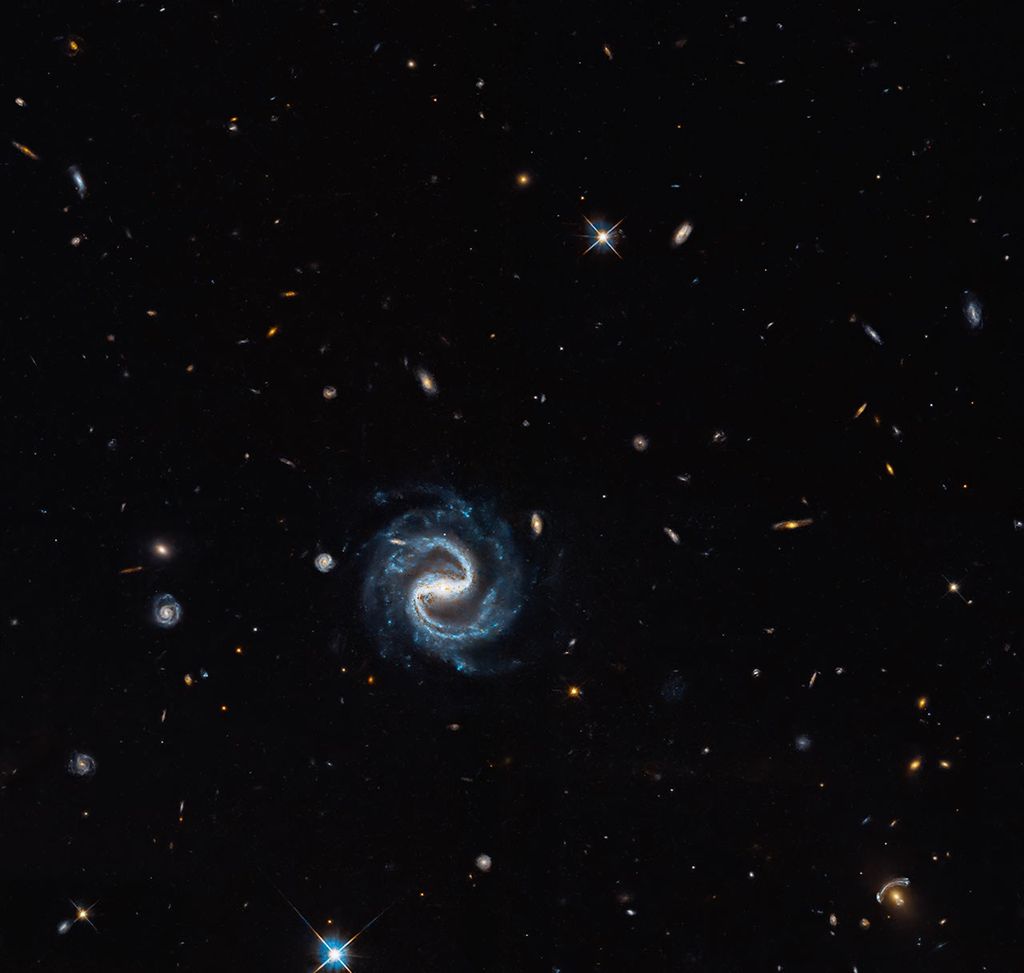
The Habitable Worlds Observatory and other Future Great Observatories will provide an unprecedented window into the physical mechanisms driving active galactic nuclei (AGN) fueling and feedback, which play a key role in galaxy evolution but are still poorly understood. Leveraging these future observatories requires detailed, physically predictive models of galaxy evolution but, despite much recent progress, cosmological galaxy formation simulations have been limited by resolution, interstellar medium physics, and uncertain sub-grid treatment of black holes. In this talk, I will present a new class of cosmological hyper-refinement simulations that for the first time explicitly resolve AGN fueling and feedback at sub-pc resolution in a full cosmological setting while modeling a realistic multi-phase interstellar medium including gas consumption by star formation, local feedback from supernovae, stellar winds, and radiation, and gravitational torques from multi-scale stellar non-axisymmetries. I will highlight some of the lessons learned from these multi-scale simulations, with important implications for the nature of luminous quasars, the star formation-AGN connection, black hole-galaxy scaling relations, and galaxy quenching, and I will present a new pipeline to produce mock emission line data cubes with unprecedented information content to make detailed comparisons between theoretical models and future observational constraints of AGN fueling and feedback.
Seminar Connection
Zoom link for Galaxies SIG seminars
Seminar Schedule: Every first Wednesday of the month, 1pm – 2pm ET
Please join the Galaxies SIG Email List
News Straight to Your Inbox
Subscribe to your community email news list
We will never share your email address.
