




















UV STIG Seminar
UV Science and Technology Interest Group : Quorum for Ultraviolet Exploration of Science and Technology (QUEST) Seminar 4
DATE
Aug 12, 2021
TIME
3:00 pm EST
COMMUNITY
UV STIG
TYPE
Seminar
QUEST Seminar 4
Exploring the Ultraviolet Transient Universe
Suvi Gezari, STScI
New capabilities on the horizon for wide-field time-domain observations of the sky in the Ultraviolet (UV) have the opportunity to open up a new discovery space in the areas of stellar evolution, supermassive black hole growth, accretion physics, and exoplanet habitability. High cadence, wide-field monitoring in the UV enables the early discovery of stellar explosions, the discovery of energetic flares and eruptions from stars, and the assembly of large samples of tidal disruption events. I will summarize the parameter space of UV transients that has been explored so far with previous UV missions, GALEX and Swift, and demonstrate the exciting discovery potential that will be opened up with future wide-field UV mission concepts such as Dorado.
DORADO: Wide-field UV Imaging for the Multi-Messenger Era
Brad Cenko, GSFC
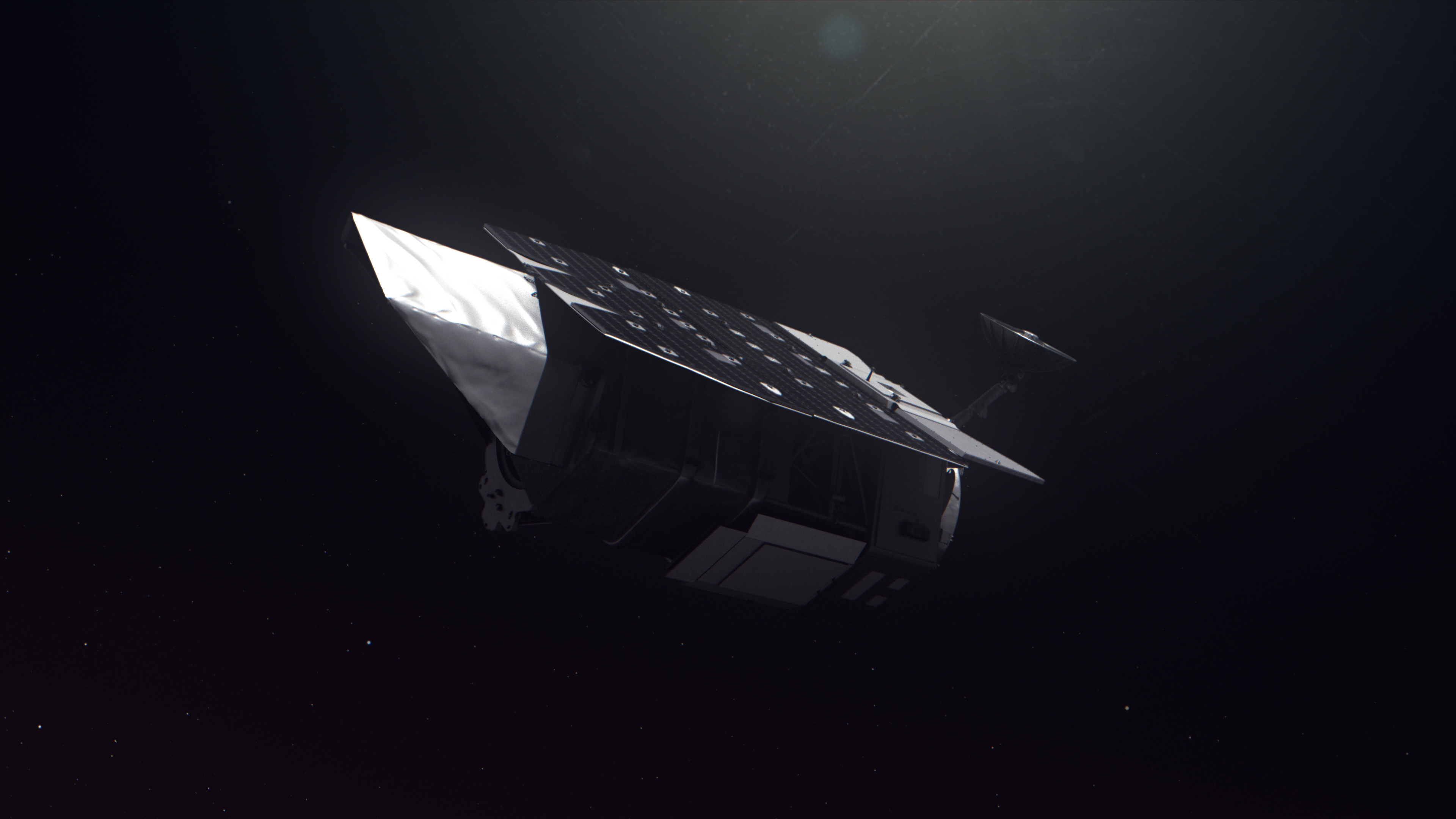
Dorado is an astrophysics Mission of Opportunity ($35M SmallSat) concept that addresses two "frontier" discovery areas highlighted by the 2010 Astronomy and Astrophysics Decadal Survey: gravitational waves (GWs) and time-domain astronomy. Dorado provides the highest priority observational capability identified by the community in order to fully capitalize on the highly anticipated multi-messenger era in the mid-2020's—sensitive, wide-field ultraviolet (UV) imaging. By promptly (< 2 hours) imaging the large localizations provided by ground-based GW detectors at UV wavelengths, Dorado can uniquely address such fundamental questions as where heavy (r-process) elements are formed, and how relativistic jets are launched and propagate. While awaiting GW triggers, Dorado conducts a transformative UV time-domain survey, discovering hundreds of transients (e.g., supernovae, tidal disruption events, flaring stars) and complementing contemporaneous flagship facilities across the electromagnetic spectrum, including the Vera C. Rubin Observatory (optical), the Nancy Grace Roman Space Telescope (near-infrared), and the Square Kilometer Array (radio). In this talk I will present an overview of the Dorado concept, including the science objectives, instrument, and mission implementation.
News Straight to Your Inbox
Subscribe to your community email news list
We will never share your email address.
