





















Webb Researchers Discover Lensed Supernova, Confirm Hubble Tension
Earlier this year, astronomers used Webb data containing Cepheid variables and Type Ia supernovae, reliable distance markers to measure the universe’s expansion rate, to confirm NASA’s Hubble Space Telescope’s previous measurements.
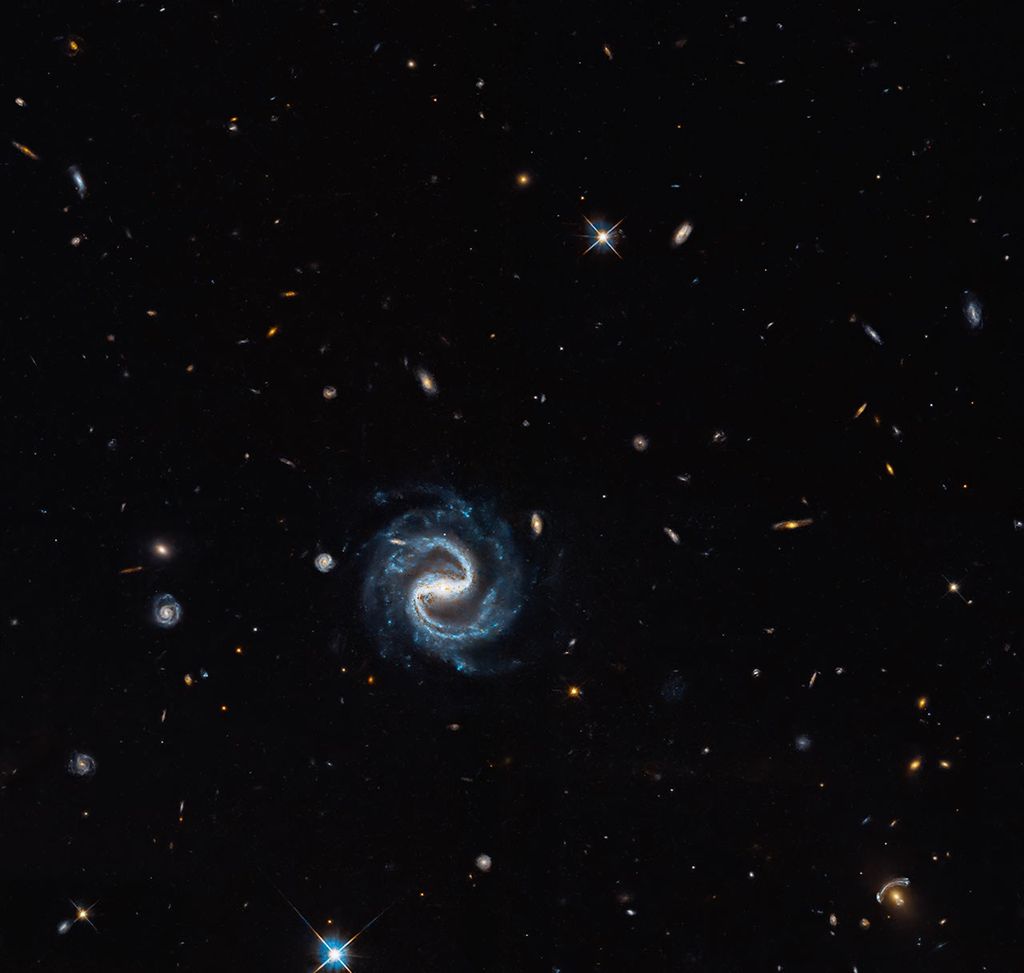
Now, researchers are using an independent method of measurement to further improve the precision of the Hubble constant — gravitationally lensed supernovae. Brenda Frye from the University of Arizona, and a team of many researchers from different institutions around the world, are leading this effort after Webb’s discovery of three points of light in the direction of a distant and densely populated cluster of galaxies.
News Straight to Your Inbox
Subscribe to your community email news list
We will never share your email address.
