

















NASA Field-Tests AI Fleet Capability for Science, Exploration
NASA scientists and industry partners recently field-tested an artificial intelligence application that could make future solar system exploration missions more efficient, return more science data, and allow for faster scientific discoveries.
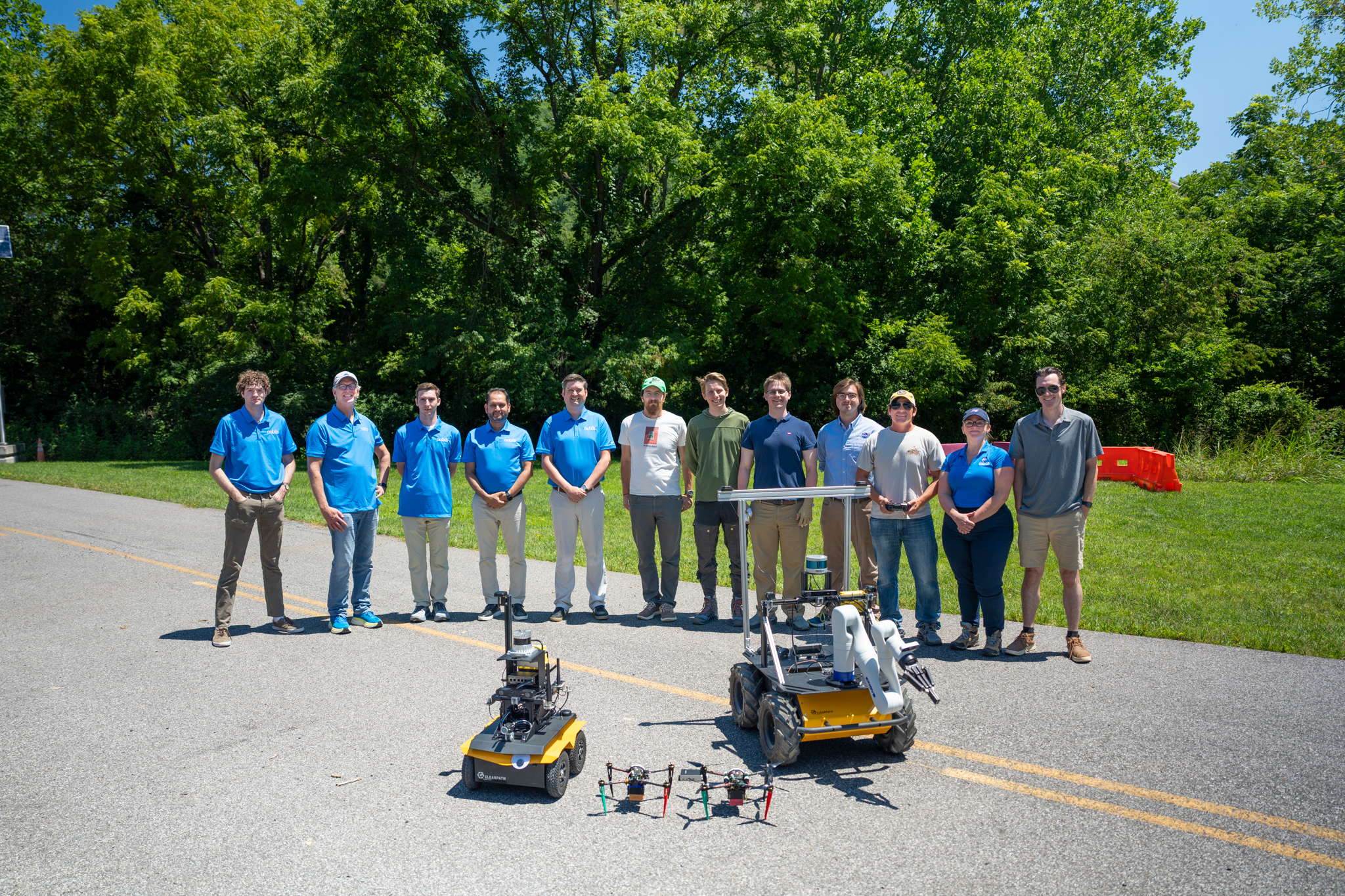
This summer at the Virginia Tech Transportation Institute in Blacksburg, Virginia, a fleet of three robots worked together, and researchers assessed the fleet’s ability to act like an independent science team. To begin each test, a drone was assigned to choose an area of interest based on initial science goals provided by human experts. Then, the fleet’s programming weighed risks against potential science payoffs and calculated which robotic team member was best suited to investigate. As the fleet carried out its plan, it continually checked for environmental hazards, reassessed its strategy to adapt to new information, and reported back to its human managers, NASA’s Adaptive Sensing Technology for Responsive Autonomy (ASTRA) team.

The project’s ultimate goal is to provide a trustworthy extension of the human science team in situations where humans are too far away to give real-time instructions, like on uncrewed missions to the outer planets of our solar system, or where the risk to human explorers is unacceptably high, like in areas of the Moon and Mars that are difficult for astronauts to explore.
One of the questions the field test was designed to answer: Once the fleet has started working on a science objective, will it change tasks autonomously based on new information? In the testing, the fleet showed it could focus on its original objectives and follow up on new possibilities. When the lead drone found an additional area of interest in the course of its work, it didn’t abandon its current task, but it did pause to process the opportunity and pull in another robotic asset to investigate the new question.
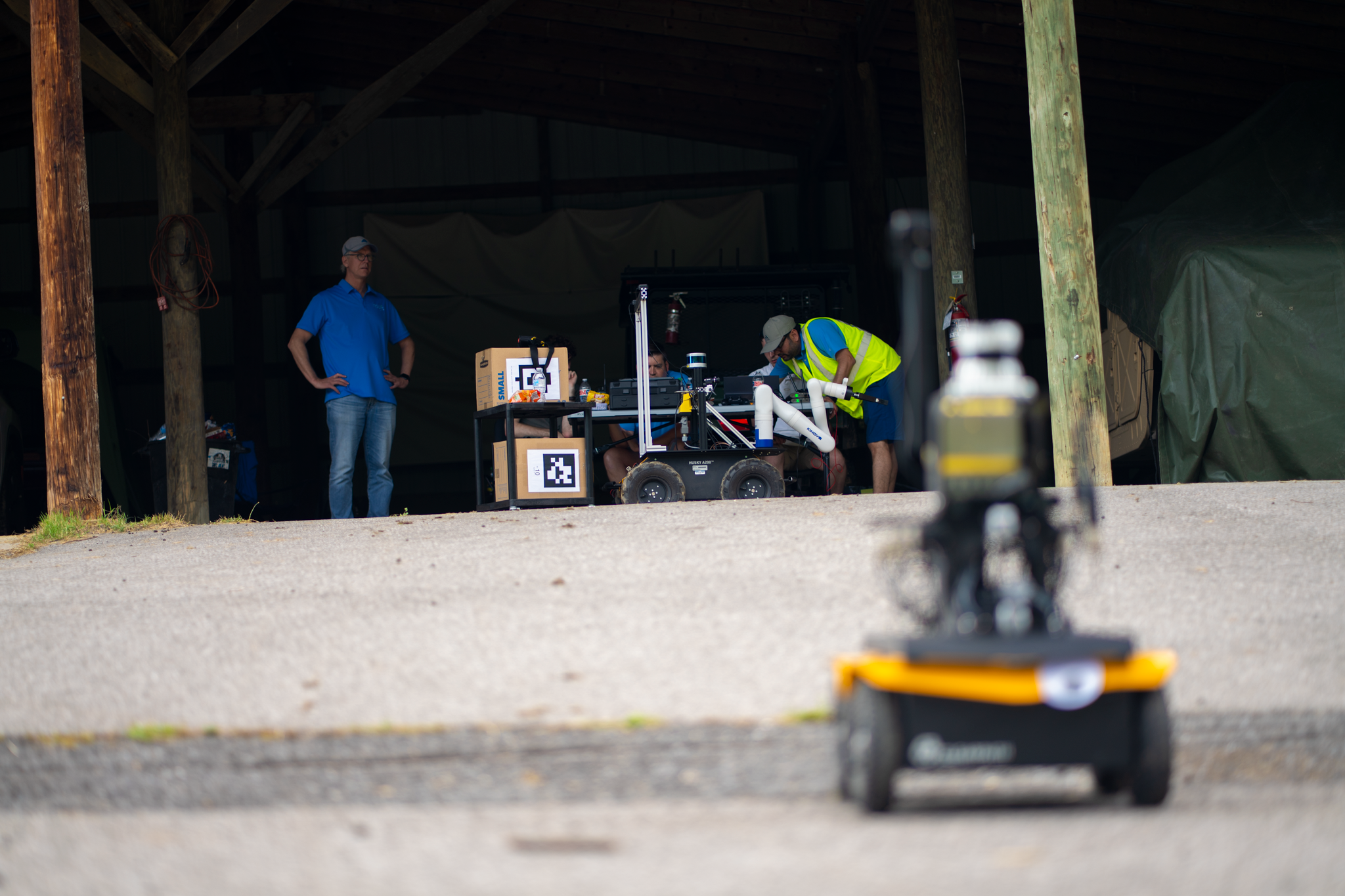
Crucially, the fleet’s decision-making programs handled both objective and subjective information. What robotic assets are available? How far away are they, and how fast can each one move? How much does the science team want the knowledge that can be gained by mapping this area or by taking a sample of that material? Would the humans want to learn from a newly spotted point of interest more than they’d want the fleet to focus on its original task? How risky is each job for the robot attempting it, and is the danger acceptable to the mission planners?
“We want to find a way for missions to do things that they could never do before because they didn’t have a decision-maker on board that can weigh all these criteria at the same time,” says Bethany Theiling, ASTRA principal investigator and field lead, of NASA’s Goddard Space Flight Center in Greenbelt, Maryland.
This ability to consider subjective criteria alongside simple facts, then deliver decisions that satisfy the people behind the project, is what the ASTRA team is working to develop. The mission team will consider the robotic fleet to be successful if it can correctly act without direct instructions based on its physical capabilities and on the team’s priorities and risk assessments.
Theiling led the testing campaign in collaboration with Noblis, Aurora Engineering, and the University of Tulsa.
About Planetary Analogs
Our planet isn’t the only place with ice, volcanoes, impact craters, quakes, and erosion. Studying extreme environments on Earth helps us to understand other worlds better, too.
Learn More