
















Suggested Searches

Solar Cycle 25

  • Strong Solar Flare Erupts from Sun
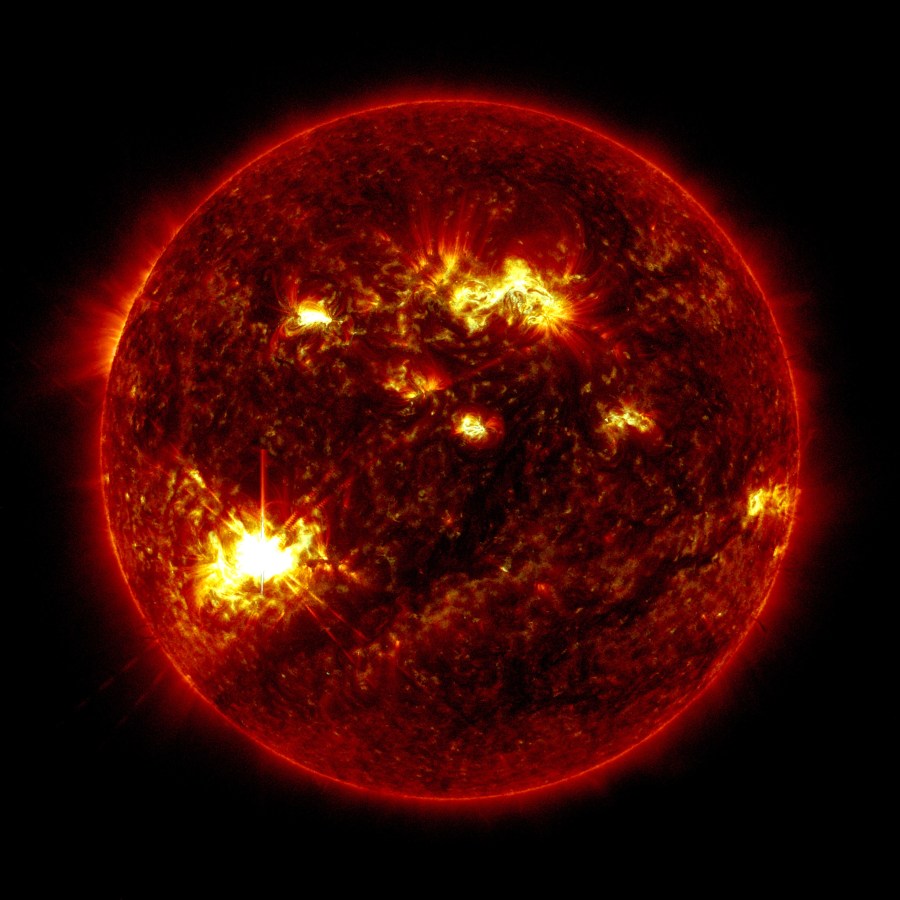
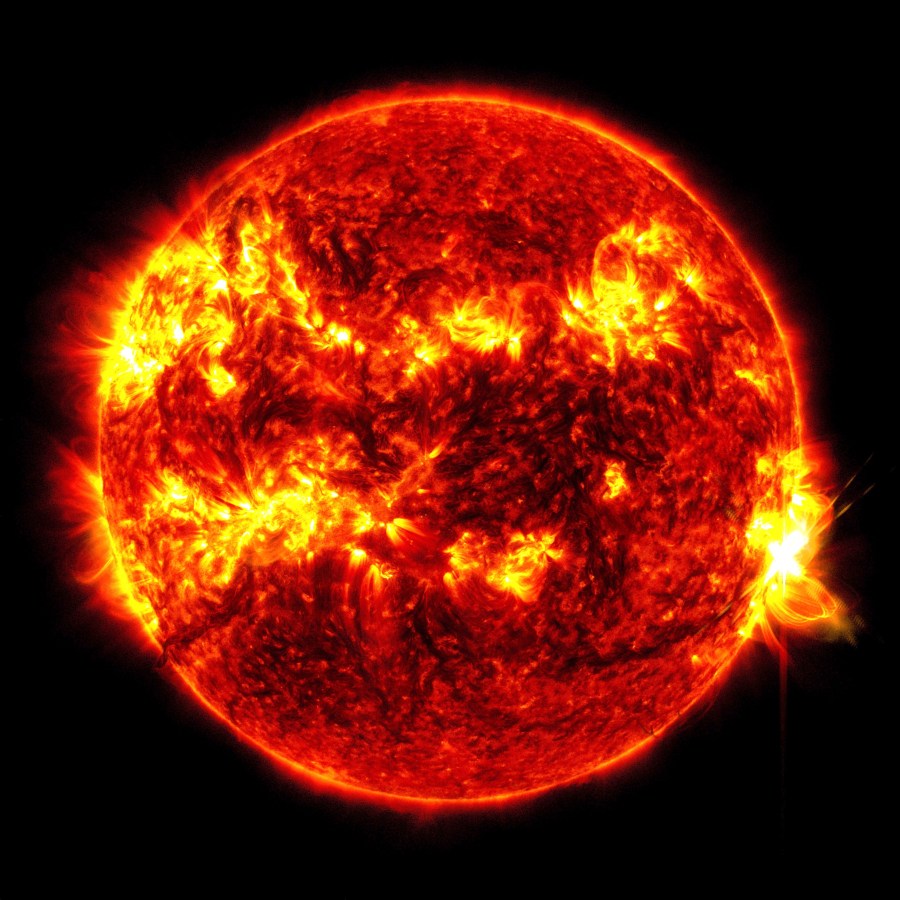
    The Sun, shown in red, appears against a black background. Several bright yellow active regions appear across the Sun. A bright flash of yellow and white light can be seen in the lower left part of the Sun.

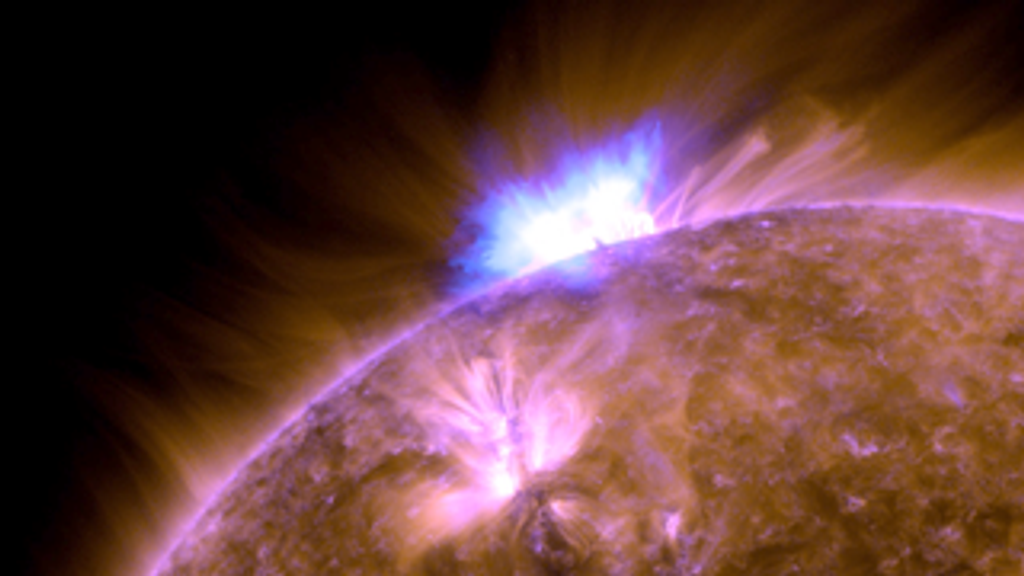
    The Sun emitted a strong solar flare, peaking at 6:03 p.m. ET on May 31, 2024. NASA’s Solar Dynamics Observatory, which watches the Sun constantly, captured an image of the event. Solar flares are powerful bursts of energy. Flares and solar eruptions can impact radio communications, electric power grids, navigation signals, and pose risks to …

  • Sun Releases Strong Solar Flare

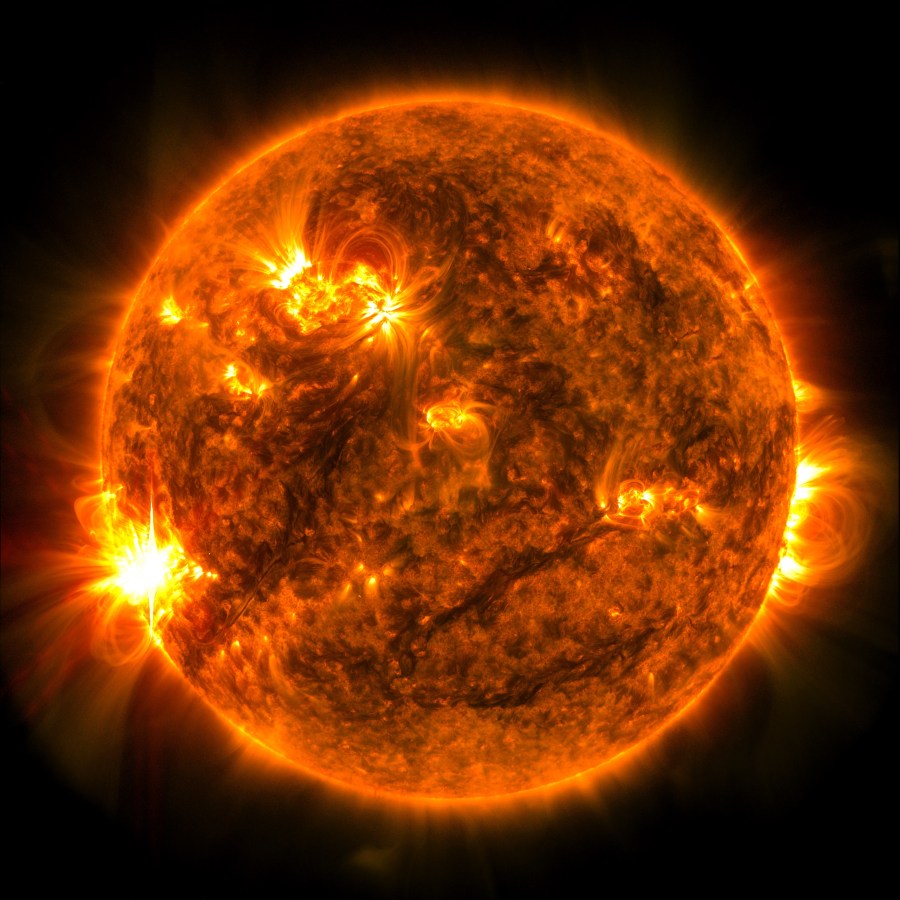
    The Sun, shown in orange, appears against a black background. A few bright yellow active regions appear across the Sun. A bright flash of yellow and white light can be seen on the lower left edge of the Sun against the black background.

    The Sun emitted a strong solar flare, peaking at 10:37 a.m. ET on May 29, 2024. NASA’s Solar Dynamics Observatory, which watches the Sun constantly, captured an image of the event. Solar flares are powerful bursts of energy. Flares and solar eruptions can impact radio communications, electric power grids, navigation signals, and pose risks to …

  • Strong Solar Flare Erupts from Sun
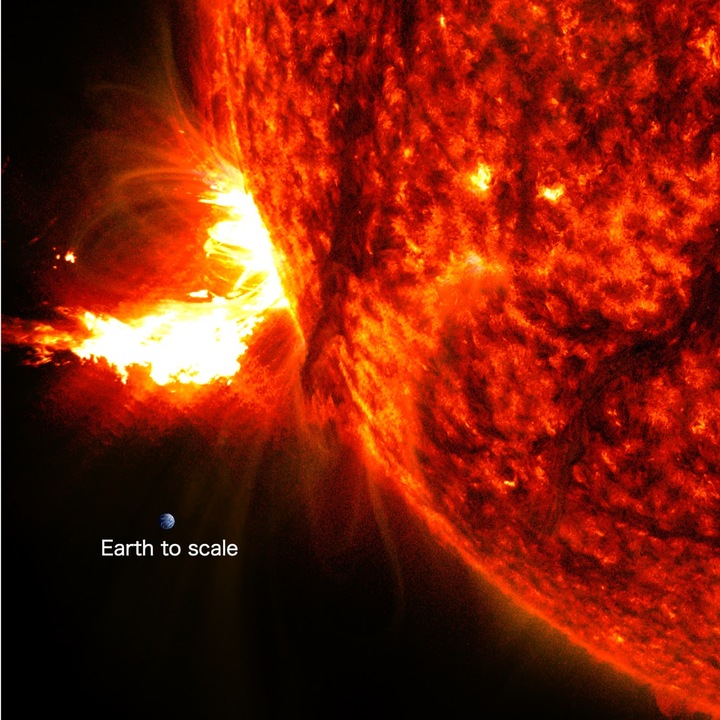
    a close up image of a solar flare on the Sun, with the Earth inset at scale for size comparison

    The Sun emitted a strong solar flare, peaking at 3:08 a.m. ET on May 27, 2024. NASA’s Solar Dynamics Observatory, which watches the Sun constantly, captured an image of the event. Solar flares are powerful bursts of energy. Flares and solar eruptions can impact radio communications, electric power grids, navigation signals, and pose risks to …

  • Strong Solar Flare Erupts from Sun
    The Sun emitted a strong solar flare, peaking at 10:38 a.m. ET on May 15, 2024. NASA’s Solar Dynamics Observatory, which watches the Sun constantly, captured an image of the event. Solar flares are powerful bursts of energy. Flares and solar eruptions can impact radio communications, electric power grids, navigation signals, and pose risks to …

  • Sun Releases Strong Solar Flare

    The Sun emitted a strong solar flare, peaking at 4:37 a.m. ET on May 15, 2024. NASA’s Solar Dynamics Observatory, which watches the Sun constantly, captured an image of the event. Solar flares are powerful bursts of energy. Flares and solar eruptions can impact radio communications, electric power grids, navigation signals, and pose risks to …

  • Strong Solar Flare Erupts from Sun
    NASA’s Solar Dynamics Observatory captured this image of a solar flare – as seen in the bright flash on the right – on May 14, 2024. The image shows a subset of extreme ultraviolet light that highlights the extremely hot material in flares and which is colorized in red and yellow. Credit: NASA/SDO

    The Sun emitted a strong solar flare, peaking at 12:51 p.m. ET on May 14, 2024. NASA’s Solar Dynamics Observatory, which watches the Sun constantly, captured an image of the event. Solar flares are powerful bursts of energy. Flares and solar eruptions can impact radio communications, electric power grids, navigation signals, and pose risks to …

  • Sun Releases 2 Strong Solar Flares

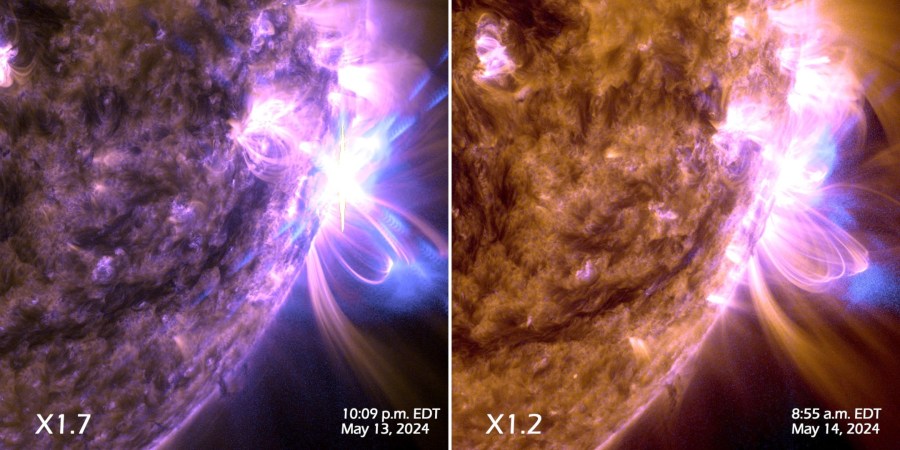
    NASA’s Solar Dynamics Observatory captured images of the two solar flares on May 13 and May 14, 2024. The flares are classified as X1.7 and X1.2-class flares, respectively. The image shows a subset of extreme ultraviolet light that highlights the extremely hot material in flares created from a mixture of SDO’s AIA171 and 131 channels. Available with EDT and UTC time labels as well as unlabeled.Credit: NASA/SDO

    The Sun emitted two strong solar flares, the first peaking at 10:09 p.m. ET on May 13, 2024, and the second peaking at 8:55 a.m. ET on May 14, 2024. NASA’s Solar Dynamics Observatory, which watches the Sun constantly, captured images of the event. Solar flares are powerful bursts of energy. Flares and solar eruptions …

  • Strong Flare Erupts from Sun

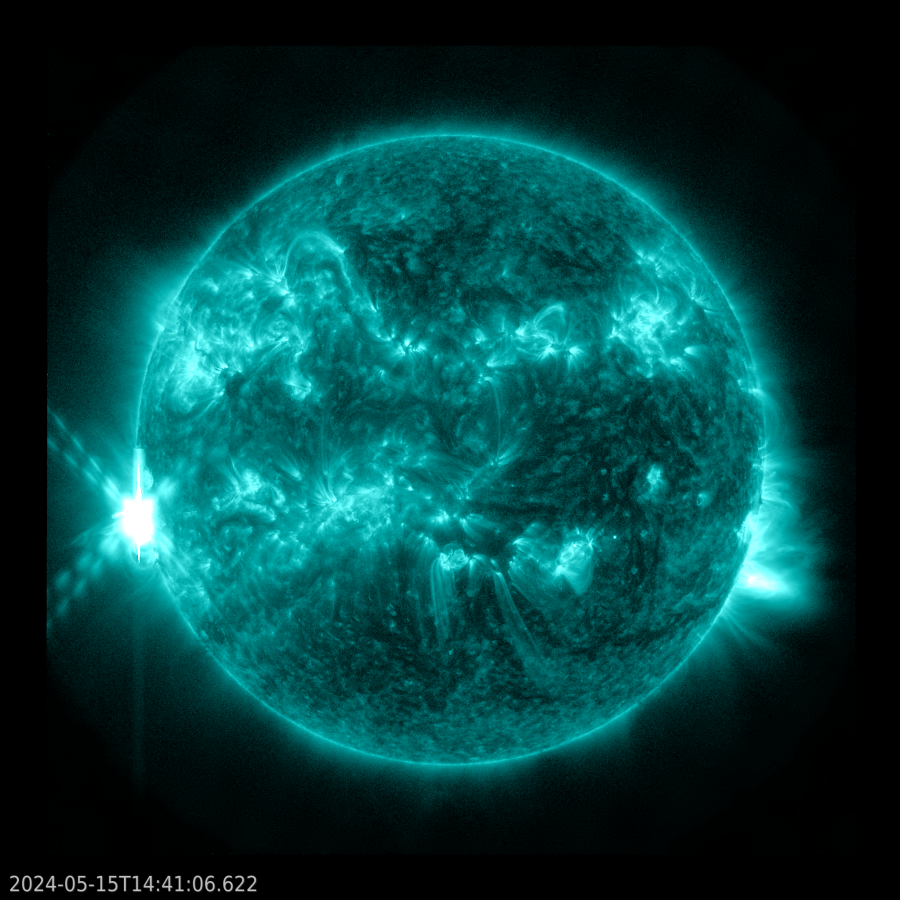
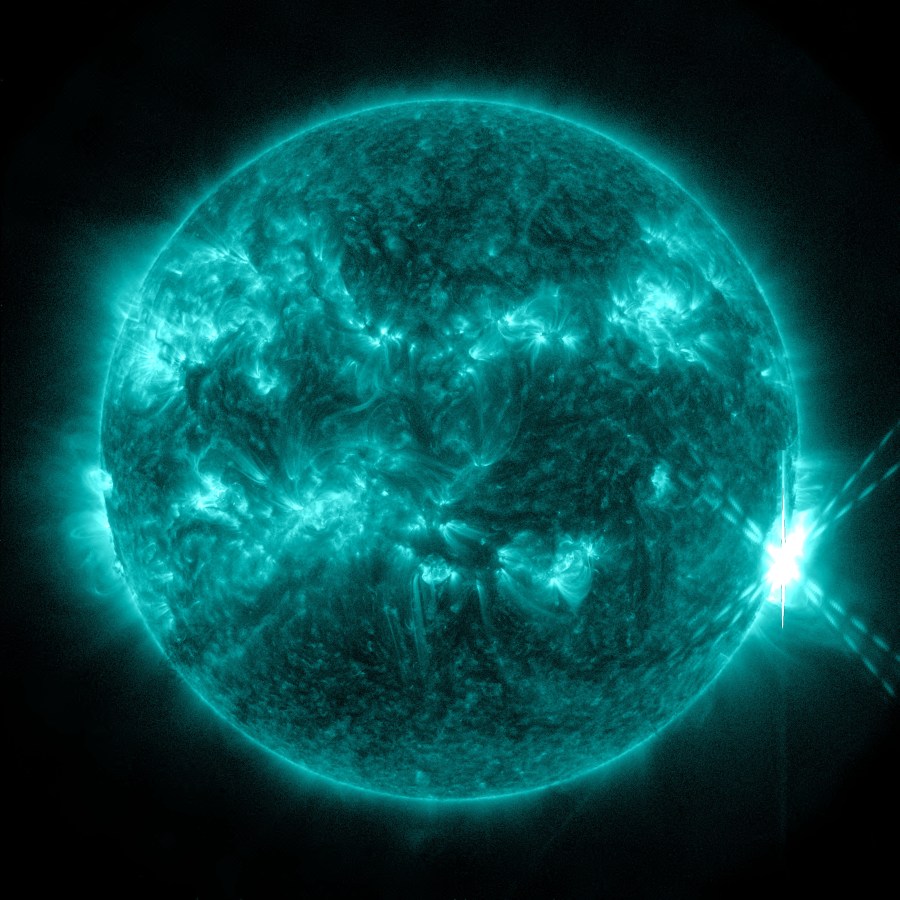
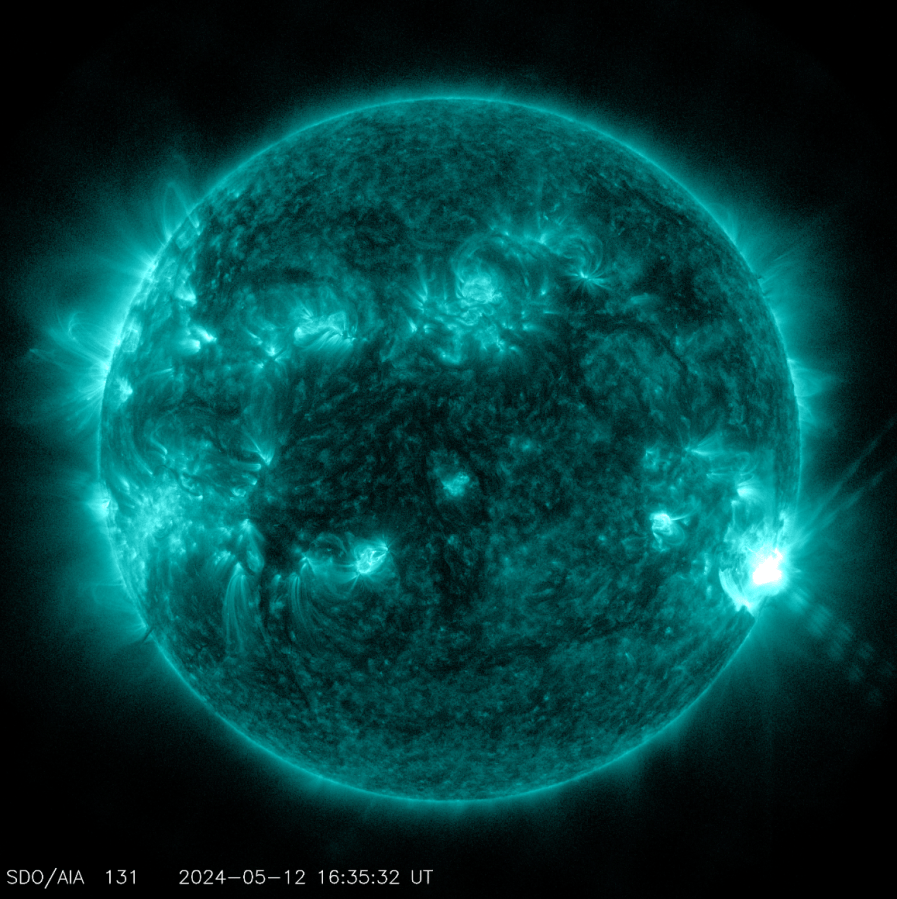
    The disk of the Sun, colorized in teal, features a bright flash on the lower right. Less intense bright spots and loops of material dot much of the Sun's surface.

    The Sun emitted a strong solar flare, peaking at 12:26 p.m. ET on Sunday, May 12. NASA’s Solar Dynamics Observatory, which watches the Sun constantly, captured an image of the event. Solar flares are powerful bursts of energy. Flares and solar eruptions can impact radio communications, electric power grids, navigation signals, and pose risks to …

  • Sun Releases 2 Strong Flares

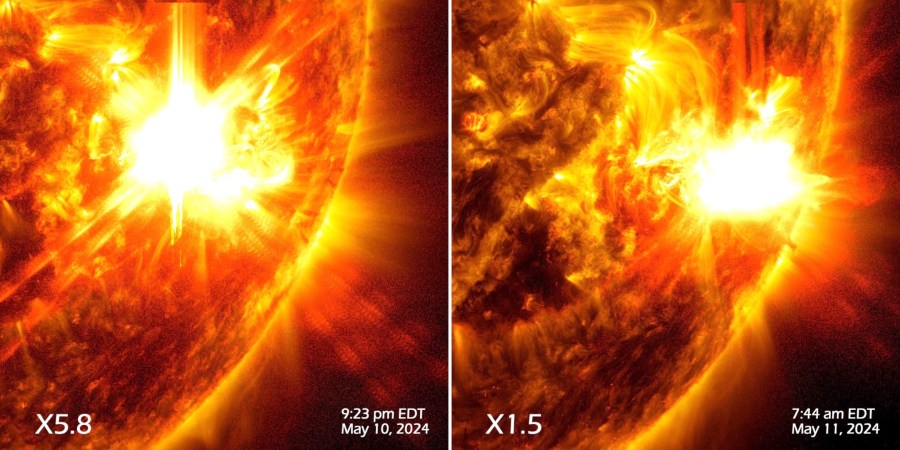
    NASA’s Solar Dynamics Observatory captured images of the two solar flares on May 10 and May 11, 2024. The flares are classified as X5.8 and X1.5-class flares, respectively. The image shows a subset of extreme ultraviolet light that highlights the extremely hot material in flares created from a mixture of SDO’s AIA 193, 171 and 131 channels. Available with EDT and UTC time labels as well as unlabeled.Credit: NASA/SDO

    The Sun emitted two strong solar flares, peaking at 9:23 p.m. ET on May 10, 2024, and 7:44 a.m. ET on May 11, 2024. NASA’s Solar Dynamics Observatory, which watches the Sun constantly, captured an image of the event. Solar flares are powerful bursts of energy. Flares and solar eruptions can impact radio communications, electric …