
















Suggested Searches

Solar Cycle 25

  • Strong Solar Flare Erupts from Sun
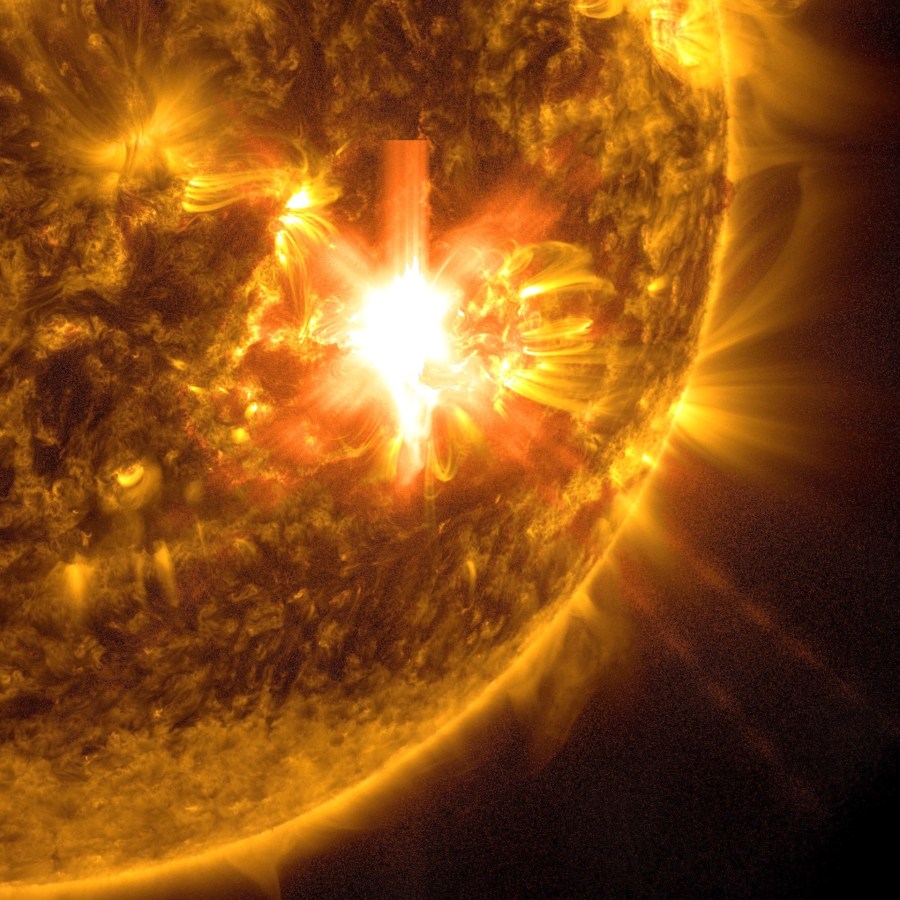
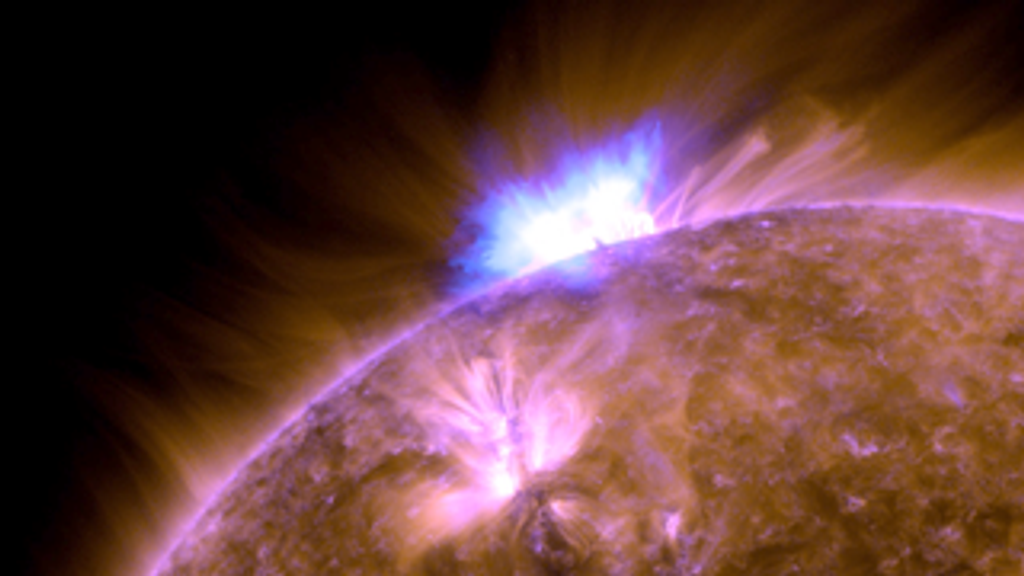
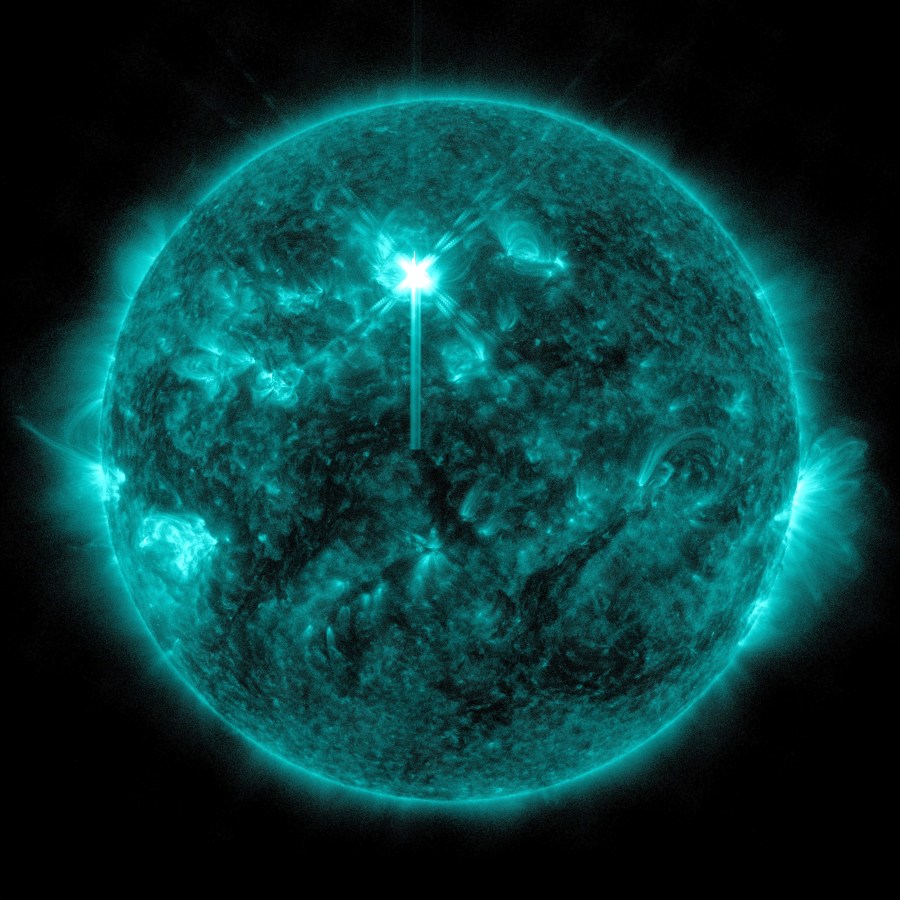
    NASA’s Solar Dynamics Observatory captured this image of an X3.9 flare on May 10, 2024. The image shows a blend of 171 and 131 Angstrom light, subsets of extreme ultraviolet light. Credit: NASA/SDO

    The Sun emitted a strong solar flare, peaking at 2:54 a.m. ET on May 10, 2024. NASA’s Solar Dynamics Observatory, which watches the Sun constantly, captured an image of the event. Solar flares are powerful bursts of energy. Flares and solar eruptions can impact radio communications, electric power grids, navigation signals, and pose risks to …

  • Strong Solar Flare Erupts from Sun
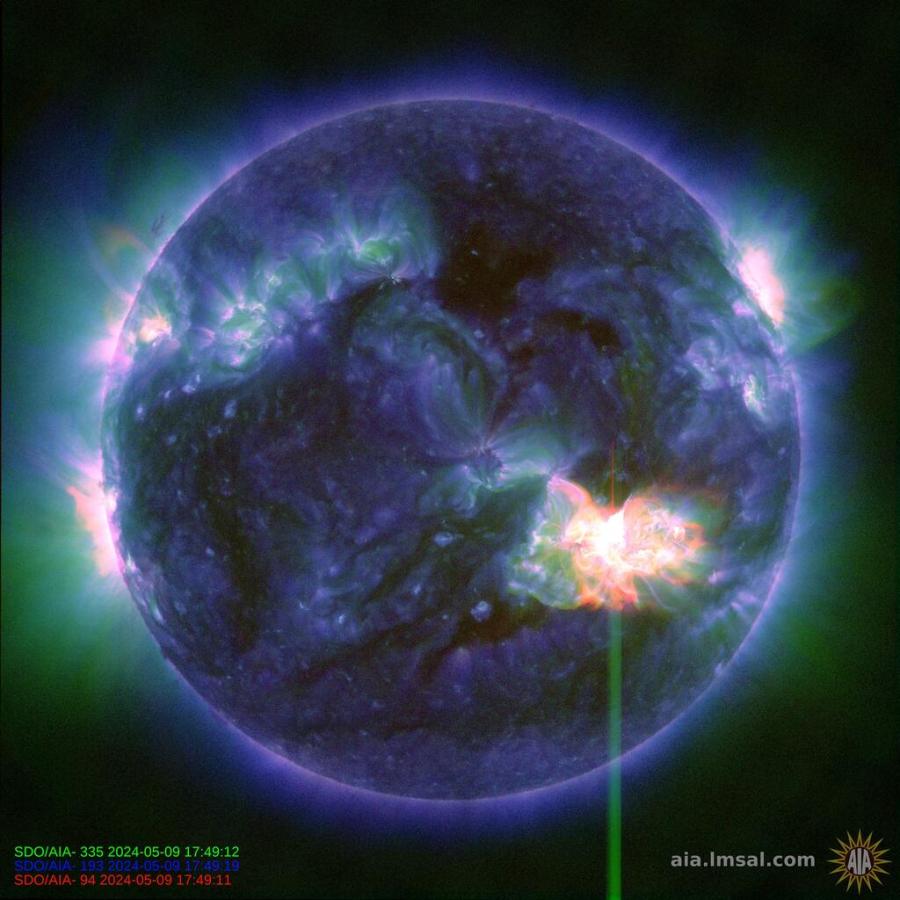
    A composite image of the Sun in blue, green, and red shows an X-class flare as a large, bright burst of white and red light in the lower right.

    The Sun emitted a strong solar flare, peaking at 1:44 p.m. ET on May 9, 2024. NASA’s Solar Dynamics Observatory, which watches the Sun constantly, captured an image of the event. Solar flares are powerful bursts of energy. Flares and solar eruptions can impact radio communications, electric power grids, navigation signals, and pose risks to …

  • Sun Releases 2 Strong Solar Flares

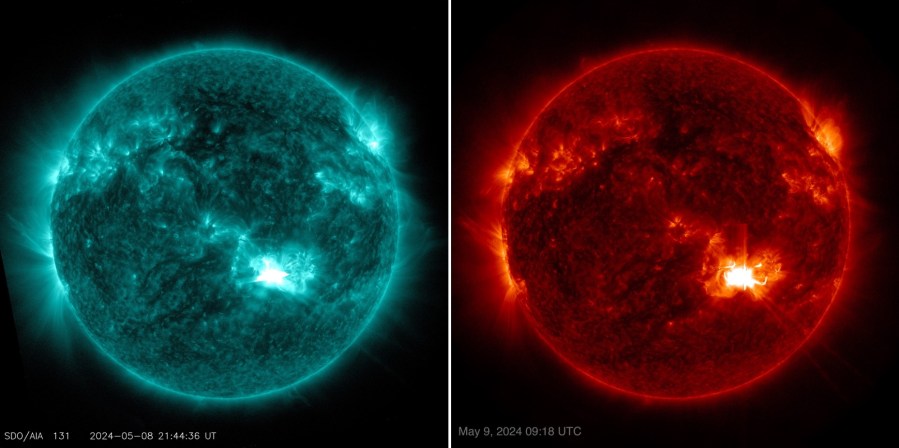
    On the left, a teal Sun against a black background. The Sun has bright spots, especially on the far left and far right, but the brightest spot is slight to the right of center. There there is a bright flash — the flare. On the right, the same Sun, shown in red. The bright flash of the second flare is in the same spot as the first.

    The Sun emitted two strong solar flares, peaking at 5:40 p.m. ET on May 8, 2024, and 5:13 a.m. ET on May 9, 2024. NASA’s Solar Dynamics Observatory, which watches the Sun constantly, captured images of the events. Solar flares are powerful bursts of energy. Flares and solar eruptions can impact radio communications, electric power …

  • Sun Releases 2 Strong Flares

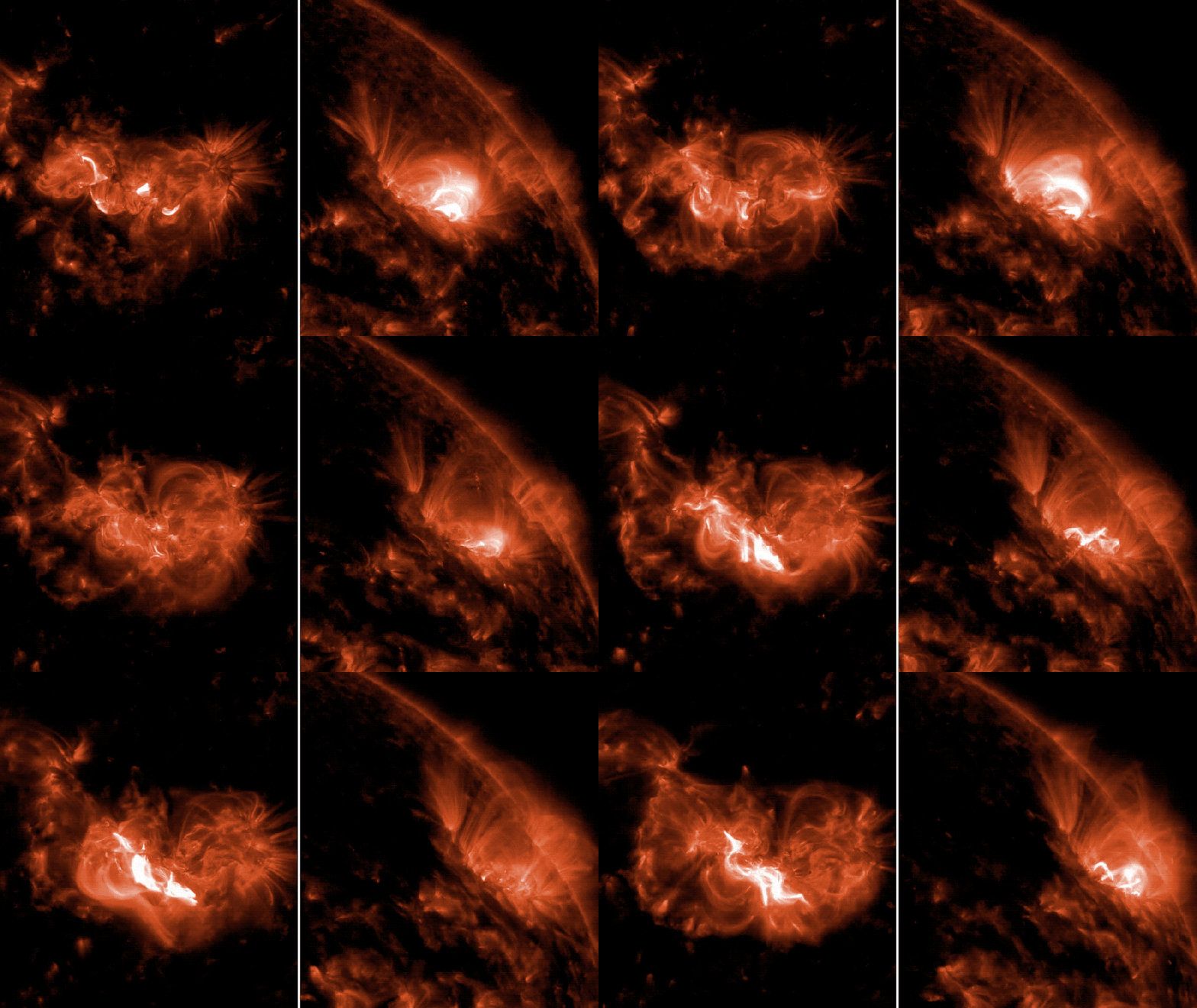
    NASA’s Solar Dynamics Observatory captured these images of the solar flares — as seen in the bright flashes in the left image (May 8 flare) and the right image (May 7 flare). The image shows 131 angstrom light, a subset of extreme ultraviolet light that highlights the extremely hot material in flares and which is colorized in orange. Credit: NASA/SDO

    The Sun emitted two strong solar flares, the first peaking at 9:41 p.m. ET on May 7, 2024, and the second peaking at 1:09 a.m. ET on May 8, 2024. NASA’s Solar Dynamics Observatory, which watches the Sun constantly, captured images of the events. Solar flares are powerful bursts of energy. Flares and solar eruptions …

  • Sun Releases Three Strong Flares

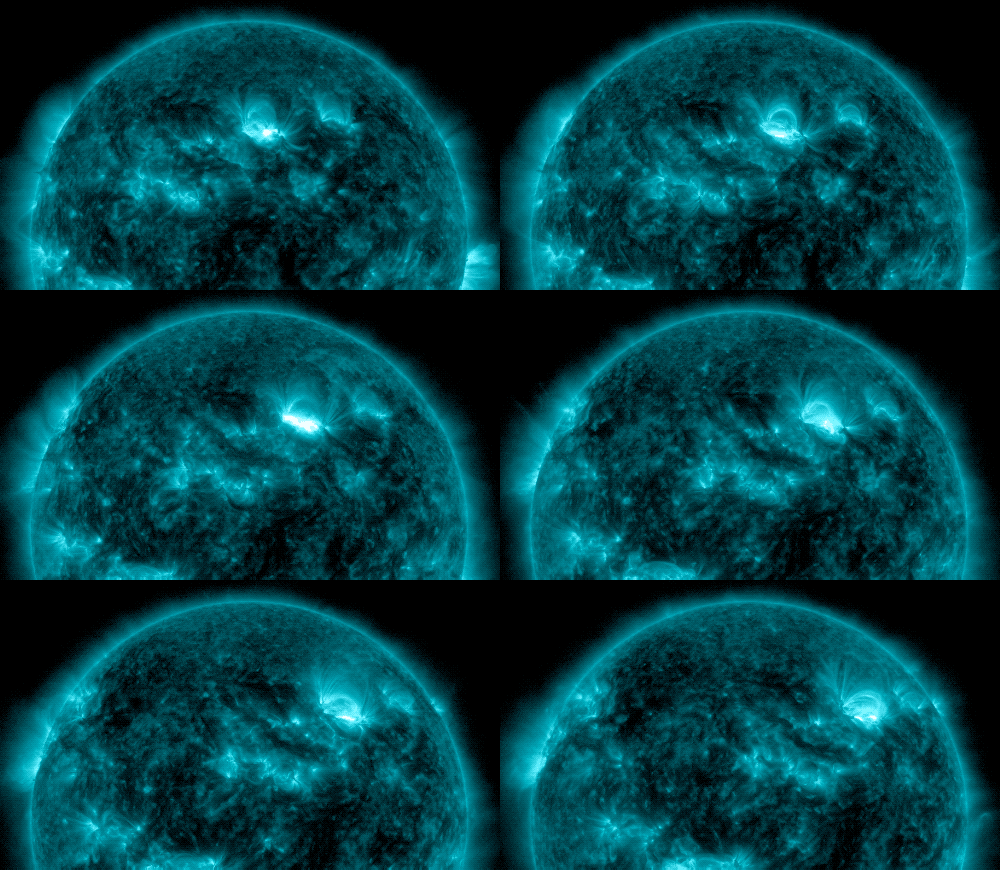
    A cropped view of the Sun, colorized in teal. The Sun is rotating toward the right. As it rotates, a bright real active region ejects solar material several times.

    The Sun emitted three strong solar flares. The first flare peaked at 2:01 A.M. ET on May 5, 2024, and the second peaked at 7:54 A.M. ET on May 5, 2024. The third peaked at 2:35 A.M. ET on May 6, 2024. NASA’s Solar Dynamics Observatory, which watches the Sun constantly, captured an image of …

  • Sun Releases Strong Flare

    The Sun emitted a strong solar flare, peaking at 10:22 p.m. ET on May 2, 2024. NASA’s Solar Dynamics Observatory, which watches the Sun constantly, captured an image of the event. Solar flares are powerful bursts of energy. Flares and solar eruptions can impact radio communications, electric power grids, navigation signals, and pose risks to …

  • Strong Solar Flare Erupts from Sun
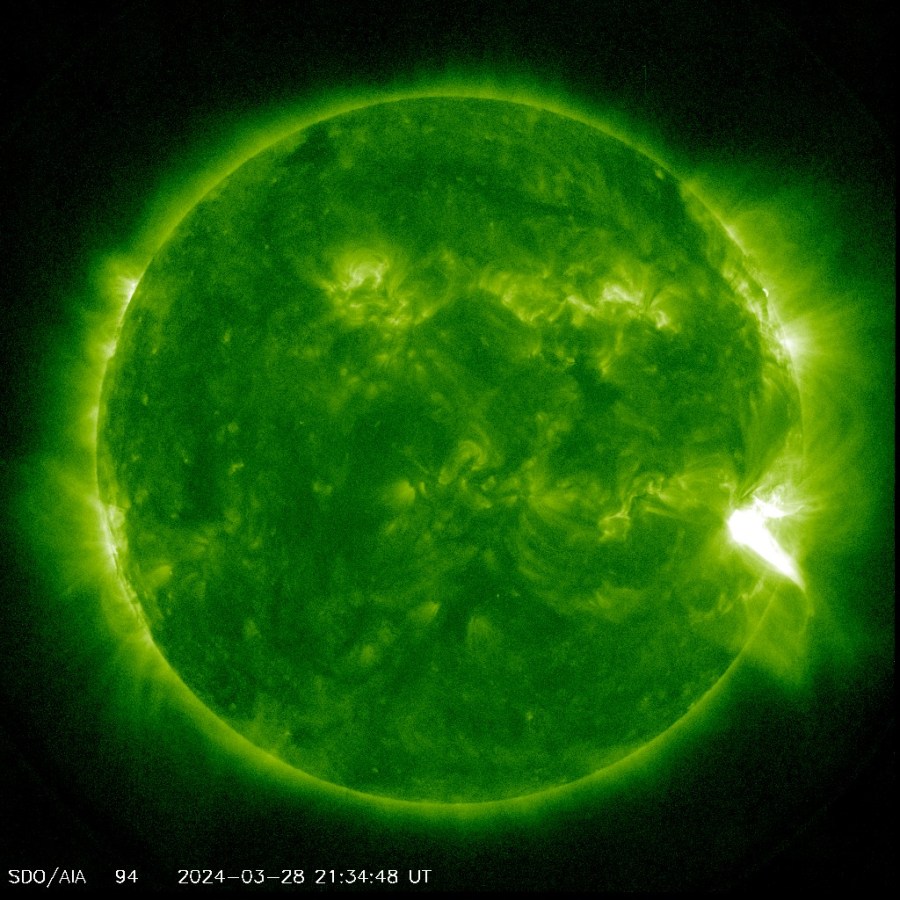
    A view of the Sun colorized in green shows a bright flash of light on the right side.

    The Sun emitted a strong solar flare, peaking at 4:56 p.m. ET on March 28, 2024. NASA's Solar Dynamics Observatory, which watches the Sun constantly, captured an image of the event. Solar flares are powerful bursts of energy. Flares and solar eruptions can impact radio communications, electric power grids, navigation signals, and pose risks to …

  • Sun Releases Strong Flare

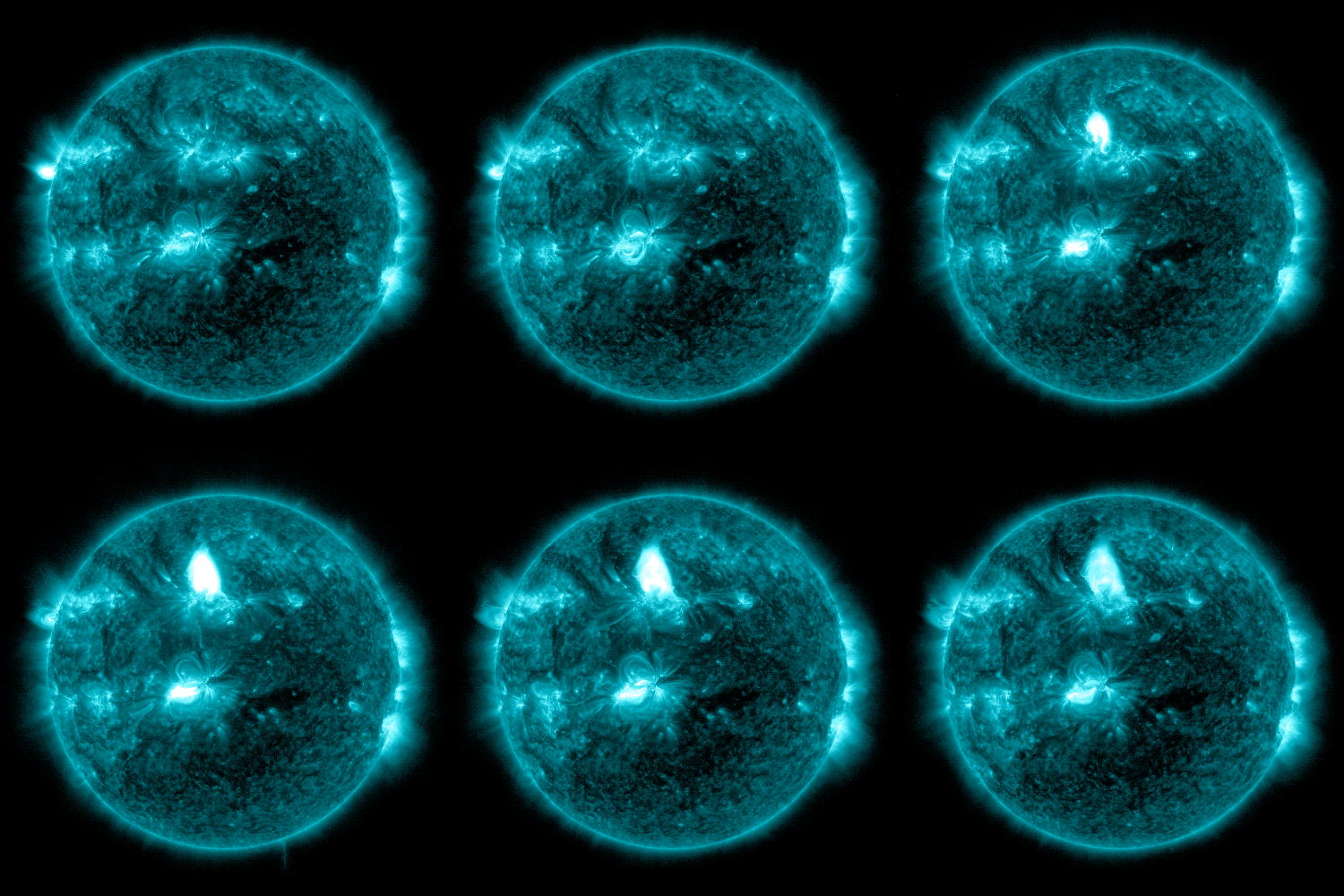
    A view of the Sun colorized in blue shows two bright flashes of light near the Sun's center and top

    The Sun emitted a strong solar flare, peaking at 9:33 p.m. EDT on Friday, March 22. NASA's Solar Dynamics Observatory, which watches the Sun constantly, captured an image of the event. Solar flares are powerful bursts of energy. Flares and solar eruptions can impact radio communications, electric power grids, navigation signals, and pose risks to …

  • Strong Solar Flare Erupts from Sun
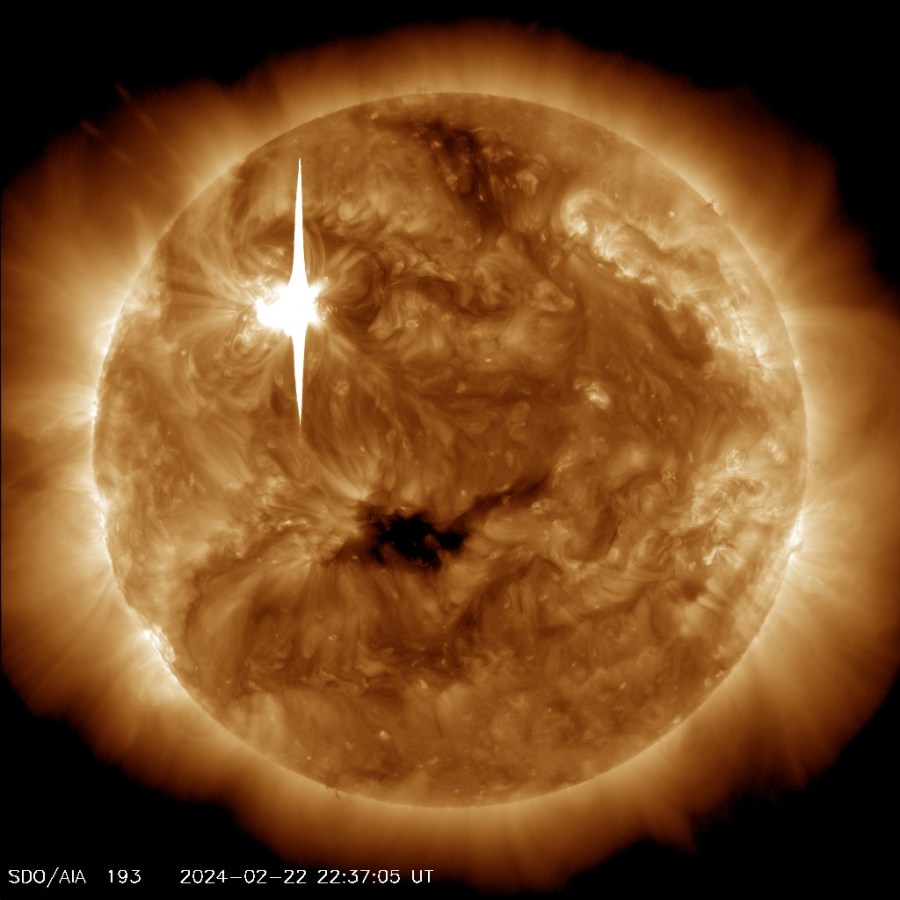
    The Sun, shown in bronze. There are several bright areas and one very dark splotch. On the upper left is a bright white line – this is the flare.

    The Sun emitted a strong solar flare, peaking at 5:34 p.m. EST on Feb. 22, 2024. NASA's Solar Dynamics Observatory, which watches the Sun constantly, captured an image of the event. Solar flares are powerful bursts of energy. Flares and solar eruptions can impact radio communications, electric power grids, navigation signals, and pose risks to …