

















Earth Modeling Nexus Core Computing
Providing cutting-edge supercomputing capabilities to power Earth system modeling innovation and accelerate scientific discovery
NASA’s Earth Modeling Nexus Core Computing (Nexus Compute) is the technology engine that powers the agency's flagship Earth system models. As NASA's Earth Modeling Nexus (Nexus) advances a more unified modeling and data assimilation framework, Nexus Compute ensures strategic alignment between model development and the high-end computing power needed to run them.
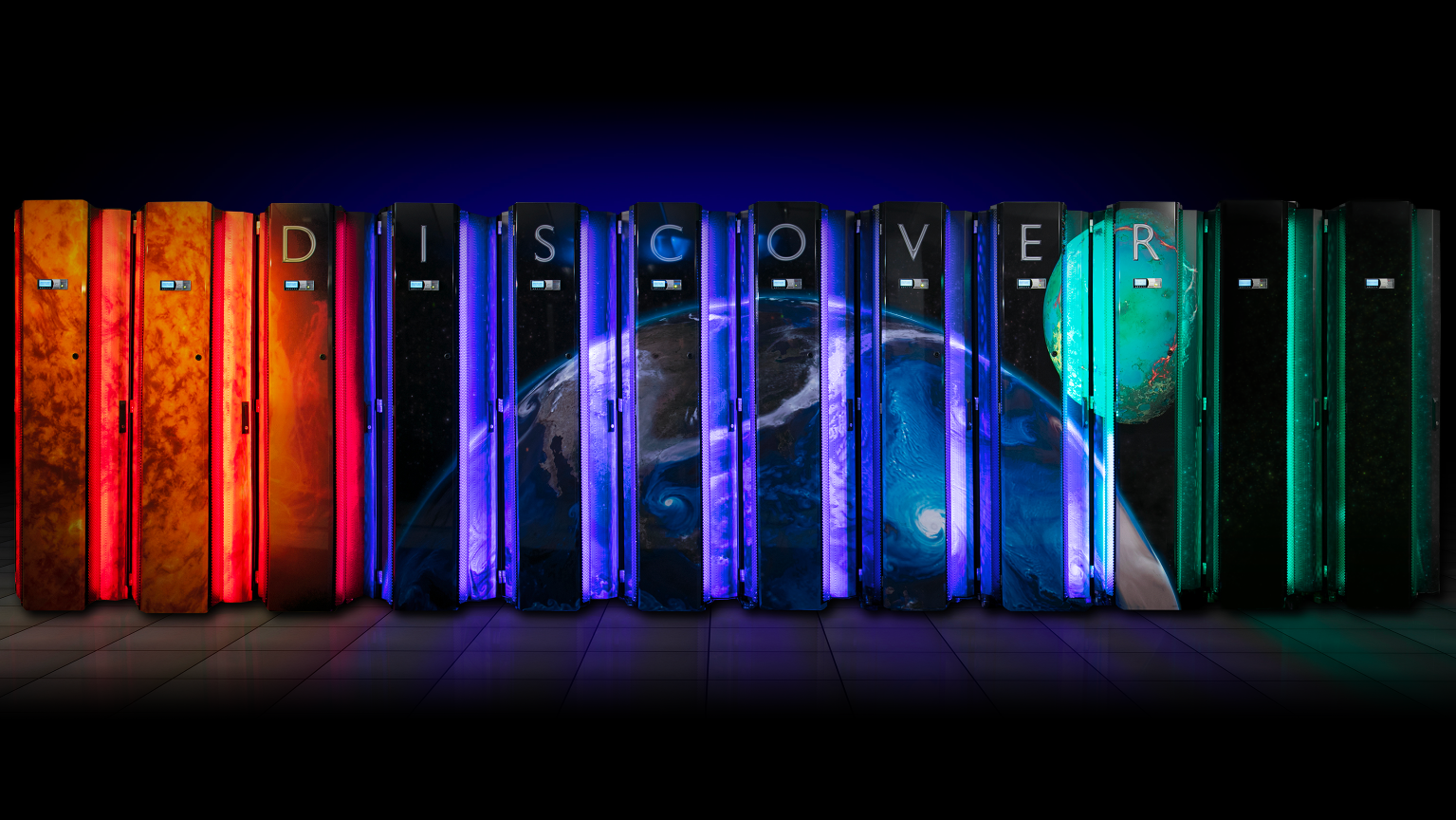
Nexus Compute provides specialized computing capabilities for the large, complex challenges that NASA models are uniquely designed to address, improving Earth system understanding and robust future estimations. The centerpiece is the Discover supercomputing cluster, which synthesizes decades of trusted NASA Earth observations to build fine-scale, high-fidelity simulations of global systems – including land, atmosphere, ocean, and ice processes – across time scales from days to centuries. This capability is central to discovery, enabling scientists to unlock deeper understanding of interconnected Earth systems and stimulating new technology and applications to support partners and industry.
To further support innovation and efficiency, Nexus Compute provides tens of petabytes of data storage, a software environment tailored to modeling code development, optimized resource management, and user resources. This mission-critical infrastructure provides the scalable performance and agility needed to advance NASA’s Earth science vision and maximize trustworthy, observation-constrained Earth information for societal benefit.
compute cores
213,288
Calculations per second
8.28 quadrillion
Data management
49.5 petabytes
Capabilities
High-resolution simulation across timescales, innovative technology and code development
Extracting Earth insights with NASA's cutting-edge discovery engine
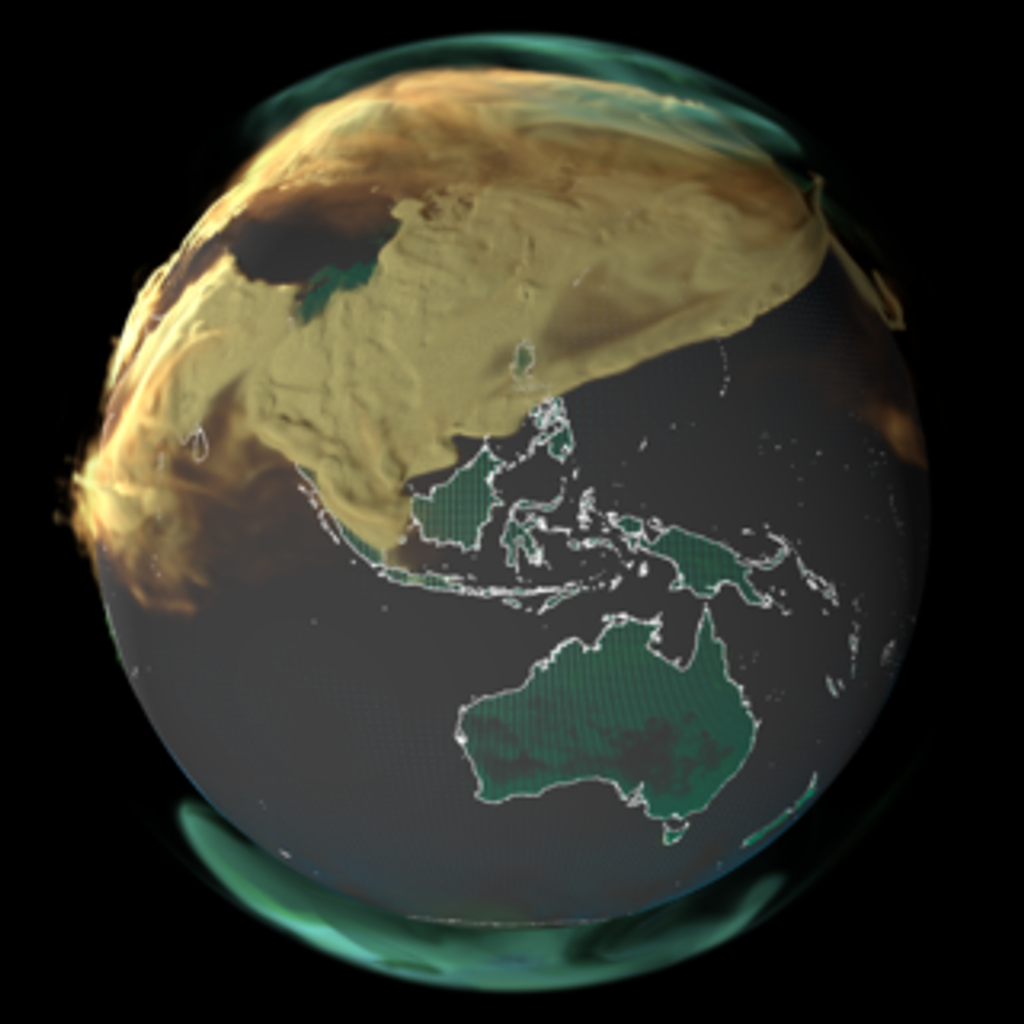
Nexus Compute serves as the scientific workhorse behind NASA’s Earth system models. High-performance supercomputing enables scientists to crunch decades of trusted global observations, mapping individual data points across time and space to construct advanced 3D-gridded models of complex Earth processes. By simulating interactions between atmosphere, land, ocean, and ice systems, Nexus models build a highly-accurate, living history of our planet. Nexus Compute helps to transform massive volumes of raw data into trusted, actionable Earth information and provides a test bed for innovative applications to support operational partners and industry.

Powering innovation for public and private sector breakthroughs
By combining state-of-the-art, high-performance computing with cutting-edge AI and machine learning tools, Nexus Compute provides a launchpad for next-generation Earth system modeling and technology. Nexus' physics-based models run on large-capacity systems to process massive inflow and outflow of data, delivering trusted high-quality outputs which serve as training data for AI foundation models. Advanced AI methodologies enable scientists to parse data faster and answer complex, global-scale questions, but the breakthroughs ripple far beyond NASA. Interagency partners, commercial technology developers, and industrial sectors leverage this open innovation to build smarter, tech-driven solutions that protect lives and boost economic resilience nationwide.

Supporting mission readiness from surface to deep space
Before a satellite ever launches, Nexus Compute is already at work to ensure maximum return on investment. Scientists and engineers leverage computing power to run complex simulations, strengthening mission design and demonstrating the value of future observations to advance Earth understanding. The simulations are also used to shape plans for airborne field campaigns and test model readiness to ingest new data, reducing time-to-science once sensors begin delivering data. Looking further upward, Nexus Compute processes upper atmosphere, planetary, and space weather models built upon NASA's global Earth system models. As humanity reaches toward the Moon and Mars, these interdisciplinary models support critical safeguarding for crewed spaceflight, directly supporting launch condition forecasting and safe entry, descent, and landing.

Driving efficiency through alignment with top strategic objectives
As NASA Earth scientists work to answer the most challenging and consequential questions about our home planet, computing power is a critical resource they depend upon. Nexus Compute coordinates efficient use of on-premise supercomputers, specialized high-end facilities, and flexible commercial clouds to fuel scientific discovery. By streamlining workflows, automating tasks, and eliminating redundancies, Nexus Compute ensures that compute resources are optimized to achieve NASA’s Earth system modeling objectives. This disciplined approach maximizes computational performance in alignment with core agency and national goals.
Nexus Compute Leadership
| Argyro Kavvada | Program Manager, Nexus |
| Lesley Ott | Project Scientist, Nexus |
| Daniel Duffy | Scientific Computing Lead, Nexus |
| Ellen Salmon | Acting Lead, Nexus Compute |
Nexus Compute is maintained and operated by the Computational & Information Sciences and Technology Office (CISTO) at NASA's Goddard Space Flight Center.
Looking for additional computing resources? Visit the NASA Science Cloud, also operated by CISTO, or High-End Computing at NASA's Ames Research Center.
Modeling Computing Service Transition
Supercomputing is an essential enabling component in NASA's strategy to integrate flagship Earth system models into an efficient unified framework under Nexus. To directly align critical compute resources with the highest-priority Earth system modeling objectives, the NASA Center for Climate Simulation (NCCS) is transitioning to become Nexus Compute. Most modeling computing services will be unaffected by this evolution. While a small number of compute activities may be redirected as existing infrastructure and services are transitioned, the Nexus Compute team is managing this process gradually through FY27 to ensure continuity of ongoing research and data services.
Learn More