
















Mission
Atmosphere fosters research and innovation targeting the dynamics and thermodynamics of the atmosphere, its physical and chemical composition, and the interdependent impacts that these have on the Earth’s radiative balance, air quality, and weather.
Latest Content
Stay up-to-date with the latest content from NASA as we explore the universe and discover more about our home planet.

Clouds of dust lofted from the Sahara Desert brought hazy skies and muddy rain to Western Europe.
NASA’s Plankton, Aerosol, Cloud, ocean Ecosystem (PACE) satellite, known for measuring tiny organisms in the ocean and particles in the…
NASA’s Libera instrument, which is designed to maintain the global data record of Earth’s radiation budget, has successfully completed comprehensive…
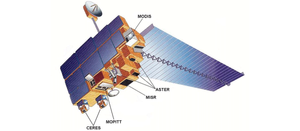
Launched into the night sky more than 26 years ago, on Dec. 18, 1999, from Vandenberg Air Force Base (now…
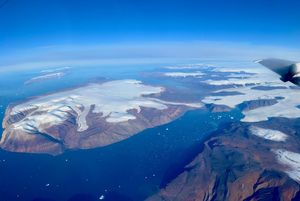
Introduction The Clouds and the Earth’s Radiant Energy System (CERES) was initially designed in the late-1980s and early-1990s as a…
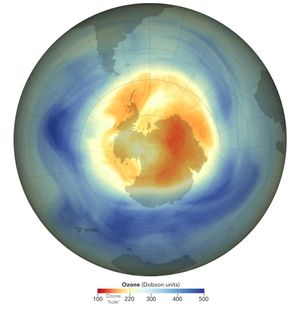
The ozone hole over the Antarctic was small in 2025 compared to previous years and remains on track to recover…
Overview
NASA Atmosphere collectively supports innovative research of the Earth's atmospheric processes. Atmosphere examines ozone-controlling mechanisms in the upper troposphere and stratosphere through comprehensive observations from satellites, aircraft, ground networks, and laboratories, directly supporting international ozone depletion assessments mandated by the Montreal Protocol. Atmosphere also focuses on global tropospheric trace gases and aerosols, developing integrated observing systems that utilize coupled chemical and meteorological models with multi-platform observations to enhance understanding of air quality and long-term trends. In addition, Atmosphere investigates how atmospheric gases, particles, and clouds interact with solar and terrestrial radiation, particularly regarding radiative variability and long-term trends, while simultaneously advancing radiative transfer theory and measurement capabilities.
Atmosphere likewise supports research to obtain and understand measurements of thermodynamic and dynamic state to understand and predict processes and weather events that impact the atmosphere over short-term, subseasonal, and seasonal periods at local, regional, and global scales. Finally, Atmosphere supports research that serves as an integrative force, using observations and models that bridge composition and dynamics to synthesize work across all atmospheric research efforts. NASA Atmosphere also engages in work that collaborates with other elements across the research Spheres, within NASA Earth Science (Earth Action, Data Systems, and Technology) and beyond (i.e., interagency and cross-agency efforts).
The Core Science Questions that Drive NASA's Atmosphere Research
-
How is atmospheric composition changing?
-
What trends in atmospheric composition and solar radiation influence the Earth system?
-
How does atmospheric composition respond to and affect global environmental change?
-
What are the effects of global atmospheric composition and Earth system changes on regional air quality?
-
How can we improve predictive capability for weather, including extreme events?
-
How can we use NASA, NOAA, commercial, and other countries’ satellite observations to innovate and transition new algorithms, data, and tools for operational weather forecasts?

Funded Research Opportunities
Solicited program elements relevant to Atmosphere are publicized through the Research Opportunities in Space and Earth Sciences (ROSES) NASA Research Announcements (NRAs) on the NASA Solicitation and Proposal Integrated Review and Evaluation System (NSPIRES) website. Past, open, and future solicitations can be searched and viewed on NSPIRES.
- A.2 Earth Venture: TROPICS and PREFIRE Science and Applications Teams: Step-1 due September 18, 2025, Step-2 due January 13, 2026
- A.4 Rapid Response and Novel Research in Earth Science: No due date
- F.5 Future Investigators in NASA Earth and Space Science and Technology: Due date TBD
Research Areas
-
Atmospheric Composition Modeling and Analysis
Atmospheric Composition Modeling and Analysis (ACMA) uses models to help integrate observations from multiple satellite, airborne-, and ground-based instruments in four main areas. These include air quality and oxidation efficiency in the troposphere, how pollution-sourced aerosols affect cloud properties, stratospheric chemistry and ozone depletion, and interactions between atmospheric chemistry and the Earth system. ACMA also supports small amounts of research into long-term trends in atmospheric composition.
Near surface concentration of nitrogen oxides (NOx) estimated from nitrogen oxide and nitrogen dioxide produced by NASA’s Goddard Earth Observing System Composition Forecasting (GEOS-CF) model. GEOS-CF tracks the concentrations of hundreds of gas phase chemical species and dozens of particle types characterized by their composition and size.NASA/Scientific Visualization Studio -
Atmospheric Physics
Atmospheric Physics (AP) studies the physics and dynamics of the atmosphere, temperature, moisture, and wind to better understand the conditions that drive specific weather events. This research improves computer models, algorithms, and data assimilation that support short-term to seasonal weather prediction and understanding. To do this, AP observes atmospheric phenomena through suborbital and satellite observations to determine the relationship between atmospheric thermodynamics, dynamics, storm structure, and convection; ocean surface properties; and radiation within weather systems. Ultimately, AP hopes to improve process models in these areas, provide initial conditions and assimilation of data to better characterize and understand weather systems, and develop long-term time-series of atmospheric analyses to support weather and Earth system studies.
 The DC-8 aircraft engines are visible through the passenger window during the CPEX-CV campaign. Each day, the team took off from Cabo Verde, an island nation in the east tropical North Atlantic Ocean, logging roughly 100 hours altogether.NASA/Amin Nehrir
 -
Planetary Boundary Layer
Improved understanding and prediction accuracy of temperature and moisture profiles within the atmospheric Planetary Boundary Layer (PBL), in addition to determining PBL height, allow for the ability to make significant advances in several PBL application areas (e.g., wildfire, flight visibility and drone navigability, air quality and human health, contaminant transport, sensible weather, low-level jets, channelized airflow, convection and severe storms, and solar and wind resource availability). These interdisciplinary science and application areas are currently constrained by the lack of global PBL observations at sufficient spatial and temporal resolution and sampling. NASA works to identify the most critical PBL science and applications questions in the context of Earth System science, considering the diverse spatial and temporal scales of the atmosphere, ocean, land, and ice. Scientific research supporting integrated measurements from ground-based, airborne, and satellite remote sensing, including new observing technologies and approaches developed by NASA’s Earth Science Technology Office, have the potential to significantly increase the quality, amount, and types of observations collected within the PBL.
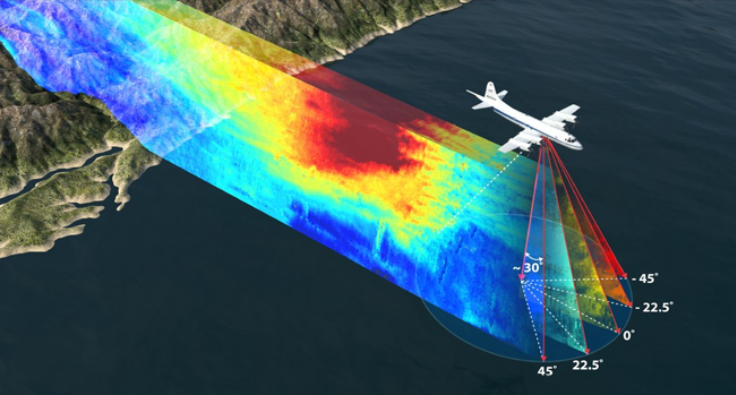 The Next-Generation Aerosol Wind Profiler (AWP) wind lidar is capable of providing near-simultaneous full 3-D wind vector retrievals. The AWP operates with laser pulse energy and has a repetition rate combination for high spatial and vertical resolution wind profiling from space.NASA/Langley Research Center
 -
Radiation Sciences
Radiation Sciences (RS) conducts research to better understand and predict how aerosols, clouds, and gases scatter and absorb both solar and terrestrially emitted radiation in the Earth’s atmosphere. RS supports studies to improve the theoretical understanding of radiative transfer and to improve field measurements of aerosol and cloud particle concentration, composition, microphysics, and optical properties. These measurements include both airborne and surface-based remote and in situ measurements. RS also supports the analysis of satellite remote sensing and field data as well as the development of process models, which contribute to Earth system modeling.
 In June 2020, the “Dustzilla” event transported Saharan dust across the tropical North Atlantic all the way to the United States. Saharan dust impacted the Earth’s radiation budget by absorbing and scattering light, as well as interacting with cloud and precipitation processes.NASA/Scientific Visualization Studio
 -
Tropospheric Composition
Tropospheric Composition (TC) studies global tropospheric ozone and aerosols, including their chemical precursors and the reactions involved in their formation and transformation into other chemical compounds. TC strives to develop an integrated observing system for tropospheric composition, which includes atmospheric chemistry models, as well as satellite, airborne-, and ground-based observations of tropospheric composition. This integrated observing system is fundamental to create a better understanding of air quality and the Earth system.
 By measuring nitrogen dioxide and formaldehyde, TEMPO can derive the presence of near-surface ozone. The images show nitrogen dioxide and formaldehyde build up in the atmosphere over the city and over the Houston ship channel in the early afternoon.NASA/Scientific Visualization Studio
 -
Upper Atmosphere
Upper Atmosphere (UA) studies the processes and reactions that control the amount of ozone in the upper troposphere and stratosphere. UA uses observations from satellites, airborne campaigns, ground networks, and laboratory studies to quantify changes in ozone concentration and to better understand the driving forces behind reactions that can either directly or indirectly destroy or create atmospheric ozone and precursors to ozone-destroying compounds. NASA and NASA-supported observations have documented the decline of ozone around the globe, with extreme depletions occurring over Antarctica in each spring and occasional large depletions in the Arctic. For the last decade, these observations have provided the first indications of recovery in stratospheric ozone, particularly in the upper stratosphere. This research contributes significantly to the World Meteorological Organization and the U.N. Environment Programme quadrennial assessments on ozone depletion, as mandated by the Montreal Protocol.
Here, the globes show ozone data on the day that the minimum ozone concentration was reached over Antarctica, each year from 1979 and 2024.NASA/Scientific Visualization Studio
Atmosphere Data and Distributed Active Archive Centers (DAACs)
- Atmospheric Science Data Center (ASDC) DAAC
- EarthData DAACs
- Global Hydrology Resource Center (GHRC) DAAC
- Goddard Earth Sciences (GES) Data and Information Services Center (DISC)
- Level-1 and Atmosphere Archive & Distribution System (LAADS) DAAC
Missions and Campaigns
-
Missions
NASA Earth Science missions see Earth from space and enable researchers to monitor and understand our home planet. Missions range from instruments onboard the International Space Station (ISS) to Earth-orbiting satellites that span both large and small (i.e., CubeSats) form factors. NASA’s Earth Science missions often have US or other international partnerships and frequently collect data for 10 or more years.
-
Campaigns
Campaigns use instrumented aircrafts, balloons, ships, and surface networks over land and ocean, to better observe and understand our home planet. Campaigns represent coordinated efforts with intensive observation periods over one or more regions that can last anywhere from weeks to years. These measurements help support missions by providing initial tests of instruments before they are launched to space. Campaigns also provide important measurements to calibrate and validate satellite data in addition to collecting observations in support of related scientific endeavors.

Public Events
Upcoming Meetings and Workshops
- 2026 Atmosphere Investigator Meeting (invitation only), 21-24 April 2026, Hampton, VA, USA
- Decadal Survey Planetary Boundary Layer Incubation Community Meeting, 12-13 May 2026, Pasadena, CA, USA
- CYGNSS Science Team Meeting, 9-11 June 2026, Ann Arbor, MI, USA
Select Recent Meetings and Workshops
- INSPYRE 2026 Science Team Meeting, 18-20 February 2026, Iowa City, IA, USA
- 106th American Meteorological Society (AMS) Annual Meeting, 25-29 January 2026, Houston, TX, USA
- American Geophysical Union (AGU) 2025 Fall Meeting, 15-19 December 2025, New Orleans, LA, USA
- NDACC Symposium 2025 and Steering Committee Meeting, 27-30 October 2025, Virginia Beach, VA, USA
- OCO Science Team Meeting, 22-26 September 2025
- Decadal Survey Planetary Boundary Layer Incubation Community Technical Meeting, 15-16 September 2025, Hyattsville, MD, USA
- Carbon Monitoring System Science Team Meeting & Applications Workshop, 9-11 September 2025, Moffett Field, CA, USA
- NURTURE Science Team Meeting, 3-5 September 2025, Hampton, VA, USA
- TEMPO/GeoXO ACX Joint Science Team Workshop, 19-22 August 2025, Cambridge, MA, USA
- Eighth Annual SAGE III on ISS Science Team Meeting, 13-14 August 2025, Hampton, VA, USA
- ARCSIX Science Team Meeting, 19-21 May 2025, Boulder, CO, USA
- Decadal Survey Planetary Boundary Layer Incubation Community Meeting, 1-3 April 2025, Silver Spring, MD, USA
Collaborating Organizations and Partnerships
- Atmospheric Infrared Sounder (AIRS)
- Clouds and the Earth’s Radiant Energy System (CERES)
- Cyclone Global Navigation Satellite System (CYGNSS)
- Multi-Angle Imager for Aerosols (MAIA)
- Moderate Resolution Imaging Spectroradiometer (MODIS)
- Multi-Angle Imaging Spectroradiometer (MISR)
- Plankton, Aerosol, Cloud, ocean Ecosystem (PACE)
- Polar Radiant Energy in the Far-InfraRed Experiment (PREFIRE)
- Stratospheric Aerosol and Gas Experiment (SAGE)
- Tropospheric Emissions: Monitoring of Pollution (TEMPO)
Contacts
Ed Nowottnick
Atmosphere Program Manager
Radiation Science Research
Contact | Bio
Emma Knowland
Atmosphere Program Manager
Tropospheric Composition Research
Contact | Bio
John T. Sullivan
Atmosphere and Enabling Capabilities Program Manager (dual role)
Ground Networks, Calibration Labs, and Crowdsourcing, Multi-Source Integrated Observatory Deputy Program Manager
Contact | Bio
Justin Stachnik
Atmosphere and Hydrosphere Associate Program Scientist (ASRC Contractor) (dual role)
Atmospheric Physics and Precipitation Science Research
Contact | Bio
Ken Jucks
Atmosphere Program Manager
Upper Atmosphere Research
Contact | Bio
Will McCarty
Atmosphere and Hydrosphere Program Manager (dual role)
Atmospheric Physics and Precipitation Science Research
Contact | Bio
Earth Science Division Embeds
Amber Emory
Earth Science Technology Office Embed
Contact | Bio
Joel Scott
Earth Science Data Systems Embed
Contact | Bio
John Haynes
Earth Action Embed
Contact