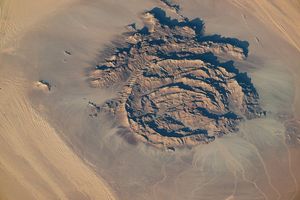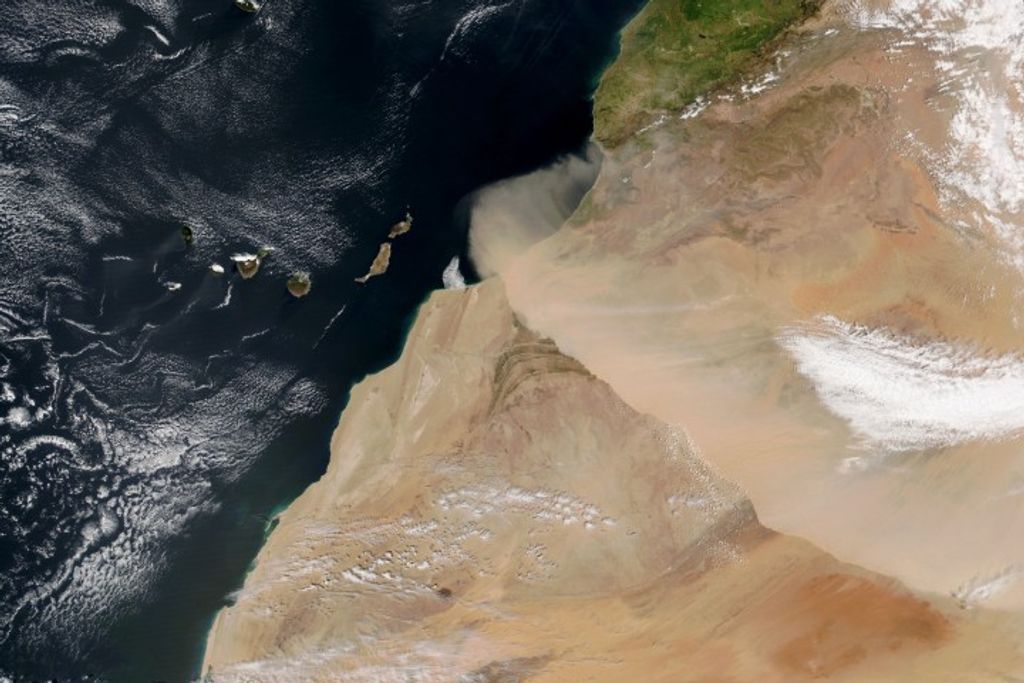


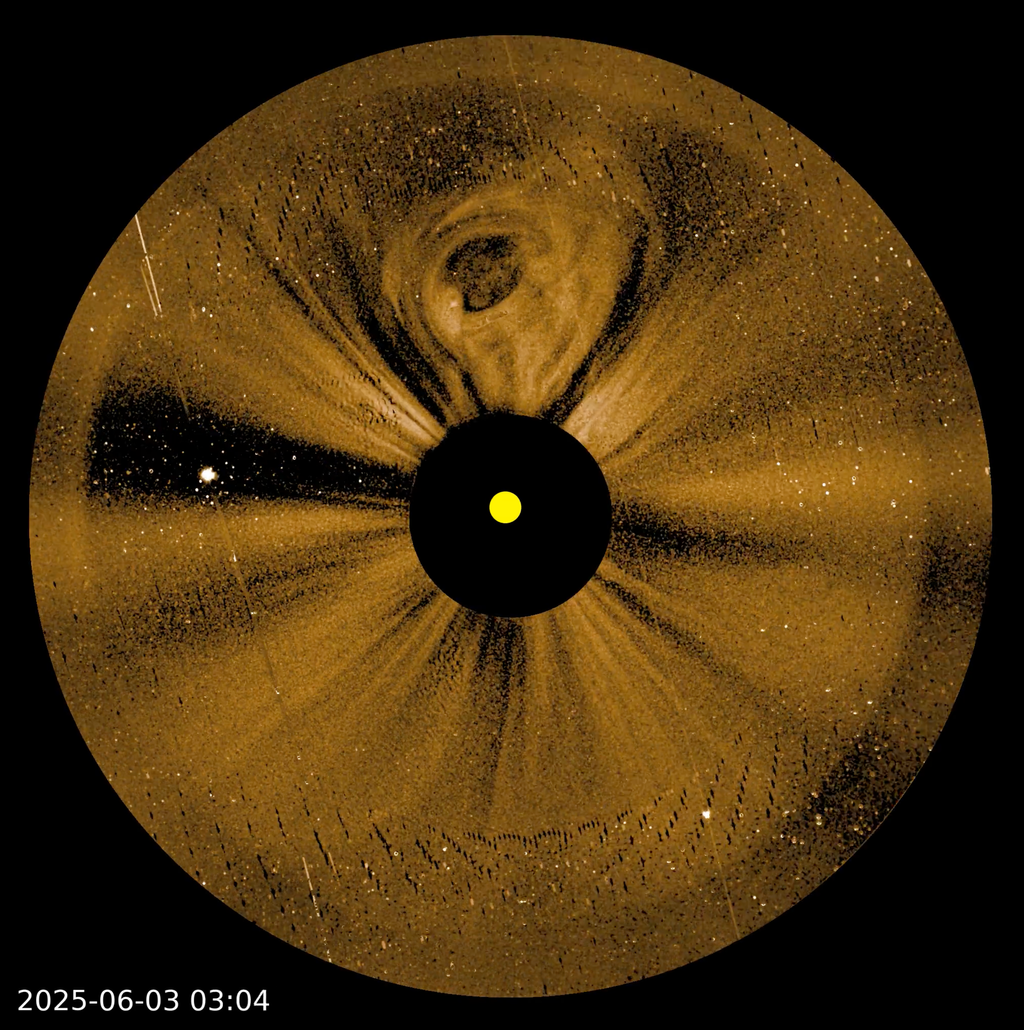















Editor’s note: Today’s Image of the Day kicks off a week of stories featuring some of our most captivating images of impact sites around the planet.
The many impact craters scattered across Earth's surface offer ample reminders of past cataclysms. However, one of Earth’s best-known encounters with a near-Earth object in recent history—the Tunguska Event—left no permanent mark.
Early in the morning on June 30, 1908, an object that scientists estimate was between 50 and 100 meters (150 and 300 feet) across plunged into Earth’s atmosphere, creating a brilliant fireball that exploded over a remote part of Siberia. The explosion, an airburst, likely occurred about 6 to 10 kilometers (4 to 6 miles) above the surface of the present-day Evenkiysky district of Krasnoyarsk Krai, vaporizing the vast majority of the incoming bolide, injuring eyewitnesses, and toppling and scorching trees across hundreds of square kilometers.
More than a century later, on July 6, 2024, the OLI (Operational Land Imager) on Landsat 8 captured this image of part of the area affected by the explosion. The image shows no visible signs of the impact or damage—just healthy pine forests, marshes, and rivers. Labels show the approximate epicenter of the damage based on field surveys and one possible trajectory of the incoming bolide. (Published estimates of the trajectory vary considerably.)
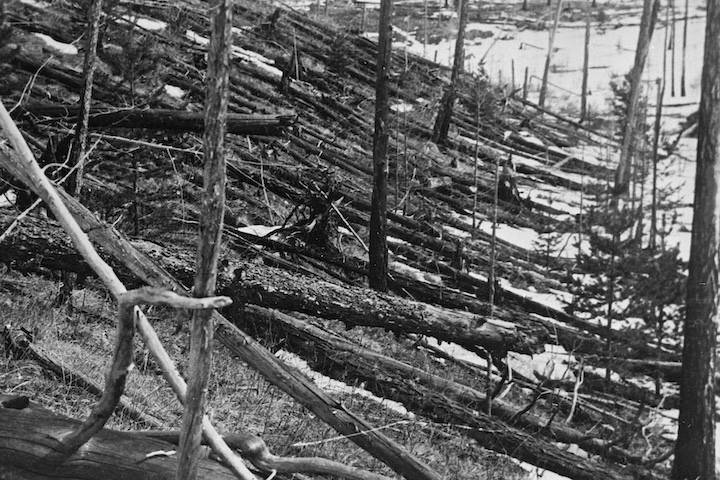
Mineralogist Leonid Kulik conducted a series of field expeditions in the 1920s and 1930s that produced some of the first detailed documentation of damage caused by the Tunguska Event, including photos and aerial surveys showing felled and scorched trees in a radial pattern. The photo of damaged trees shown below was taken during a Kulik expedition in May 1929.
In subsequent decades, research teams have refined maps of the butterfly-shaped blast zone. Others have asserted that particular rock fragments, shocked quartz, and tree ring irregularities are potential signs of the blast. Some researchers have proposed that nearby Lake Cheko may have formed as a result of a falling bolide fragment, but other research teams dispute that idea. Direct evidence of craters or the bolide that caused the explosion remains elusive and a topic of ongoing study and debate.
To be classified as a near-Earth object, a comet or asteroid must have an orbit that brings it within 1.3 astronomical units of the Sun. NASA’s database of known near-Earth asteroids contained more than 38,000 entries in June 2025, though the number has been rising rapidly in recent years. Asteroid surveys have led to the addition of hundreds of new entries in some months.
In June 2025, the Vera C. Rubin Observatory announced that it had discovered 2,104 new asteroids in our solar system, including seven near-Earth objects, within just a few days. Astronomers expect the observatory’s gigantic digital camera to find millions more in the coming years as it surveys larger swaths of the night sky.
The vast majority of near-Earth objects are harmless and will never cross paths with Earth. In 2016, NASA established a Planetary Defense Coordination Office to find and track the objects that could pose a hazard.
References & Resources
- Britannica (2025, June 13) What Is Known (and Not Known) About the Tunguska Event. Accessed June 27, 2025.
- Collins, G.S. et al. (2008) Evidence that Lake Cheko is not an impact crater. Terra Nova, 20(2), 165-168.
- Gasperini, L. et al. (2007) A possible impact crater for the 1908 Tunguska Event. Terra Nova, 19 (4), 245-251.
- Gladysheva, O. (2020) The Tunguska event. Icarus, 348, 113837.
- Longo, G. (2007) The Tunguska Event. In: Bobrowsky, P.T., Rickman, H. (eds) Comet/Asteroid Impacts and Human Society. (Springer, Berlin, Heidelberg).
- MIT Technology Review (2013, May 2) First Tunguska Meteorite Fragments Discovered. Accessed June 27, 2025.
- NASA Near-Earth Objects Program. Accessed June 27, 2025.
- NASA (2025) Eyes on Asteroids. Accessed June 27, 2025.
- NASA (2019, June 26) Tunguska Revisited: 111-Year-Old Mystery Impact Inspires New, More Optimistic Asteroid Predictions. Accessed June 27, 2025.
- Nature (2013, June 10) Rock samples suggest meteor caused Tunguska blast. Accessed June 27, 2025.
- Rogozin, D.Y., et al. (2023) Morphology of Lakes of the Central Tunguska Plateau (Krasnoyarsk Krai, Evenkiya): New Data on the Problem of the Tunguska Event of 1908. Doklady Earth Sciences, 510, 307-311.
- Scientific American (2008, June 30) The Tunguska Mystery—100 Years Later. Accessed June 27, 2025.
- Zlobin, A. (2013) Discovery of probably Tunguska meteorites at the bottom of Khushmo river’s shoal. Accessed June 27, 2025.
NASA Earth Observatory image by Michala Garrison, using Landsat data from the U.S. Geological Survey . Damaged tree photograph from the 1929 Leonid Kulik expedition. Epicenter and trajectory estimates from Longo, G. et al. 2007 . Story by Adam Voiland .