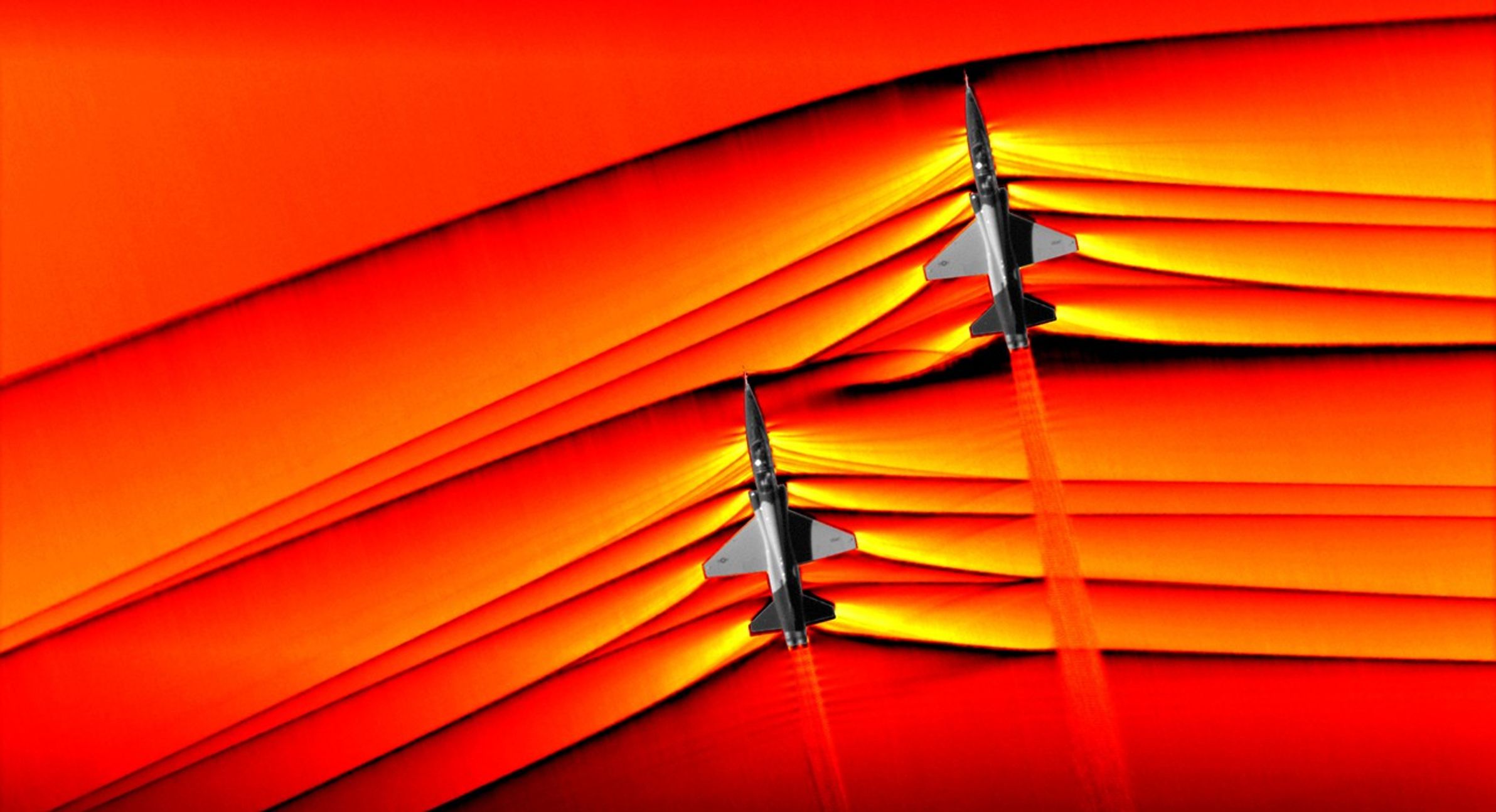





















“We never dreamt that it would be this clear, this beautiful,” said J.T. Heineck of NASA’s Ames Research Center. After more than ten years of developing and refining imaging techniques and equipment, the scientist got a glimpse of perhaps the first-ever images of the interaction of shockwaves from two supersonic aircraft in flight.
“I am ecstatic about how these images turned out,” Heineck said after a test of an advanced air-to-air photographic technology. “With this upgraded system, we have, by an order of magnitude, improved both the speed and quality of our imagery from previous research.”
The images were captured as part of the Air-to-Air Background Oriented Schlieren flights, or AirBOS, which took place at NASA’s Armstrong Flight Research Center. The flight series included successful testing of an upgraded system that captures high-resolution images of shockwaves, the rapid pressure changes produced when an aircraft flies faster than the speed of sound. Shockwaves merge together as they travel through the atmosphere and are responsible for what is heard on the ground as a “sonic boom.”
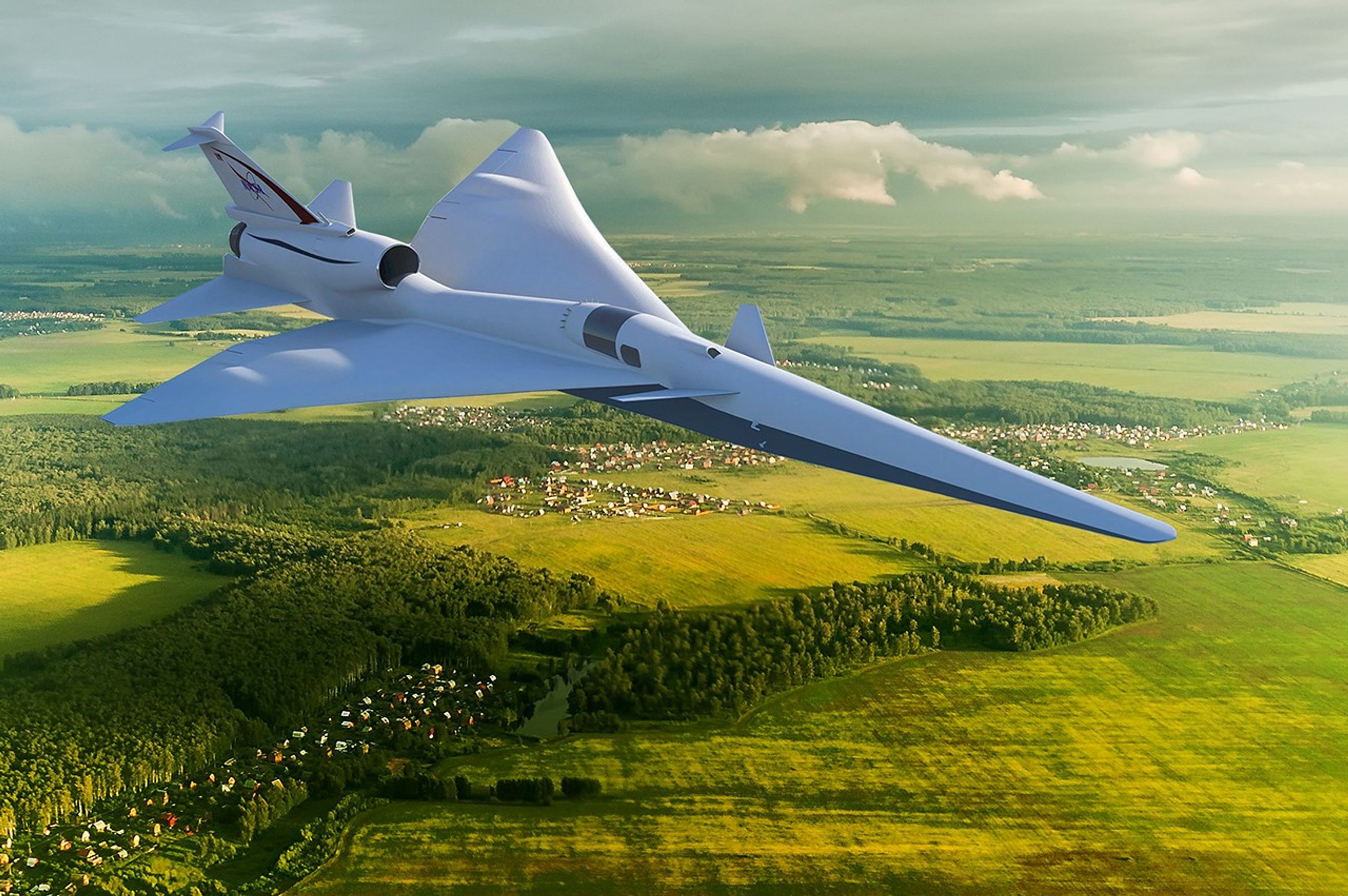
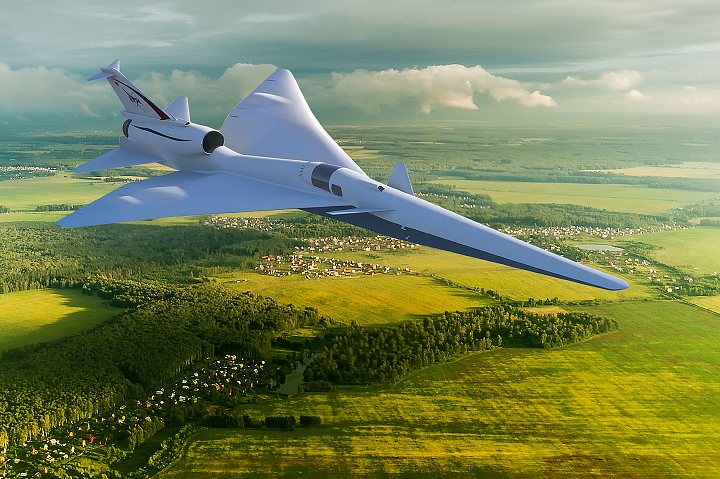
The system will be used to capture data crucial to confirming the design of NASA’s X-59 Quiet SuperSonic Technology X-plane, or X-59 QueSST (photo below). The plane will fly supersonic, but will produce shockwaves in such a way that, instead of producing a loud sonic boom, will only make a quiet rumble. The ability to fly supersonic without a sonic boom may one day result in lifting current restrictions on supersonic flight over land.
The image at the top of this page features a pair of T-38s from the U.S. Air Force Test Pilot School. The T-38s are flying approximately 30 feet from each other, with the trailing aircraft flying about 10 feet lower than the leading one. The image shows the flow of the shock waves from both aircraft and the interaction of the shocks.
“If you look at the rear T-38, you see these shocks kind of interact in a curve,” said Neal Smith, a research engineer with AerospaceComputing Inc. at NASA Ames. “This is because the trailing T-38 is flying in the wake of the leading aircraft, so the shocks are going to be shaped differently. This data is really going to help us advance our understanding of how these shocks interact.”
While NASA has previously used the schlieren photography technique to study shockwaves, the AirBOS flights featured an advanced approach that allowed researchers to capture three times the amount of data in the same amount of time.
References & Resources
Story by Matt Kamlet, NASA Armstrong Flight Research Center, with Mike Carlowicz, NASA Earth Observatory.