











It was loud and brief. For a few minutes around 9 p.m. on January 3, 2017, Alaska’s Bogoslof volcano let loose an explosion.
According to the Alaska Volcano Observatory, cloud-top temperatures indicate the volcanic plume may have reached as high as 33,000 feet (10,000 meters) into the atmosphere. Winds out of the south carried the cloud north over the Bering Sea.
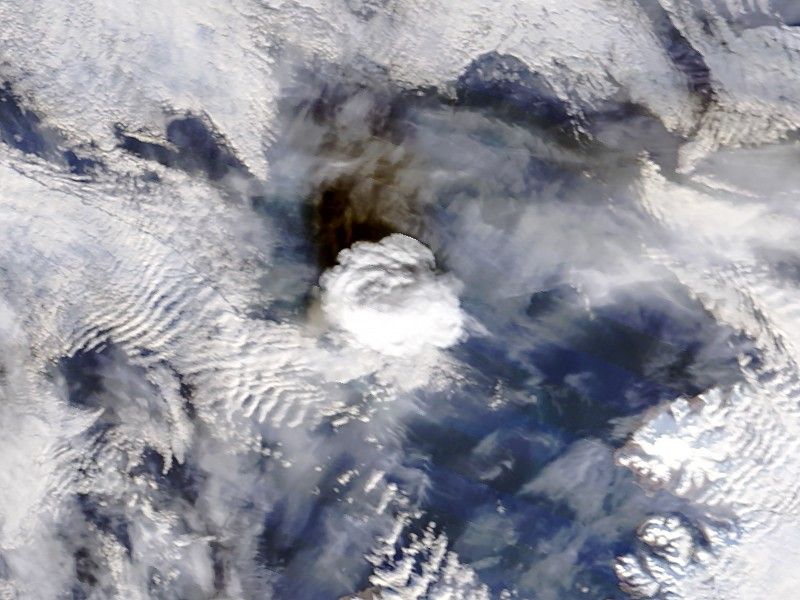
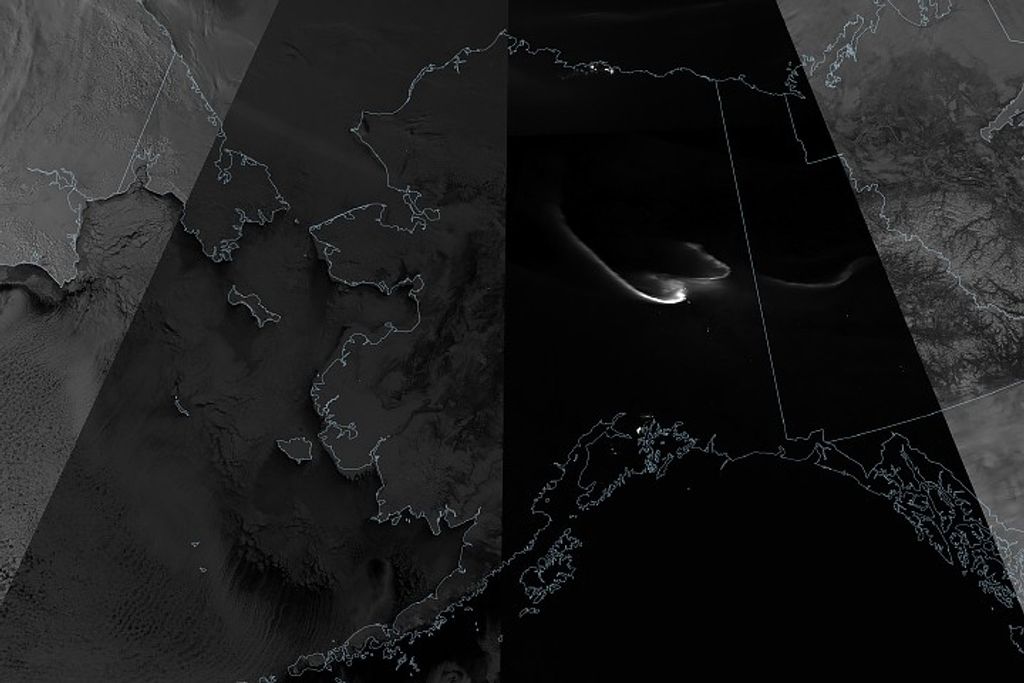
The volcano blew off more steam and ash two days later, when the Moderate Resolution Imaging Spectroradiometer (MODIS) on NASA’s Terra satellite captured this image.
A video clip assembled from Himawari-8 data shows another volcanic cloud on the afternoon of January 5, 2017. Infrared sensors detected that temperatures in the plume plunged to -58 degrees Celsius (-72° F) as the steam and ash rose into the atmosphere, according to Dan Lindsey, an atmospheric scientist with NOAA. Himawari-8 is a geostationary weather satellite run by the Japan Meteorological Agency.
References & Resources
- Alaska Dispatch News (2017, January 3) Bogoslof volcano continues grumbling in Aleutians. Accessed Janaury 6, 2017.
- Alaska Volcano Observatory (2017, January 3) Bogoslof Volcano. Accessed Janaury 6, 2017.
- NASA Earth Observatory (2014, June 7) The Aleutian Islands.
NASA image courtesy Jeff Schmaltz, MODIS Rapid Response Team , Goddard Space Flight Center. Caption by Pola Lem.