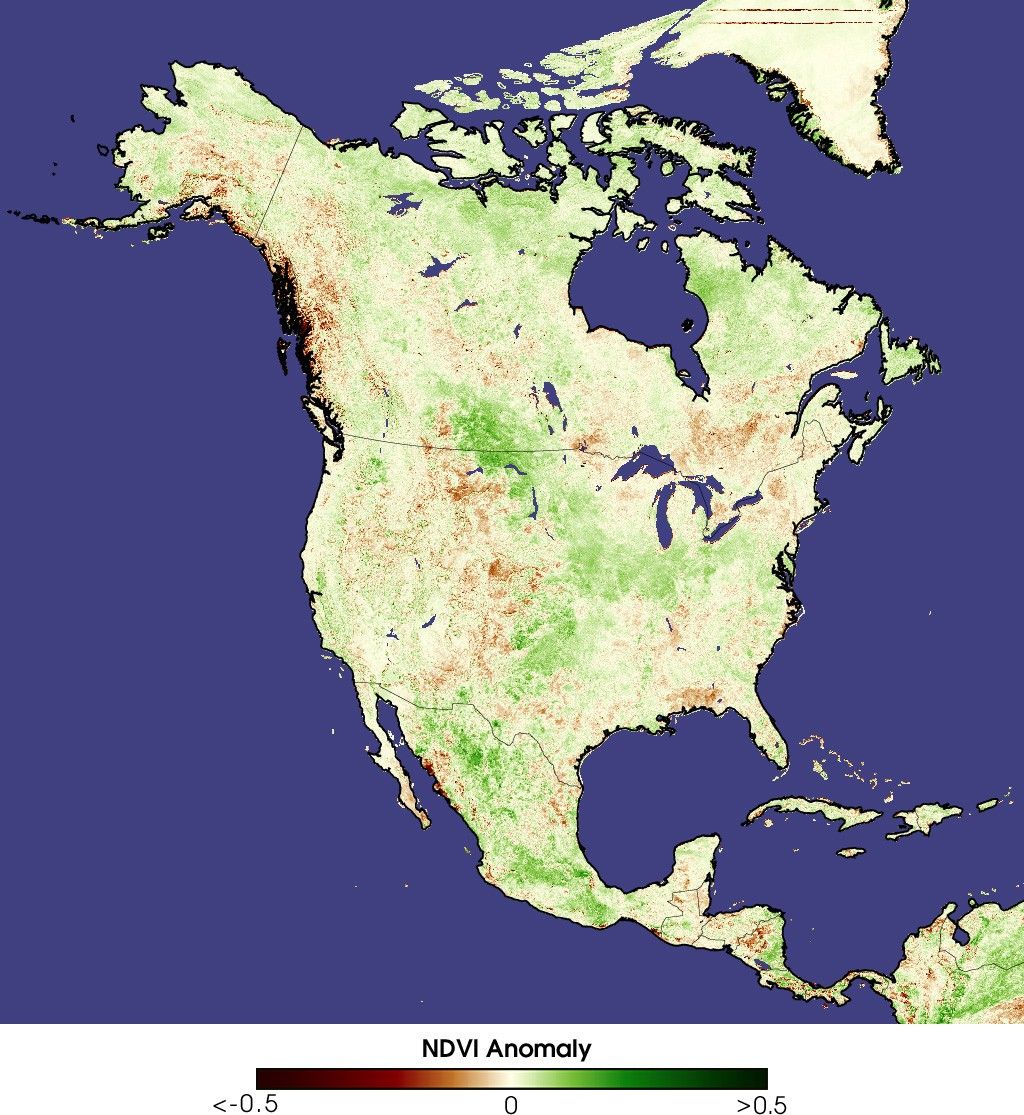

















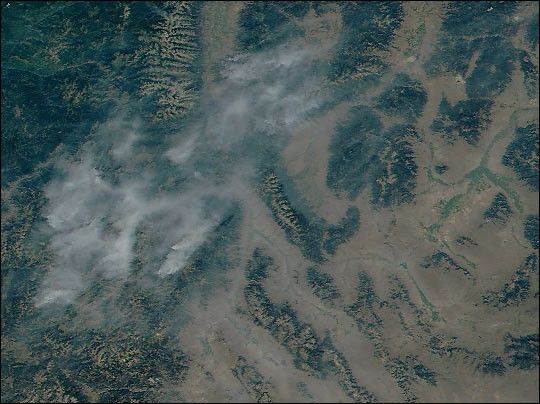

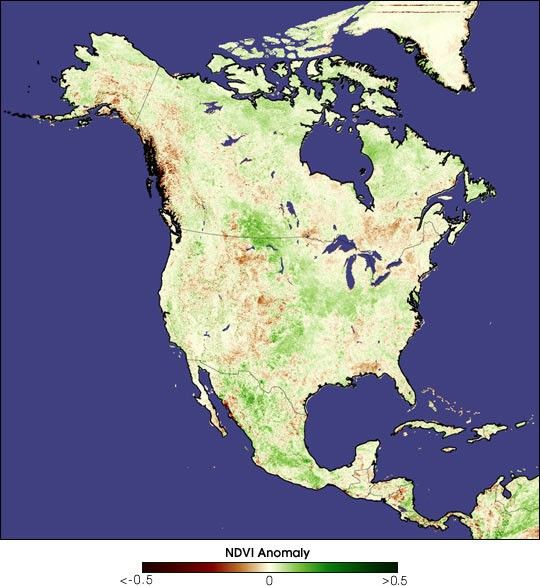
This image shows the difference between the amount of vegetation in July2000 and the average July vegetation for North America. Of particularinterest are the dry conditions in the western United States. This spring and summerthe Rocky Mountains have been relatively dry, and the brown regionsstretching from the Canadian to the Mexican border, indicate the effecton the regions' forests. Western Montana and eastern Idaho areparticularly parched, and appear darker brown. The dry conditionshave contributed to this year's devastating fire season, during whichmillions of acres have burned in the west.
Scientists find that during the growing season, land plants can be usedto measure drought. Healthy, thriving plants reflect and absorb visibleand near-infrared light differently than plants under stress. Thesevariations in reflectance and absorption can be measured by satellitesto produce maps of healthy and stressed vegetation. This image showsNormalized Difference Vegetation Index (NDVI) anomaly, which indicateswhere vegetation growth was above average (green pixels), below average(brown pixels), or normal (white pixels).
References & Resources
Image courtesy NASA Goddard Space Flight Center Biospheric Sciences Branch, based on data from NOAA.