




















A NASA oceanographer, using spaceborne technologies to study the effects of Hurricane Floyd, has seen indications that there may be significant impacts on the marine food chainalong the North Carolina coast due to extensive rainfall in the region.
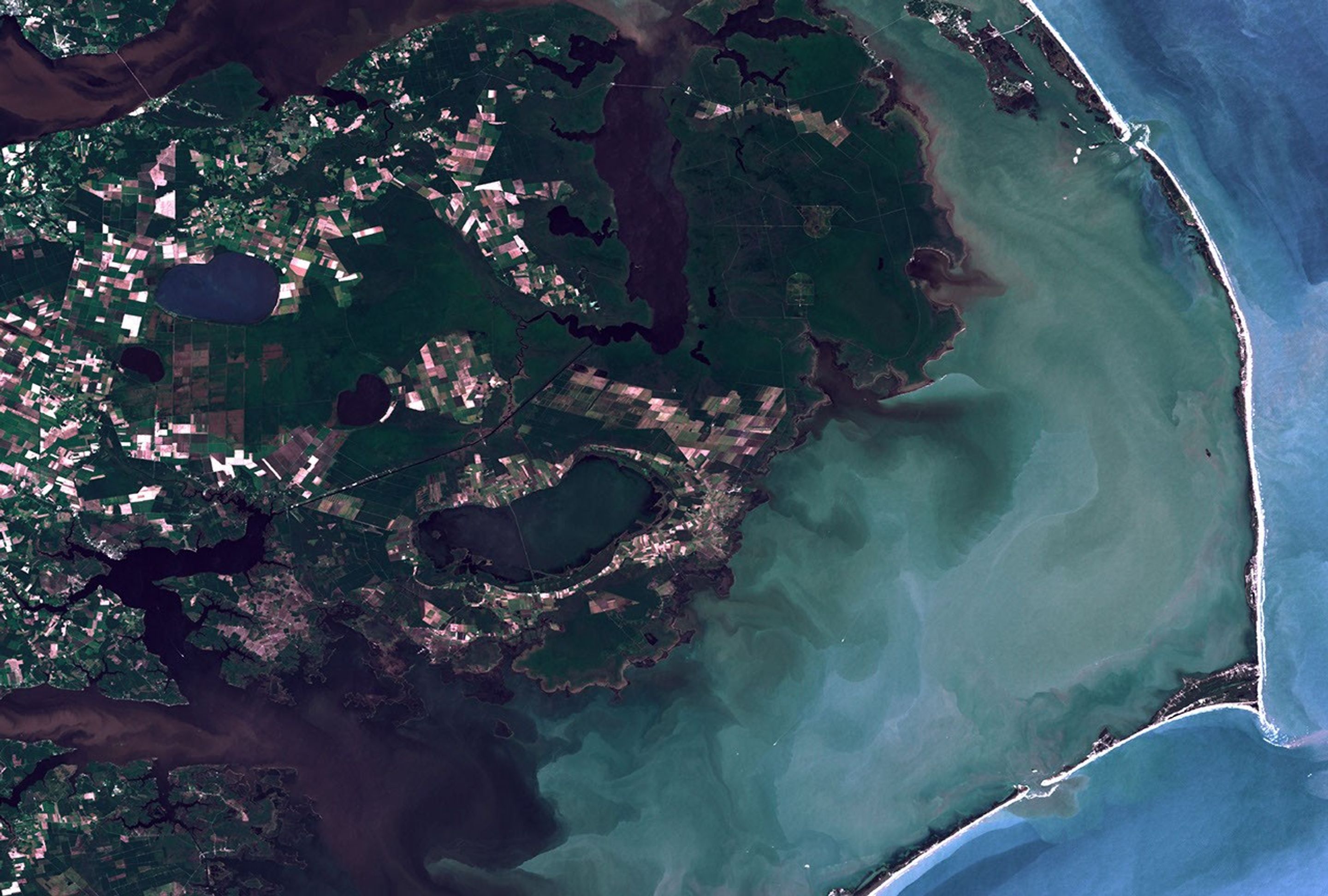
"Following Hurricane Floyd, record-breaking rains continued to soak the area, washing mountains of sediment and waste into the water system. Now rivers and tributaries alongthe Atlantic are choked and major ecological changes are happening," said Gene Feldman, of NASA's Goddard Space Flight Center, Greenbelt, MD.
"Periodically, levels of dissolved oxygen in the water have dropped dramatically as organic matter decomposes, and aquatic life has been threatened in dozens of estuaries and peripheral habitats, commonly referred to as 'dead zones.' The current changes in the area may havelasting repercussions for hundreds of thousands of people," he said.
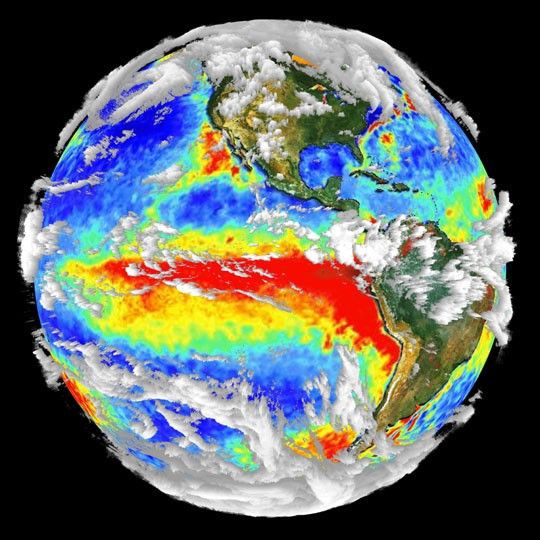
The image above, from Landsat 7, shows the sediment washed into the ocean from hurricane Floyd's rains.
See the Landsat 7 fact sheet for more details.
For more information and images of this event, see the Floyd's Carolina Floods from the Scientific Visualization Studio.
References & Resources
Image Courtesy Scientific Visualization Studio, NASA Goddard Space Flight Center