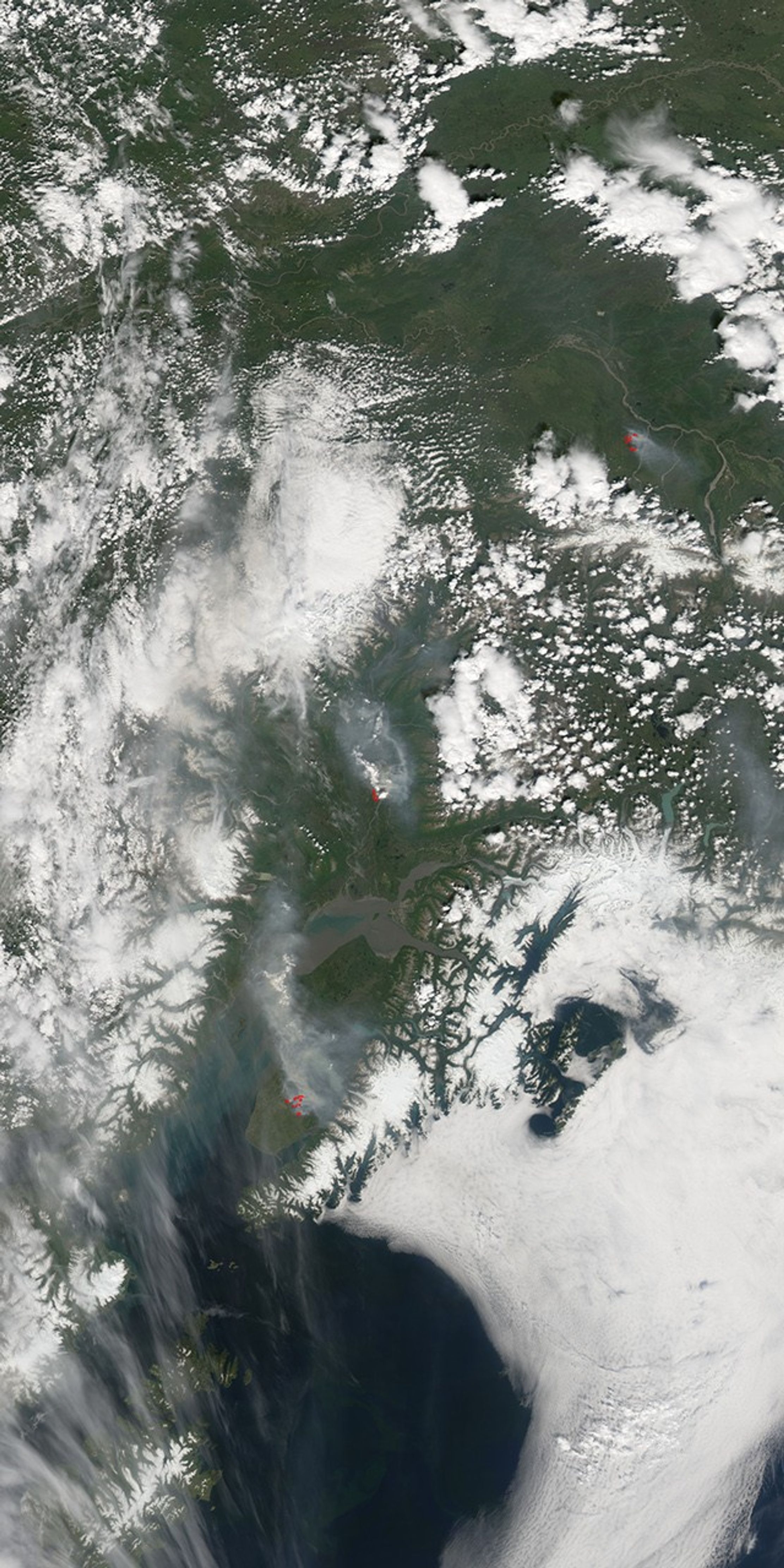
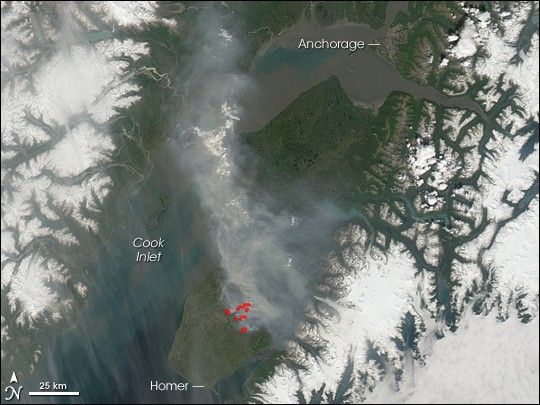
On Alaska’s Kenai Peninsula, a wildfire that started June 19 had destroyed at least 70 cabins, homes, and outbuildings as of June 27, 2007. Damp weather over the June 23 weekend helped firefighters make progress, but did not contain the blaze. The Alaska Interagency Coordination Center estimated that the fire was 54,773 acres on June 27. The biggest fuel source was swaths of spruce trees killed by the insect pest known as the spruce bark beetle.
This image shows the Caribou Hills fire on June 21, 2007, as observed by the Moderate Resolution Imaging Spectroradiometer (MODIS) on NASA’s Aqua satellite. Places where MODIS detected actively burning fire are marked in red. Smoke (and thin clouds, image left) give the scene a hazy look. The waters in Cook Inlet appear a muddy brown in many places and bright green in others; rivers here deposit very finely ground sediment—created by the scraping of glaciers over the landscape—into the coastal waters. The fine sediment colors the water. Farther out to sea (bottom left), the waters appear a deeper, clearer blue.
You can download a 250-meter-resolution KMZ file of the mouth of the Ob River suitable for use with Google Earth.
References & Resources
NASA image created by Jesse Allen, using data provided courtesy of the MODIS Rapid Response team.