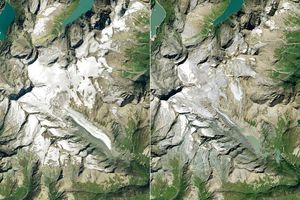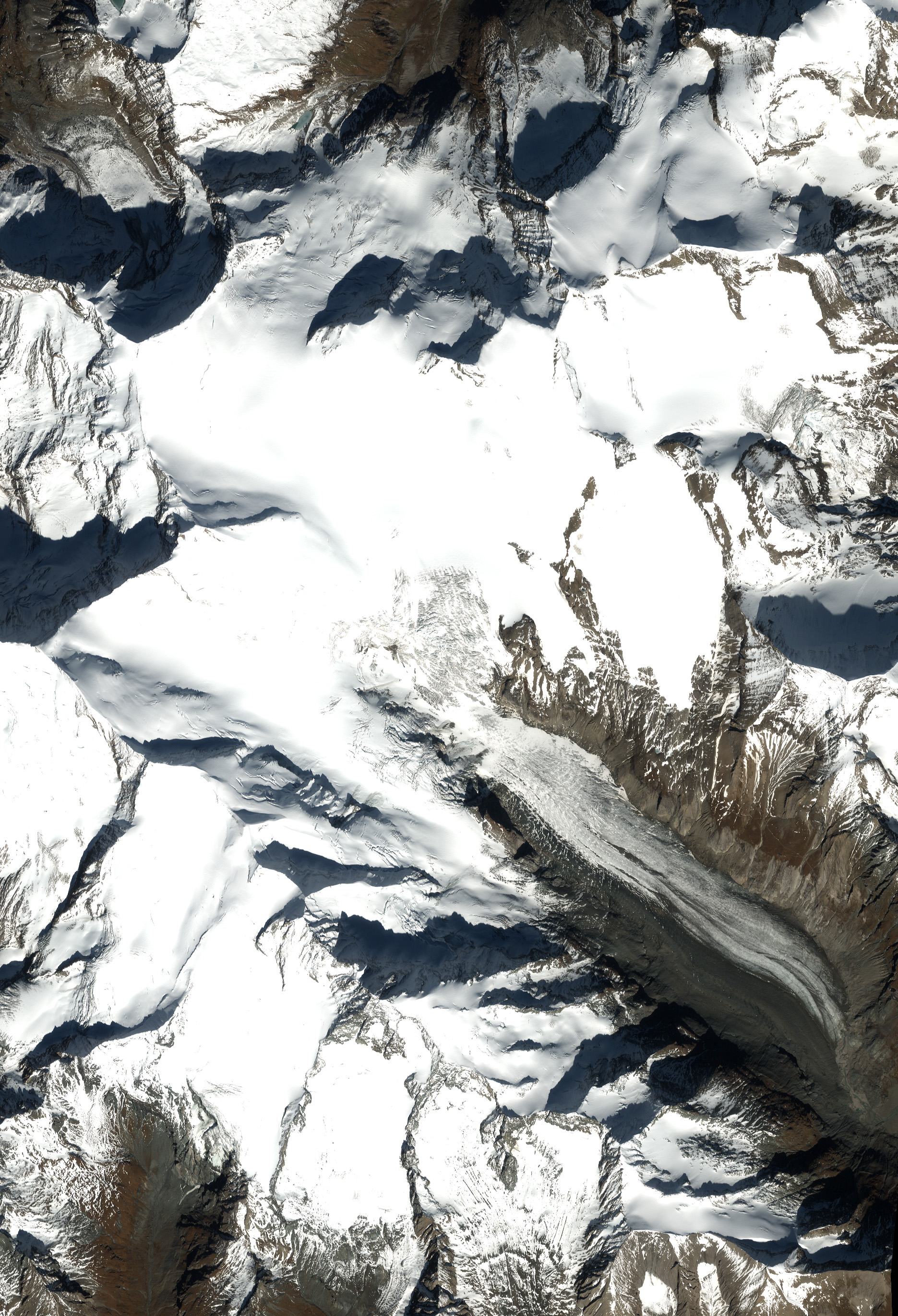





























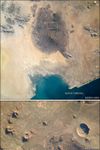

The Pasterze Glacier in western Austria has been receding since 1856. A combination of higher summer temperatures and lower winter snowfall is causing the retreat. Glaciers in nearby Switzerland receded more rapidly in 2003 than in any other year since annual measurements began in 1880. Despite the record heat in Europe that summer, scientists from the Swiss Academy of Natural Sciences attributed the melting to long-term climate change.
NASA scientists use satellite data to measure the advance and retreat of glaciers all around the world. This true-color image was acquired by Space Imaging’s Ikonos satellite on October 3, 2001. The full-resolution image has a resolution of 4 meters per pixel.
For more information about monitoring Glaciers, read At the Edge: Monitoring Glaciers to Watch Global Change.
References & Resources
© All Rights Reserved: Use of IKONOS, GeoEye, QuickBird and WorldView imagery must be coordinated with Maxar.
Image by Robert Simmon, NASA’s Earth Observatory, based on data copyright DigitalGlobe © All Rights Reserved: Use of IKONOS, GeoEye, QuickBird, WorldView, and Digital Globe imagery must be coordinated with Maxar .