
















The International Space Station orbits 354 kilometers (220 miles) above the Earth, completing one trip around the globe every 92 minutes. Cruising along at 27,700 km (17,200 miles) per hour, the astronauts experience 15 or 16 sunrises and sets every day. Since the launch of the Zarya Control Module on November 20, 1998, the station has orbited the Earth over 66,500 times (as of June 27, 2010). The station’s orbit is inclined to the equator by 51.65°, meaning at its most northerly, it is at the latitude of London, England, and at it most southerly it is over the latitude of the Falkland Islands.
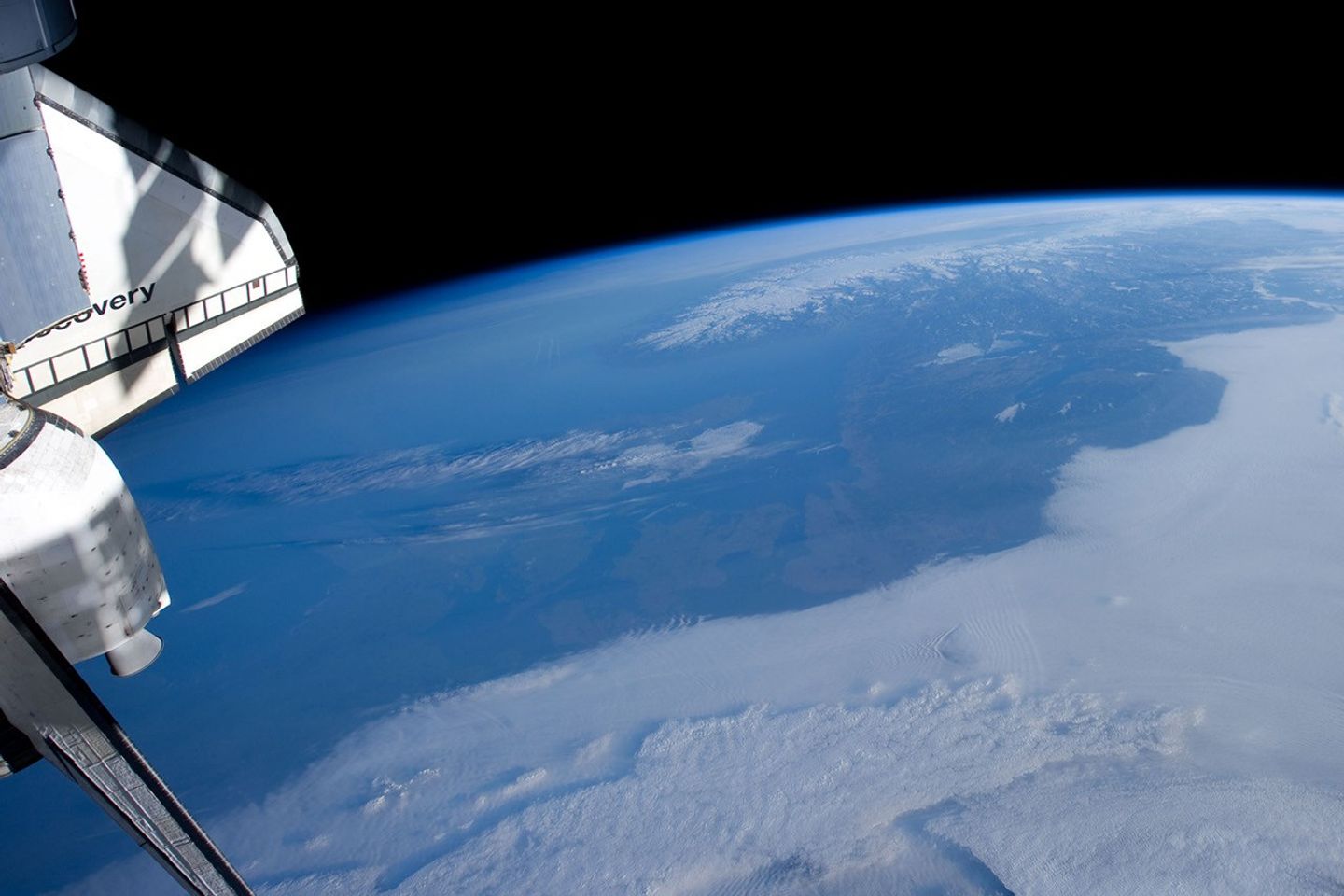
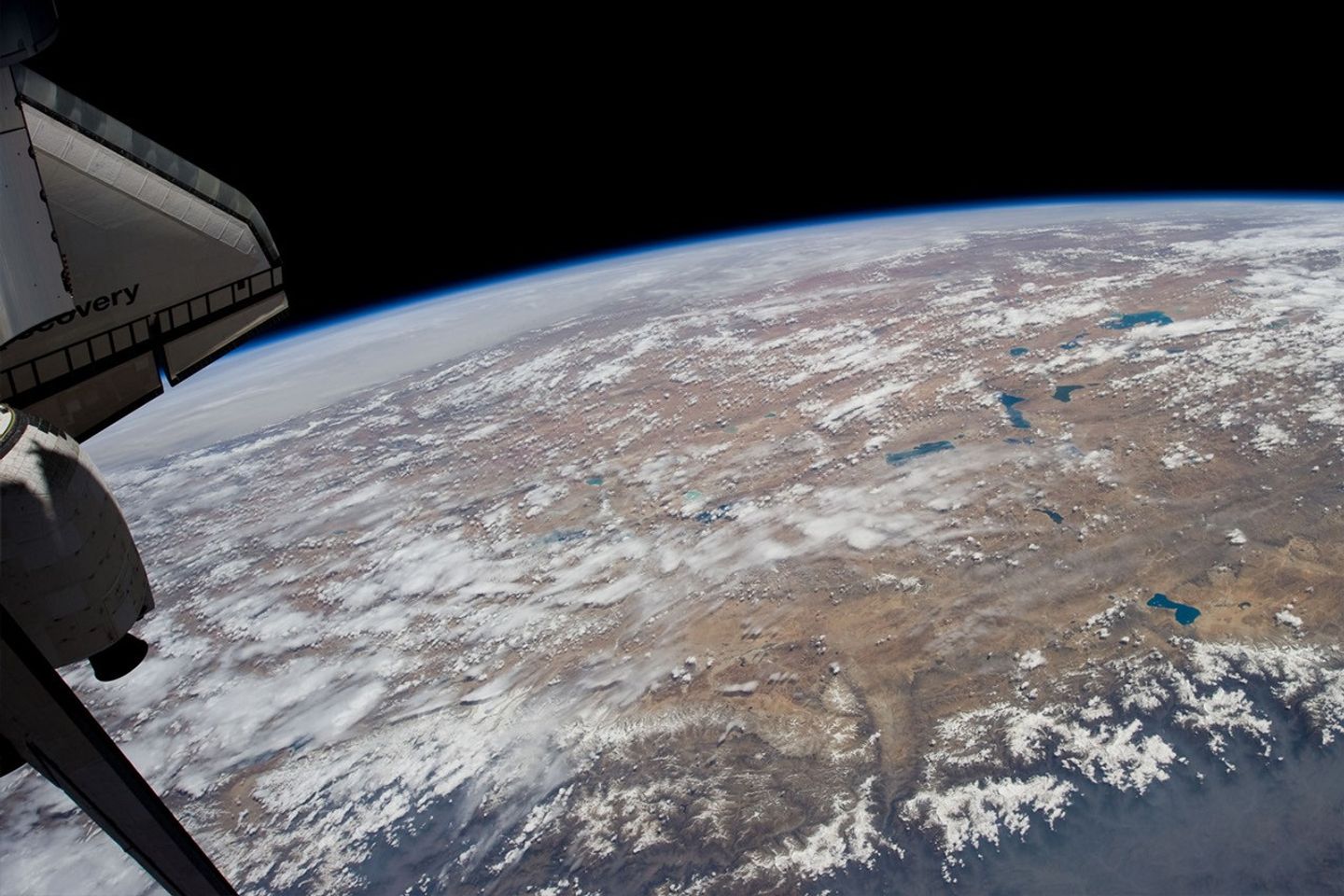
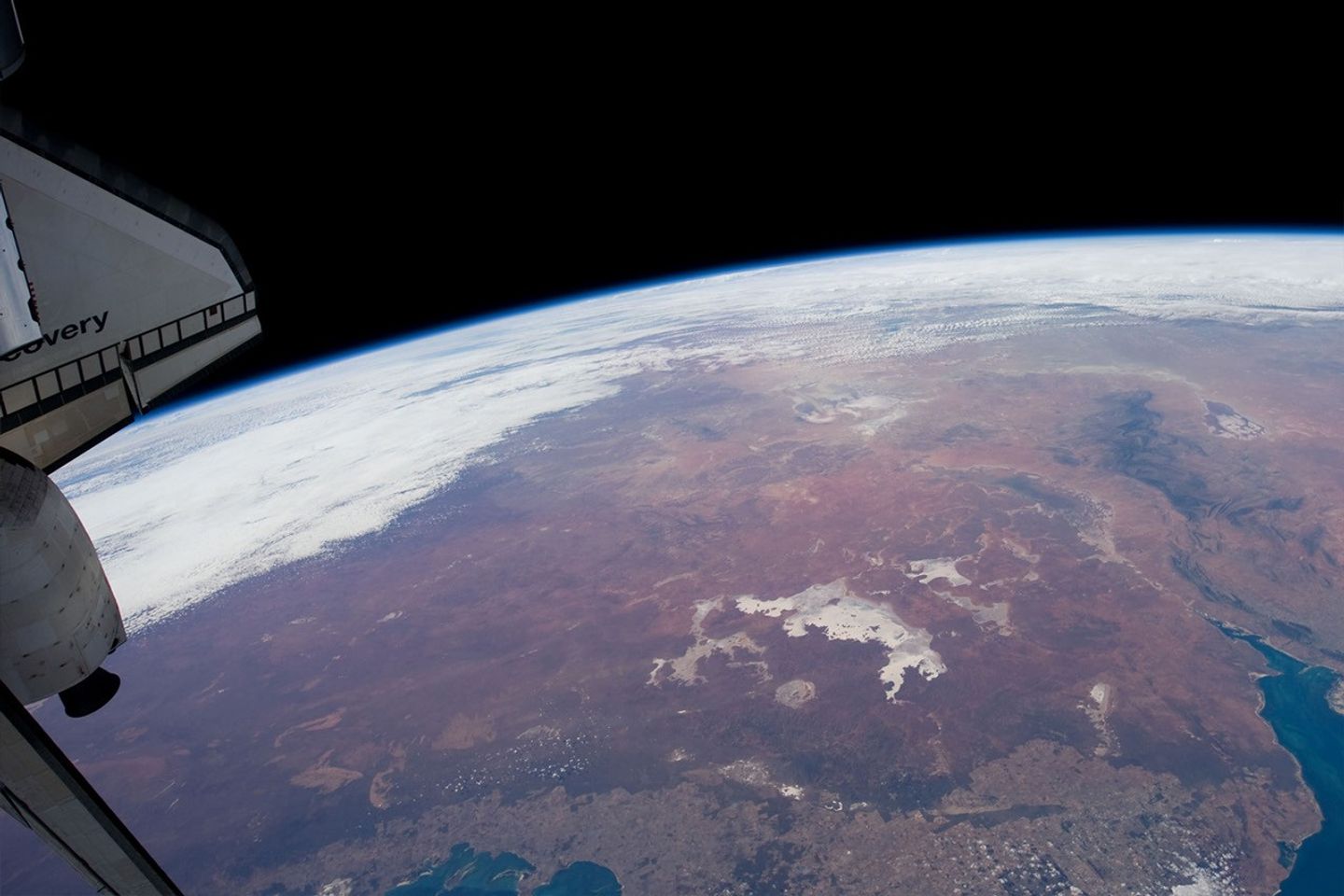
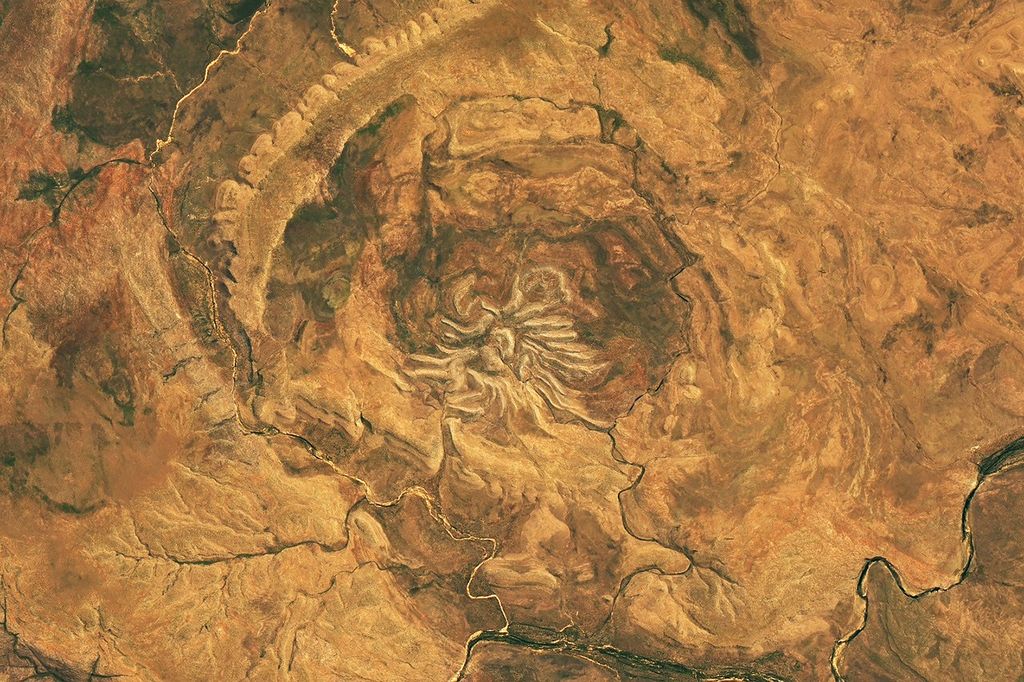
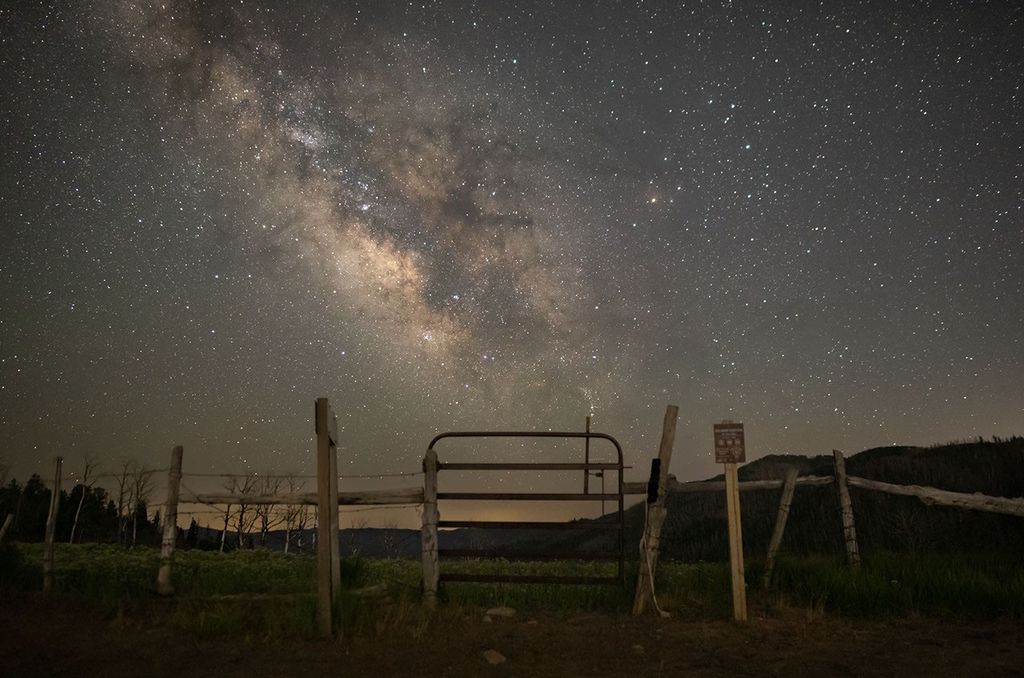
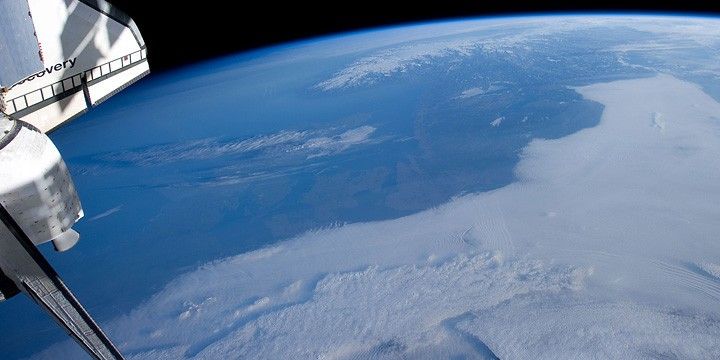
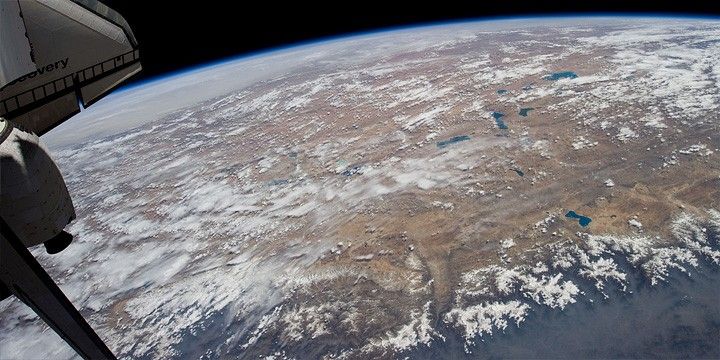
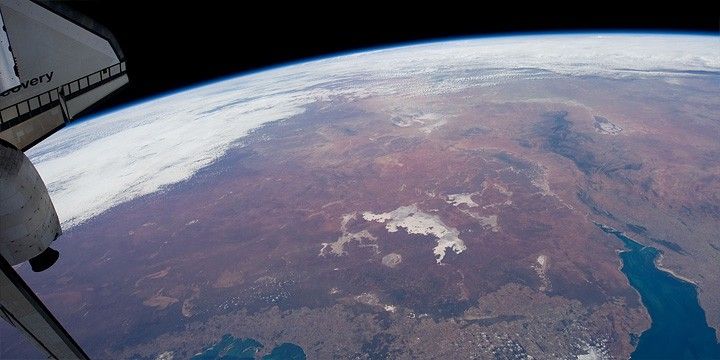
This sequence of time-lapse photographs illustrates roughly half an orbit, from sunrise over Northern Europe (top photograph) to sunset southeast of Australia, on April 12, 2010. The view is to the north of the station’s ground track. In the upper-left is the tail of the Space Shuttle Discovery, which docked with the Space Station during the STS-131 mission. The animation begins with a view of snow-covered Norway (image top) and the Jutland Peninsula (image center). Low clouds cover Central Europe (image bottom).
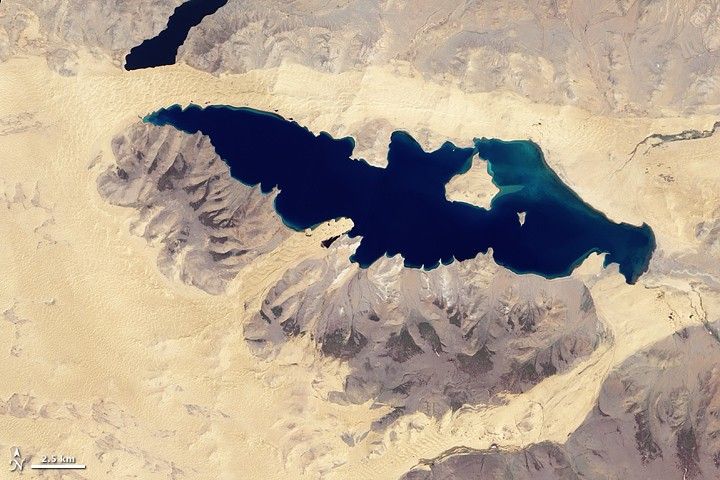
The animation continues as the Station flies by Ukraine, eastern Russia, the Volga River, and then the Russian Steppes. South and east of the steppes, a dust storm comes into view over the Taklimakan Desert, followed shortly by the lake-studded Tibetan Plateau and the glaciers of the Himalayan Mountains (center photograph). Smoke-shrouded lowlands hug the southern margin of the Himalayas. Smoke also covers much of Southeast Asia, including the Irrawaddy Delta.
After the Space Station passes over the sapphire-blue South China Sea, the island of Borneo appears, followed by the open expanse of the Indian Ocean. A trio of coral reefs lies off the coast of Western Australia, which is studded with clouds. Australia’s arid interior is colored myriad shades of red (bottom photograph). As sunset nears, cloud shadows lengthen, highlighting their structure. Night falls as the Space Station crosses the terminator above the South Pacific.
References & Resources
Astronaut photographs STS131-E-11693 to STS131-E-12195 courtesy NASA JSC Image Science & Analysis Laboratory. Animation & caption by Robert Simmon. Special thanks to William L. Stefanov, NASA-JSC.