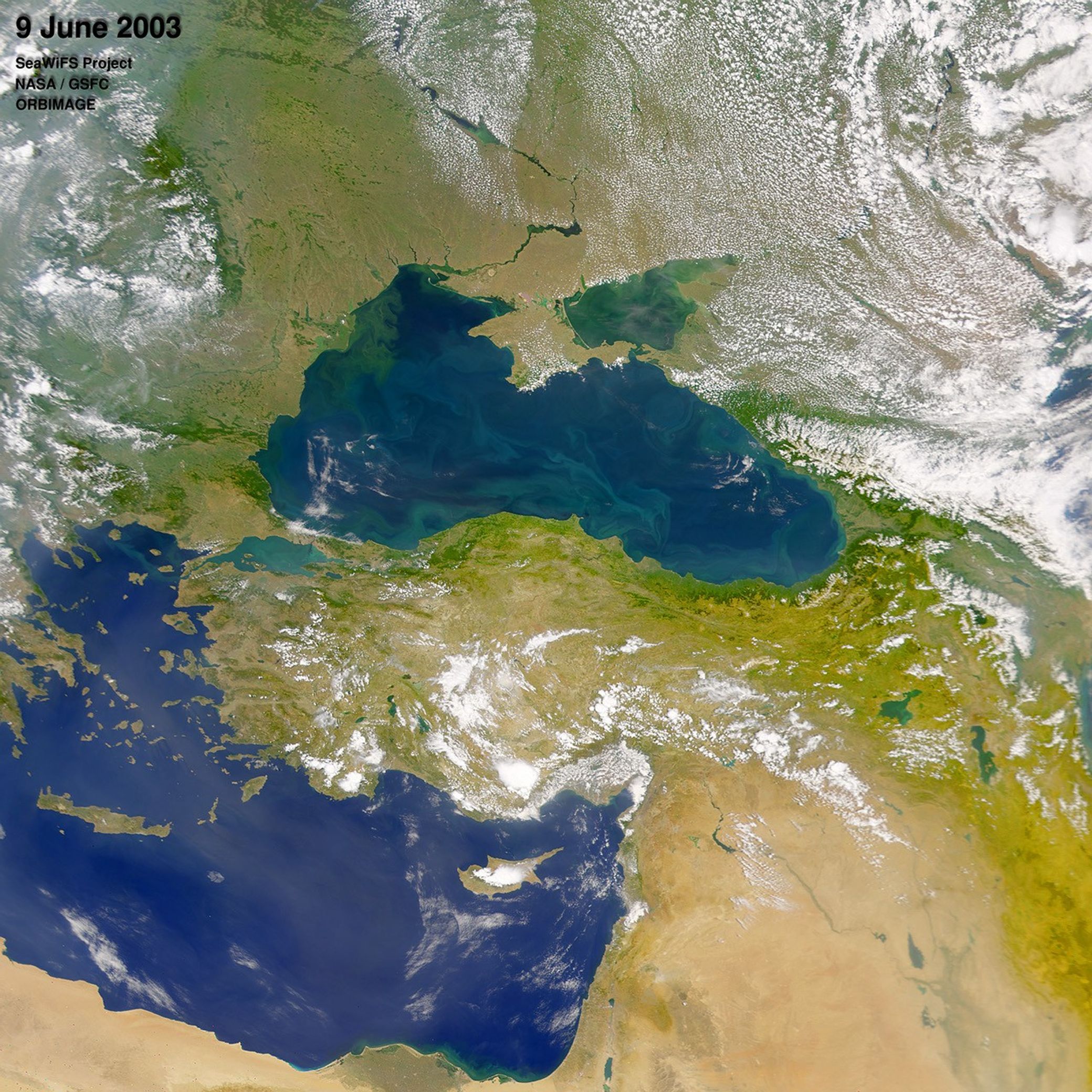



























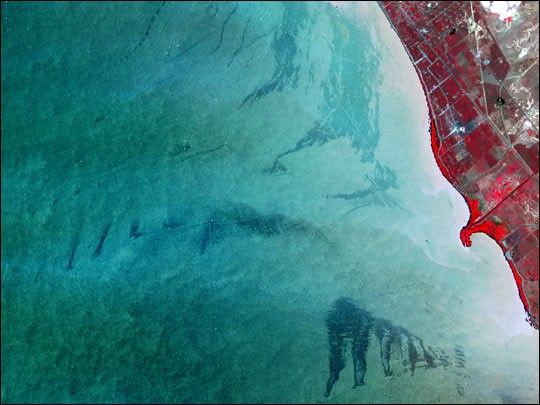
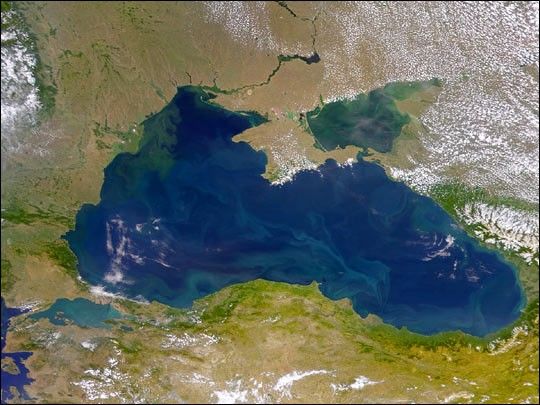
This cloud-free Sea-viewing Wide Field-of-view Sensor (SeaWiFS) view of the Black Sea on June 9, 2003, reveals the colorful interplay of currents on the lake’s surface. The green crescent shaped pattern in the northwestern corner of the Black Sea is due to the nutrient-rich, sediment-laden discharge of the Danube River stimulating biological activity. The brighter, more turquoise patterns on the lake to the south and east are probably blooms of another type of phytoplankton.
The Danube is Europe’s second longest river, and the only major river on the continent to flow from west to east. The Danube originates in Germany’s Black Forest and, from there, flows eastward roughly 1,770 miles (2,850 km) where it divides to form a large delta on the Romanian coast of the Black Sea.
For more details read Black Sea Becomes Turquoise.
References & Resources
Image courtesy the SeaWiFS Project, NASA/Goddard Space Flight Center, and ORBIMAGE