

















Ever wonder about the rain? Beyond the practicality of needing anumbrella, climate researchers have wondered about the science ofrainfall for a long time. But it's only in the past few years thatthey've begun to roll back some of its secrets. One of their tools fordoing so is a powerful satellite called the Tropical Rainfall MeasuringMission, or TRMM. Now, after three years of continual operation, projectscientists have released dramatic new maps of rainfall patterns gatheredacross a wide band of the Earth. And with measurements from one of thesatellite’s advanced sensors, meteorologists are now able to calibrateground-based rain monitoring systems with greater precision than everbefore.
A complete accounting of the world’s total rainfall has long been amajor goal of climate researchers. Rain acts as the atmosphere’sfundamental engine for heat exchange; every time a raindrop falls, theatmosphere gets churned up and latent heat flows back into the totalclimate system. Considering that rainfall is the primary driving forceof heat in the atmosphere, and that two thirds of all rain falls in thetropics, these measurements are significant for our understanding ofoverall climate.
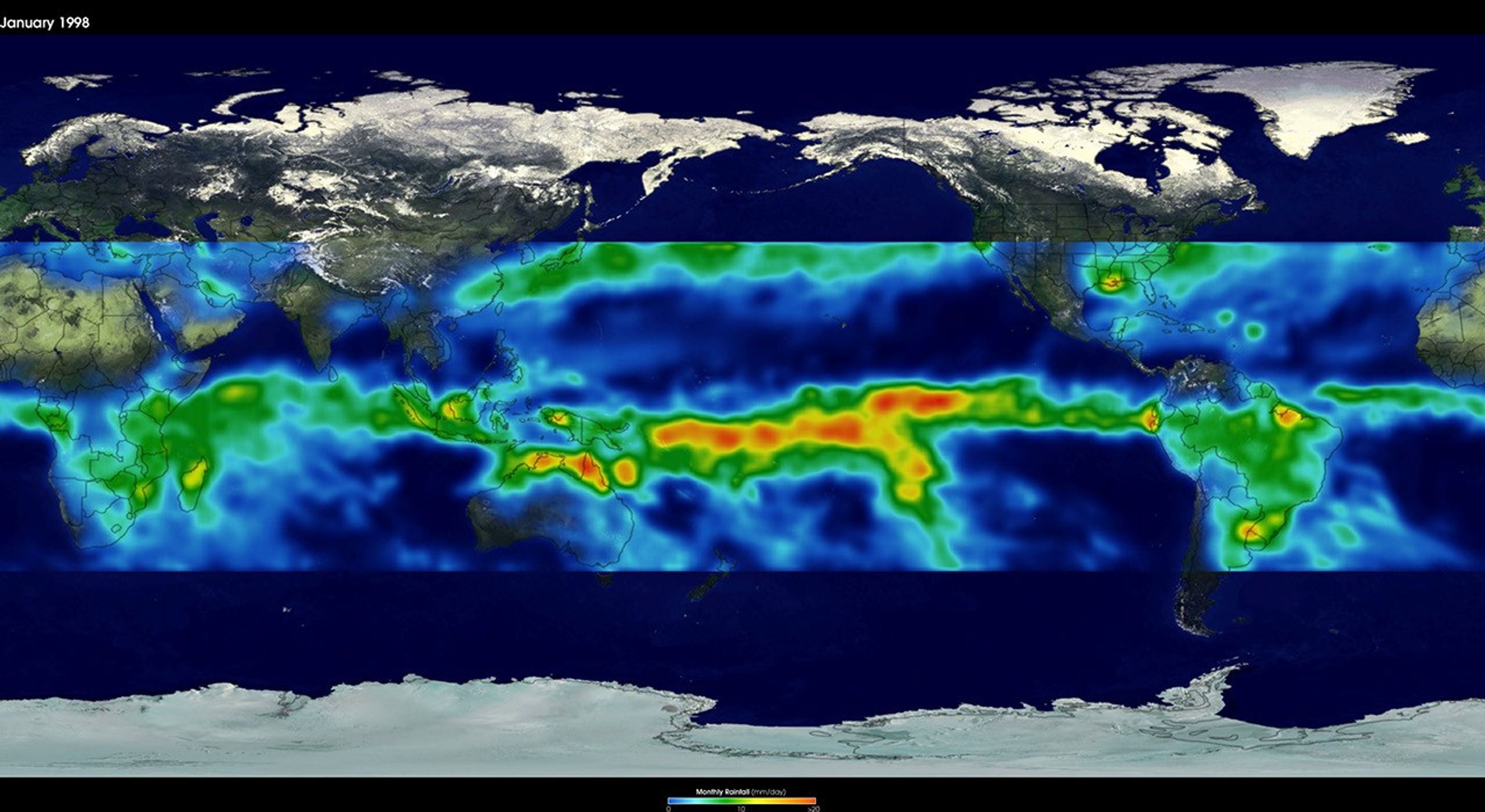
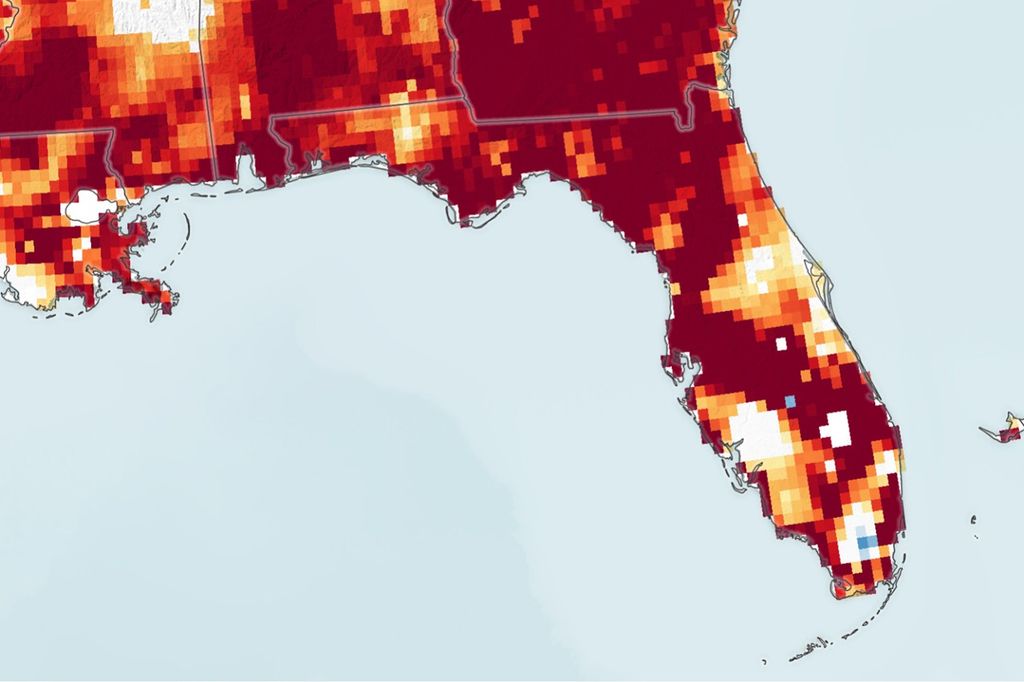
The above image shows a one month average of rainfallmeasurements taken by the TRMM’s unique precipitation radarduring January of 1998. Areas of low rainfall are colored light blue, whileregions with heavy rainfal are colored orange and red. TRMM began collectingdata in December of 1997, and continues today.
For more information about TRMM’s 3-year anniversary, readMaps of Falling Water
To learn more about the TRMM mission or order TRMM data, seethe TRMMHome Page.
References & Resources
Image courtesy TRMM Science team and the NASA GSFC Scientific Visualization Studio.