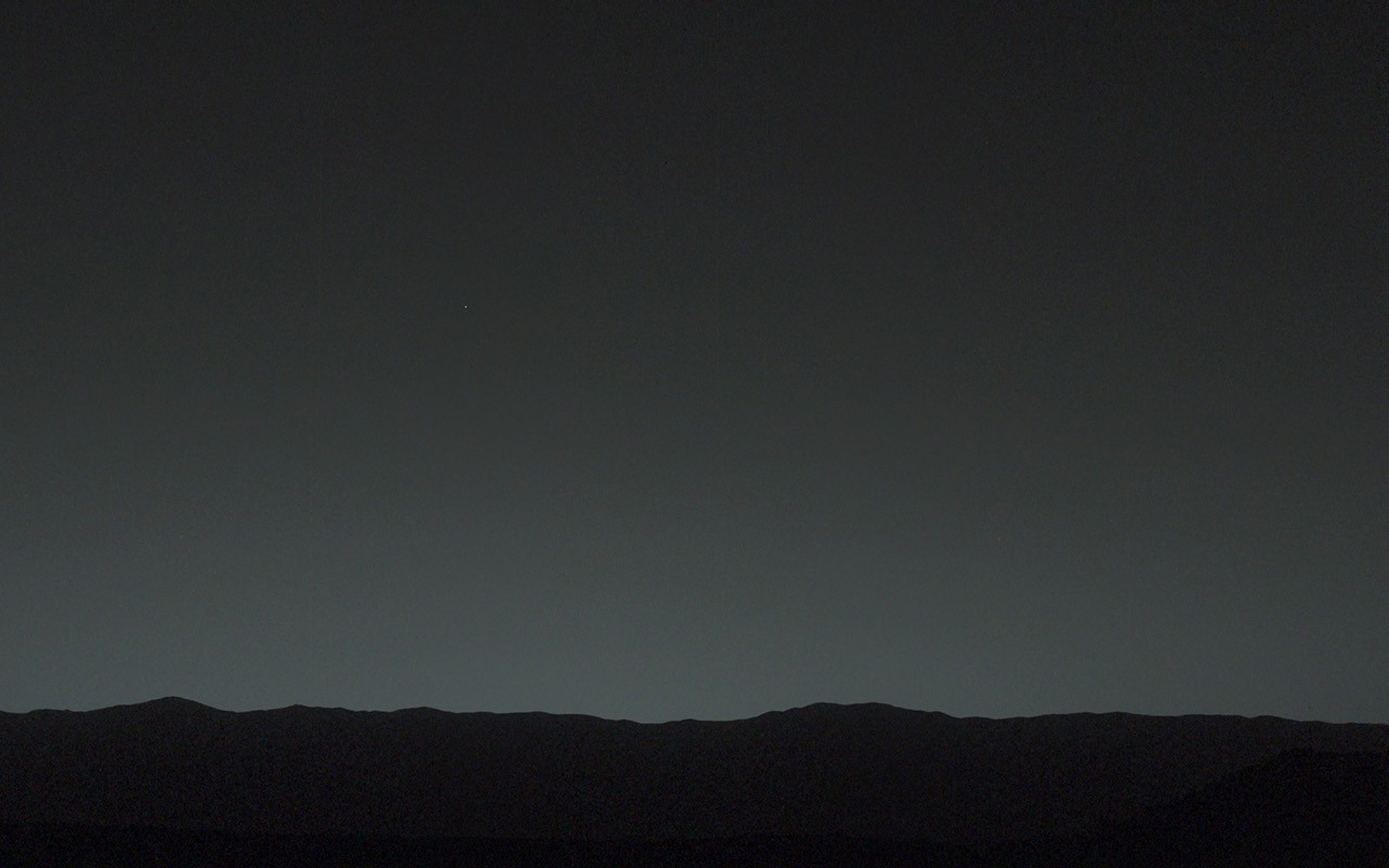
















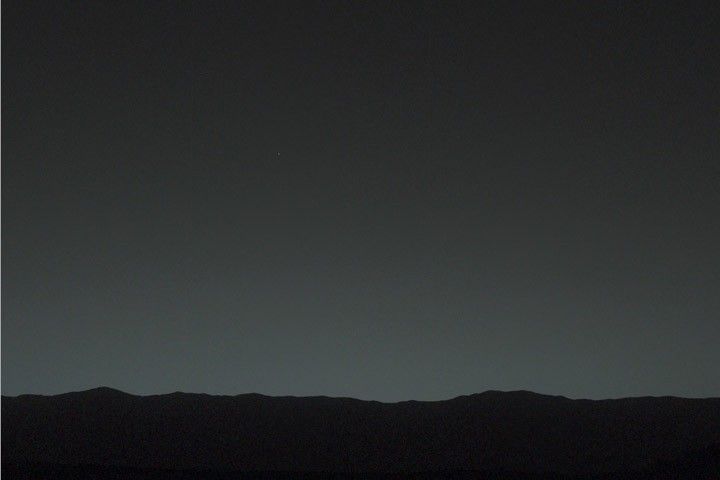
Venus, Mars, and other planets can appear as “evening stars”s in our skies, depending on your location and the time of year. On January 31, 2014, Earth played the same role for an earthling on Mars. NASA’s Curiosity rover turned its Mast Camera toward the horizon and snapped this photo of home.
Earth is just barely visible (image top-center-left), just above the dim glow of twilight near the Martian landscape. The image was captured about 80 minutes after sundown on the rover’s 529th day, or sol, on the red planet.
Curiosity and Mars were about 160 million kilometers (99 million miles) from Earth at the time, and the Big Blue Marble or Pale Blue Dot looked more like a faint white speck in this view. However, a human observer with normal vision, if standing on Mars, could easily see Earth and its moon as two distinct “evening stars.”
If you cannot spot Earth in the image above, click here for a pointer.
References & Resources
Image by NASA/JPL-Caltech/MSSS/TAMU. Caption by Mike Carlowicz based on a NASA JPL press release.