









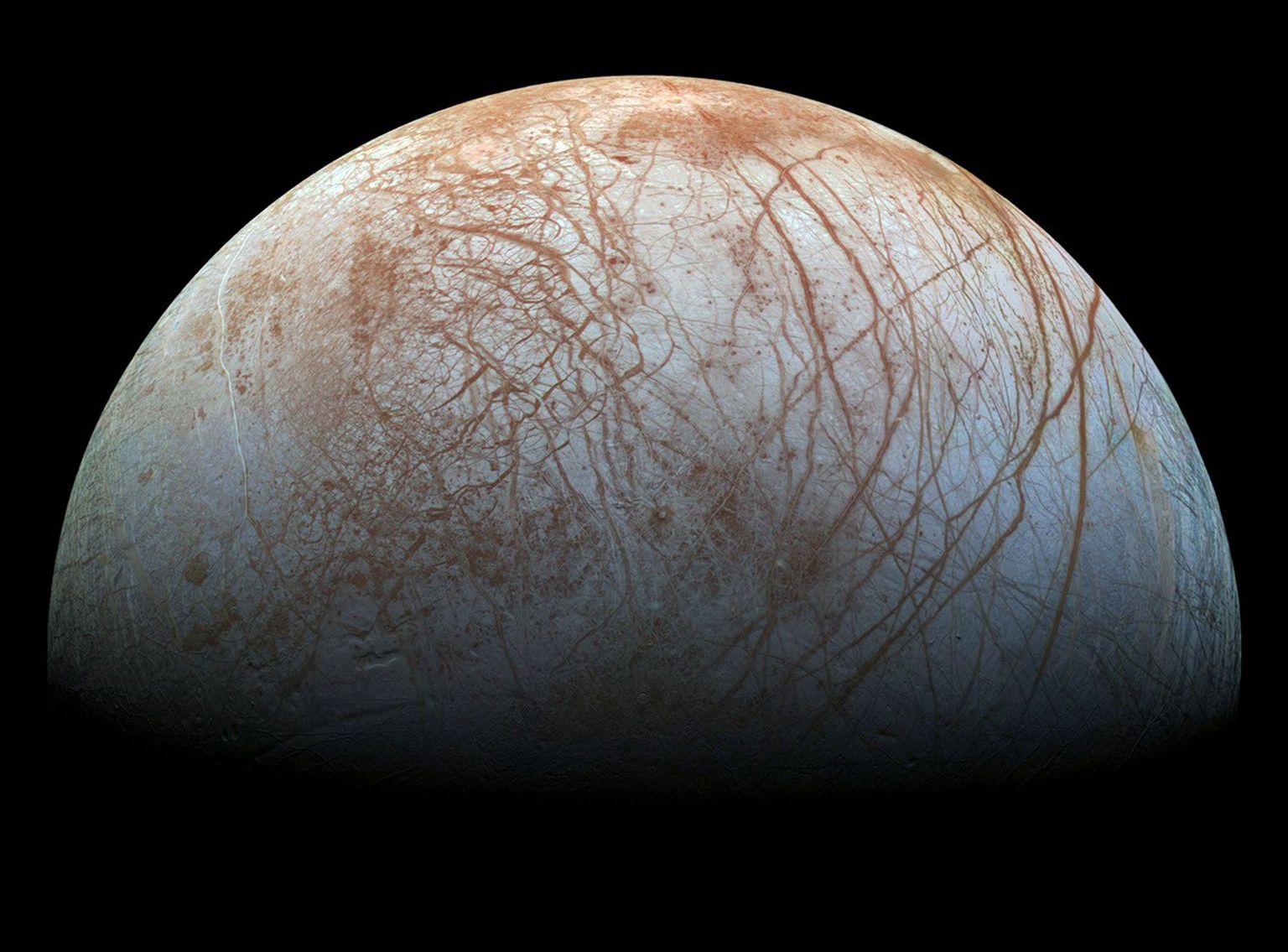
Europa
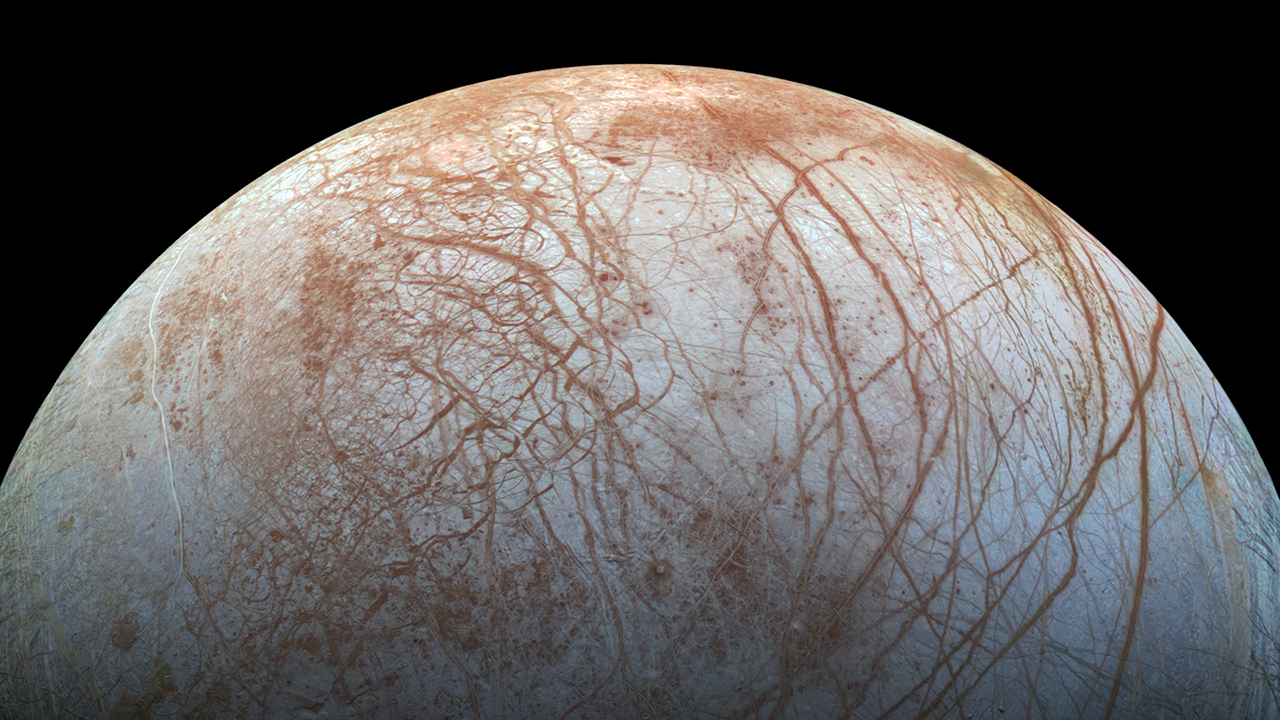
There is strong evidence Jupiter's moon Europa has a saltwater ocean that may be one of the best places to look for environments where life could exist beyond Earth.
Facts About Europa
Europa is the fourth largest of Jupiter’s moons. It's the sixth-closest moon to the planet.
Europa may be one of the most promising places in our solar system to find present-day environments suitable for some form of life beyond Earth. NASA launched Europa Clipper on Oct. 14, 2024, to determine whether there are places below Europa's surface that could support life.
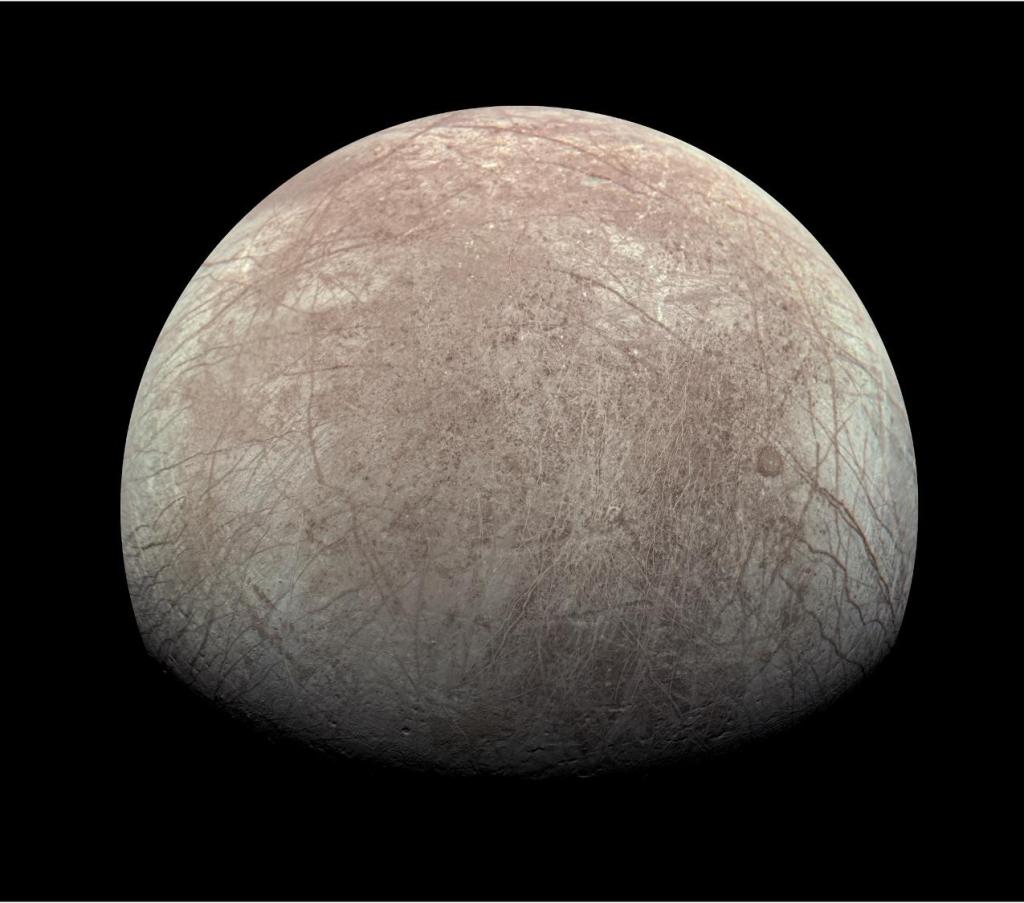
Exploring Europa
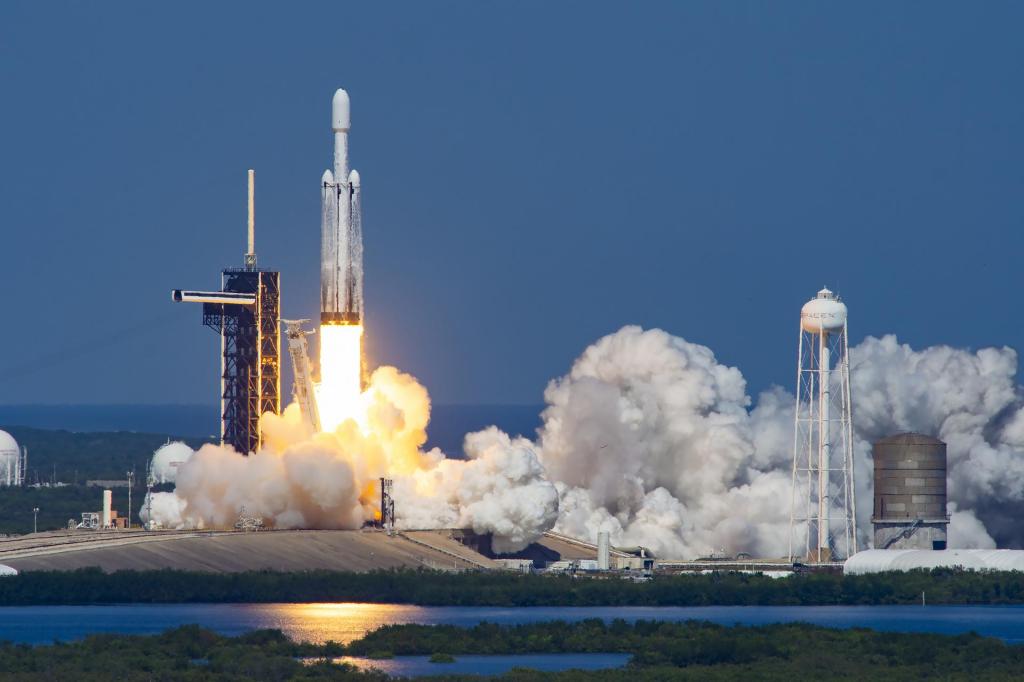
NASA's Europa Clipper launched on Oct. 14, 2024, on the first mission to conduct a detailed science investigation of Europa.
Six robotic spacecraft have explored Europa, and scientists do regular observations of the moon with Hubble Space Telescope. Europa was first observed up close during the Jupiter flybys of Pioneer 10, Pioneer 11, Voyager 1 and Voyager 2. Most of what we know about the moon comes from observations by the Galileo mission. NASA's Juno spacecraft is orbiting Jupiter, and has made close flybys of Europa.
Europa Multimedia
Images, posters and more.

Europa Clipper Gets a Boost
-
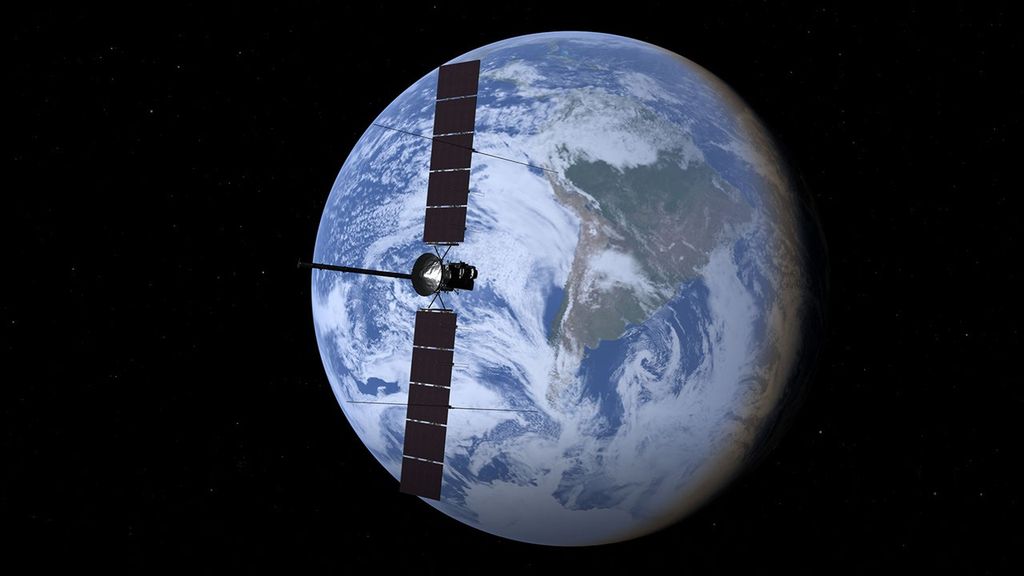
Europa Clipper to Zoom By Earth
NASA’s Europa Clipper will soon swing past Earth before making a yearslong beeline for Jupiter, where the orbiter will probe whether the ocean beneath its moon Europa’s icy shell has the ingredients for life. The flyby will offer a propellant-saving boost and an opportunity to prepare for the science-gathering that lies ahead.
 Depicted here in an artist’s concept, NASA’s Europa Clipper is flying by Earth Dec. 3, 2026, on its journey to the Jupiter system.Credit: NASA/JPL-Caltech
-
The Europa Concept
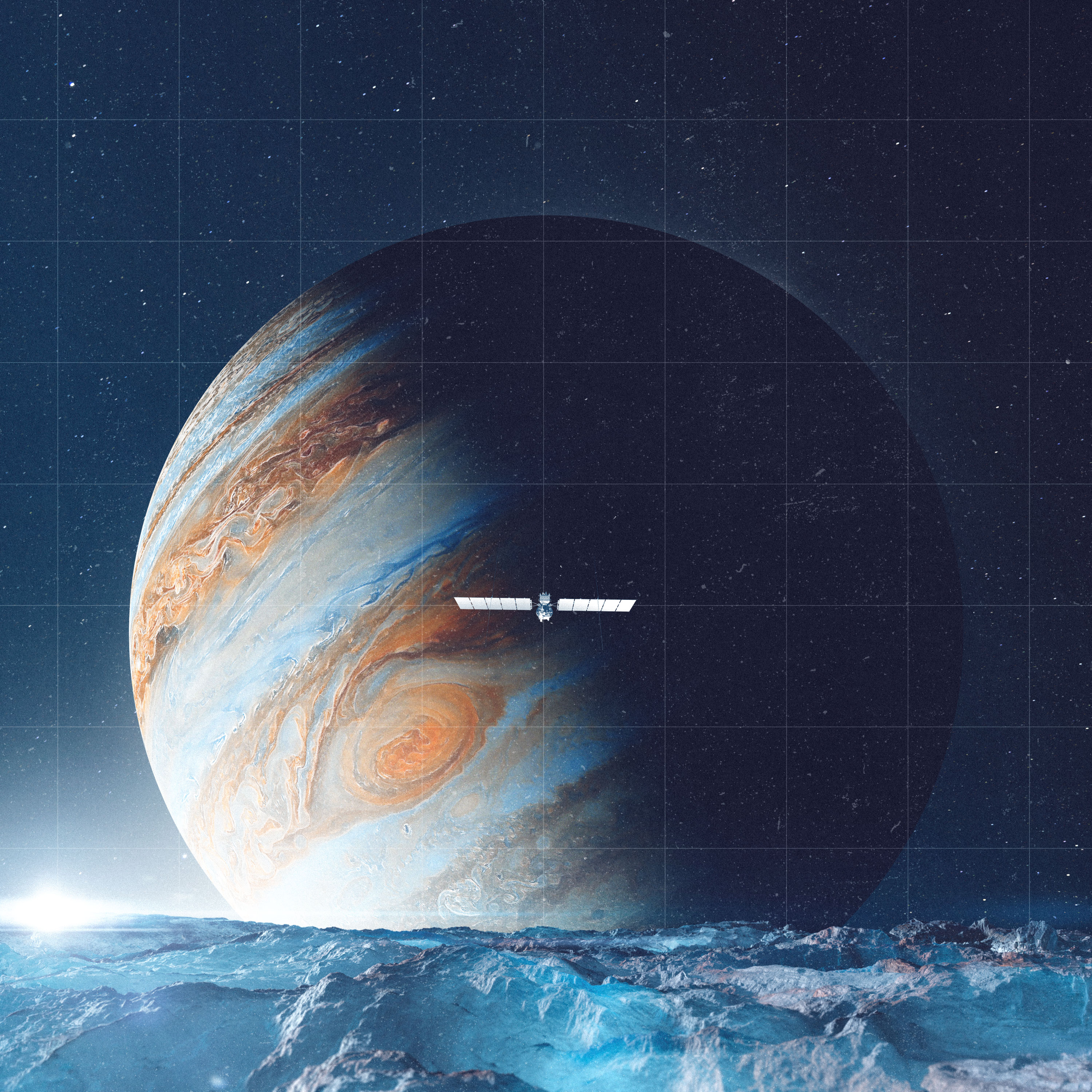
This documentary tells the story of how thousands of dedicated minds poured their expertise, creativity, and persistence into building Europa Clipper, the largest spacecraft NASA has ever engineered and built for a planetary mission.
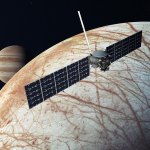
 Artist's concept of Europa Clipper during a flyby of Europa, with Jupiter looming in the background.Credit: NASA/JPL-Caltech