

























APOD
Astronomy Picture of the Day
Discover the cosmos! Each day a different image or photograph of our fascinating universe is featured, along with a brief explanation written by a professional astronomer.
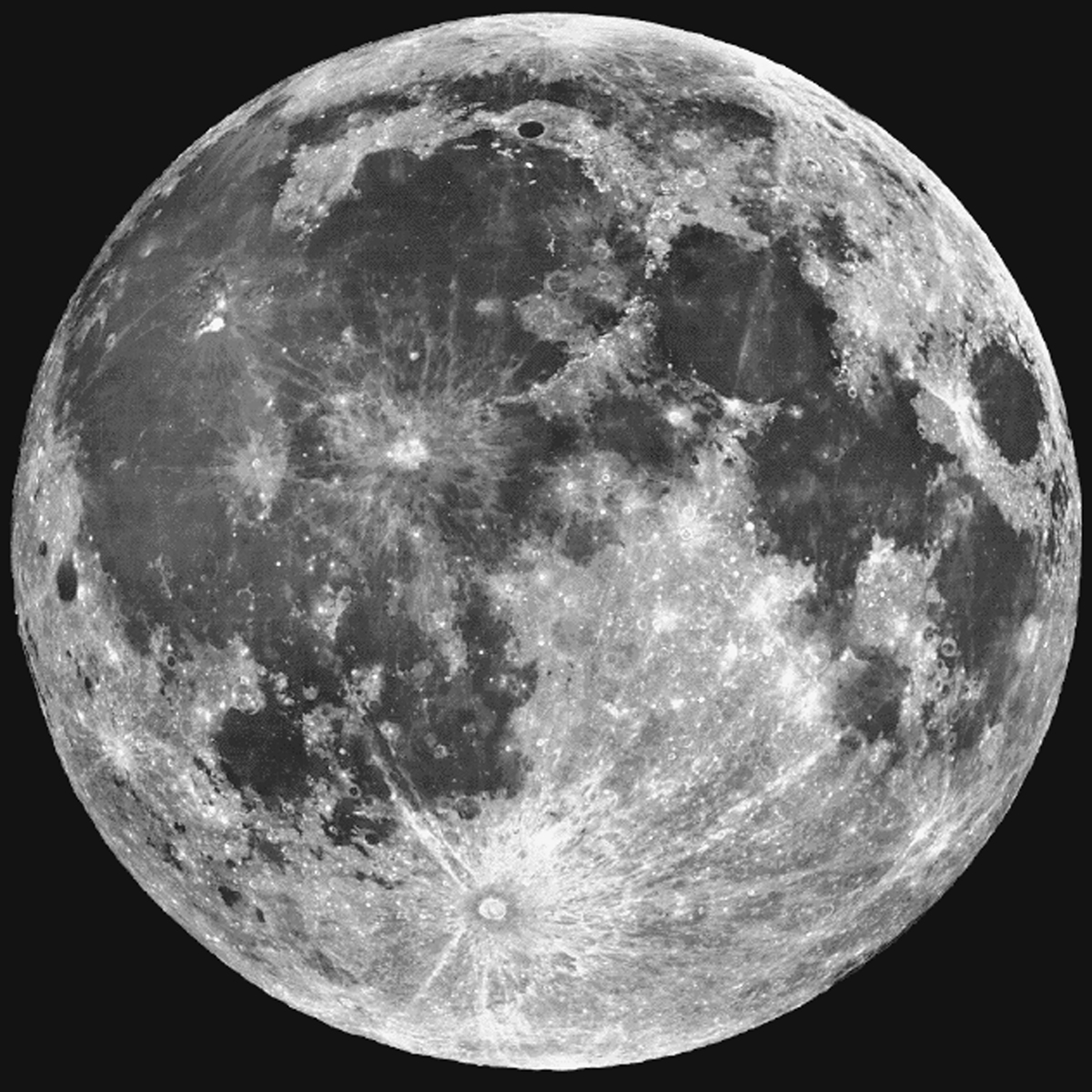
The Full Moon
Explanation: Earth has one moon. A symbol in famous love songs , movies , poems , and folklore , many myths about the Moon date back to ancient history. In fact, the name Monday originates from Moon-day . The Moon glows by light it reflects from the Sun and is frequently the brightest object in the night sky. The Moon orbits the Earth about once a month (moon-th) from about 1 light second away. The above-pictured Full Moon occurs when the Moon is nearly opposite to the Sun in its orbit. The Moon's diameter is about 1/4 that of the Earth , and from the Earth's surface appears to have almost exactly the same angular size as the Sun. Recent evidence indicates that the Moon formed from a colossal impact on the Earth about 4.5 billions of years ago, and therefore has a similar composition to the Earth. Humans walked on the Moon for the first time in 1969.
| Date | April 19, 1999 |
|---|---|
| Credit | Credit: Lick Observatory |
| Authors & editors: | Robert Nemiroff (MTU) & Jerry Bonnell (UMCP) |
| A service of: |
ASD at NASA / GSFC, NASA Science Activation & Michigan Tech. U. |