























Gomez’s Hamburger
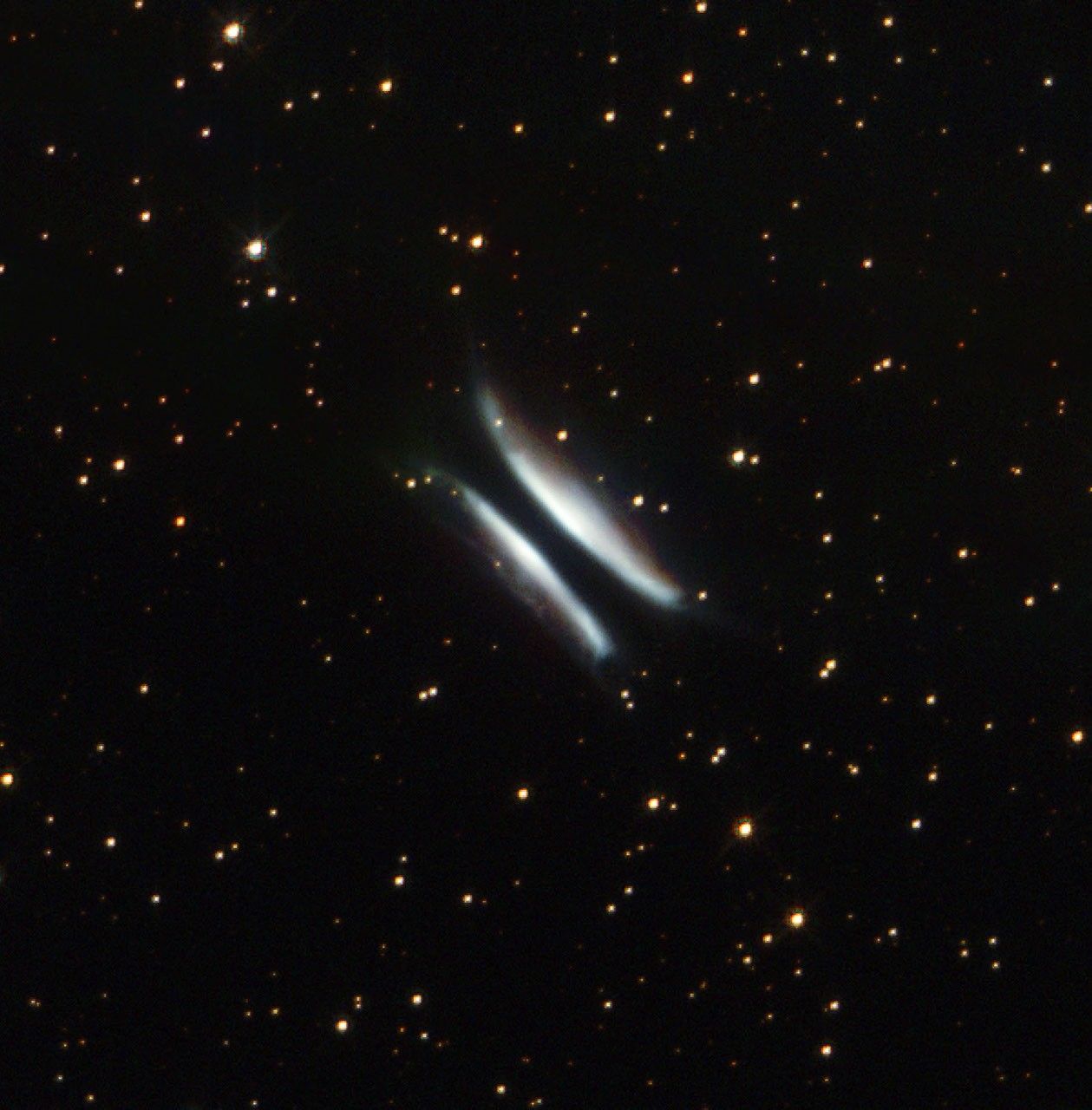
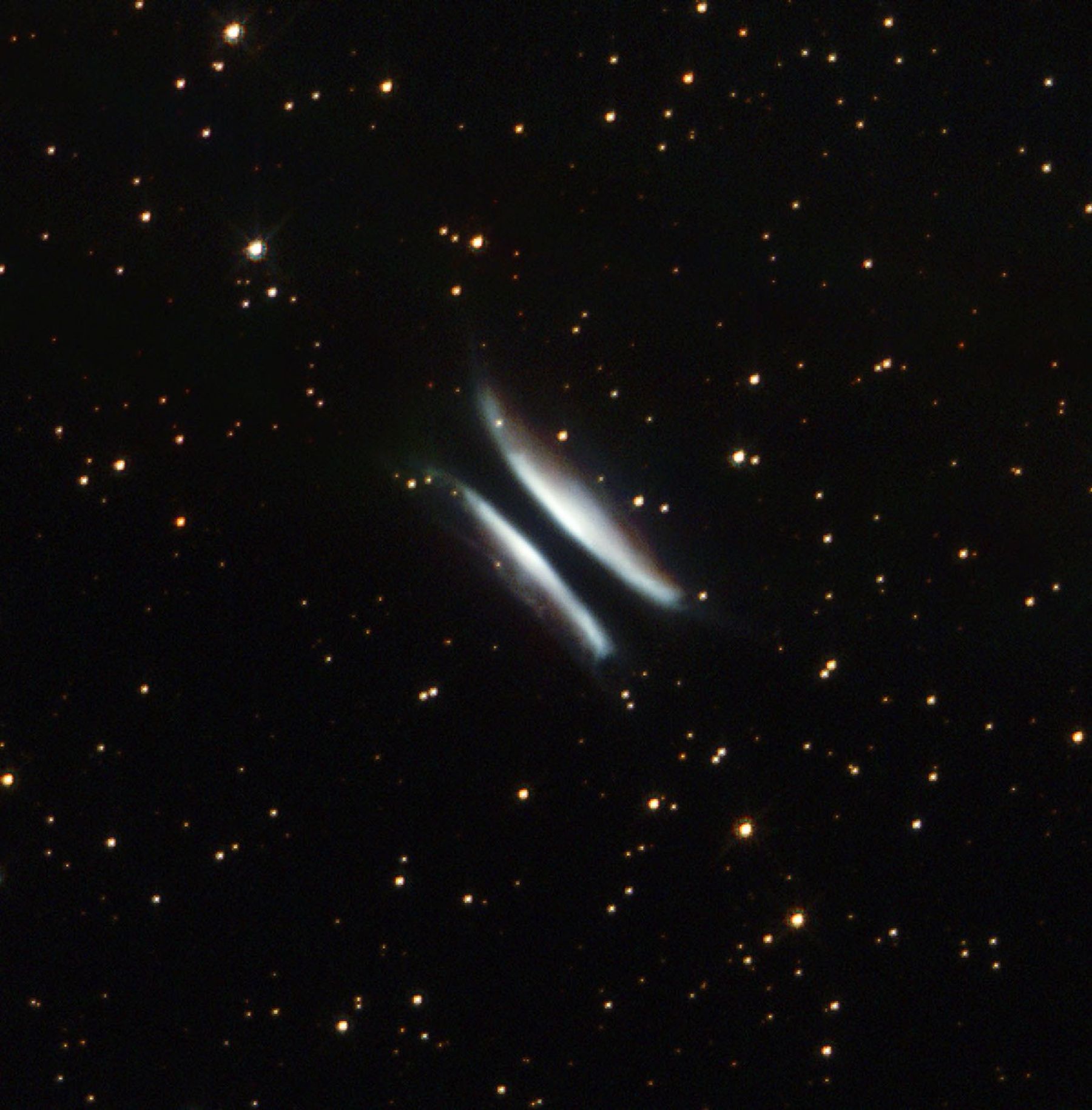
NASA's Hubble Space Telescope captured this photograph of a strange object that bears an uncanny resemblance to a hamburger. The object, nicknamed Gomez's Hamburger, is a Sun-like star nearing the end of its life. It already has expelled large amounts of gas and dust and is on its way to becoming a colorful, glowing planetary nebula. The ingredients for the giant celestial hamburger are dust and light. The hamburger buns are light reflecting off dust, and the patty is the dark band of dust in the middle. The Hubble image, taken February 22, 2002, with the Wide Field and Planetary Camera 2, shows the structure of Gomez's Hamburger in high resolution, particularly the striking dark band of dust that cuts across the middle. The dark band is actually the shadow of a thick disk around the central star, which is seen edge-on from Earth. The star itself, with a surface temperature of approximately 18,000 degrees Fahrenheit (10,000 degrees Celsius), is hidden within this disk. However, light from the star does emerge in the directions perpendicular to the disk and illuminates dust above and below it. The reason why the star is surrounded by a thick, dusty disk remains somewhat uncertain. It is possible that the central object is actually a pair of stars. If so, then the star that ejected the nebula may be rapidly rotating, expelling material mostly from its equatorial regions. Stars with masses similar to our Sun's end their lives as planetary nebulae. Less well known are protoplanetary nebulae, objects like Gomez's Hamburger that are in a state of evolution immediately before the true planetary-nebula stage. Just after the red giant expels its outer layers, the remnant star in the center is still relatively cool. Consequently, it emits ordinary visible light but very little ultraviolet radiation. Therefore the surrounding gas does not glow. However, the ejected material also contains vast numbers of microscopic dust particles, which can reflect the starlight and make the material visible. This same effect of light scattering produces halos around streetlights on a foggy night. The lifetime of a protoplanetary nebula is very brief. Astronomers expect that in less than a thousand years the central star will become hot enough to make the dust particles evaporate, thus exposing the star to view. At that time the surrounding gas will glow. Gomez's Hamburger will have become a beautiful, glowing planetary nebula.
Image Credit: NASA and the Hubble Heritage Team (STScI/AURA); Acknowledgment: A. Gomez (Cerro Tololo Inter-American Observatory)
- X
https://science.nasa.gov/image-detail/amf-318a4610-8767-4d64-a9a9-6005cfee151a/
Image CreditNASA and the Hubble Heritage Team (STScI/AURA); Acknowledgment: A. Gomez (Cerro Tololo Inter-American Observatory)
Size1800x1830px