

























Orion Nebula
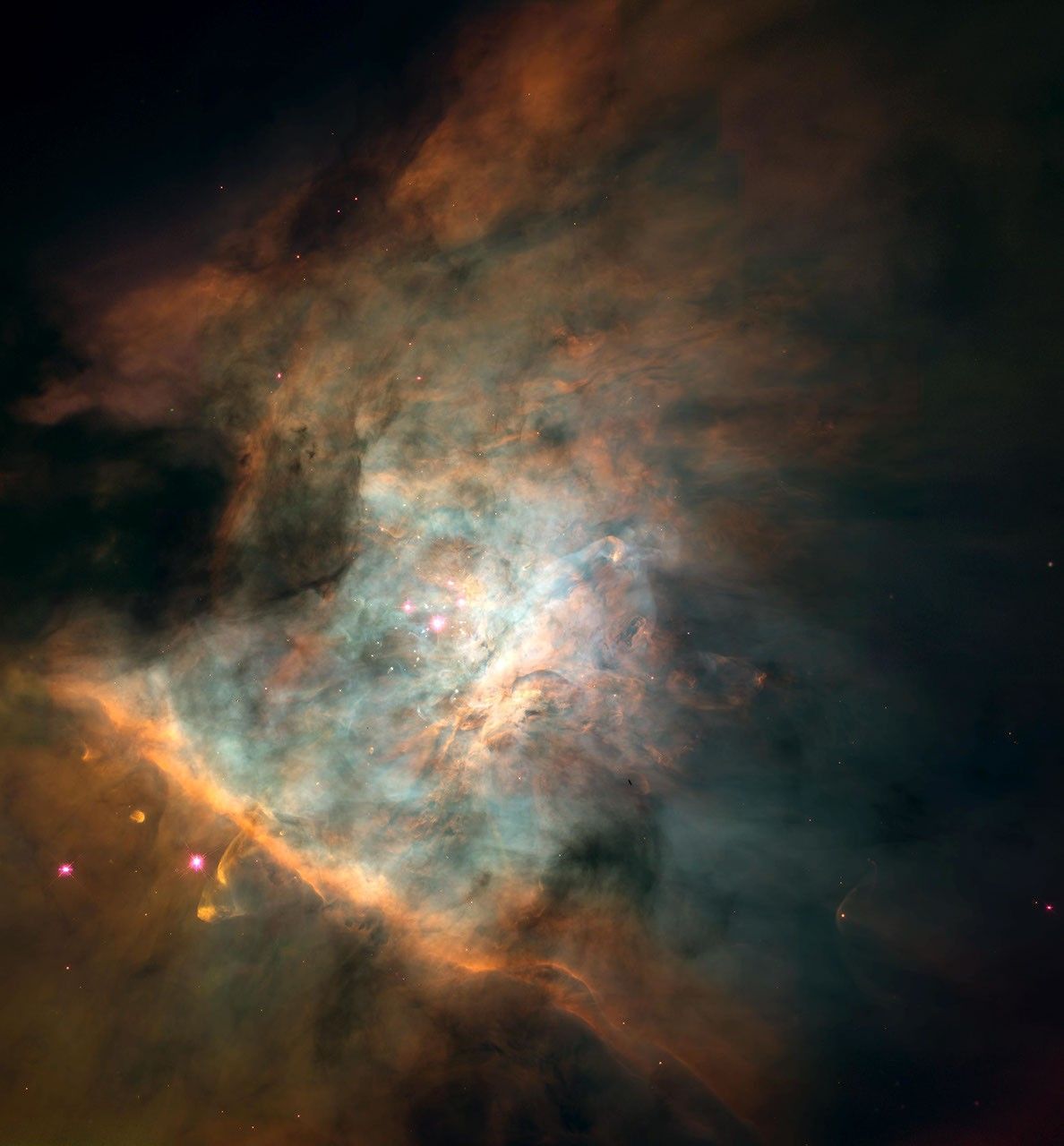
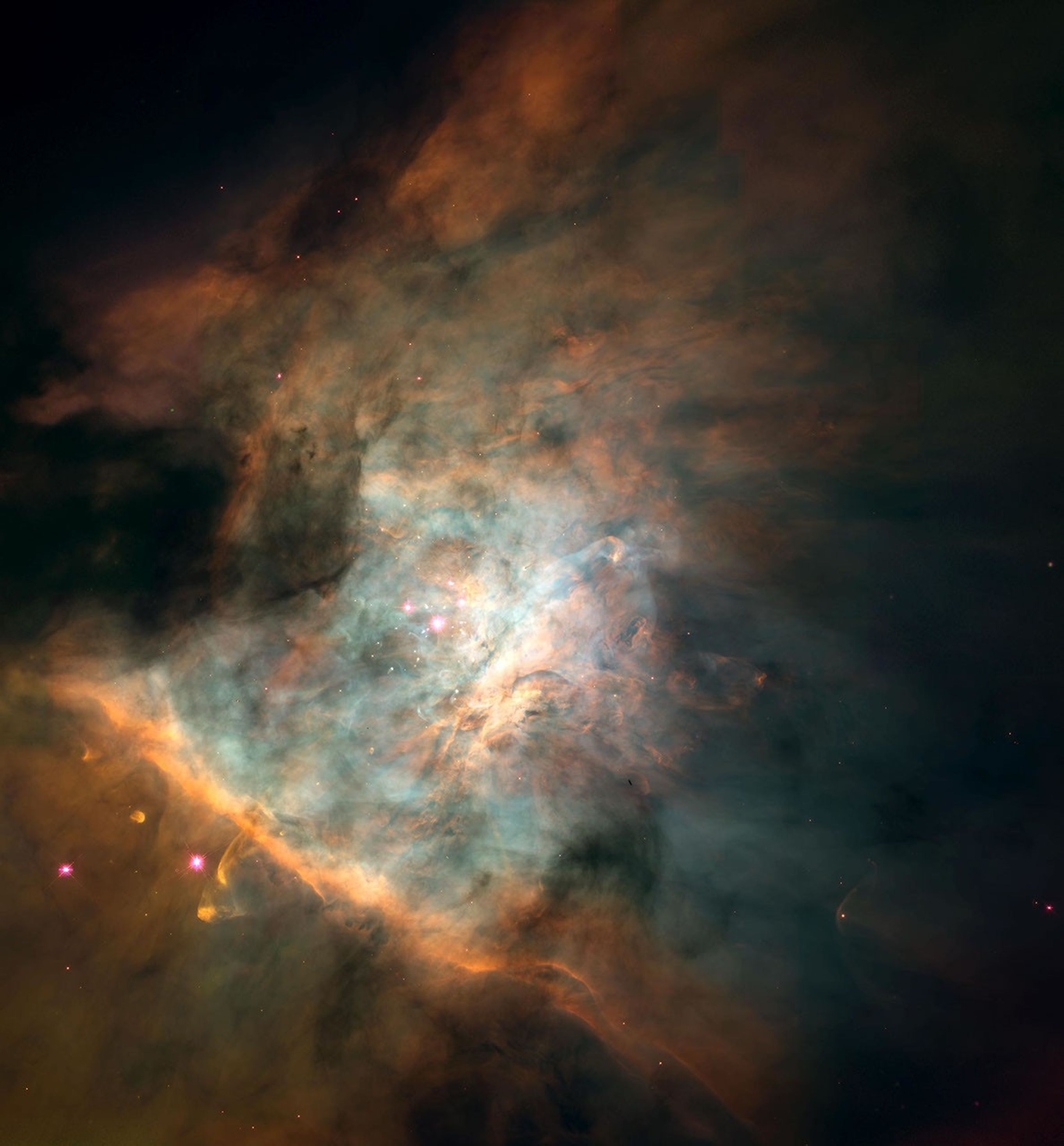
This spectacular color panorama of the center of the Orion Nebula is one of the largest pictures ever assembled from individual images taken with NASA's Hubble Space Telescope. The picture, seamlessly composited from a mosaic of 15 separate fields, covers an area of sky about five percent the area covered by the full Moon. The seemingly infinite tapestry of rich detail revealed by Hubble shows a churning, turbulent star factory set within a maelstrom of flowing, luminescent gas. Though this 2.5 light-year-wide view is still a small portion of the entire nebula, it includes almost all of the light from the bright, glowing clouds of gas and a star cluster associated with the nebula. Hubble reveals details as small as 4.1 billion miles across. Hubble observing time was devoted to making this panorama because the nebula is a vast laboratory for studying the processes that gave birth to our own Sun and solar system 4.5 billion years ago. Many of the nebula's details can't be captured in a single picture — any more than one snapshot of the Grand Canyon yields clues to its formation and history. Like the Grand Canyon, the Orion Nebula has a dramatic surface topography — of glowing gases instead of rock — with peaks, valleys, and walls. They are illuminated and heated by a torrent of energetic ultraviolet light from its four hottest and most massive stars, called the Trapezium, which lie near the center of the image. In addition to the Trapezium, this stellar cavern contains hundreds of other young stars at various stages of formation.
Image Credit: NASA, C.R. O'Dell and S.K. Wong (Rice University)
- X
https://science.nasa.gov/image-detail/amf-3e759cfb-90b3-437e-ab1b-fb7175827355/
Image CreditNASA, C.R. O'Dell and S.K. Wong (Rice University)
Size2730x2940px