























LH 95
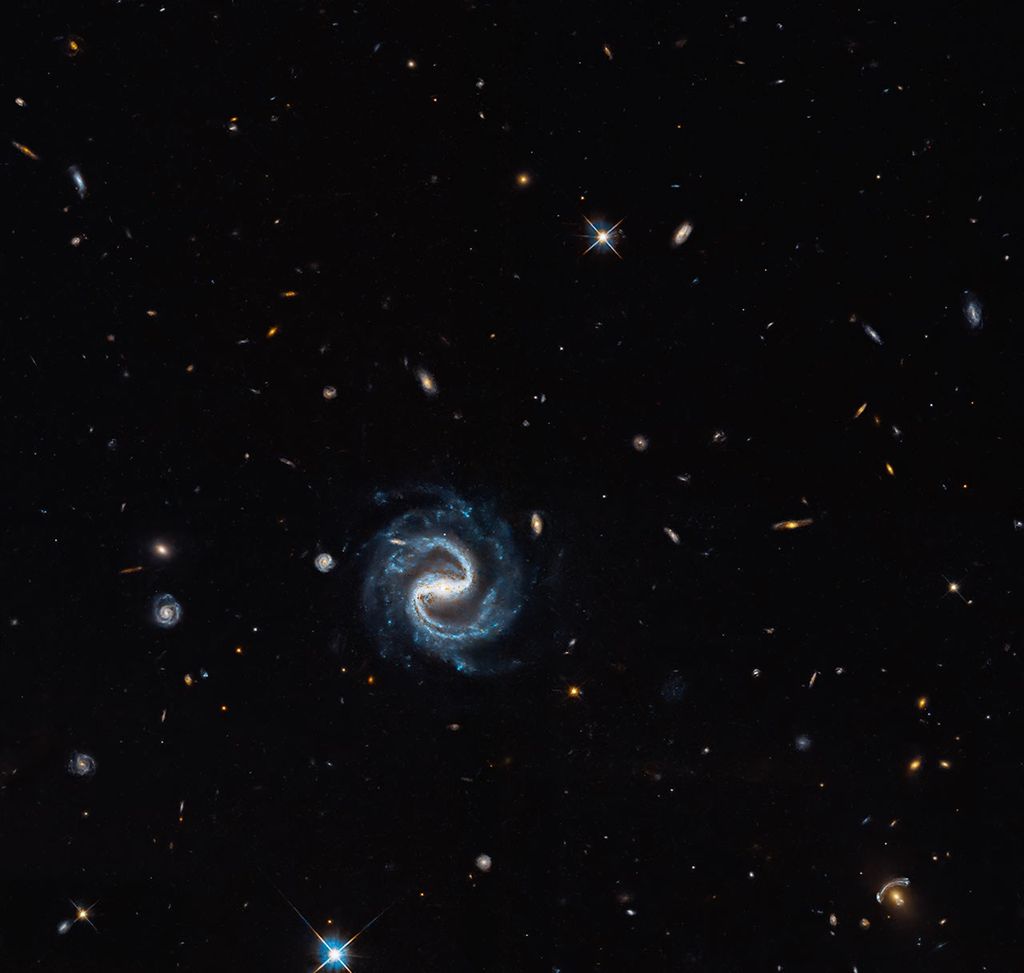
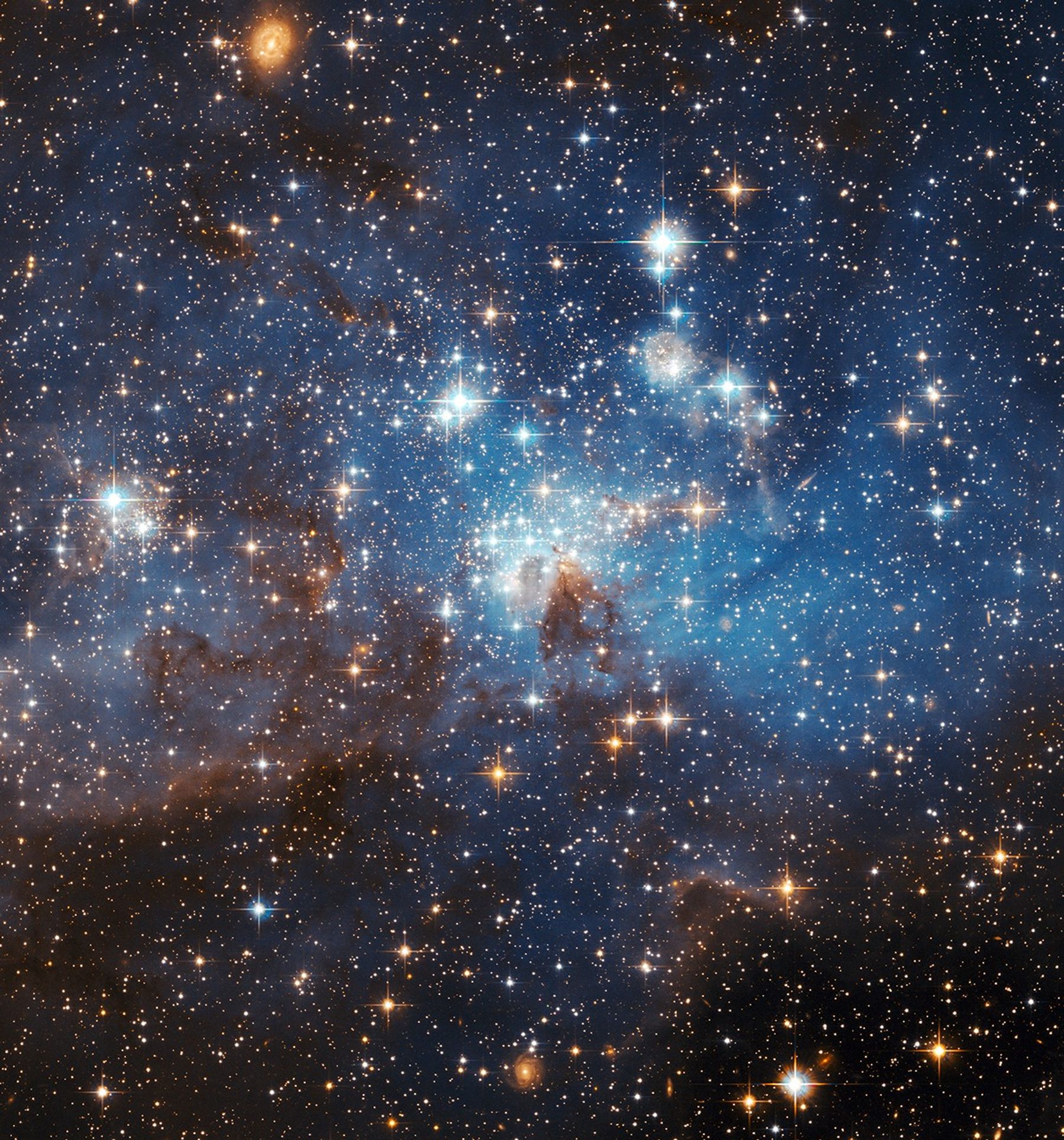
Swirls of gas and dust reside in this ethereal-looking region of star formation. This majestic view, located in the Large Magellanic Cloud (LMC), reveals a region where low-mass infant stars and their much more massive stellar neighbors reside. A shroud of blue haze gently lingers amid the stars. Known as LH 95, this is just one of the hundreds of star-forming systems, called associations, located in the LMC some 160,000 light-years distant. Earlier ground-based observations of such systems had only allowed astronomers to study the bright blue giant stars present in these regions. With Hubble's resolution, the low-mass stars can also be analyzed, which will allow for a more accurate calculation of their ages and masses. The largest stars within LH 95 — those with at least three times the mass of the Sun — generate strong stellar winds and high levels of ultraviolet radiation that heat the surrounding interstellar gas. The result is a bluish nebula of glowing hydrogen that continues to expand out into the molecular cloud that originally collapsed to form these massive stars. This deep Hubble image also reveals several large spiral and distant galaxies decorating the background of LH 95.
Image Credit: NASA, ESA, and the Hubble Heritage Team (STScI/AURA)-ESA/Hubble Collaboration; Acknowledgment: D. Gouliermis (Max Planck Institute for Astronomy, Heidelberg)
- X
https://science.nasa.gov/image-detail/amf-428518e5-5e94-49d4-93cb-de066e9a3397/
Image CreditNASA, ESA, and the Hubble Heritage Team (STScI/AURA)-ESA/Hubble Collaboration; Acknowledgment: D. Gouliermis (Max Planck Institute for Astronomy, Heidelberg)
Size1800x1927px
