













Dragonfly
Dragonfly isn’t a mission to detect life — it’s a mission to investigate the chemistry that came before biology here on Earth.
Zibi Turtle
Dragonfly Principal Investigator, Planetary Scientist at Johns Hopkins Applied Physics Laboratory
Mission Overview
-
An Airborne Science Mission Like No Other
Never before have humans planned an airborne science mission to another world like Dragonfly.
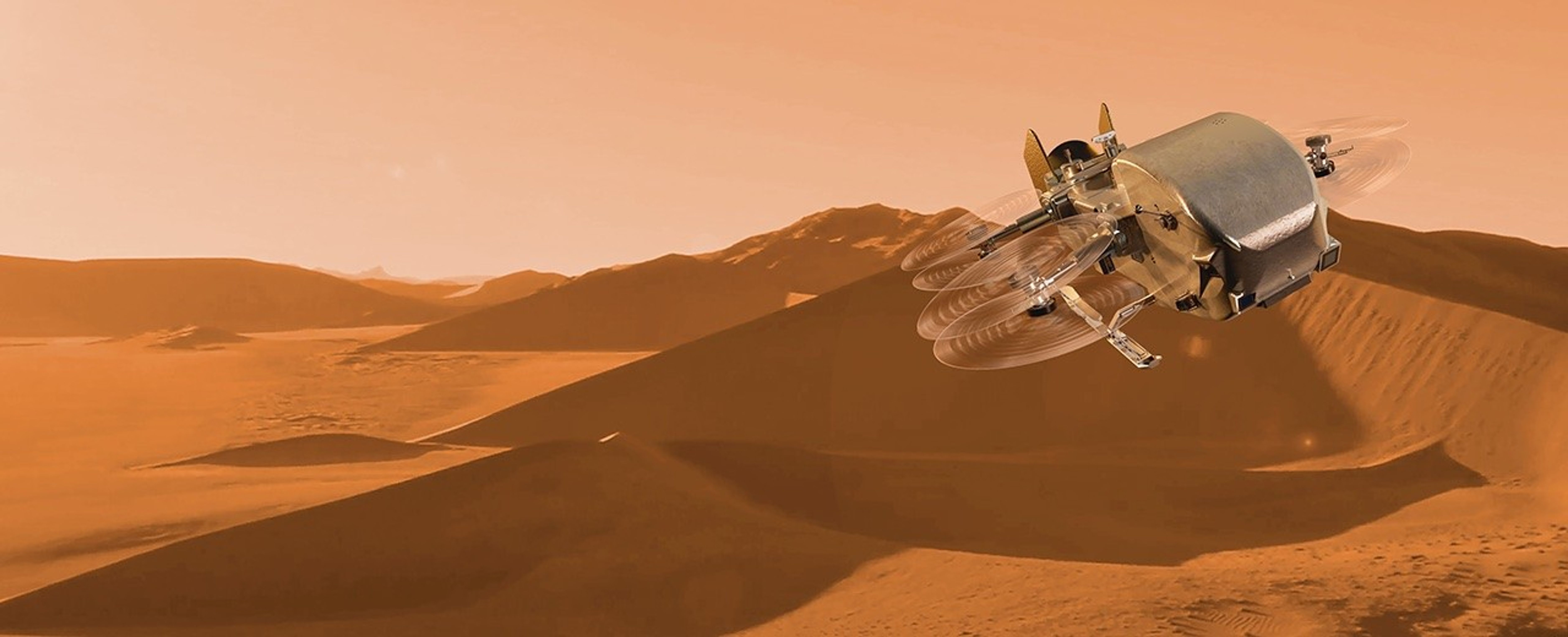
The Dragonfly rotorcraft will break the barriers for exploration of other planetary bodies. Instead of being limited to just the region around its landing site, Dragonfly’s rotors will carry it for miles across Titan during its planned 3.3-year mission, stopping to explore a variety of geologically interesting areas along the way, including dunes and Selk Crater.
Dragonfly is expected to make one flight every 1-2 Titan days, which is called a Tsol and lasts about 16 Earth days.
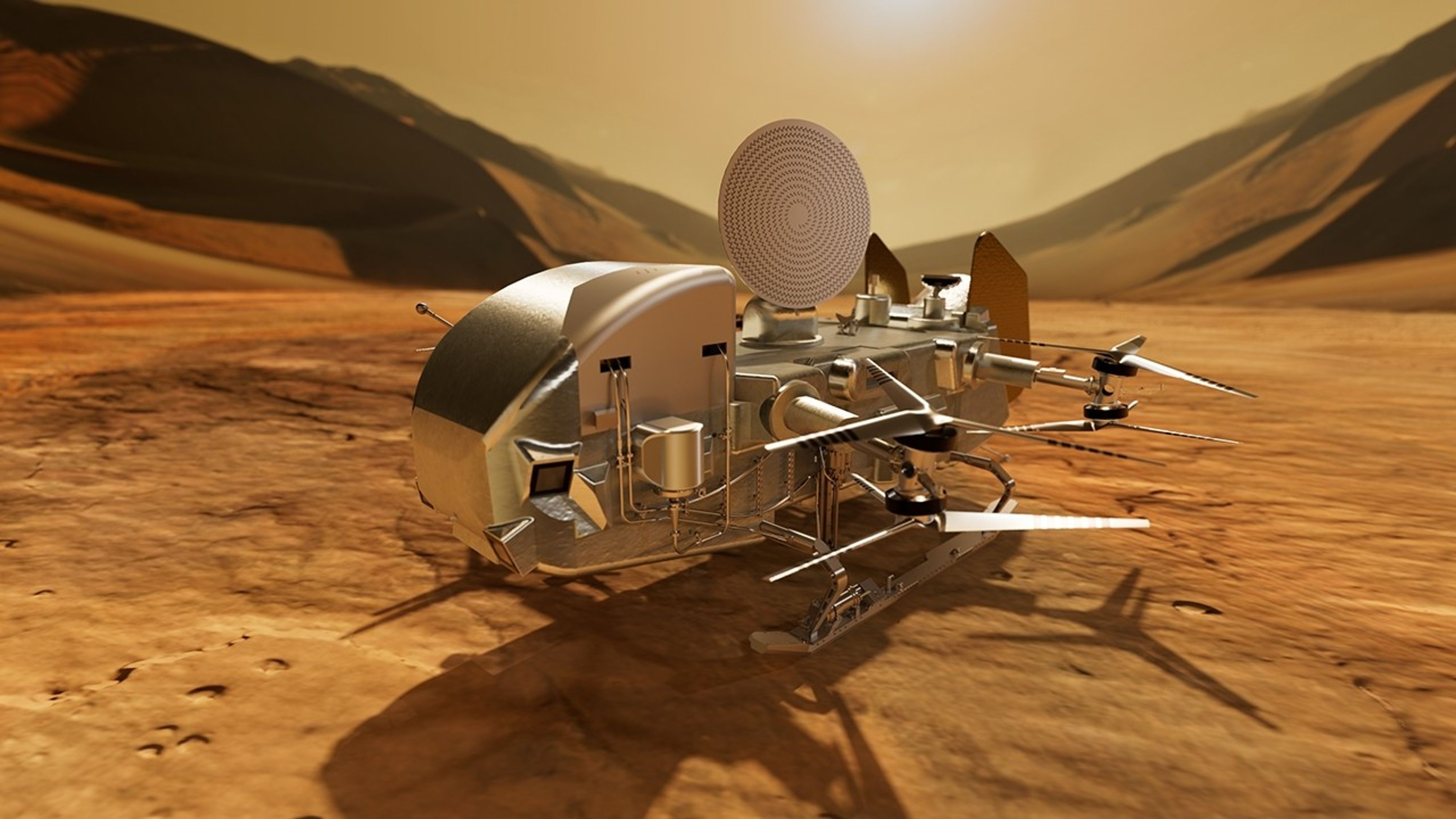 Artist's concept of Dragonfly on the surface of TitanNASA/Johns Hopkins APL
 -
Sampling the Surface
Traveling several miles on each flight through the yellowish, smoggy haze of Titan’s nitrogen-rich atmosphere, Dragonfly will stop at a variety of geologic sites, where it will collect samples of surface material for analysis inside the rotorcraft by a suite of scientific instruments.
The exploration of these diverse locations will help to characterize the habitability of Titan’s environment, investigate how far prebiotic chemistry has progressed, identify compounds of astrobiological interest, and even search for chemical indicators of water-based or hydrocarbon-based life.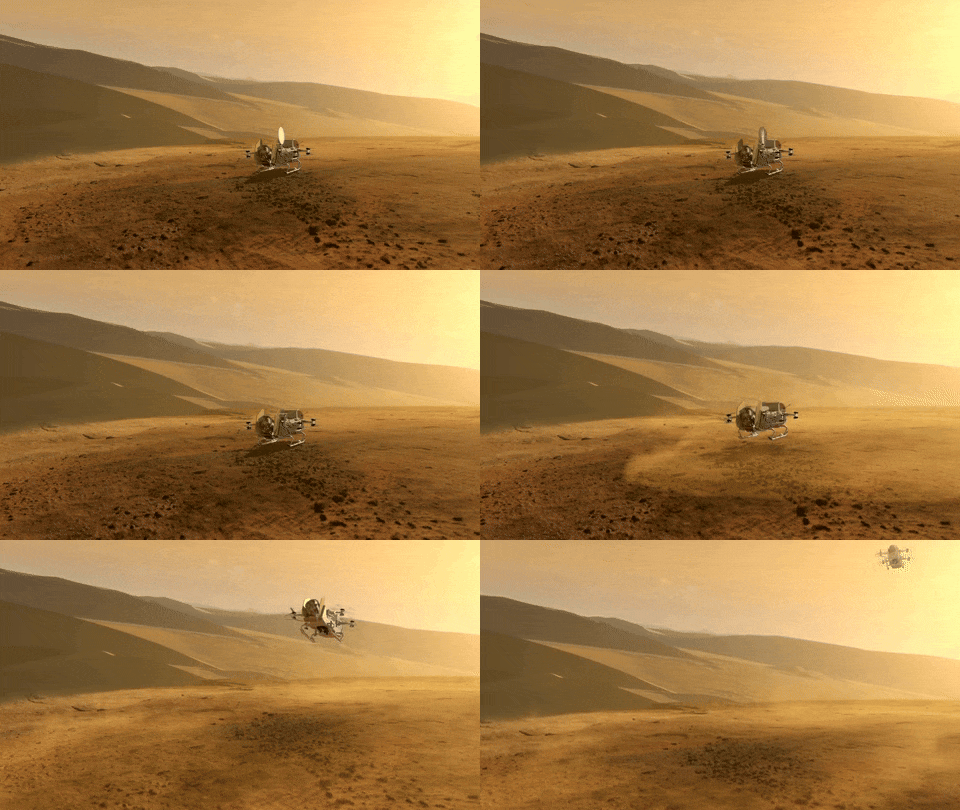 Artist's concept of Dragonfly lifting off from the surface of Titan.NASA/Johns Hopkins APL
Eye on Dragonfly
NASA and Johns Hopkins APL give viewers an inside look at NASA's Dragonfly mission as it reaches another exciting milestone on the path to Saturn's moon Titan. Hear directly from Dragonfly scientists and engineers as they discuss the spacecraft's latest progress through integration and testing, explain how Dragonfly will explore Titan, and answer audience questions about the mission.
Watch hereDragonfly News
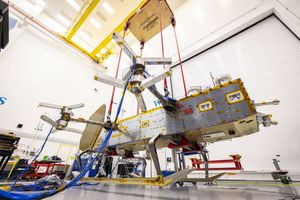
NASA’s Dragonfly is starting to look less like a collection of spacecraft parts and more like the rotorcraft that will…

In preparation for the journey to reach the surface of Saturn’s largest moon, Titan, the heat shield for NASA’s Dragonfly…
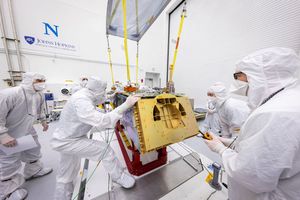
NASA’s Dragonfly rotorcraft is beginning to take shape – literally – with the delivery of the panels that make up…
Mission Background
-
New Frontiers
Dragonfly was selected in 2019 as the fourth mission of NASA’s New Frontiers program, which conducts planetary science investigations using innovative and efficient approaches to answering unique science questions throughout our solar system. New Frontiers is managed for NASA's Science Mission Directorate in Washington by the Planetary Missions Program Office at NASA’s Marshall Space Flight Center in Huntsville, Alabama.
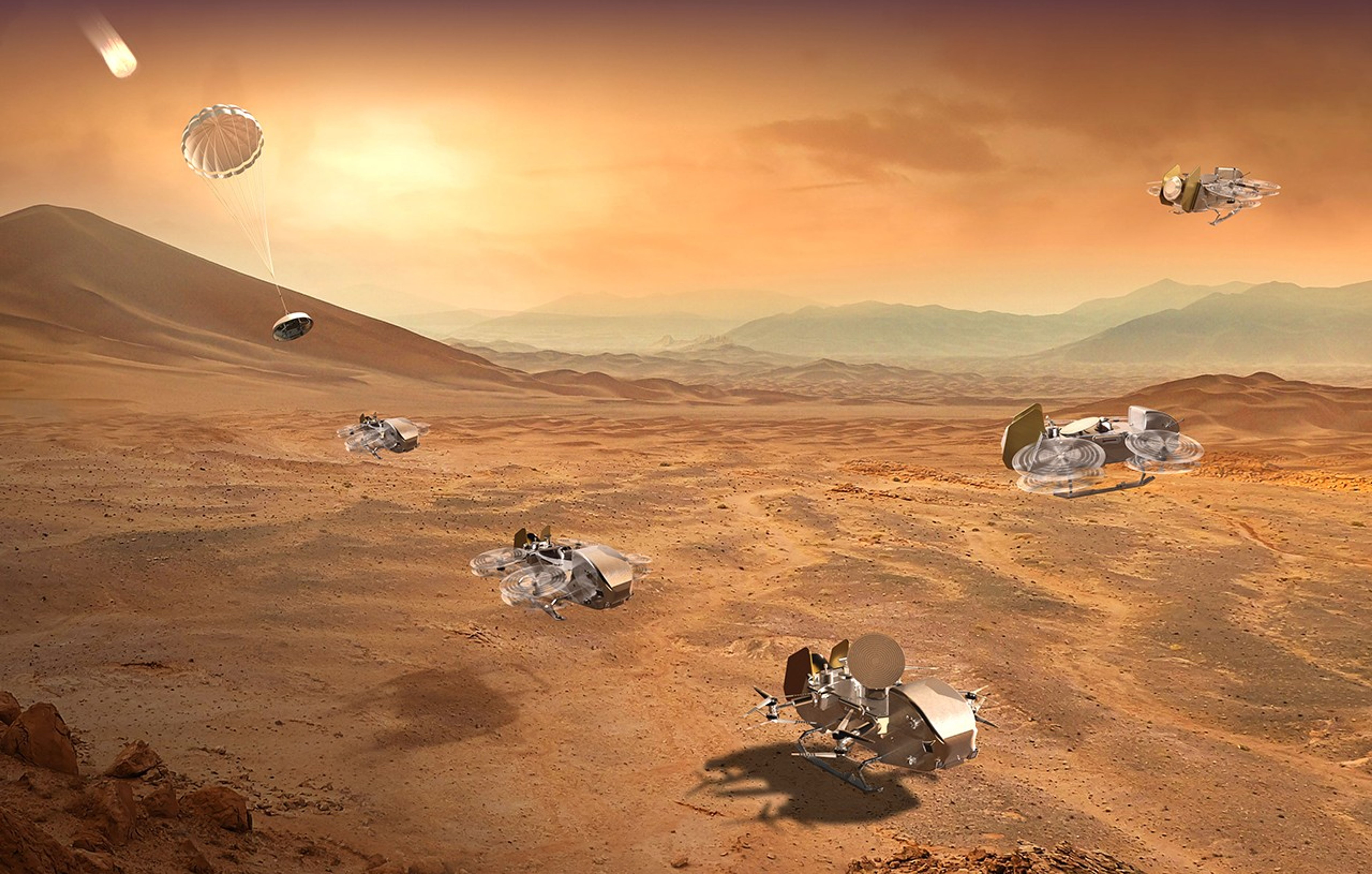 Artist's concept of Dragonfly's entry, descent, and landing, and its liftoff to explore the surface of Titan.NASA/Johns Hopkins APL
 -
Mission Team
Dragonfly is being designed and built under the direction of the Johns Hopkins Applied Physics Laboratory (APL) in Laurel, Maryland, which manages the mission for NASA. Elizabeth (Zibi) Turtle of APL is the principal investigator.
The Dragonfly team includes key partners at NASA’s Goddard Space Flight Center in Greenbelt, Maryland; Lockheed Martin Space in Littleton, Colorado; NASA’s Ames Research Center in California’s Silicon Valley; NASA’s Langley Research Center in Hampton, Virginia; Penn State University in State College, Pennsylvania; Malin Space Science Systems in San Diego; Honeybee Robotics in Pasadena, California; NASA’s Jet Propulsion Laboratory in Southern California; CNES (Centre National d’Etudes Spatiales) in Paris; the German Aerospace Center (DLR) in Cologne, Germany; and JAXA (Japan Aerospace Exploration Agency) in Tokyo. Dragonfly mission identifier.NASA/Johns Hopkins APL
Learn more
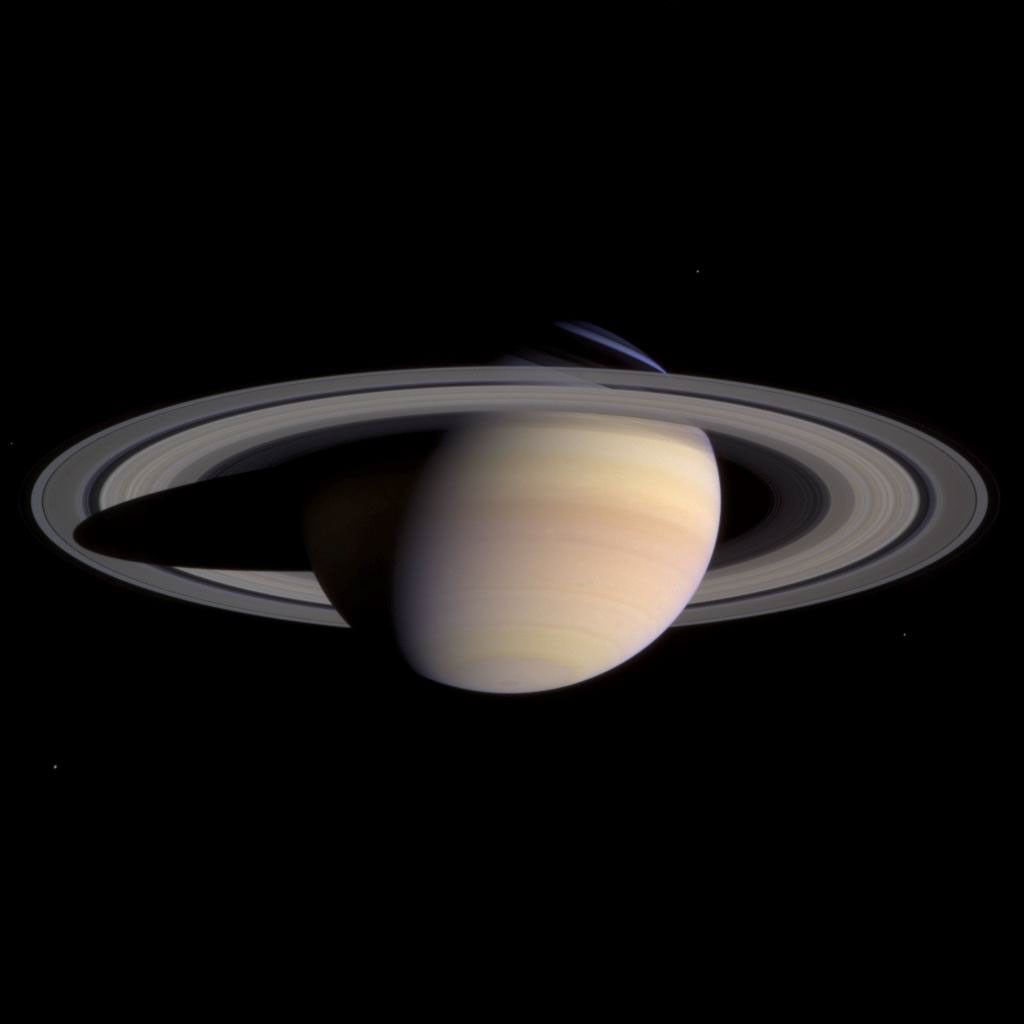
Saturn
Saturn is a massive ball made mostly of hydrogen and helium.
Titan
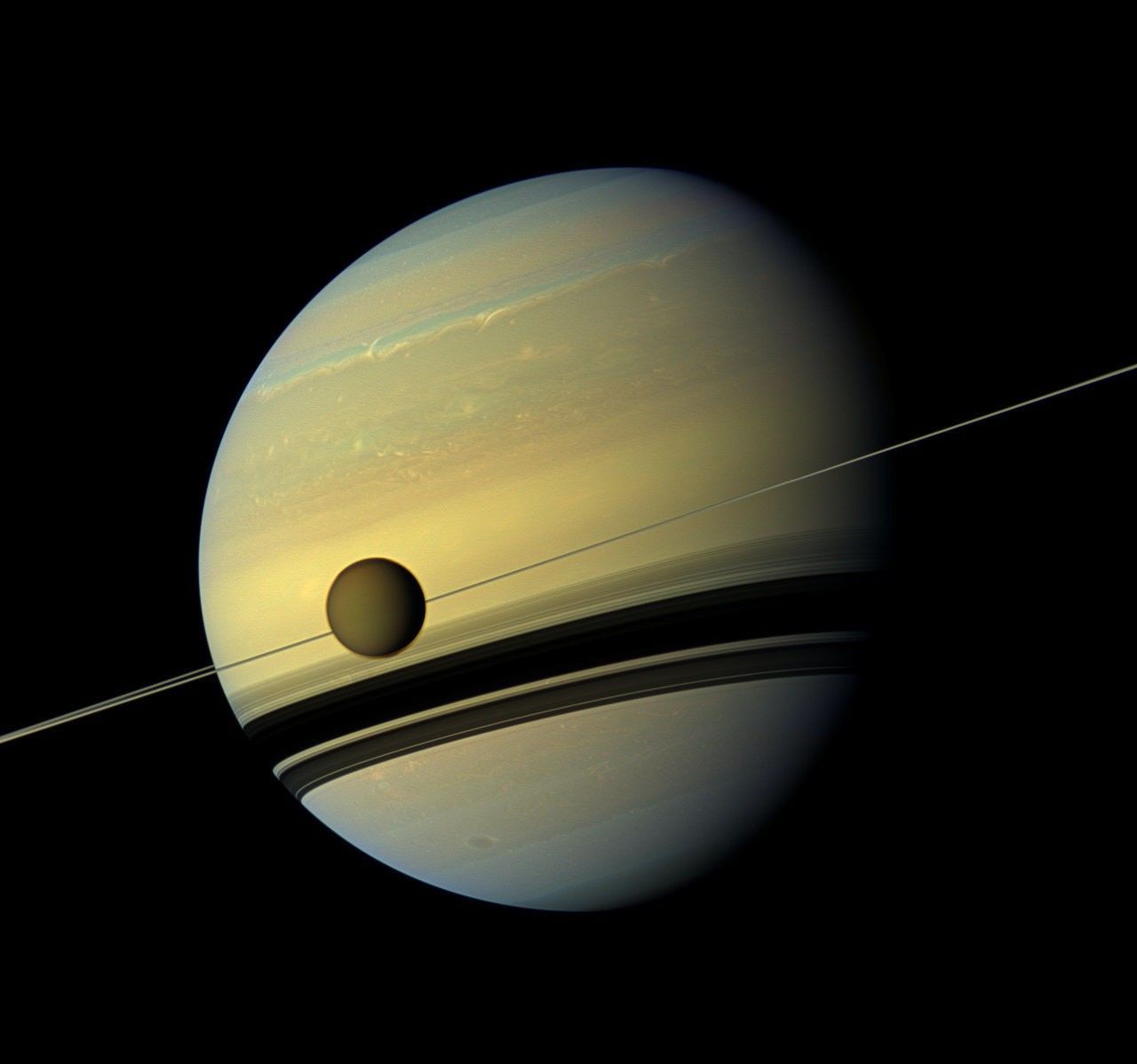
Titan is Saturn's largest moon.
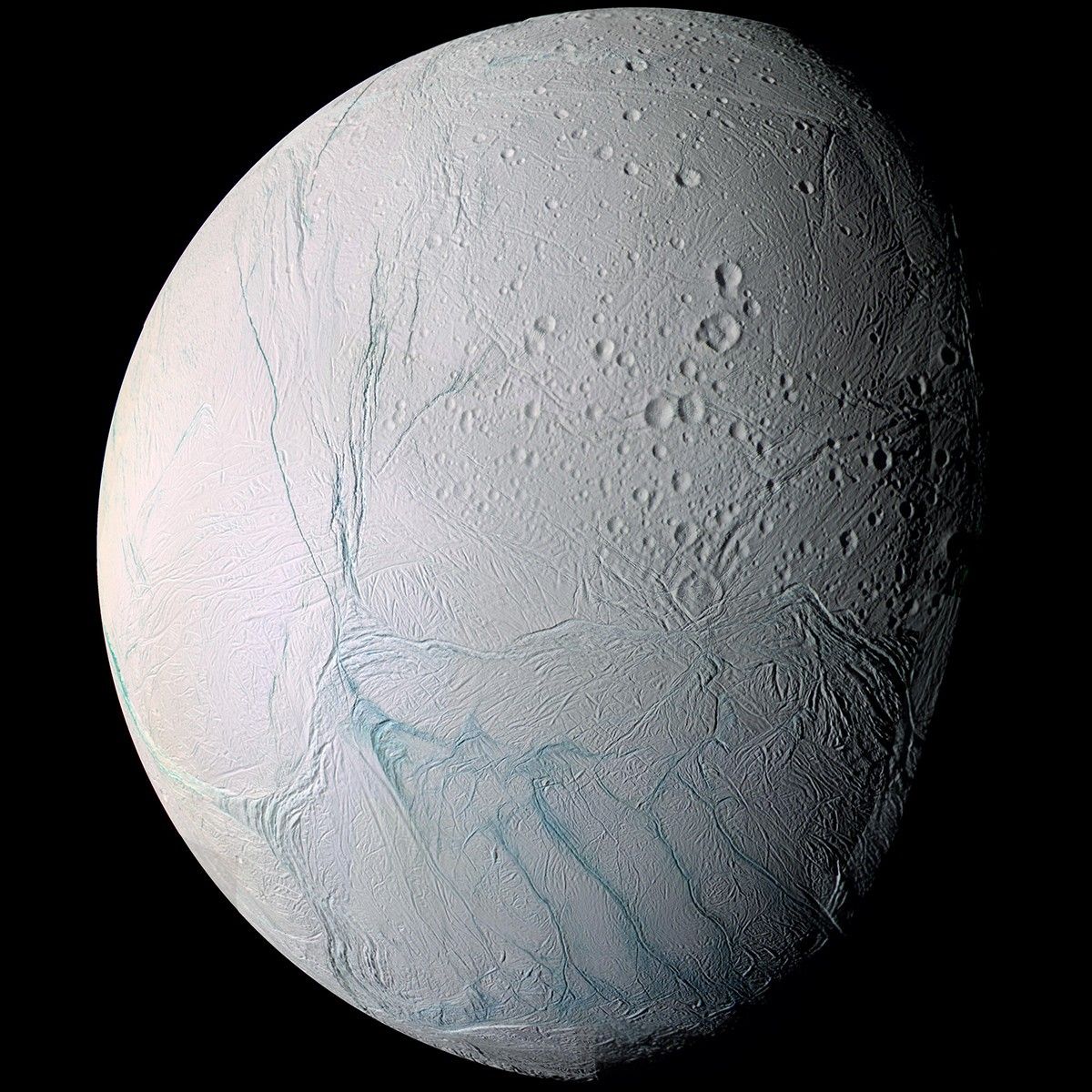
Saturn's Moons
Saturn has 274 confirmed moons in its orbit.
Dragonfly at APL
More about the mission from Johns Hopkins University Applied Physics Laboratory.