
















NISAR
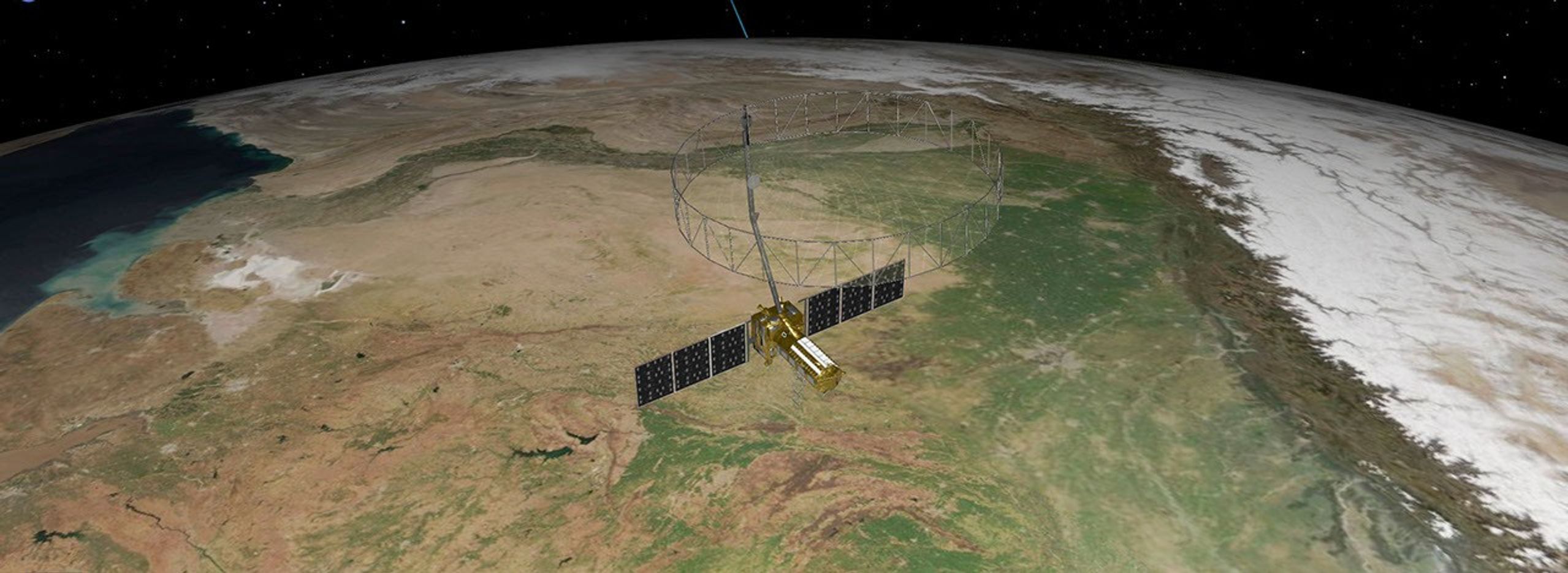
NISAR (NASA-ISRO Synthetic Aperture Radar)
Active Mission
- Mission Partners
NASA, ISRO - Instrument Type
Synthetic Aperture Radar (SAR) - Instruments
L-band SAR (24 cm wavelength) and S-band SAR (9.4 cm wavelength) - Mission Phase
Science Phase - Data Availability
NISAR data is being archived by the Alaska Satellite Facility (ASF) DAAC and is openly available to the public.

NISAR Provisional Data Released on July 20, 2026
These L-band data products are fully calibrated and have undergone validation at a limited number of sites around the world. Additional information on data availability can be found at this link.
NISAR S-band Data Released by ISRO
ISRO has released NISAR S-band daily processed data products through the Bhoonidhi portal. Additional information and data access are available at this page.
NISAR Image Releases
6 Images