












Spotlight



Mission
Cryosphere investigates polar ice, including the Antarctic and Greenland ice sheets, polar glaciers, and sea ice in the Arctic and Southern Oceans, with a focus on satellite and airborne observations. Cryosphere also seeks to improve our understanding of processes, advance prediction, and link the cryosphere to the Earth system.
Overview
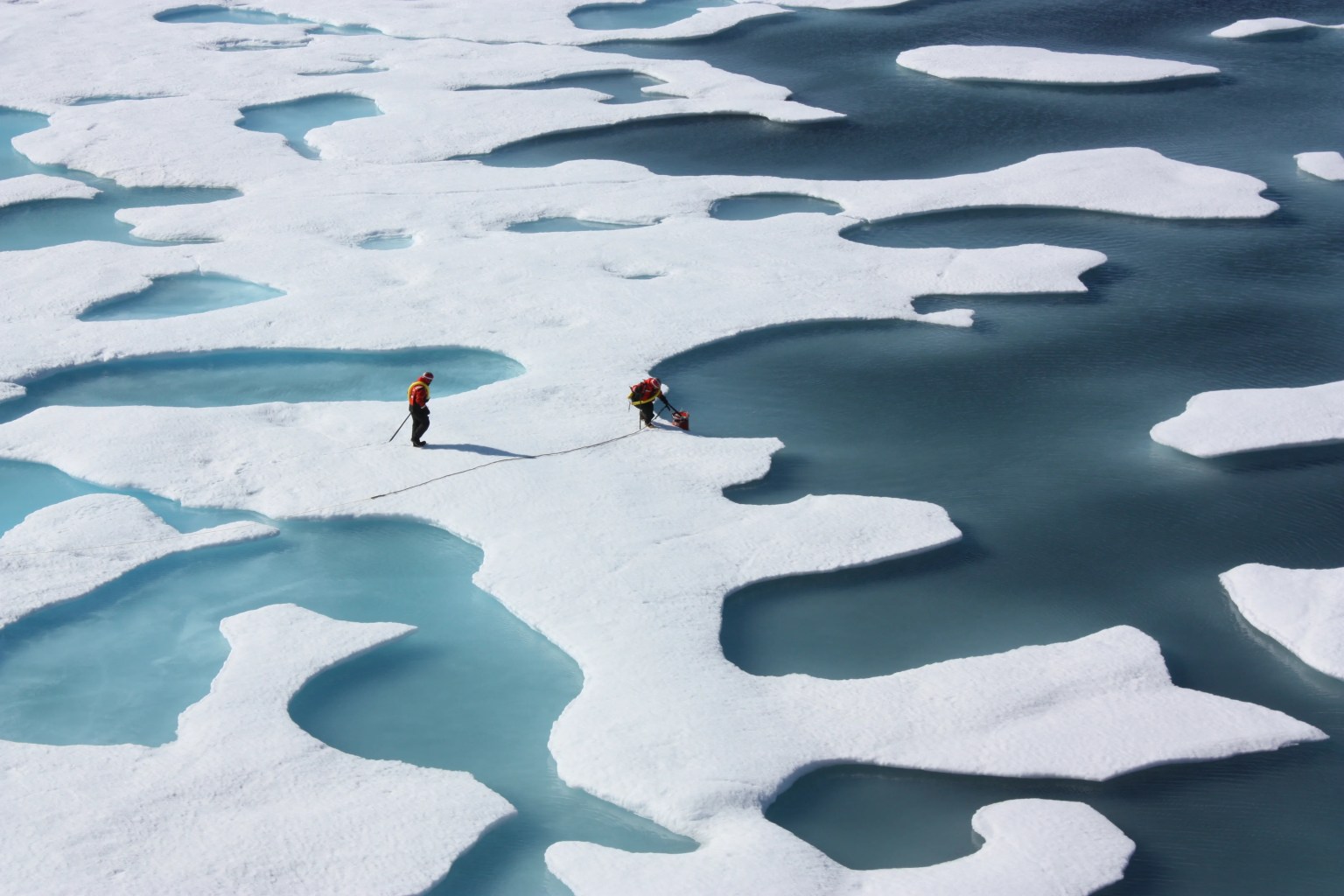
Polar ice is a key component of the Earth system, interacting with the biosphere, atmosphere, ocean, and solid earth. It is sensitive to changing atmospheric and oceanic conditions and currently undergoing rapid change. For example, melting ice from the Antarctic and Greenland ice sheets contributes to sea level rise while changes in sea ice impact ocean biology, air-sea exchanges, and the ocean circulation. Furthermore, ice at the poles is highly reflective and changes to the surface area or ice surface reflective properties impact the Earth’s radiation balance. Several feedback mechanisms thus link changes in the polar regions to conditions globally.
Monitoring the cryosphere and to understanding the underlying physical processes that govern its behavior are critical to the US economy and national security. Despite the importance of polar observations, the remote and harsh nature of these regions means in situ measurements are often sparse. NASA Cryosphere thereby uses satellite and airborne based observations to provide large-scale and continuous measurements of the polar regions for the betterment of society.
Featured News

US-India Satellite Delivers Data, Reveals ‘Hummingbird’ in Antarctica
New NASA Earth Missions Gear Up to Start Science Flights

CSDA Selects Eight Commercial Satellite Data Providers for On-Ramp 2 Contract Awards

NASA Flights Map Tropical Ecosystems, Water, Ice

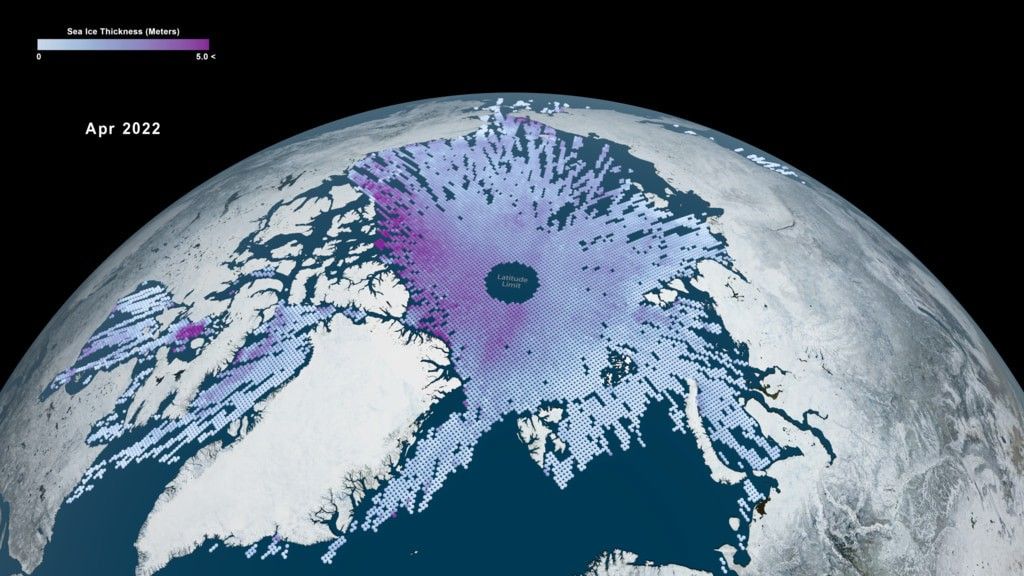
Arctic Winter Sea Ice Ties Record Low, NASA, NSIDC Scientists Find

NASA Samples Antarctic Water to Inform Search for Life on Icy Worlds
NASA Selects Two Earth System Explorers Missions

Tracking Glacial Change with Landsat and Radar
SWOT Raster Data Reveals Antarctic Ice Motion
The team demonstrated that repeated Surface Water and Ocean Topography (SWOT) high-rate acquisitions can accurately monitor changes in ice-shelf surface heights at sub‐kilometer resolution. This allows for measurement of processes caused by ocean forcing, including ice flexure at grounding lines and crevasse deepening and motion. Advancing observations of small-scale ice shelf processes is key for understanding stability of Antarctic ice shelves, which is further necessary for accurate modeling of ice sheet mass loss and sea level change. Identification of SWOT’s strengths and weaknesses for cryospheric applications will inform future missions as well, such as ESA's Sentinel‐3 Next Generation-Topography (S3NG‐T) mission.
Full publication
The Core Science Questions that Drive NASA's Cryosphere Research
-
How can predictions of glaciers and ice sheet changes be improved?
-
What are the critical processes related to the cryosphere and global sea levels?
-
How are ice covered areas changing, especially the frozen oceans in the Arctic and Antarctica, and what are the critical processes related to the Earth system?
Funded Research Opportunities
Solicited program elements relevant to Cryosphere are publicized through the Research Opportunities in Space and Earth Sciences (ROSES) NASA Research Announcements (NRAs) on the NASA Solicitation and Proposal Integrated Review and Evaluation System (NSPIRES) website. Past, open, and future solicitations can be searched and viewed on NSPIRES.
- A.3 NASA-ISRO Synthetic Aperture Radar (NISAR) Mission Research and Applications Science Team: Step-1 due March 13, 2026, Step-2 due May 14, 2026
- A.4 Rapid Response and Novel Research in Earth Science: No due date
- A.5 Earth Venture Suborbital-4 Snow4Flow Science Team: Due September 9, 2025
- A.11 Early Career Investigator Program in Earth Science: Mandatory NOIs due May 18, 2026, Proposals due June 17, 2026
- F.5 Future Investigators in NASA Earth and Space Science and Technology: Due July 14, 2026
Research Areas
-
Cryospheric Sciences
Cryospheric Sciences (CS) supports basic research into the Earth’s sea- and land-based ice to understand how and why it is changing. Additionally, CS seeks to understand how changes in polar ice will affect global climate, sea level, and the polar environment. Supported studies use space-based, aircraft-based, and other remote sensing techniques to understand the factors controlling the retreat (shrinking) and advance (growth) of the world’s sea- and land-based ice and how polar ice interacts with the ocean, atmosphere, solid Earth, and solar radiation. CS sponsors several polar initiatives designed to encourage an integrated approach to cryospheric science problems, such as the annual West Antarctic Ice Sheet (WAIS) meeting.
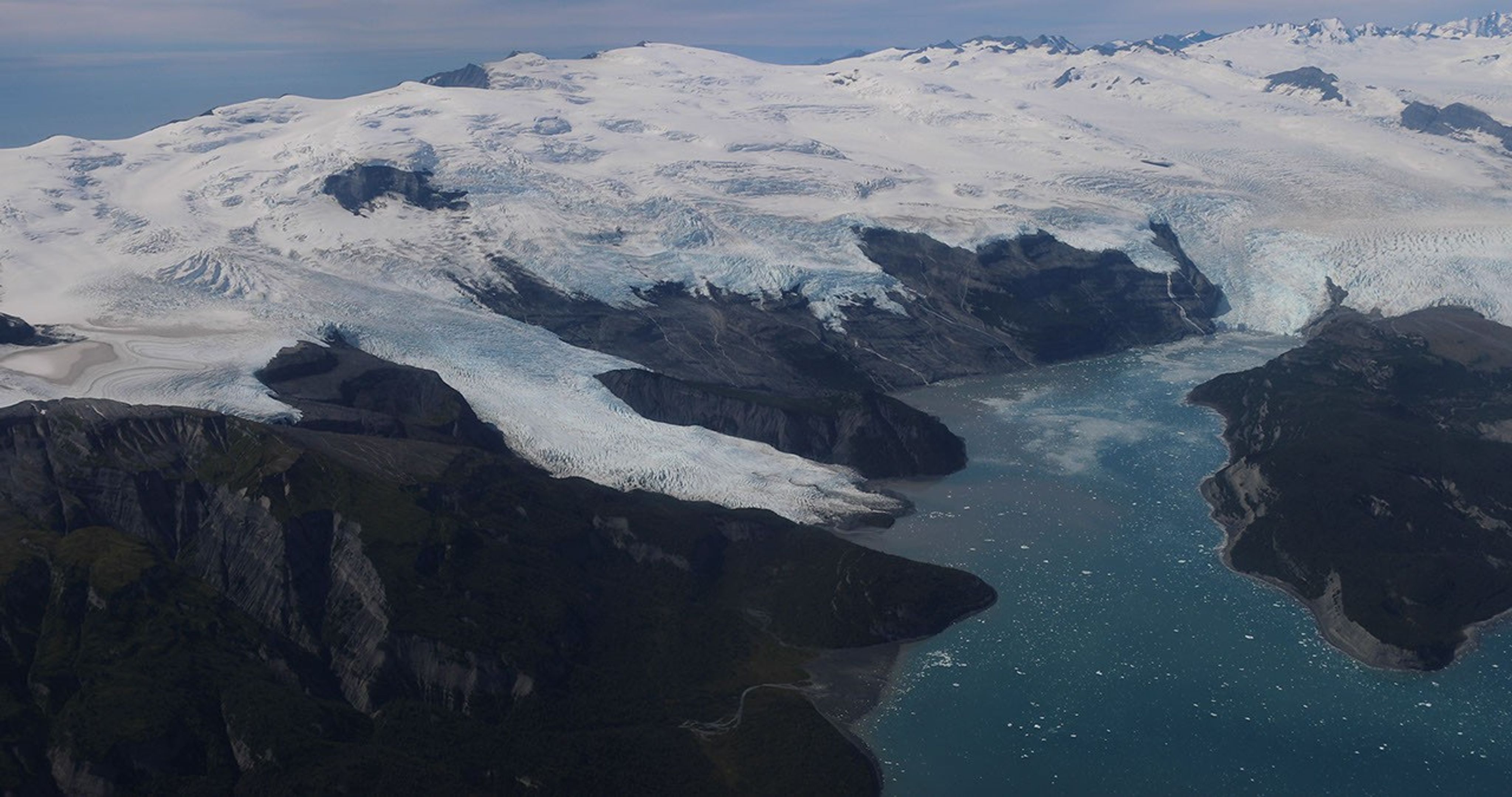
 Landsat view of the Zachariae Isstrom glacier in northeast Greenland in August 2022.NASA/Scientific Visualization Studio
Cryosphere Data Access and Distributed Active Archive Centers (DAACs)
- Alaska Satellite Facility (ASF) DAAC
- EarthData DAACs
- NASA National Snow and Ice Data Center (NSIDC) DAAC
Missions and Campaigns
-
Missions
NASA Earth Science missions see Earth from space and enable researchers to monitor and understand our home planet. Missions range from instruments onboard the International Space Station (ISS) to Earth-orbiting satellites that span both large and small (i.e., CubeSats) form factors. NASA’s Earth Science missions often have US or other international partnerships and frequently collect data for 10 or more years.
-
Campaigns
Campaigns use instrumented aircrafts, balloons, ships, and surface networks over land and ocean, to better observe and understand our home planet. Campaigns represent coordinated efforts with intensive observation periods over one or more regions that can last anywhere from weeks to years. These measurements help support missions by providing initial tests of instruments before they are launched to space. Campaigns also provide important measurements to calibrate and validate satellite data in addition to collecting observations in support of related scientific endeavors.

Events and Meetings
Upcoming Meetings and Workshops
- 2026 IEEE International Geoscience and Remote Sensing Symposium, 9-14 August 2026, Washington, DC, USA
- 2026 Cryosphere and Geosphere Investigator Meeting (invitation only), 15-17 September 2026, Greenbelt, MD, USA
- AGU 2026 Annual Meeting, 7-11 December 2026, San Francisco, CA, USA
Select Recent Meetings and Workshops
- International Symposium on Artificial Intelligence in Glaciology, 23-27 June 2026, Hanover, New Hampshire, USA
- JpGU-AGU 2026 Joint Meeting, 24-29 May 2026, Chiba, Japan
- EGU 2026 Joint Meeting, 3-8 May 2026, Vienna, Austria
- ARCSIX Science Team Meeting, 28-30 April 2026, Hampton, VA, USA
- Snow4Flow Science Team Meeting, 21-23 April 2026, Virtual
- Climate and Cryosphere Open Science Conference, 9-12 February 2026, Wellington, New Zealand
- American Geophysical Union (AGU) 2025 Fall Meeting, 15-19 December 2025, New Orleans, LA, USA
- NASA ICESat-2 Data Training: Inland Surface Water Data, Services, and Tools, 19 November 2025, online only
Collaborating Organizations
Cryosphere Science Team, Partnerships, and Program Links
- Cryosphere Research Page
- Gravity Recovery and Climate Experiment (GRACE) Science Team
- ICESat-2 Science Team
- Ice-sheet and Sea-level System Model (ISSM)
- Ice sheet Mass Balance Inter-comparison Exercise (IMBIE)
- NASA-ISRO Synthetic Aperture Radar (NISAR) Mission
- National Snow and Ice Data Center (NDISC)
Contacts
Denis Felikson
Cryosphere and Geosphere Program Manager (GSFC Detailee) (dual role)
Cryospheric Science and Geospheric Science Research
Contact | Bio
Thorsten Markus
Cryosphere Program Manager
Cryospheric Science Research
Contact | Bio
Earth Science Division Embeds
Ali Giese
Earth Action Embed
Contact
Jessica Burnett
Earth Science Data Systems Embed
Contact
Parminder Ghuman
Earth Science Technology Office Embed
Contact