












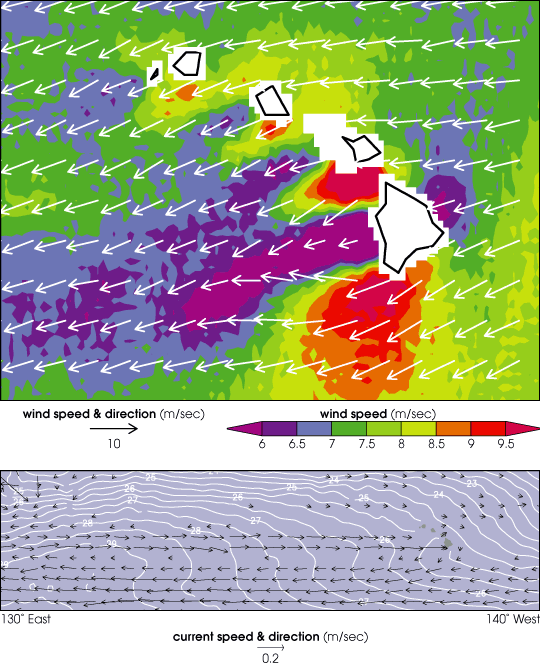
The Hawaiian Islands trigger an extraordinary interaction between windand ocean that extends thousands of kilometers. This island effect ismuch larger than has ever been observed by scientists before.
Using data from Earth-observing satellites, researchers discoveredthis unusually long island "wake," which includes a narroweastward-flowing ocean current extending 8,000 kilometers (4,900 miles)from Asia to Hawaii. While scientists have known of an eastward current off of Asia forsome years, this new research shows that it extends from Asia to theHawaiian Isles.
The top image above shows the winds around the Hawaiian Islands measured by theSeawinds instrument aboard QuikScat during August 1999. Trade winds blow from eastto west (right to left in the image). Between islands the winds increase, while in thewake of the islands the winds are remarkably weaker. The bottom image shows theocean current formed by the islands' wake. Arrows indicate current direction and speed(derived from a general circulation model), while white contours show oceantemperatures (measured by the Tropical Rainfall Measuring Mission). The warm water of the current generates winds which sustain thecurrent for thousands of miles.
For more information, images, and an animation, readSatellites Reveal Hawaiian Isles' Long Tail of Wind and Water andFar-Reaching Effects of the Hawaiian Islands on the PacificOcean-Atmosphere System.
References & Resources
Images courtesy Shang-Ping Xie, University of Hawaii International Pacific Research Center and Meteorology Department, and Timothy Liu, NASA Jet Propulsion Laboratory Seawinds science team.
None