






















A NASA satellite confirms that overturning in the North Atlantic Ocean—a process where surface water sinks and deep water rises due to varying water densities—speeds up and slows down by 20 to 30 percent over 12- to 14-year cycles. Scientists previously believed that a change of this magnitude would take hundreds of years, rather than close to a decade.
The findings were made possible by TOPEX/Poseidon satellite data that measured sea surface height in the North Atlantic.
Sirpa Hakkinen, of NASA's Goddard Space Flight Center, used computer models to link sea surface height to natural cycles of overturning in the North Atlantic. She found that when overturning increases, so does the sea surface height, and vice versa.
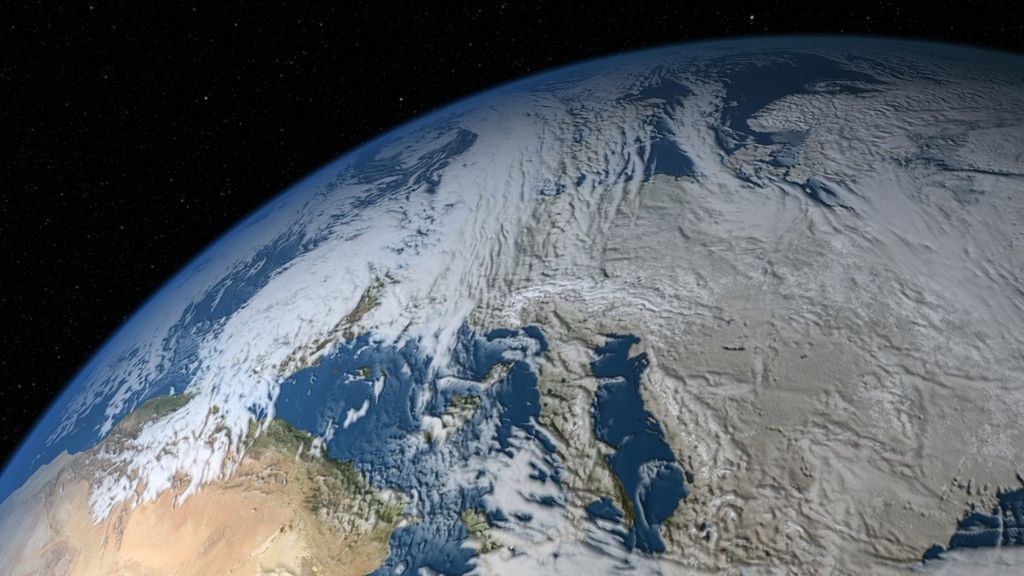
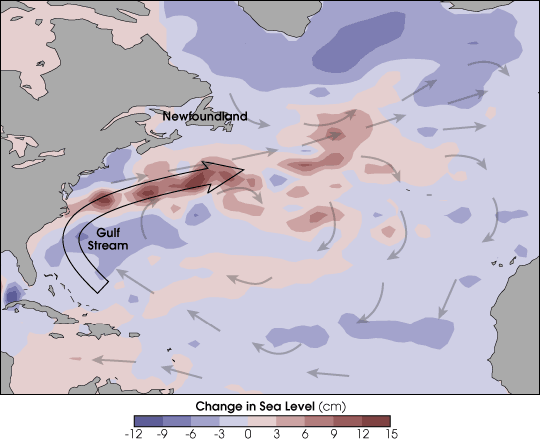
As the Gulf Stream moves warm surface water from the equator north through the Atlantic, the water cools, gets saltier due to evaporation, and becomes very dense. By the time it approaches the coast of Newfoundland, south of Greenland, it becomes dense enough to sink. The current then slowly travels in a kind of conveyor belt in the deep ocean back to the equator where it warms, becomes less salty, and rises. This process of sinking and rising water is called overturning.
"The close association of the sea surface height and changes in overturning provides a simple method for assessing the state of the ocean," Hakkinen said.
Using TOPEX/Poseidon sea surface height data from 1992 to 2000, Hakkinen found that between the winters of 1995 and 1996, sea surface height over the Gulf Stream decreased by about 12 centimeters. She suggests that this large, abrupt change in sea surface height can be associated with a slow-down of overturning from peaks in the early 1990s.
"They are very large changes," Hakkinen said. "People have not wanted to believe that you can have these kinds of changes over a decadal time scale. They want to think about these changes over hundreds to thousands of years. But in fact, very large changes can occur over decadal time scales."
For more information, read: Climate Change in the Atlantic Larger Than Previously Thought.
References & Resources
Image courtesy Sirpa Hakkinen, NASA GSFC