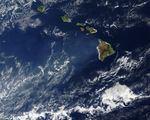







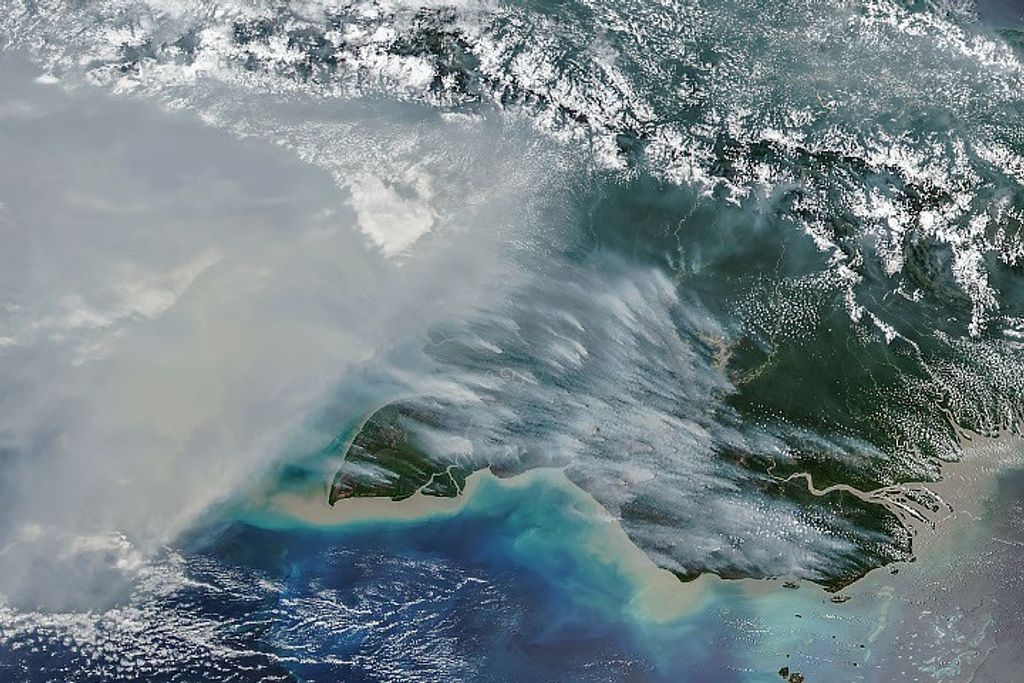
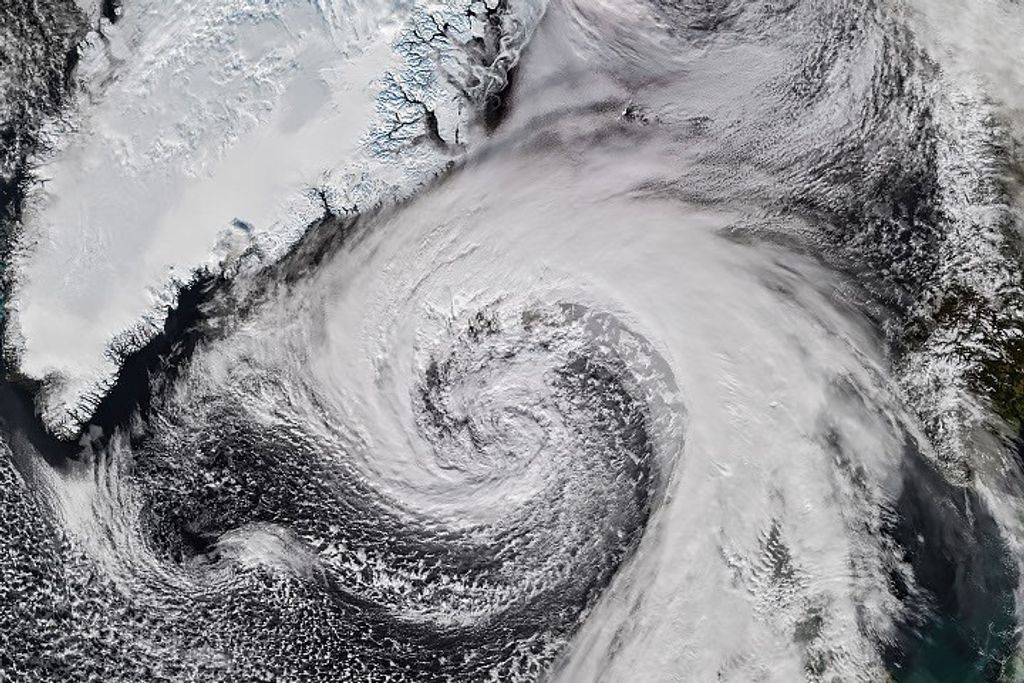



















Volcanic fog—vog—swirls around the Hawaiian Islands in this satellite image. Vog is formed when sulfur dioxide gas emitted from a volcano reacts with oxygen and water vapor. The reactions form tiny drops of sulfuric acid and other sulfates, which create a visible haze. Since March 12, 2008, emissions of sulfur dioxide (the gas that forms vog) from Kilauea volcano have been elevated: 800 metric tons (1,800,000 pounds) per day in early December 2009, compared to an average of 140 metric tons per day (310,000 pounds) from 2003–2007.
The Moderate Resolution Imaging Spectroradiometer (MODIS) aboard NASA’s Terra satellite captured this natural-color image on December 9, 2009.
References & Resources
- United States Geological Survey Hawaiian Volcano Observatory. (2009, December 10.) Recent Kilauea Status Reports, Updates, and Information Releases. Accessed December 10, 2009.
- United States Geological Survey. (2000, June.) Volcanic Air Pollutionââ¬âA Hazard in Hawaii. Accessed December 10, 2009.
NASA image by Jeff Schmaltz, MODIS Rapid Response, Goddard Space Flight Center.