












Wildfires have burned throughout the western United States for months. Major blazes first emerged in New Mexico in May, then began to turn up in Colorado and Idaho in large numbers. Most recently, fires have surged in California and Washington.
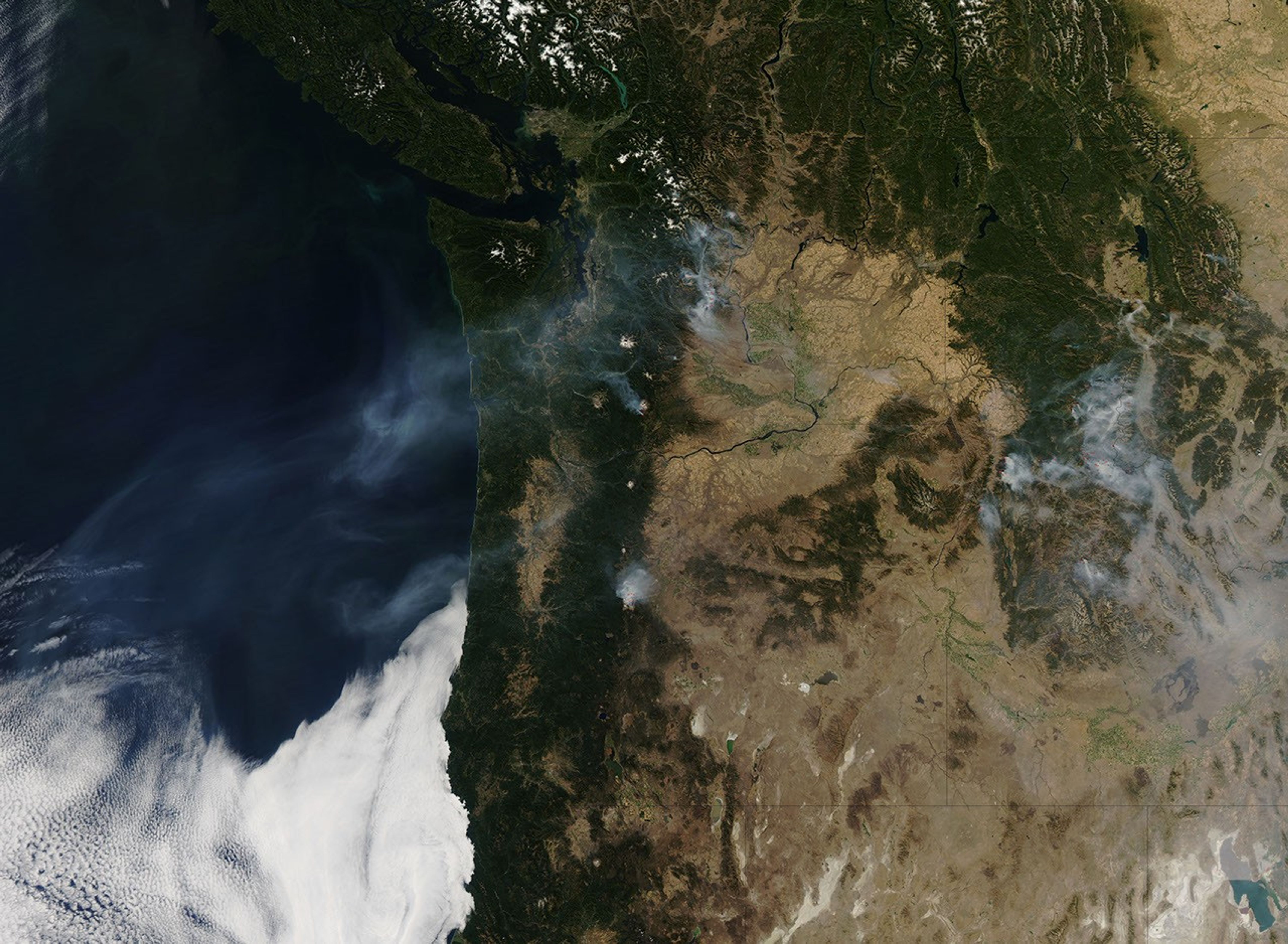
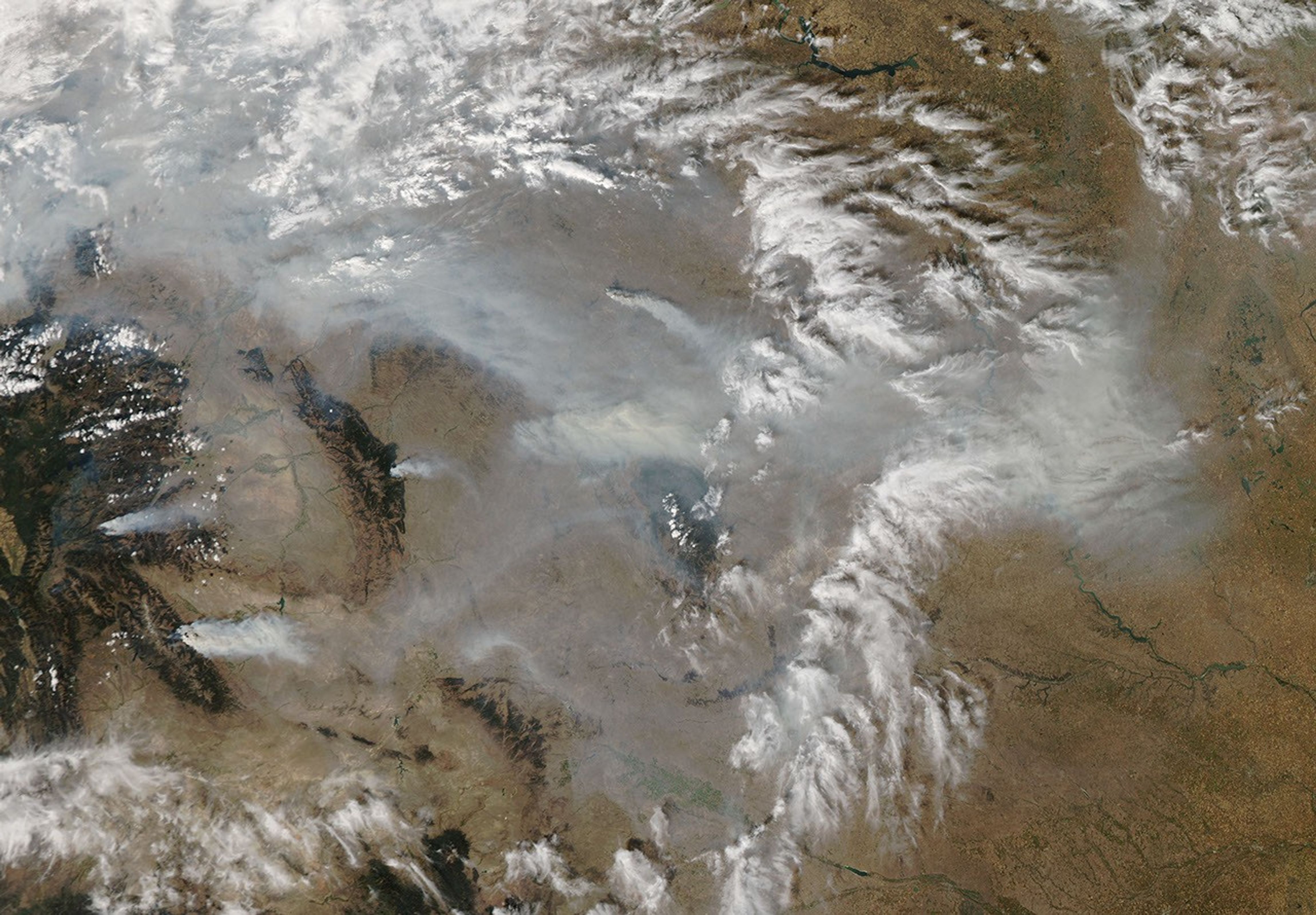
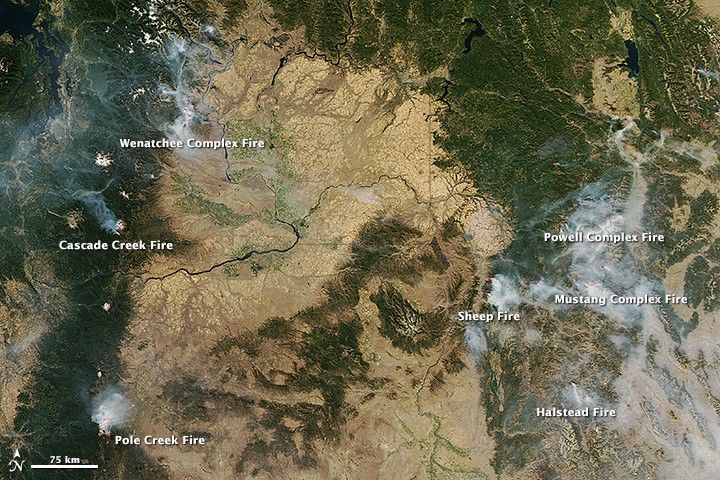
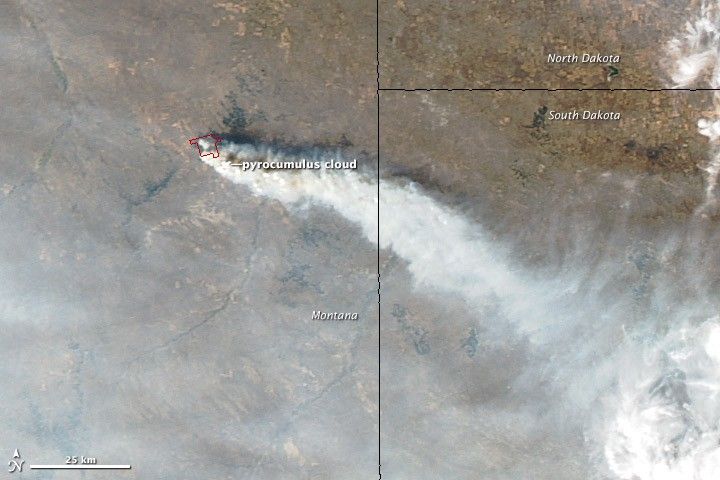
On September 17, 2012, numerous fires (top) continued to rage throughout the western United States. Some, like the Halstead and Mustang Complex fires in Idaho, have been burning for months; others, like the Pole Creek and Sheep fires, were ignited in just the past few weeks. Montana’s Dugan fire (bottom) was discovered in Custer National Forest as recently as September 14, 2012.
The Moderate Resolution Imaging Spectroradiometer (MODIS) on NASA’s Aqua satellite captured the top image on September 17, 2012, and the bottom image on September 15, 2012. Red outlines indicate hot spots where MODIS detected unusually warm surface temperatures associated with fires.
In the bottom image, the light spots within the smoke plume are the tops of pyrocumulus clouds, towering clouds provoked by the fire and rising above the smoke layer. Such clouds form when intense heat from a fire pushes air high into the atmosphere. Pyrocumulus clouds sometimes generate intense thunderstorms that can either dampen the flames with drenching rains or propel the fire with strong winds.
The 2012 wildfire season will likely break the United States record for the most acres burned, set in 2006 when more than 9.8 million acres burned. (The National Interagency Fire Center has been keeping records since 1960.) Fire had burned nearly 8.4 million acres (3.4 million hectares) across the United States as of September 18, 2012—an area larger than the state of Maryland. Idaho, Oregon, and Montana were hardest hit. Idaho alone accounted for 18 percent of the land burned across the United States in 2012; Oregon accounted for 15 percent, and Montana 11 percent.
The size and frequency of wildfires has increased significantly in the western United States over the past few decades due largely to climate change and changing forestry practices. Climate change has decreased winter snow cover, hastened the arrival of spring, and intensified heat waves across much of the West—all factors that exacerbate wildfires. In addition, decades of aggressive fire suppression have left denser forests and abundant fuel on the ground, which makes fires more difficult to control.
Further Reading
- Marlon, J. (2012) Long-term perspective on wildfires in the western USA. Ecological Proceedings of the National Academy of Sciences.
- Westerling, A.L. (2006, August 18) Warming and earlier spring increase western U.S. forest wildfire activity. Science
References & Resources
- Climate Central. (2012, September 18) Report: The age of western wildfires. Accessed September 18, 2012.
- Inciweb. (n.d.). Incident Information System. Accessed September 18, 2012.
- National Interagency Fire Center. (n.d) Year-to-date statistics. Accessed September 18, 2012.
- National Interagency Fire Center. (n.d) Total wildland fires and acres (1960-2011). Accessed September 18, 2012.
- Washington Post. (2012, February 29) Why Western wildfires keep getting worse. Accessed September 18, 2012.
NASA image courtesy Jeff Schmaltz, LANCE MODIS Rapid Response Team at NASA GSFC. Caption by Adam Voiland.