





















March 18th. — We sailed from Bahia. A few days afterwards, when not far distant from the Abrolhos Islets, my attention was called to a reddish-brown appearance in the sea. The whole surface of the water, as it appeared under a weak lens, seemed as if covered by chopped bits of hay, with their ends jagged.
—Charles Darwin, The Voyage of the Beagle
Even in Darwin's day, naturalists recognized these "chopped bits of hay," also historically called "sea sawdust," as colonies of Trichodesmium. They are a genus of cyanobacteria, an ancient type of marine bacteria that, like other phytoplankton, capture and store solar energy through photosynthesis. However, Trichodesmium is also known for its ability to fix nitrogen—it can use atoms of molecular nitrogen in the ocean to aid in growth at times when the preferred ammonia molecules are scarce. The phenomenon is analogous to how land plants respond to the application of fertilizer.
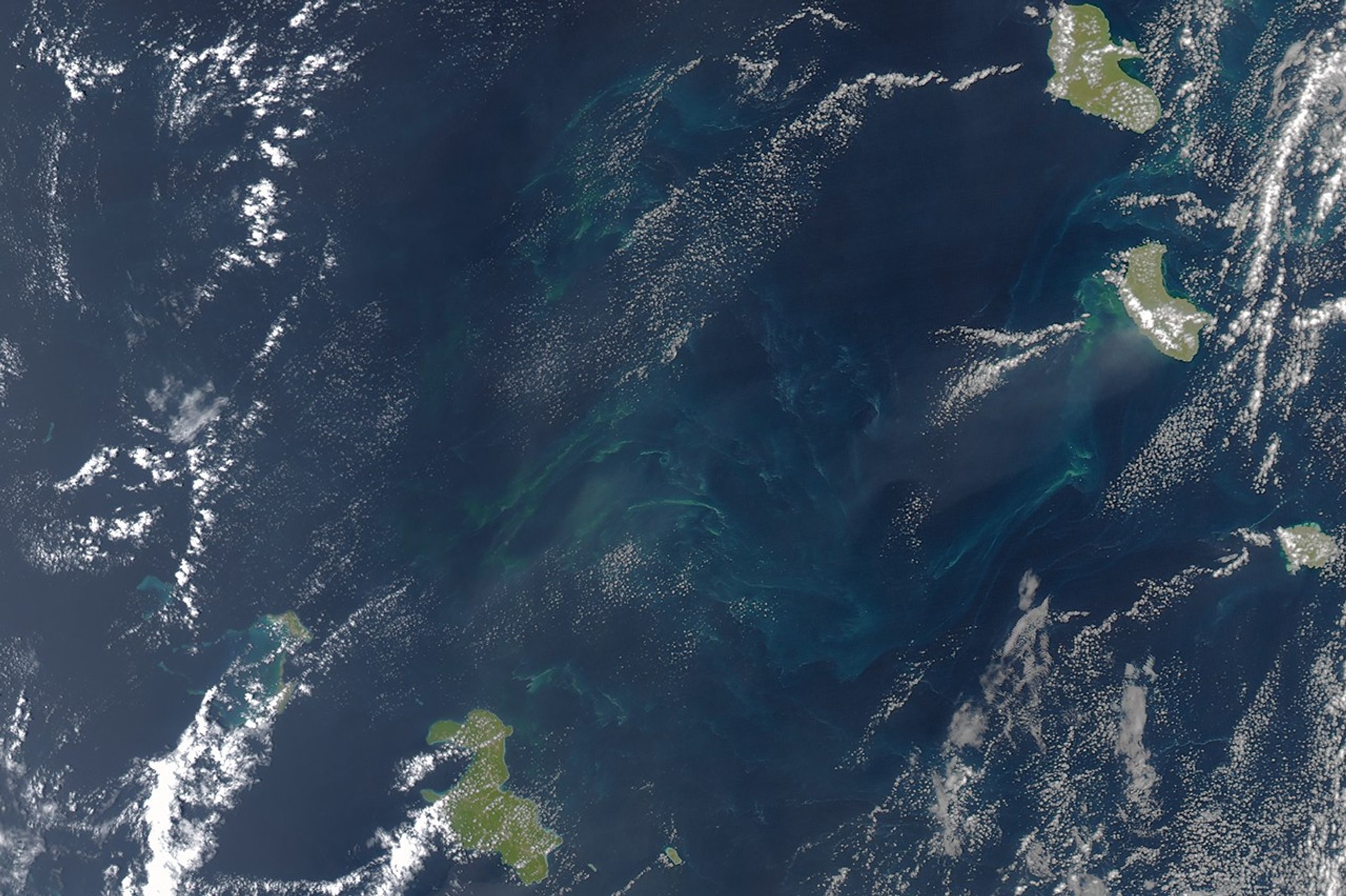
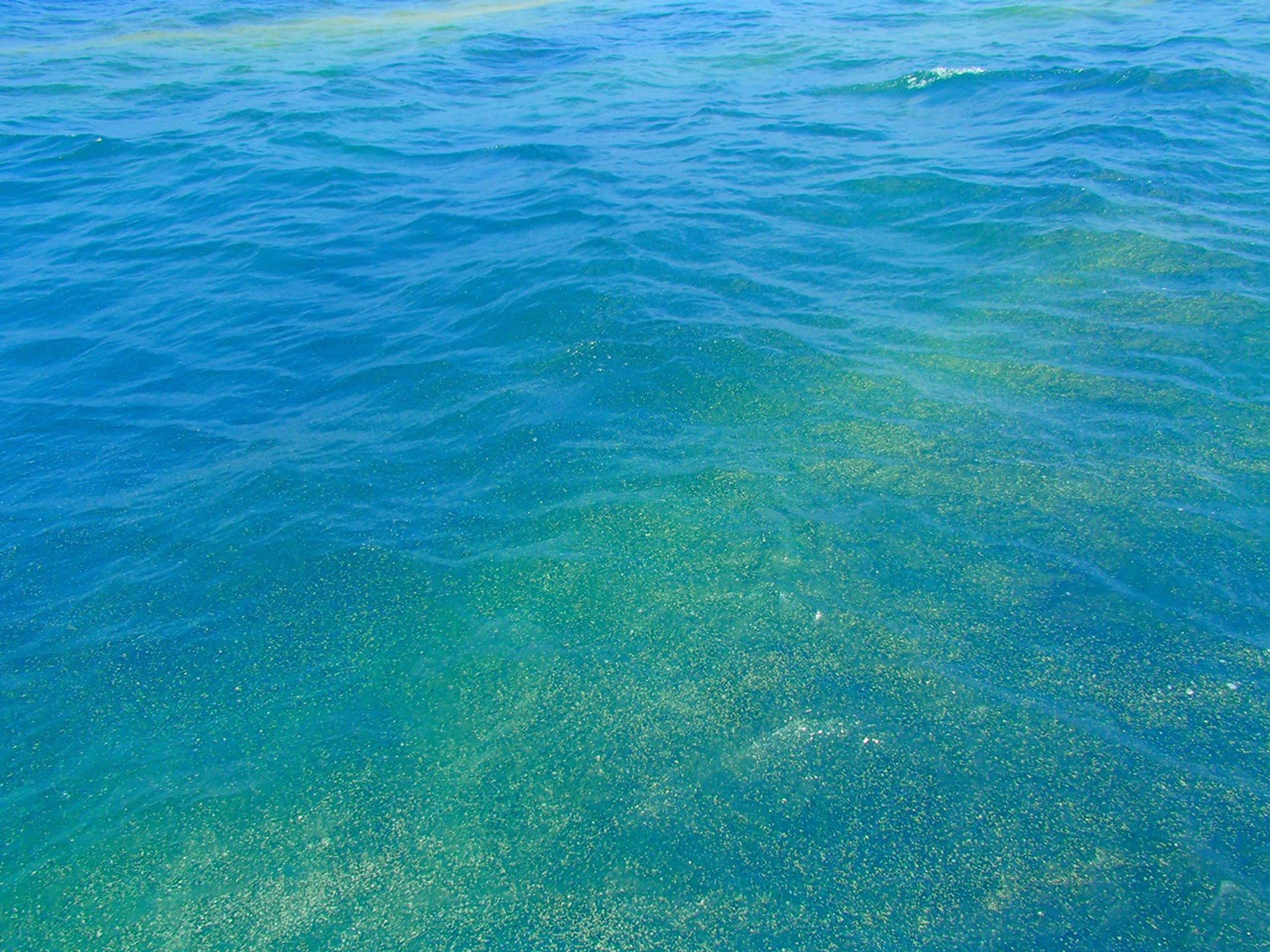
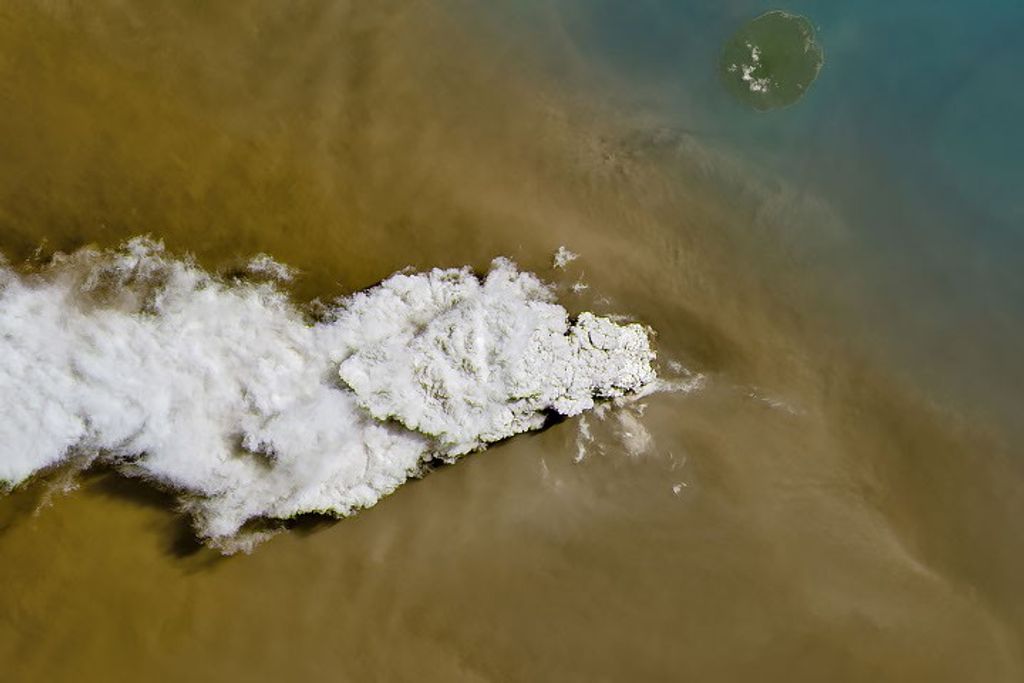
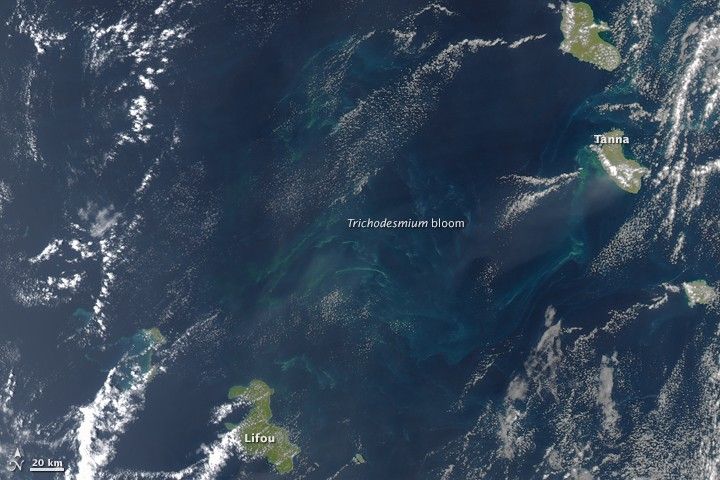
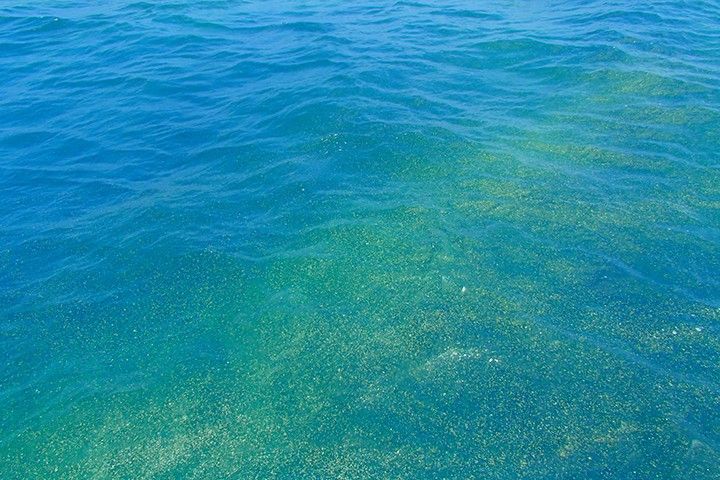
The top image, acquired on December 19, 2014, with the Moderate Resolution Imaging Spectroradiometer (MODIS) on NASA’s Aqua satellite, shows a bloom of Trichodesmium erythraeum in the southwest Pacific Ocean between New Caledonia and Vanuatu. The second image shows the same bloom as viewed from the deck of the research vessel Alis in mid-December 2014. Phytoplankton researcher Cécile Dupouy of the Mediterranean Institute of Oceanography (France) photographed the bloom while headed toward the South Pacific Ocean Time Series (SPOT) marine observation station.
"As the sun shines, we distinctly see colonies sparkling—especially at noon, when colonies go up to the surface to catch the sun," Dupouy said. For reasons that remain a mystery, daylight hours are the only time when colonies of Trichodesmium erythraeum fix nitrogen. And even after several decades of observations, it's also unclear why blooms fluctuate so much from one year to the next.
Another cruise will cross this bloom area again in February 2015. Dupouy plans to make measurements of Trichodesmium blooms with instruments on the ship and then compare that data with imagery from satellites.
"We need regular observations of slicks in these waters where Trichodesmium blooms are common from November to March," Dupouy said. Because the colonies can be so widespread, scientists think Trichodesmium may be a major contributor to the global nitrogen and carbon cycles.
References & Resources
- Capone, D. et al., (1997, May 23) Trichodesmium, a Globally Significant Marine Cyanobacterium. Science 276 (5316), 1221-1229.
- Charles Darwin Works from the Classic Literature Library, The Voyage of the Beagle. Accessed January 15, 2015.
- Dupouy, C. et al., (2011) An algorithm for detecting Trichodesmium surface blooms in the South Western Tropical Pacific. Biogeosciences 8 (2011) 3631-3647.
- NASA Ocean Color (2005, March 11) Nitrogen Fixers in the Southwest Pacific. Accessed January 15, 2015.
- University of Southampton (2014, December 18), Nitrogen Fixation in the Oceans. Accessed January 15, 2015.
- WHOI Oceanus magazine (2015, December) Little Things Matter A Lot. Accessed January 15, 2015.
Top image is by NASA Earth Observatory's Josh Stevens and Jesse Allen, using MODIS data. Bottom image is courtesy Cécile Dupouy, Mediterranean Institute of Oceanography. Caption is by Kathryn Hansen.