




![Request for Information – Potential [Placeholder for Prize]](https://assets.science.nasa.gov/dynamicimage/assets/science/missions/a-step/FFR_Earth_Background_20251120%20.png?w=1024)






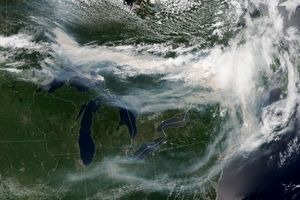
On May 30, 2015, the Moderate Resolution Imaging Spectroradiometer (MODIS) on NASA’s Aqua satellite acquired this image of smoke from wildfires in northern Canada. Red outlines indicate areas where MODIS detected unusually warm surface temperatures associated with fire.
MODIS detected fires in this area on May 28, 2015; by the time the natural-color image above was acquired, those had significantly intensified. Heavy smoke from the growing blazes merged with lingering smoke from previous days, making air quality a major concern. The large plume of smoke in the lower right came from a fire in Wood Buffalo National Park.
“Fires this early are very unusual,” said Mike Flannigan of the University of Alberta. He noted that the Northwest Territories and northern Alberta usually see the most active part of the fire season in July, and British Columbia’s fire season typically runs from the end of July through August. According to the National Wildland Fire Situation Report issued on May 27 by Natural Resources Canada, the seasonal fire occurrence and the area burned across Canada so far are both above the ten-year average.
Scientists think the high intensity of fires on May 30 led to as many as five pyrocumulonimbus events—thunderstorms generated by the heat from fire rather than by the sun-warmed ground.
Farther south in Alberta (not pictured), fires displaced thousands of residents and led some energy companies to suspend oil operations. According to CBC News, fires and maintenance operations dropped Canada’s crude oil production in May to its lowest level in two years.
References & Resources
- CBC News (2015, June 1) Canada’s crude oil production del in May to lowest level in almost 2 years, Barclays says. Accessed June 2, 2015
- CBC News (2015, May 1) N.W.T. fire season forecast to start early, burn hot in May and June. Accessed May 29, 2015
- Cooperative Institute for Meteorological Satellite Studies (2015, May 30) Multiple pyroCb events in Canada’s Northwest Territories. Accessed June 2, 2015
- The Guardian (via Reuters) (2015, May 26) Alberta wildfires prompt oil firms to suspend production and evacuate staff. Accessed May 29, 2015
- NASA Earth Observatory (2015, May 28) Fires in Northern Canada.
- Natural Resources Canada (2015, May 27) National Wildland Fire Situation Report. Accessed June 2, 2015
NASA image by Jeff Schmaltz, LANCE/EOSDIS Rapid Response. Caption by Kathryn Hansen.